THE ADVENTURE COLLECTIVE® · Independent discovery and booking for outdoor travel

Spend a day where rivers carve clear lagoons, granite ridges open to sweeping panoramas, and mountain villages keep old rhythms alive. This seven-hour small-group tour of Peneda-Gerês pairs easy walks with local culinary stops and insider viewpoints.
Spend a day where rivers carve clear lagoons, granite ridges open to sweeping panoramas, and mountain villages keep old rhythms alive. This seven-hour small-group tour of Peneda-Gerês pairs easy walks with local culinary stops and insider viewpoints.
Early light slices the valley and a guide’s voice threads through the hush: “Welcome to Gerês.” You step from an air-conditioned minivan onto a road where granite walls absorb the morning chill and water, impatient all night, rushes over bedrock toward hidden pools. The day unfolds like a local map—short walks to crystal lagoons, viewpoints that pin the horizon, and stone villages where time moves at the pace of the shepherds who still tend rain-fed pastures.
Verified experiences and guided adventures in the surrounding area.
Operated by Montesa - Making Memories Experts · Braga, Braga
Early light slices the valley and a guide’s voice threads through the hush: “Welcome to Gerês.” You step from an air-conditioned minivan onto a road where granite walls absorb the morning chill and water, impatient all night, rushes over bedrock toward hidden pools. The day unfolds like a local map—short walks to crystal lagoons, viewpoints that pin the horizon, and stone villages where time moves at the pace of the shepherds who still tend rain-fed pastures.
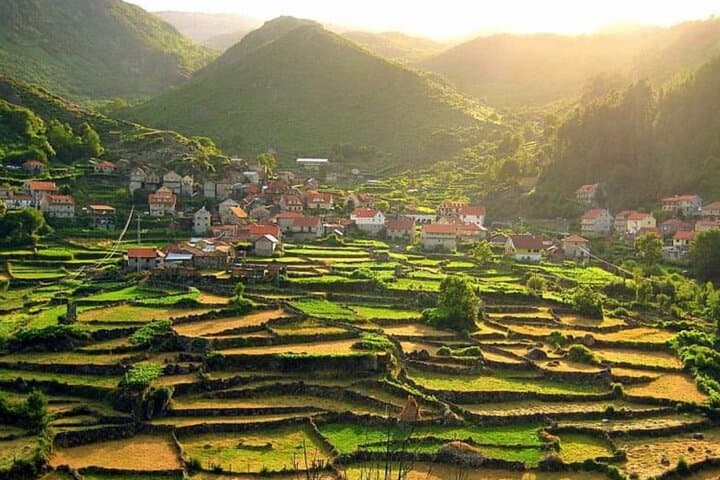
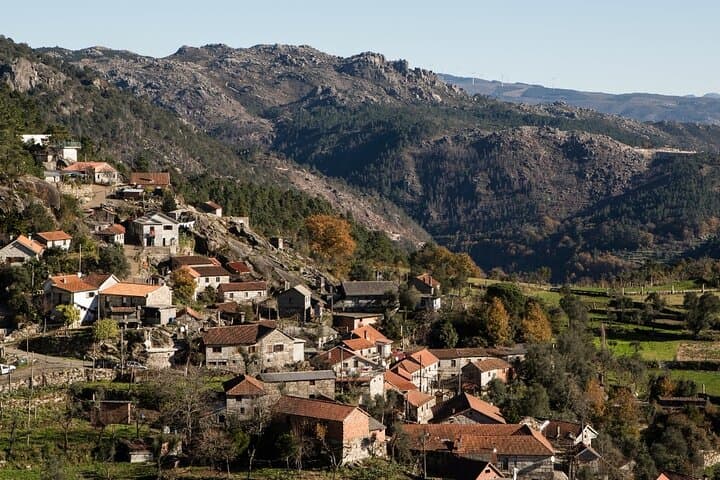
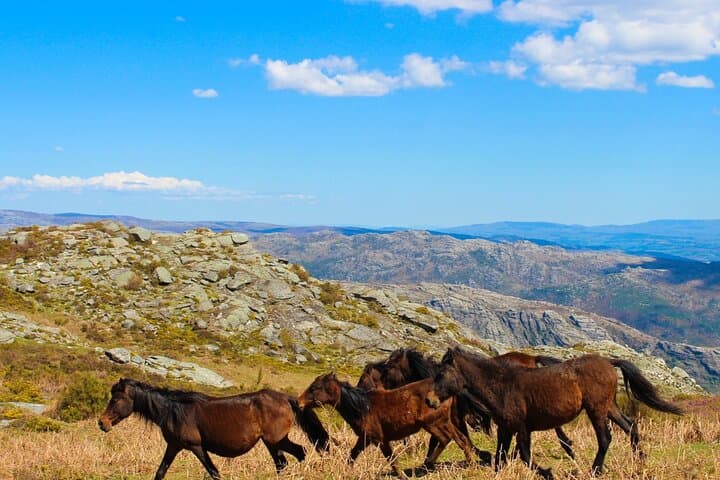
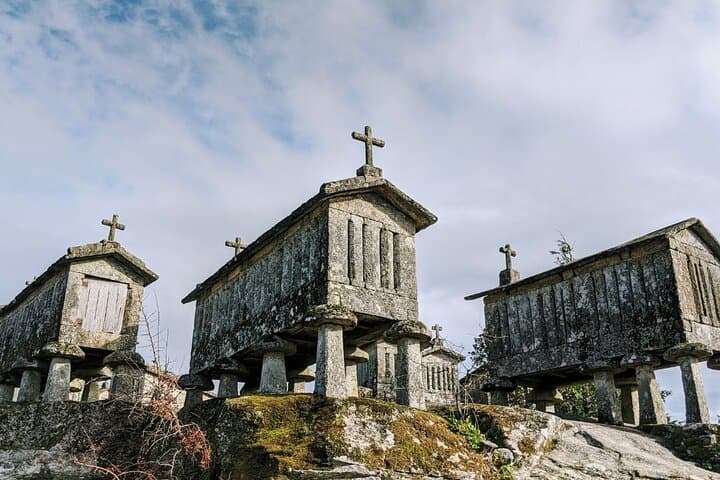
Peneda-Gerês is Portugal’s only national park and one of Europe’s designated biosphere reserves. The landscape reads like a geological field guide: ancient schist and granite rounded by glacial and fluvial forces, cliffs carved by rivers that dare you to follow them. Flora ranges from oak and pine woodlands to shrublands dotted with heather; fauna includes roe deer, wild boar, and the rarer Iberian wolf on the broader margins. Human history is woven into terraces, medieval bridges, and chapels—settlements like Soajo and Lindoso preserve communal granaries and stone houses that speak to centuries of mountain life.
Culturally, this is a borderland shaped by farming rhythms and seasonal migration. Guides will explain local crafts, seasonal festivals, and foodways: the picnic on this tour often features presunto, local cheese, broa bread, and regional sweets—an efficient way to taste place between viewpoints.
Practically, the tour is a seven-hour, small-group experience designed for accessibility. Expect several short, well-maintained walks—many less than 1.5 km each—with modest elevation changes, though some overlooks require steeper steps. Terrain shifts from paved village lanes to rocky footpaths and damp trails near waterfalls, so footwear matters.
Plan to start early to catch cleaner light and cooler temperatures. Layers are essential: mornings can be cool, afternoons warm, and sudden showers are common. Summer invites swims in isolated lagoons where permitted; spring brings wildflowers and fuller streams; autumn sharpens the views; winter can be wet and chilly, making some rural roads trickier.
The guide’s local knowledge is the real value—access to quiet viewpoints and off-the-beaten-path lagoons that larger buses can’t reach. For photographers, the combination of rock, moving water, and village architecture rewards varied compositions.
Book a private or small-group slot and confirm pickup from Braga or nearby towns. Bring reusable water, snacks beyond what’s provided if you have dietary needs, and a small daypack. With the right prep, a day here becomes more than a list of sights: it’s a paced conversation with a wild and human landscape that continues to shape one another.
moderate.
7 hours.
Suitable for most fitness levels; participants should be comfortable walking up to 1–2 km at a time with short elevation gains.
Yes; walks are short and accessible, but check mobility limits—participants should manage short staircases and uneven ground.
The tour includes regional snacks and bottled water; a gourmet picnic is available by reservation—notify dietary needs when booking.
Swimming is allowed only in designated spots and in good weather; guides advise when it’s safe and respectful to local rules.
Pickup is arranged from your accommodation in Braga or nearby towns—confirm your pickup point and time at booking and expect a ~60-minute pickup window.
The operator may cancel for heavy rain or unsafe conditions; full refund is available if cancelled 24+ hours in advance per policy.
Tours are offered as private or small-group experiences—book the private option for a personalized itinerary.
The park preserves medieval villages and ancient transhumance routes; many stone bridges and chapels date to medieval times and reflect centuries of mountain farming.
Peneda-Gerês is a protected biosphere reserve; visitors are encouraged to stay on trails, pack out waste, and respect seasonal grazing areas to minimize impact.
Montesa - Making Memories Experts operates guided outdoor trips and adventures with an emphasis on safety, stewardship, and memorable experiences.
Early light slices the valley and a guide’s voice threads through the hush: “Welcome to Gerês.” You step from an air-conditioned minivan onto a road where granite walls absorb the morning chill and water, impatient all night, rushes over bedrock toward hidden pools. The day unfolds like a local map—short walks to crystal lagoons, viewpoints that pin the horizon, and stone villages where time moves at the pace of the shepherds who still tend rain-fed pastures.
Early light slices the valley and a guide’s voice threads through the hush: “Welcome to Gerês.” You step from an air-conditioned minivan onto a road where granite walls absorb the morning chill and water, impatient all night, rushes over bedrock toward hidden pools. The day unfolds like a local map—short walks to crystal lagoons, viewpoints that pin the horizon, and stone villages where time moves at the pace of the shepherds who still tend rain-fed pastures.
Peneda-Gerês is Portugal’s only national park and one of Europe’s designated biosphere reserves. The landscape reads like a geological field guide: ancient schist and granite rounded by glacial and fluvial forces, cliffs carved by rivers that dare you to follow them. Flora ranges from oak and pine woodlands to shrublands dotted with heather; fauna includes roe deer, wild boar, and the rarer Iberian wolf on the broader margins. Human history is woven into terraces, medieval bridges, and chapels—settlements like Soajo and Lindoso preserve communal granaries and stone houses that speak to centuries of mountain life.
Culturally, this is a borderland shaped by farming rhythms and seasonal migration. Guides will explain local crafts, seasonal festivals, and foodways: the picnic on this tour often features presunto, local cheese, broa bread, and regional sweets—an efficient way to taste place between viewpoints.
Practically, the tour is a seven-hour, small-group experience designed for accessibility. Expect several short, well-maintained walks—many less than 1.5 km each—with modest elevation changes, though some overlooks require steeper steps. Terrain shifts from paved village lanes to rocky footpaths and damp trails near waterfalls, so footwear matters.
Plan to start early to catch cleaner light and cooler temperatures. Layers are essential: mornings can be cool, afternoons warm, and sudden showers are common. Summer invites swims in isolated lagoons where permitted; spring brings wildflowers and fuller streams; autumn sharpens the views; winter can be wet and chilly, making some rural roads trickier.
The guide’s local knowledge is the real value—access to quiet viewpoints and off-the-beaten-path lagoons that larger buses can’t reach. For photographers, the combination of rock, moving water, and village architecture rewards varied compositions.
Book a private or small-group slot and confirm pickup from Braga or nearby towns. Bring reusable water, snacks beyond what’s provided if you have dietary needs, and a small daypack. With the right prep, a day here becomes more than a list of sights: it’s a paced conversation with a wild and human landscape that continues to shape one another.