THE ADVENTURE COLLECTIVE® · Independent discovery and booking for outdoor travel

Spin from oak-lined streets to vineyard views on this guided cycling tour of Stellenbosch. History, cellar doors, and the Jonkershoek Valley come together in a relaxed 4–5 hour ride with tastings and plenty of scenery.
Spin from oak-lined streets to vineyard views on this guided cycling tour of Stellenbosch. History, cellar doors, and the Jonkershoek Valley come together in a relaxed 4–5 hour ride with tastings and plenty of scenery.
Morning light slips down from the Hottentots-Holland mountains, silvering the vines as wheels start to turn. Stellenbosch’s oak-lined streets hum softly to the rhythm of freewheels and birdsong. The Eerste River keeps pace, nudging along as your guide points the way past gables and galleries, then outward where vineyards shoulder the valley and the road dares you to keep exploring.
Verified experiences and guided adventures in the surrounding area.
Operated by Adventureshop Stellenbosch · Stellenbosch, Western Cape
Morning light slips down from the Hottentots-Holland mountains, silvering the vines as wheels start to turn. Stellenbosch’s oak-lined streets hum softly to the rhythm of freewheels and birdsong. The Eerste River keeps pace, nudging along as your guide points the way past gables and galleries, then outward where vineyards shoulder the valley and the road dares you to keep exploring.
This guided bike tour strings together the town’s oldest stories and its freshest flavors. Founded in 1679 by Governor Simon van der Stel, Stellenbosch grew on fertile alluvial soils, framed by granite and sandstone peaks. You’ll feel that geology under your tires—mostly smooth tarmac with short gravel connectors—as you roll from Cape Dutch facades to the broad avenues of Stellenbosch University, then out toward the mouth of Jonkershoek. Here the fynbos edges in, aromatic and tough, leaning into the wind that often presses down the valley in the afternoons.
Expect roughly 15–20 km of riding with gentle grades and about 150–250 m of cumulative climbing. It’s comfortable for most riders who are steady on a bike, with a few brief rises that ask for an easy gear and a steady cadence. The guide sets a relaxed pace and keeps the group tight on mixed terrain and when crossing quiet farm roads. South Africa rides on the left, and your leader manages the transitions and road etiquette so you can focus on the scenery.
Culture arrives in the glass. The route includes a private cellar tour and two tasting stops, one paired with artisanal chocolate. Under-18s are welcome and are served juice; non-drinkers often opt to savor the chocolate and scenery without the pours. Between sips, vineyards ripple toward the Jonkershoek mountains, which push clouds and catch shade in the heat of summer. The valley’s wineries date to the late 1600s, and their modern cellars tell the ongoing story of terroir shaped by mountain runoff, maritime breezes, and cool nights that the vines quietly work into balance.
Practical matters are straightforward. Mountain bikes and helmets are provided; wear closed-toe shoes and bring a refillable bottle. Summer sun hits hard—start hydrated and carry sunscreen. Winter fronts can sweep in quickly from the southwest, so a light shell goes a long way. Surfaces are mostly paved, with occasional compacted gravel farm lanes where you’ll want to keep eyes up and hands light on the brakes. The ride begins and ends at the operator’s cycling office in town, making it simple to enjoy a post-ride coffee or a walk among the oaks.
By the time you roll back under the shade of Stellenbosch’s trees, the town has worked its way under your skin—the river still urging forward, the mountains standing watch, and the vineyards quietly hinting there’s more to taste tomorrow.
moderate.
4–5 hours.
Comfortable riding 15–20 km with a few short hills; able to stand on pedals briefly and ride mixed surfaces.
Plan on 15–20 km over mostly paved streets and bike-friendly roads with short sections of compacted gravel and gentle hills.
Yes—two tastings are included along with a cellar tour; under-18s may join and are served juice instead of wine.
No—quality mountain bikes and helmets are provided by the operator.
You’re welcome to join; advise the operator in advance so they can suggest non-alcoholic alternatives or adjust portions at the stops.
Yes, it’s a relaxed pace suitable for most riders who can confidently steer, brake, and ride for several hours with breaks.
Closed-toe shoes, breathable layers, and sun protection. Bring a light jacket in winter and padded shorts for added comfort.
Stellenbosch is South Africa’s second-oldest town, established in 1679, and its wine tradition dates back to the late 17th century with iconic Cape Dutch architecture still defining the historic core.
Jonkershoek’s fynbos is fire-adapted and fragile; stay on designated roads and respect private farm tracks. Use refillable bottles and pack out all litter to protect waterways feeding the Eerste River.
Adventureshop Stellenbosch operates guided outdoor trips and adventures with an emphasis on safety, stewardship, and memorable experiences.
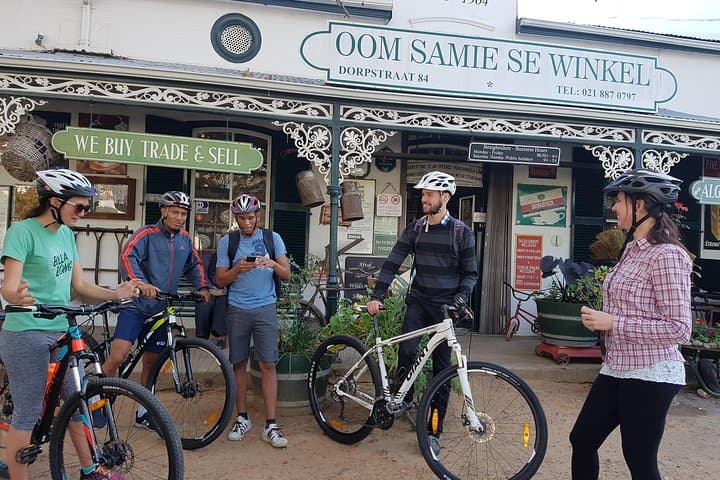
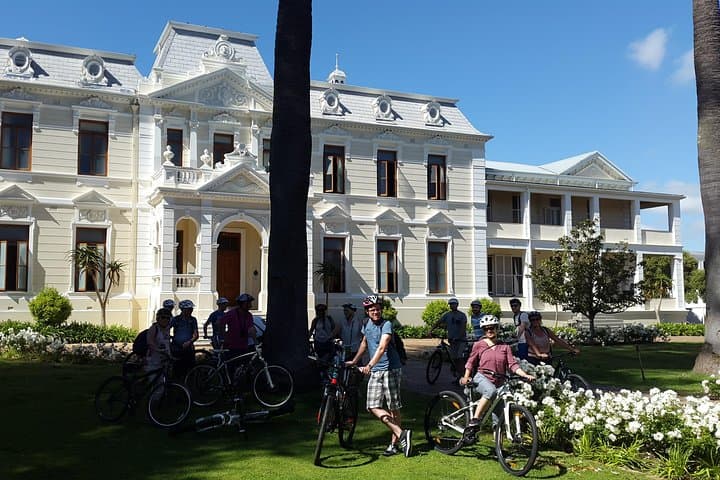
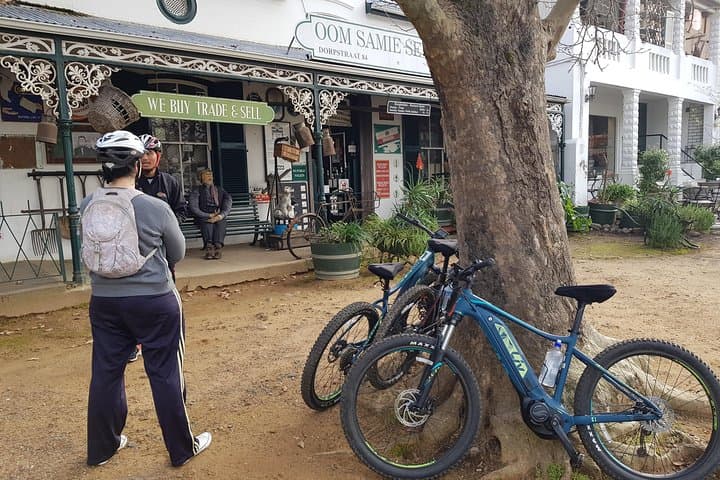
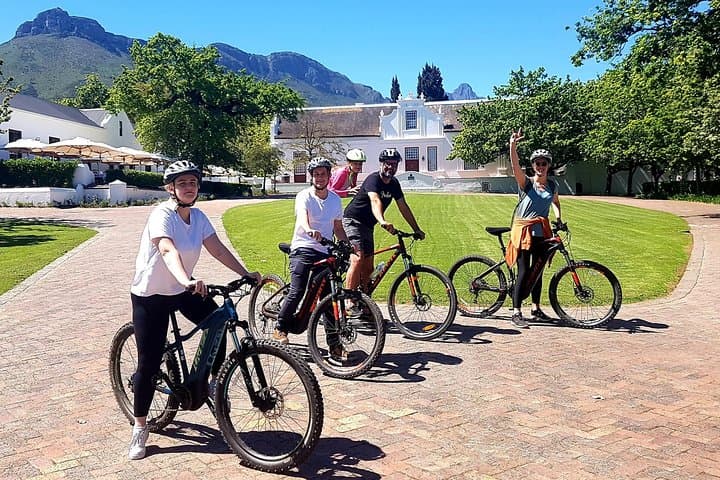
Morning light slips down from the Hottentots-Holland mountains, silvering the vines as wheels start to turn. Stellenbosch’s oak-lined streets hum softly to the rhythm of freewheels and birdsong. The Eerste River keeps pace, nudging along as your guide points the way past gables and galleries, then outward where vineyards shoulder the valley and the road dares you to keep exploring.
Morning light slips down from the Hottentots-Holland mountains, silvering the vines as wheels start to turn. Stellenbosch’s oak-lined streets hum softly to the rhythm of freewheels and birdsong. The Eerste River keeps pace, nudging along as your guide points the way past gables and galleries, then outward where vineyards shoulder the valley and the road dares you to keep exploring.
This guided bike tour strings together the town’s oldest stories and its freshest flavors. Founded in 1679 by Governor Simon van der Stel, Stellenbosch grew on fertile alluvial soils, framed by granite and sandstone peaks. You’ll feel that geology under your tires—mostly smooth tarmac with short gravel connectors—as you roll from Cape Dutch facades to the broad avenues of Stellenbosch University, then out toward the mouth of Jonkershoek. Here the fynbos edges in, aromatic and tough, leaning into the wind that often presses down the valley in the afternoons.
Expect roughly 15–20 km of riding with gentle grades and about 150–250 m of cumulative climbing. It’s comfortable for most riders who are steady on a bike, with a few brief rises that ask for an easy gear and a steady cadence. The guide sets a relaxed pace and keeps the group tight on mixed terrain and when crossing quiet farm roads. South Africa rides on the left, and your leader manages the transitions and road etiquette so you can focus on the scenery.
Culture arrives in the glass. The route includes a private cellar tour and two tasting stops, one paired with artisanal chocolate. Under-18s are welcome and are served juice; non-drinkers often opt to savor the chocolate and scenery without the pours. Between sips, vineyards ripple toward the Jonkershoek mountains, which push clouds and catch shade in the heat of summer. The valley’s wineries date to the late 1600s, and their modern cellars tell the ongoing story of terroir shaped by mountain runoff, maritime breezes, and cool nights that the vines quietly work into balance.
Practical matters are straightforward. Mountain bikes and helmets are provided; wear closed-toe shoes and bring a refillable bottle. Summer sun hits hard—start hydrated and carry sunscreen. Winter fronts can sweep in quickly from the southwest, so a light shell goes a long way. Surfaces are mostly paved, with occasional compacted gravel farm lanes where you’ll want to keep eyes up and hands light on the brakes. The ride begins and ends at the operator’s cycling office in town, making it simple to enjoy a post-ride coffee or a walk among the oaks.
By the time you roll back under the shade of Stellenbosch’s trees, the town has worked its way under your skin—the river still urging forward, the mountains standing watch, and the vineyards quietly hinting there’s more to taste tomorrow.