THE ADVENTURE COLLECTIVE® · Independent discovery and booking for outdoor travel

Launch from Signal Hill and drift above Cape Town’s coastline with guaranteed city and ocean views. This tandem paragliding flight balances backcountry exhilaration with seasoned pilot care — ideal for first-timers who want a safe, cinematic way to see the Mother City.
Launch from Signal Hill and drift above Cape Town’s coastline with guaranteed city and ocean views. This tandem paragliding flight balances backcountry exhilaration with seasoned pilot care — ideal for first-timers who want a safe, cinematic way to see the Mother City.
You drive to the very end of Signal Hill, the road unwinds and the city pulls away beneath you. A small car park, a stone launch platform and the Atlantic stretching toward Robben Island set the stage. When the wind lines up, a pilot fastens the harness, checks the canopy and the world slides quiet — the ocean seems to hold its breath as you run a few steps and the hill releases you.
Verified experiences and guided adventures in the surrounding area.
Operated by Icarus Tandem Paragliding Cape Town · Cape Town, Western Cape
You drive to the very end of Signal Hill, the road unwinds and the city pulls away beneath you. A small car park, a stone launch platform and the Atlantic stretching toward Robben Island set the stage. When the wind lines up, a pilot fastens the harness, checks the canopy and the world slides quiet — the ocean seems to hold its breath as you run a few steps and the hill releases you.
Signal Hill rises roughly 300–350 meters above the City Bowl, and its geology is the worn edge of the Table Mountain sandstone ridge. Historically it was a place of watchmen and cannon: signal flags and the noon gun once spoke to sailors and city folk alike. Today the hill trades those messages for thermals and sea breezes; the same ridge that once guided ships now gives gravity a softer voice.
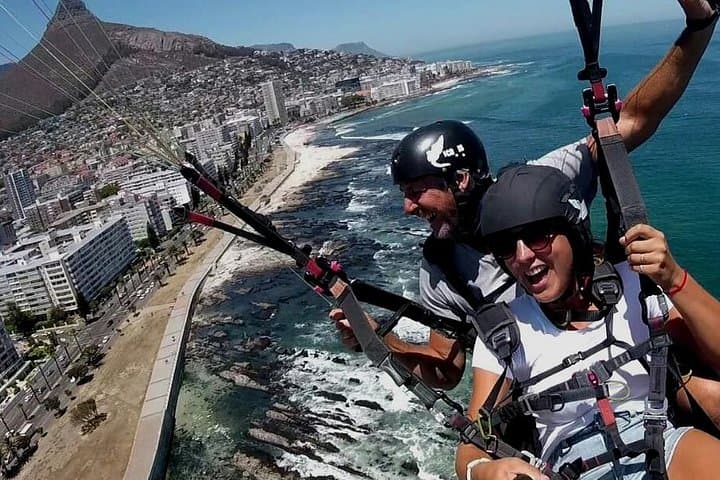
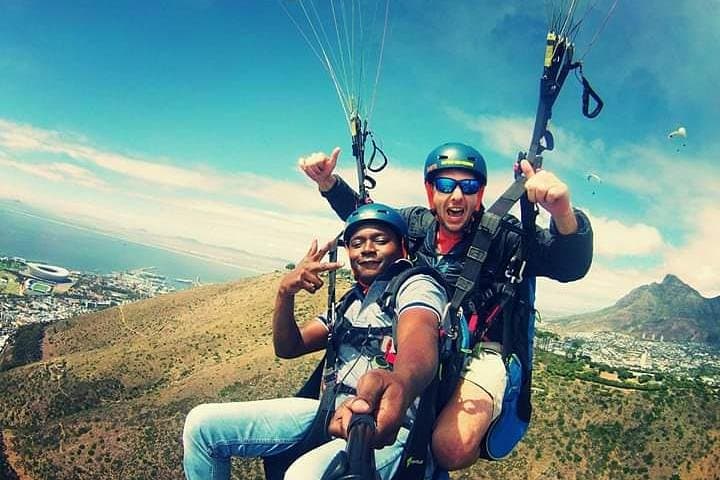
The view unfolds with cinematic clarity. To the south, Table Mountain sits broad and still; below, the City Bowl fans out with Victorian rooftops, Silo District cranes and the glint of Victoria & Alfred Waterfront. Ahead, Robben Island is a small, hard shape on the Atlantic; to the west the ocean broadens, its wind-driven texture visible from high. The launch is straightforward — a grassy, gently sloped platform within a short walk of the car park — and pilots from Icarus handle the technical work. Tandem harnesses, helmet-mounted cameras and a practiced sequence make the ascent into flight feel like a carefully choreographed handoff.
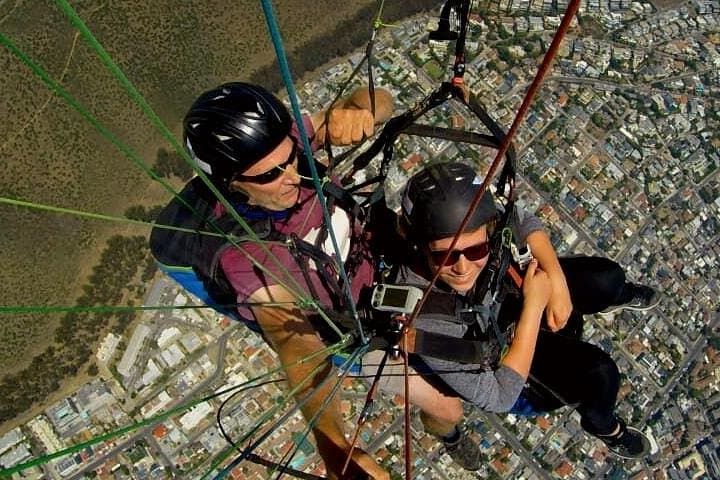
This flight is more than a thrill; it’s an efficient way to read Cape Town from above. Pilots time lifts with the daily sea breeze that often builds midday, and they aim for smooth, photographic circuits over Sea Point, Camps Bay and Clifton. The company emphasizes safety and comfort — porter-assisted takeoffs and landings, transport from landing area back to the top, and a long record of incident-free operations.
Plan practically: wear closed, comfortable shoes with traction, carry a windproof layer and arrive with enough time to check in. Flights typically last about an hour from meeting to return; airborne time varies with conditions. Not recommended for pregnant travelers, though accessible options exist for many mobility needs. Weather rules the schedule — if the wind is wrong, the flight will be postponed or refunded up to 24 hours prior.
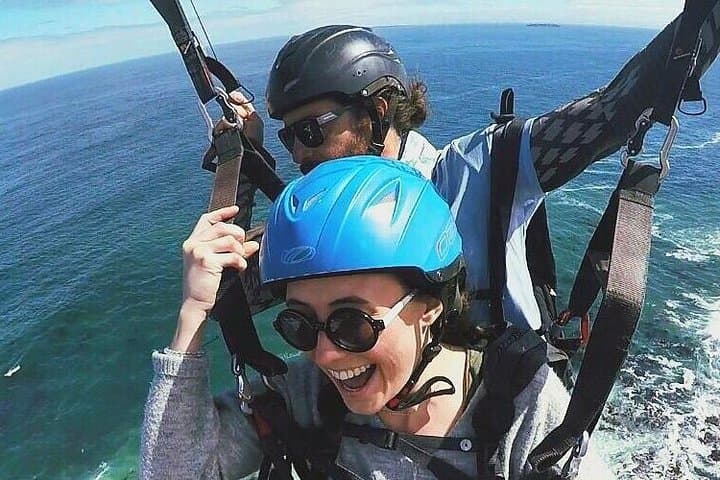
For photographers and first-timers, the headset removes noise but not wonder: the city below reads sharp and immediate. Landings are gentle and guided; pilots walk you through the sequence so you can enjoy the view, relax into the harness and, for a minute, let the Atlantic dare you to stay aloft longer.
easy.
1 hour (total experience); 10–25 minutes airborne typical.
Suitable for most fitness levels; you should be able to walk short distances and run a few steps at takeoff
No experience required; flights are tandem with a licensed pilot who handles launching, flying and landing.
The total booking is roughly one hour including check-in and transport; airborne time typically ranges from 10 to 25 minutes depending on conditions.
Closed-toe shoes, a windproof layer and comfortable clothes; avoid scarves or loose items that could catch the canopy.
Yes — operators monitor wind and visibility closely and will cancel or reschedule if conditions are unsafe; refund rules typically require 24+ hours for a full refund.
Most operators set weight limits for tandem safety; check with the provider at booking if you are close to or over standard limits.
You can bring secured cameras or phones, but pilots often mount GoPros; any loose device must be safely strapped.
Signal Hill was historically used to signal ships and house the noon gun; the hill’s vantage has shaped Cape Town’s maritime navigation and civic rituals.
Keep to established paths and avoid trampling vegetation on the launch slope; operators minimize disturbance by using a single, managed takeoff area.
Icarus Tandem Paragliding Cape Town operates guided outdoor trips and adventures with an emphasis on safety, stewardship, and memorable experiences.
You drive to the very end of Signal Hill, the road unwinds and the city pulls away beneath you. A small car park, a stone launch platform and the Atlantic stretching toward Robben Island set the stage. When the wind lines up, a pilot fastens the harness, checks the canopy and the world slides quiet — the ocean seems to hold its breath as you run a few steps and the hill releases you.
You drive to the very end of Signal Hill, the road unwinds and the city pulls away beneath you. A small car park, a stone launch platform and the Atlantic stretching toward Robben Island set the stage. When the wind lines up, a pilot fastens the harness, checks the canopy and the world slides quiet — the ocean seems to hold its breath as you run a few steps and the hill releases you.
Signal Hill rises roughly 300–350 meters above the City Bowl, and its geology is the worn edge of the Table Mountain sandstone ridge. Historically it was a place of watchmen and cannon: signal flags and the noon gun once spoke to sailors and city folk alike. Today the hill trades those messages for thermals and sea breezes; the same ridge that once guided ships now gives gravity a softer voice.
The view unfolds with cinematic clarity. To the south, Table Mountain sits broad and still; below, the City Bowl fans out with Victorian rooftops, Silo District cranes and the glint of Victoria & Alfred Waterfront. Ahead, Robben Island is a small, hard shape on the Atlantic; to the west the ocean broadens, its wind-driven texture visible from high. The launch is straightforward — a grassy, gently sloped platform within a short walk of the car park — and pilots from Icarus handle the technical work. Tandem harnesses, helmet-mounted cameras and a practiced sequence make the ascent into flight feel like a carefully choreographed handoff.
This flight is more than a thrill; it’s an efficient way to read Cape Town from above. Pilots time lifts with the daily sea breeze that often builds midday, and they aim for smooth, photographic circuits over Sea Point, Camps Bay and Clifton. The company emphasizes safety and comfort — porter-assisted takeoffs and landings, transport from landing area back to the top, and a long record of incident-free operations.
Plan practically: wear closed, comfortable shoes with traction, carry a windproof layer and arrive with enough time to check in. Flights typically last about an hour from meeting to return; airborne time varies with conditions. Not recommended for pregnant travelers, though accessible options exist for many mobility needs. Weather rules the schedule — if the wind is wrong, the flight will be postponed or refunded up to 24 hours prior.
For photographers and first-timers, the headset removes noise but not wonder: the city below reads sharp and immediate. Landings are gentle and guided; pilots walk you through the sequence so you can enjoy the view, relax into the harness and, for a minute, let the Atlantic dare you to stay aloft longer.