THE ADVENTURE COLLECTIVE® · Independent discovery and booking for outdoor travel

Glide silent through Holbox’s mangrove veins where roseate spoonbills, crocodiles and pelicans share narrow channels. This guided kayak tour pairs up-close wildlife viewing with local knowledge and low-impact travel practices—perfect for active beginners.
Glide silent through Holbox’s mangrove veins where roseate spoonbills, crocodiles and pelicans share narrow channels. This guided kayak tour pairs up-close wildlife viewing with local knowledge and low-impact travel practices—perfect for active beginners.
The first paddle stroke parts a glassy green world. Mangrove roots thread like fingers through tidal water, and the kayak moves silently, as if the island itself has invited you to listen. On Holbox, guides ease guests away from Mosquito Beach before dawn or late afternoon, when light slants through the canopy and the water mirrors a sky that seems invented for birdwatching.
Verified experiences and guided adventures in the surrounding area.
Operated by Xtreme holbox island · Holbox, Quintana Roo
The first paddle stroke parts a glassy green world. Mangrove roots thread like fingers through tidal water, and the kayak moves silently, as if the island itself has invited you to listen. On Holbox, guides ease guests away from Mosquito Beach before dawn or late afternoon, when light slants through the canopy and the water mirrors a sky that seems invented for birdwatching.
Holbox sits off the northern coast of the Yucatán Peninsula, a low-lying island shaped by tides, reefs and the slow accumulation of sand. The mangrove channels around the island are living engineering: red, black and white mangroves arrest sediment, buffer storms and create the nursery grounds that sustain the Caribbean’s fish and bird populations. For centuries Maya and coastal communities used these waterways for food and transport; today the channels are a frontline for both wildlife viewing and conservation.
This guided, non-motorized tour threads the Kuka River and adjacent mangrove arms—places where crocodiles and rays are as likely to watch you as you are to watch them. Guides point out roseate spoonbills balancing like painters’ brushes, frigatebirds loafing on unseen thermals and white pelicans that lower themselves with surgical grace. Look closely and you’ll see crabs scuttle under pneumatophores and isopods of a prehistoric look clinging to roots. The guides emphasize minimal disturbance: the soundscape is meant to be birdsong, not an engine’s bark.
Practical details matter. The excursion lasts roughly 3–3.5 hours and includes private transport from Holbox hotels, bottled water, snacks and kayak equipment. It’s shared and small-group—eight people max—so you’ll move at a steady, deliberate pace suitable for beginners with a moderate fitness level. Mosquito Beach is both the meeting and return point, and pickup is available from island hotels; be ready 10 minutes before departure.
Prepare for sun, bugs and salt. Wear quick-dry layers, reef-safe sunscreen and a wide-brimmed hat; closed-toe water shoes make launching easier. Bring a dry bag for phone, a camera with a neck strap and binoculars for detail work. Mornings deliver the best bird activity and softer light for photos; afternoons tend to be warmer and better for a relaxed rhythm through the channels.
Respect is part of the itinerary: keep your distance from wildlife, avoid sudden movements and follow the guide’s instructions when crocodiles or nesting birds are nearby. The mangroves are fragile—stay on the water, leave nothing behind and consider a donation to local conservation groups protecting Holbox’s coastal habitats. Paddling here feels intimate because it is: the island doesn’t shout. It offers space, a slow current and the chance to watch a living coastline at work.
moderate.
3–3.5 hours.
Moderate; able to paddle continuously for short stretches and get in/out of a kayak from a shallow beach
The experience runs about 195 minutes (roughly 3–3.5 hours) including transport and paddling time.
No—basic paddling instruction is provided and the tour suits beginners with moderate fitness.
Infants must sit on an adult’s lap; check with the operator about minimum ages and comfort in watercraft.
Common sightings include flamingos, roseate spoonbills, white pelicans, frigatebirds, rays, crabs and occasionally American crocodiles.
Yes—private transport from Holbox hotels is included; be ready 10 minutes before the scheduled pickup time at reception.
Bring a dry bag, hat, reef-safe sunscreen, water bottle (bottled water is provided), light layers and binoculars if you have them.
Local communities have long relied on the island’s fisheries and mangroves; the channels were traditional routes for transport and shellfish gathering.
Mangroves are vital carbon sinks and nursery habitat—avoid landing in vegetated areas, and use reef-safe products to limit local impact.
Xtreme holbox island operates guided outdoor trips and adventures with an emphasis on safety, stewardship, and memorable experiences.
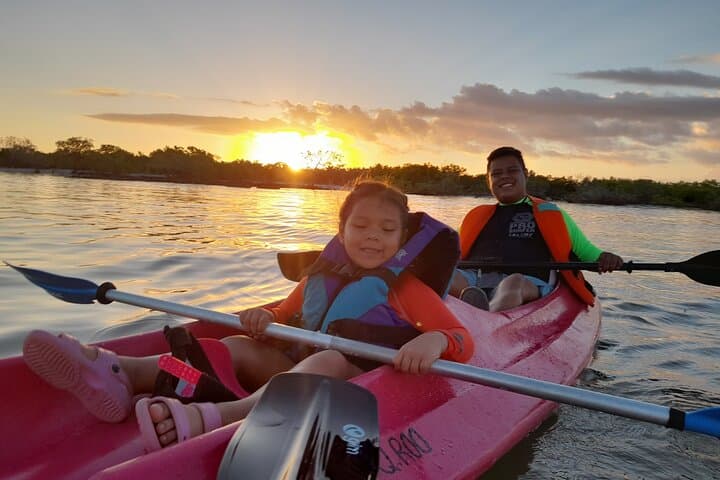
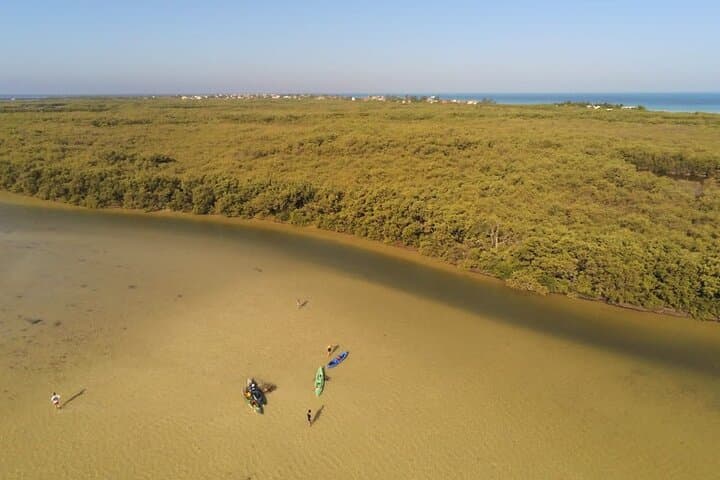
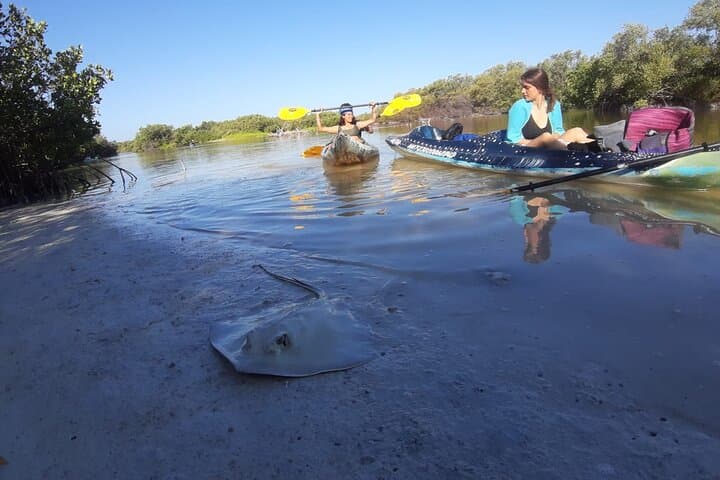
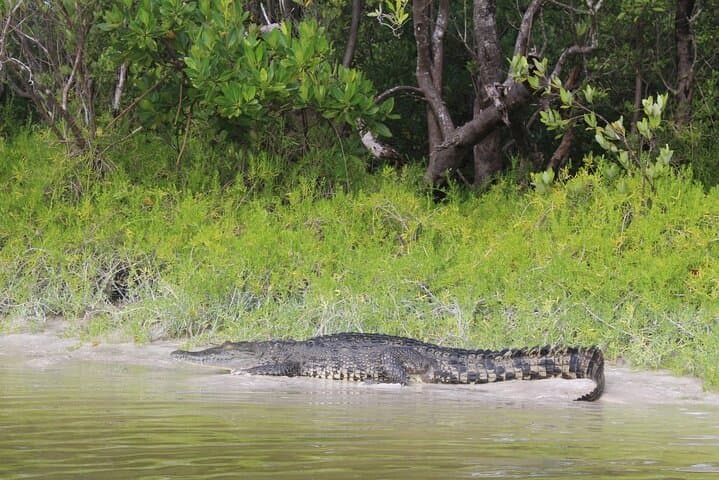
The first paddle stroke parts a glassy green world. Mangrove roots thread like fingers through tidal water, and the kayak moves silently, as if the island itself has invited you to listen. On Holbox, guides ease guests away from Mosquito Beach before dawn or late afternoon, when light slants through the canopy and the water mirrors a sky that seems invented for birdwatching.
The first paddle stroke parts a glassy green world. Mangrove roots thread like fingers through tidal water, and the kayak moves silently, as if the island itself has invited you to listen. On Holbox, guides ease guests away from Mosquito Beach before dawn or late afternoon, when light slants through the canopy and the water mirrors a sky that seems invented for birdwatching.
Holbox sits off the northern coast of the Yucatán Peninsula, a low-lying island shaped by tides, reefs and the slow accumulation of sand. The mangrove channels around the island are living engineering: red, black and white mangroves arrest sediment, buffer storms and create the nursery grounds that sustain the Caribbean’s fish and bird populations. For centuries Maya and coastal communities used these waterways for food and transport; today the channels are a frontline for both wildlife viewing and conservation.
This guided, non-motorized tour threads the Kuka River and adjacent mangrove arms—places where crocodiles and rays are as likely to watch you as you are to watch them. Guides point out roseate spoonbills balancing like painters’ brushes, frigatebirds loafing on unseen thermals and white pelicans that lower themselves with surgical grace. Look closely and you’ll see crabs scuttle under pneumatophores and isopods of a prehistoric look clinging to roots. The guides emphasize minimal disturbance: the soundscape is meant to be birdsong, not an engine’s bark.
Practical details matter. The excursion lasts roughly 3–3.5 hours and includes private transport from Holbox hotels, bottled water, snacks and kayak equipment. It’s shared and small-group—eight people max—so you’ll move at a steady, deliberate pace suitable for beginners with a moderate fitness level. Mosquito Beach is both the meeting and return point, and pickup is available from island hotels; be ready 10 minutes before departure.
Prepare for sun, bugs and salt. Wear quick-dry layers, reef-safe sunscreen and a wide-brimmed hat; closed-toe water shoes make launching easier. Bring a dry bag for phone, a camera with a neck strap and binoculars for detail work. Mornings deliver the best bird activity and softer light for photos; afternoons tend to be warmer and better for a relaxed rhythm through the channels.
Respect is part of the itinerary: keep your distance from wildlife, avoid sudden movements and follow the guide’s instructions when crocodiles or nesting birds are nearby. The mangroves are fragile—stay on the water, leave nothing behind and consider a donation to local conservation groups protecting Holbox’s coastal habitats. Paddling here feels intimate because it is: the island doesn’t shout. It offers space, a slow current and the chance to watch a living coastline at work.