THE ADVENTURE COLLECTIVE® · Independent discovery and booking for outdoor travel

Leave Bend behind for a high-country paddle through the Cascade Lakes — volcanic-formed coves, clear water, and expert naturalist guides lead families into bays only reachable by kayak. Read on for what to expect and how to prepare.
Leave Bend behind for a high-country paddle through the Cascade Lakes — volcanic-formed coves, clear water, and expert naturalist guides lead families into bays only reachable by kayak. Read on for what to expect and how to prepare.
The morning opens cold and bright; the Cascades stand as a hard, snow-lined horizon while the lakes below reflect a sky that seems almost too blue. You push a tandem kayak off a pebbled shore and the water takes you, cool and deliberate, into narrow coves carved by lava flows and glacial retreat. Guides from Bend — part naturalist, part storyteller — steer the group into quiet fingers of water where osprey wheel overhead and river otters slip like shadows between submerged logs.
Verified experiences and guided adventures in the surrounding area.
Operated by Wanderlust Tours · Bend, Oregon
The morning opens cold and bright; the Cascades stand as a hard, snow-lined horizon while the lakes below reflect a sky that seems almost too blue. You push a tandem kayak off a pebbled shore and the water takes you, cool and deliberate, into narrow coves carved by lava flows and glacial retreat. Guides from Bend — part naturalist, part storyteller — steer the group into quiet fingers of water where osprey wheel overhead and river otters slip like shadows between submerged logs.
This is high-country paddling in the Deschutes National Forest. The Cascade Lakes formed as volcanic eruptions and ice age glaciers worked together: lava sealed valleys, then glaciers gouged and reshaped basins that now hold glassy lakes at roughly 4,000–5,000 feet elevation. The geology is visible at arm’s reach — pillow lavas, pumice shores and basalt cliffs — and guides talk through how fire and ice built what you’re traveling across. Indigenous tribes, including the Confederated Tribes of Warm Springs, have long histories in these ranges, hunting, fishing and trading along the waterways that now attract hikers, anglers and paddlers.
What makes a guided tour here different is access. Many of the best bays and coves are only reachable by water; the kayaks thread into narrow inlets where trout rise and late-summer wildflowers hem the shoreline. The tour is family-friendly and deliberately low-impact: guides brief groups on paddling technique, wildlife etiquette and Leave No Trace practices before launch.
Practicalities matter. Tours depart from a Bend meeting point; expect a roughly 45-minute scenic drive into the Cascade Lakes area, followed by about two hours on the water and a total tour window near four hours. Tandem kayaks, paddles and PFDs are supplied. You will likely get splashed — bring a swimsuit, quick-dry layers and a change of dry clothes. Sun at high elevation is deceptively strong; sunscreen, a wide-brimmed hat and sunglasses are non-negotiable. Footwear should be secure and quick-drying; waterproof phone cases and small dry bags protect electronics.
Timing shifts the experience. Early mornings give glassy calm and sharp light on ridgelines; late afternoons bring warmer air, more active wildlife and softer color across pumice flats. Guides can slow the pace to match families, photographers or anyone wanting a dip.
If you go, come ready to listen: to the guide’s geology primer, the rhythmic splash of a two-person stroke, and to the water as it nudges you into hidden corners of the high desert’s aquatic world. It’s a short trip, but one that rewrites what you expect of Oregon — not just pine and lava, but a network of small, bright lakes daring you to explore them by paddle.
easy.
4 hours (total); ~2 hours on water.
Suitable for most fitness levels — able to sit and paddle for about two hours and walk short distances on uneven shore.
No — tours are beginner-friendly with guided instruction; tandem kayaks mean one experienced paddler can pair with a novice.
Tandem kayaks, paddles, and PFDs are supplied; guides handle route choice and safety briefings.
Yes — guides often allow swims when conditions are safe; bring a swimsuit and towel and be prepared for cold water.
The lakes are about a 45-minute drive from the Bend meeting point along the Cascade Lakes corridor.
Yes — recommended for ages 8 and up, though operators note very young children may be accommodated case-by-case.
Tours can be canceled for bad weather; operators will notify guests and follow a no-refund all-sales-final policy in many cases, so check before booking.
The Cascade Lakes sit on land shaped by repeated volcanic eruptions and Pleistocene glaciation; Indigenous peoples of the region used these waterways seasonally for resources and travel.
The area is managed for recreation and habitat — stay on watercraft, pack out waste, and follow Leave No Trace to protect fragile shoreline vegetation and aquatic life.
Wanderlust Tours operates guided outdoor trips and adventures with an emphasis on safety, stewardship, and memorable experiences.
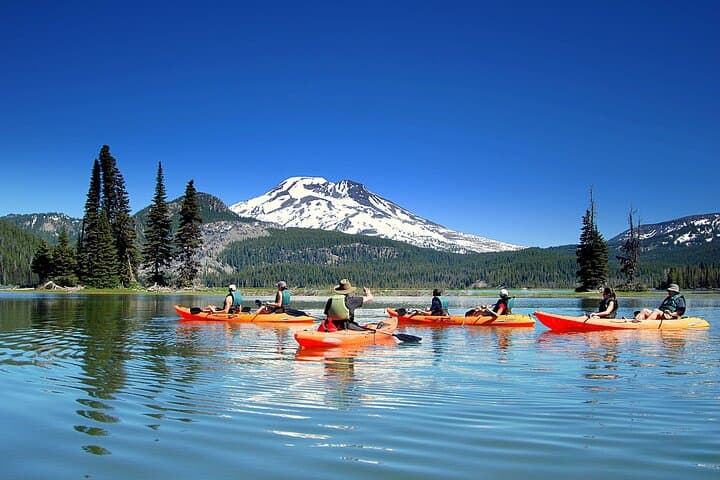
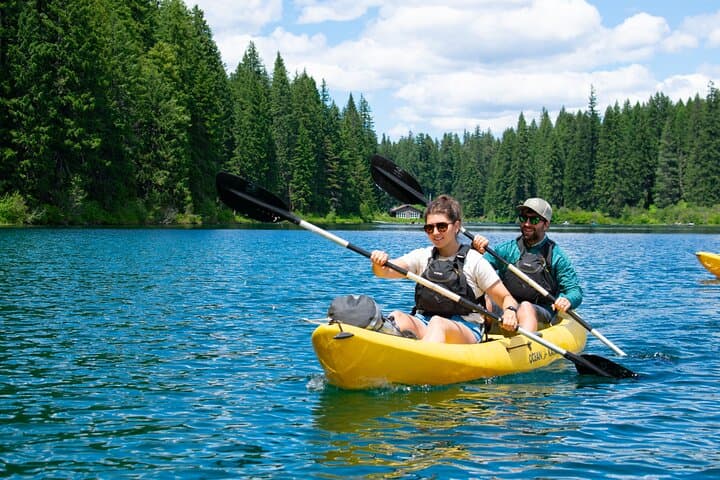
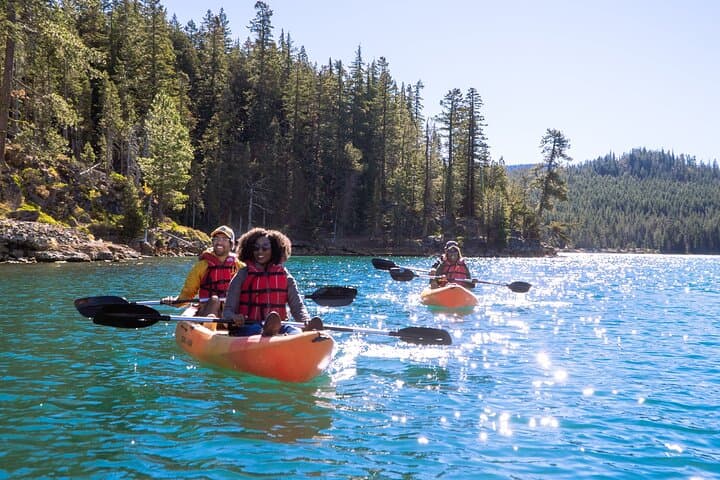
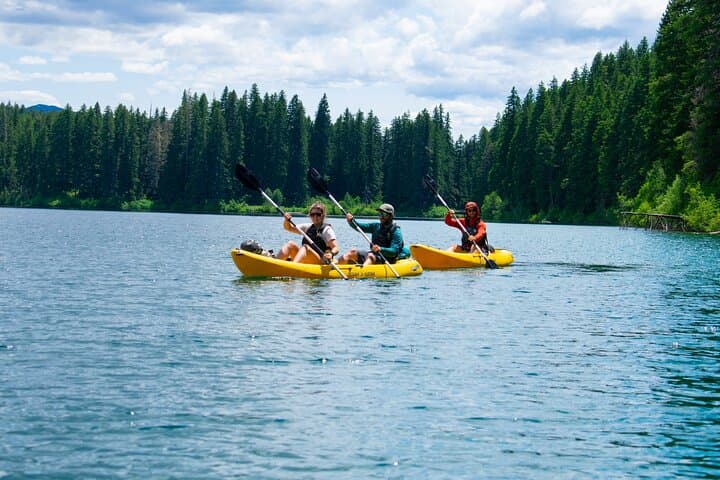
The morning opens cold and bright; the Cascades stand as a hard, snow-lined horizon while the lakes below reflect a sky that seems almost too blue. You push a tandem kayak off a pebbled shore and the water takes you, cool and deliberate, into narrow coves carved by lava flows and glacial retreat. Guides from Bend — part naturalist, part storyteller — steer the group into quiet fingers of water where osprey wheel overhead and river otters slip like shadows between submerged logs.
The morning opens cold and bright; the Cascades stand as a hard, snow-lined horizon while the lakes below reflect a sky that seems almost too blue. You push a tandem kayak off a pebbled shore and the water takes you, cool and deliberate, into narrow coves carved by lava flows and glacial retreat. Guides from Bend — part naturalist, part storyteller — steer the group into quiet fingers of water where osprey wheel overhead and river otters slip like shadows between submerged logs.
This is high-country paddling in the Deschutes National Forest. The Cascade Lakes formed as volcanic eruptions and ice age glaciers worked together: lava sealed valleys, then glaciers gouged and reshaped basins that now hold glassy lakes at roughly 4,000–5,000 feet elevation. The geology is visible at arm’s reach — pillow lavas, pumice shores and basalt cliffs — and guides talk through how fire and ice built what you’re traveling across. Indigenous tribes, including the Confederated Tribes of Warm Springs, have long histories in these ranges, hunting, fishing and trading along the waterways that now attract hikers, anglers and paddlers.
What makes a guided tour here different is access. Many of the best bays and coves are only reachable by water; the kayaks thread into narrow inlets where trout rise and late-summer wildflowers hem the shoreline. The tour is family-friendly and deliberately low-impact: guides brief groups on paddling technique, wildlife etiquette and Leave No Trace practices before launch.
Practicalities matter. Tours depart from a Bend meeting point; expect a roughly 45-minute scenic drive into the Cascade Lakes area, followed by about two hours on the water and a total tour window near four hours. Tandem kayaks, paddles and PFDs are supplied. You will likely get splashed — bring a swimsuit, quick-dry layers and a change of dry clothes. Sun at high elevation is deceptively strong; sunscreen, a wide-brimmed hat and sunglasses are non-negotiable. Footwear should be secure and quick-drying; waterproof phone cases and small dry bags protect electronics.
Timing shifts the experience. Early mornings give glassy calm and sharp light on ridgelines; late afternoons bring warmer air, more active wildlife and softer color across pumice flats. Guides can slow the pace to match families, photographers or anyone wanting a dip.
If you go, come ready to listen: to the guide’s geology primer, the rhythmic splash of a two-person stroke, and to the water as it nudges you into hidden corners of the high desert’s aquatic world. It’s a short trip, but one that rewrites what you expect of Oregon — not just pine and lava, but a network of small, bright lakes daring you to explore them by paddle.