THE ADVENTURE COLLECTIVE® · Independent discovery and booking for outdoor travel

A dramatic full-day escape from Marrakech, the Ouzoud Waterfalls tour combines a scenic 2.5–3 hour drive, olive-grove walks, optional boat rides and close encounters with Barbary macaques. Arrive early to beat the crowds and make the most of the tiered cascades and hilltop viewpoints.
A dramatic full-day escape from Marrakech, the Ouzoud Waterfalls tour combines a scenic 2.5–3 hour drive, olive-grove walks, optional boat rides and close encounters with Barbary macaques. Arrive early to beat the crowds and make the most of the tiered cascades and hilltop viewpoints.
The van eases out of Marrakech before dawn and the High Atlas loosens its silhouette into an invitation. By mid-morning the road narrows, terraces of olive trees slip past the window, and a thin spray begins to haze the valley: the Ouzoud Waterfalls announcing themselves long before the trail does.
Verified experiences and guided adventures in the surrounding area.
Operated by Beautiful road in morocco · Ouzoud, Beni Mellal-Khénifra
The van eases out of Marrakech before dawn and the High Atlas loosens its silhouette into an invitation. By mid-morning the road narrows, terraces of olive trees slip past the window, and a thin spray begins to haze the valley: the Ouzoud Waterfalls announcing themselves long before the trail does.
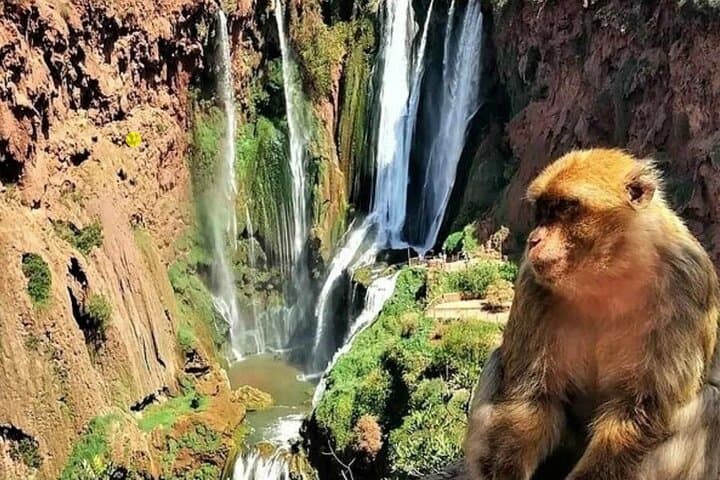
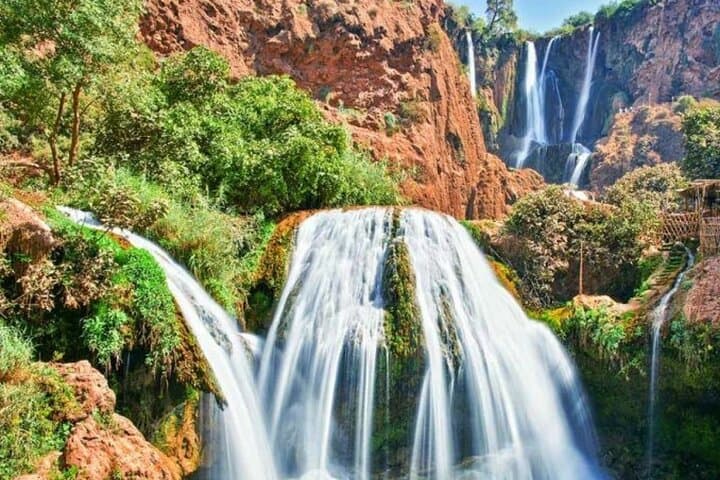
At the main overlook the falls unfold in tiers—sheets of water dropping 100+ metres over red rock and stepped ledges—while a river that has carved its path through millennia dares you to follow. Trails wind down through ancient olive groves and along stone steps; the air smells faintly of wet earth and wood smoke from nearby Berber villages. Barbary macaques appear on the cliffs and in the trees, curious, unhurried and as much a part of the scene as the falls themselves.
Geologically, Ouzoud sits where soft sedimentary layers meet harder basalt outcrops, producing the stair-step cascades that give the site its character. Culturally the valley is shaped by small Amazigh (Berber) farming communities whose terraced groves have sustained local life for generations; many of the small cafés and viewpoints are family-run and offer a direct line to regional food and hospitality.
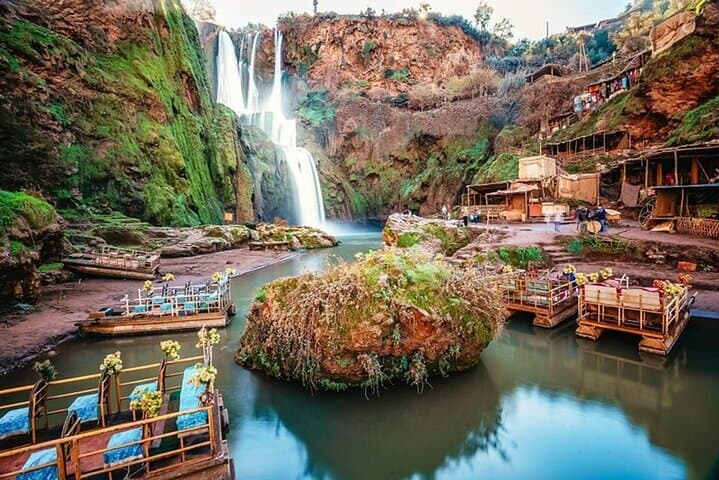
The day's arc is practical and straightforward: a 2.5–3 hour drive from Marrakech, roughly 10 hours door-to-door, and about 1–3 km of walking on site with intermittent elevation change—expect stone steps and dirt tracks with some steep sections and loose footing. Options include a short boat ride at the river base and guided local walks if you choose them. Timing matters: arrive before noon to enjoy clearer views and quieter paths; afternoons draw the largest day-trip crowds.
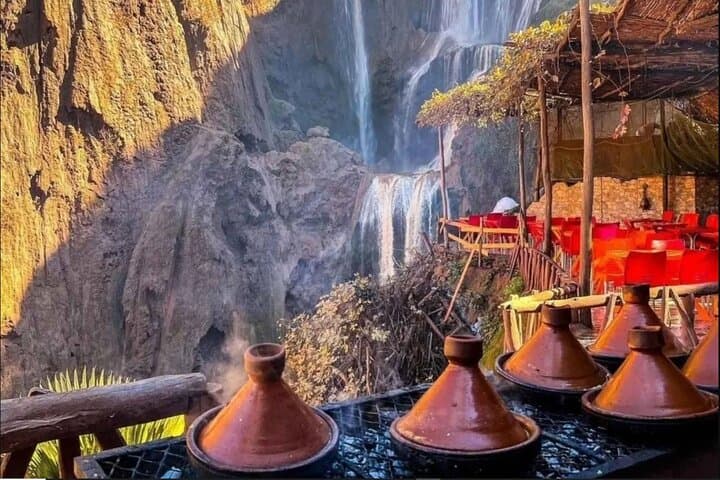
For planning, bring sturdy footwear and a refillable water bottle; the descent to lower viewpoints feels easier than the climb back up, and the river's current makes the boat option refreshing but brisk. A lightweight rain jacket handles spray from the falls and sudden mountain weather. Budget time for a relaxed lunch at a terrace café—menu highlights often include tagine and fresh orange juice—and for a slow return to Marrakech as light softens the Atlas ridges.
Sustainability note: stick to marked trails, avoid feeding wildlife, and support local vendors who practice low-impact tourism. The falls reward patience: wait for a lull in the viewing platforms and you’ll have the mist, the olive canopy and the sound of water to yourself—an elemental, manageable day trip from Marrakech that blends landscape, culture and small-scale adventure.
moderate.
10 hours.
Moderate fitness: able to handle several short steep sections, stairs and up to a few kilometers of walking.
Expect about 2.5–3 hours each way depending on traffic and road conditions.
A boat ride is offered as an option; it may be included depending on your booking choice—confirm at reservation.
Trails are family-friendly but include steep steps and loose sections; those with mobility issues should use the upper viewpoints and avoid steep descents.
Yes—macaques frequent the cliffs and trees around the falls, but don’t feed or approach them for safety and conservation reasons.
Lunch is typically at a local café with scenic views; check your booking for included meals and dietary options.
Spring and fall offer mild temperatures and fuller water flow; summer is hotter but still popular for swimming at lower pools.
The falls sit in a valley long cultivated by Amazigh communities; olive terraces and small villages reflect traditional mountain agriculture and hospitality.
Tour operators encourage staying on marked paths and supporting local businesses; avoid feeding wildlife and carry out any trash to reduce impact.
Beautiful road in morocco operates guided outdoor trips and adventures with an emphasis on safety, stewardship, and memorable experiences.
The van eases out of Marrakech before dawn and the High Atlas loosens its silhouette into an invitation. By mid-morning the road narrows, terraces of olive trees slip past the window, and a thin spray begins to haze the valley: the Ouzoud Waterfalls announcing themselves long before the trail does.
The van eases out of Marrakech before dawn and the High Atlas loosens its silhouette into an invitation. By mid-morning the road narrows, terraces of olive trees slip past the window, and a thin spray begins to haze the valley: the Ouzoud Waterfalls announcing themselves long before the trail does.
At the main overlook the falls unfold in tiers—sheets of water dropping 100+ metres over red rock and stepped ledges—while a river that has carved its path through millennia dares you to follow. Trails wind down through ancient olive groves and along stone steps; the air smells faintly of wet earth and wood smoke from nearby Berber villages. Barbary macaques appear on the cliffs and in the trees, curious, unhurried and as much a part of the scene as the falls themselves.
Geologically, Ouzoud sits where soft sedimentary layers meet harder basalt outcrops, producing the stair-step cascades that give the site its character. Culturally the valley is shaped by small Amazigh (Berber) farming communities whose terraced groves have sustained local life for generations; many of the small cafés and viewpoints are family-run and offer a direct line to regional food and hospitality.
The day's arc is practical and straightforward: a 2.5–3 hour drive from Marrakech, roughly 10 hours door-to-door, and about 1–3 km of walking on site with intermittent elevation change—expect stone steps and dirt tracks with some steep sections and loose footing. Options include a short boat ride at the river base and guided local walks if you choose them. Timing matters: arrive before noon to enjoy clearer views and quieter paths; afternoons draw the largest day-trip crowds.
For planning, bring sturdy footwear and a refillable water bottle; the descent to lower viewpoints feels easier than the climb back up, and the river's current makes the boat option refreshing but brisk. A lightweight rain jacket handles spray from the falls and sudden mountain weather. Budget time for a relaxed lunch at a terrace café—menu highlights often include tagine and fresh orange juice—and for a slow return to Marrakech as light softens the Atlas ridges.
Sustainability note: stick to marked trails, avoid feeding wildlife, and support local vendors who practice low-impact tourism. The falls reward patience: wait for a lull in the viewing platforms and you’ll have the mist, the olive canopy and the sound of water to yourself—an elemental, manageable day trip from Marrakech that blends landscape, culture and small-scale adventure.