THE ADVENTURE COLLECTIVE® · Independent discovery and booking for outdoor travel

A full-day escape from Marrakech to Morocco’s Ouzoud Waterfalls — a 110‑meter drop framed by olive terraces, Berber villages, and guided walks. Read on for what to expect on the hike, when to shoot photos, and how to prepare.
A full-day escape from Marrakech to Morocco’s Ouzoud Waterfalls — a 110‑meter drop framed by olive terraces, Berber villages, and guided walks. Read on for what to expect on the hike, when to shoot photos, and how to prepare.
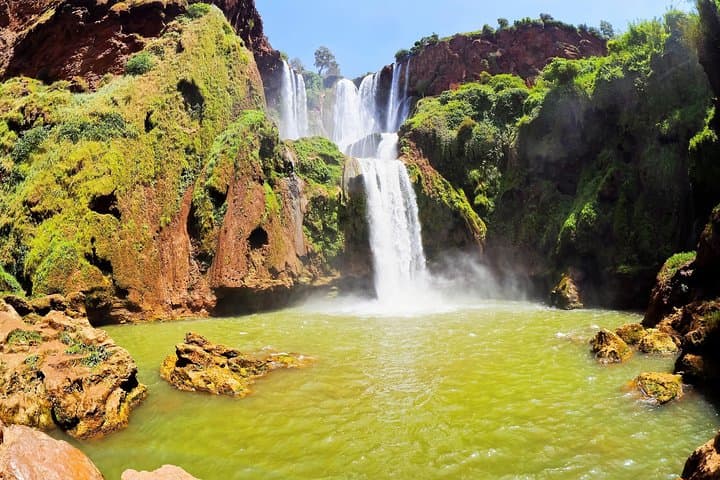
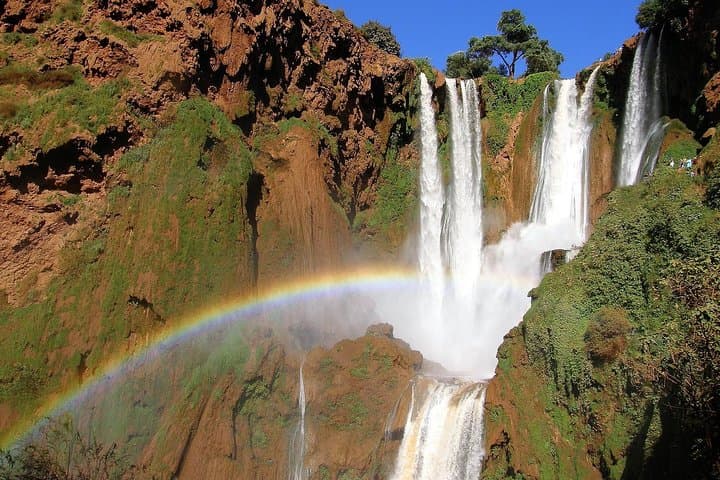
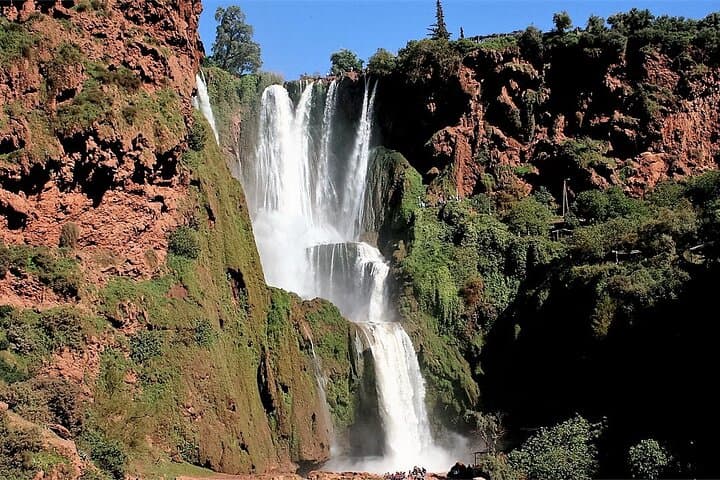
You step off the air-conditioned van onto a stone path that smells faintly of wet olive and mint; the falls announce themselves before you see them — the river’s voice rising and the air cooling as water hurls over cliff and rock. For a full day from Marrakech, the Ouzoud Waterfalls deliver a direct contrast to the ochre city: a rugged cleft in the Atlas foothills where a 110‑meter cascade pushes through terraces of olive trees, the spray catching light into quicksilver ribbons.
Verified experiences and guided adventures in the surrounding area.
Operated by Morocco Inspiring Tours · Ouzoud, Béni Mellal-Khénifra
You step off the air-conditioned van onto a stone path that smells faintly of wet olive and mint; the falls announce themselves before you see them — the river’s voice rising and the air cooling as water hurls over cliff and rock. For a full day from Marrakech, the Ouzoud Waterfalls deliver a direct contrast to the ochre city: a rugged cleft in the Atlas foothills where a 110‑meter cascade pushes through terraces of olive trees, the spray catching light into quicksilver ribbons.
Geology here is plain and useful: the falls drop through folded sedimentary rock — soft limestones and conglomerates carved by the El Abid stream over millennia — producing step-like ledges that pool and rush in sequence. Human history is braided into that geology: local Berber communities used the river for olive presses and small mills; narrow paths worn into the rock lead past old stoneworks and into vantage points that were practical, not picturesque. The village economy now mixes traditional agriculture with guiding, small cafés, and terraces that sell tajine and mint tea to travelers.
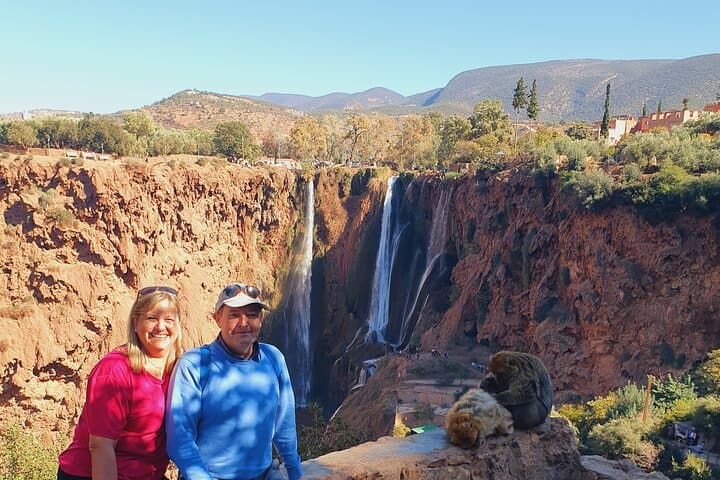
On the guided hike — typically 60–90 minutes on site — the route is a compact loop of roughly 2–3 km with about 120–160 m of ascent and descent between the rim and base viewpoints. Expect packed-earth trails and stone steps, some slick near the water. Guides point out local plants, explain milling history, and route you to quieter ledges where macaques and kingfishers frequent the trees.
Practical information cuts the romance down to useful fact: the full excursion from Marrakech is an eight‑hour outing with hotel pickup and drop-off, a small-group cap (often eight), transport in air‑conditioned vehicles, and lunch included — a fresh salad, Berber tajine, and fruit. Wear sturdy shoes with grip, bring a refillable water bottle (bottled water included on the tour), and a lightweight layer against spray and morning chill. If you plan to swim in shaded pools, check with your guide — currents and water quality can vary after rain.
Photography rewards planning: sunrise and late afternoon soften the cliff faces and reduce crowds; midday favors vibrant greens in the pools. Respect local life: tipping guides and purchasing food or handicrafts helps keep income in village hands while minimizing impact.
For travelers seeking an accessible slice of Atlas country without the commitment of multi-day trekking, Ouzoud is a compact, sensory day that pairs geological drama with human-scale culture — a place where water keeps moving, and the landscape keeps asking you to follow it downhill, then climb back up again.
easy.
8 hours.
Moderate—suitable for most visitors who can handle 1–2 hours of walking on uneven terrain with short steep sections
The on-site guided hike is typically 60–90 minutes, covering a 2–3 km loop with roughly 120–160 m of elevation change between rim and base.
Some shaded pools are accessible for swims, but conditions depend on recent weather and water flow; always check with your guide before entering the water.
Yes — pickups are arranged from hotels, riads, and listed Airbnbs in Marrakech; if in the Medina you may be collected at the nearest vehicle-accessible point.
Yes — the tour usually includes a typical lunch (salad, Berber tajine, fruit) and all entrance fees noted in the itinerary.
Yes — the tour is family-friendly; the operator notes it is suitable for all fitness levels, though parents should monitor children near cliffs and water.
Pay in Moroccan dirham locally; tipping guides and drivers is customary — small cash tips at the end of the day are appreciated.
Local Berber communities have used this stream for centuries for milling olives and growing terraced crops; small stone mills remain around the gorge.
Stay on marked trails and avoid single-use plastics; using local guides and restaurants supports community-based conservation and reduces visitor impact.
Morocco Inspiring Tours operates guided outdoor trips and adventures with an emphasis on safety, stewardship, and memorable experiences.
You step off the air-conditioned van onto a stone path that smells faintly of wet olive and mint; the falls announce themselves before you see them — the river’s voice rising and the air cooling as water hurls over cliff and rock. For a full day from Marrakech, the Ouzoud Waterfalls deliver a direct contrast to the ochre city: a rugged cleft in the Atlas foothills where a 110‑meter cascade pushes through terraces of olive trees, the spray catching light into quicksilver ribbons.
You step off the air-conditioned van onto a stone path that smells faintly of wet olive and mint; the falls announce themselves before you see them — the river’s voice rising and the air cooling as water hurls over cliff and rock. For a full day from Marrakech, the Ouzoud Waterfalls deliver a direct contrast to the ochre city: a rugged cleft in the Atlas foothills where a 110‑meter cascade pushes through terraces of olive trees, the spray catching light into quicksilver ribbons.
Geology here is plain and useful: the falls drop through folded sedimentary rock — soft limestones and conglomerates carved by the El Abid stream over millennia — producing step-like ledges that pool and rush in sequence. Human history is braided into that geology: local Berber communities used the river for olive presses and small mills; narrow paths worn into the rock lead past old stoneworks and into vantage points that were practical, not picturesque. The village economy now mixes traditional agriculture with guiding, small cafés, and terraces that sell tajine and mint tea to travelers.
On the guided hike — typically 60–90 minutes on site — the route is a compact loop of roughly 2–3 km with about 120–160 m of ascent and descent between the rim and base viewpoints. Expect packed-earth trails and stone steps, some slick near the water. Guides point out local plants, explain milling history, and route you to quieter ledges where macaques and kingfishers frequent the trees.
Practical information cuts the romance down to useful fact: the full excursion from Marrakech is an eight‑hour outing with hotel pickup and drop-off, a small-group cap (often eight), transport in air‑conditioned vehicles, and lunch included — a fresh salad, Berber tajine, and fruit. Wear sturdy shoes with grip, bring a refillable water bottle (bottled water included on the tour), and a lightweight layer against spray and morning chill. If you plan to swim in shaded pools, check with your guide — currents and water quality can vary after rain.
Photography rewards planning: sunrise and late afternoon soften the cliff faces and reduce crowds; midday favors vibrant greens in the pools. Respect local life: tipping guides and purchasing food or handicrafts helps keep income in village hands while minimizing impact.
For travelers seeking an accessible slice of Atlas country without the commitment of multi-day trekking, Ouzoud is a compact, sensory day that pairs geological drama with human-scale culture — a place where water keeps moving, and the landscape keeps asking you to follow it downhill, then climb back up again.