THE ADVENTURE COLLECTIVE® · Independent discovery and booking for outdoor travel

A day trip from Marrakech to Ouzoud Falls combines short hikes, a misty boat ride beneath the cascade, and close-up encounters with Barbary macaques. This guided trip balances easy access with authentic village culture and dramatic river scenery.
A day trip from Marrakech to Ouzoud Falls combines short hikes, a misty boat ride beneath the cascade, and close-up encounters with Barbary macaques. This guided trip balances easy access with authentic village culture and dramatic river scenery.
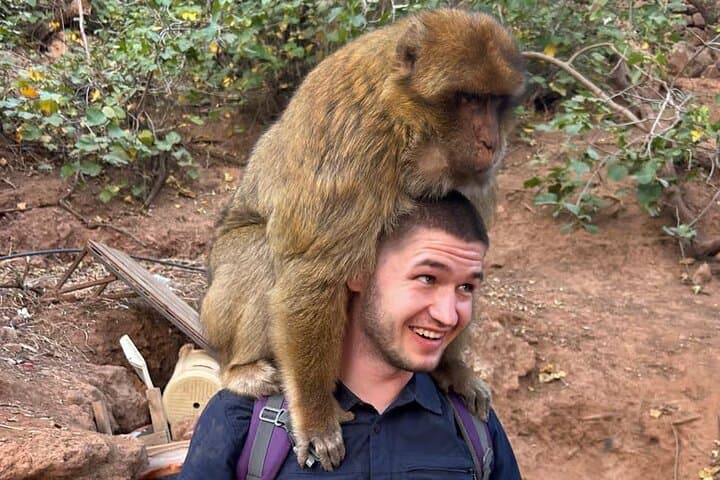
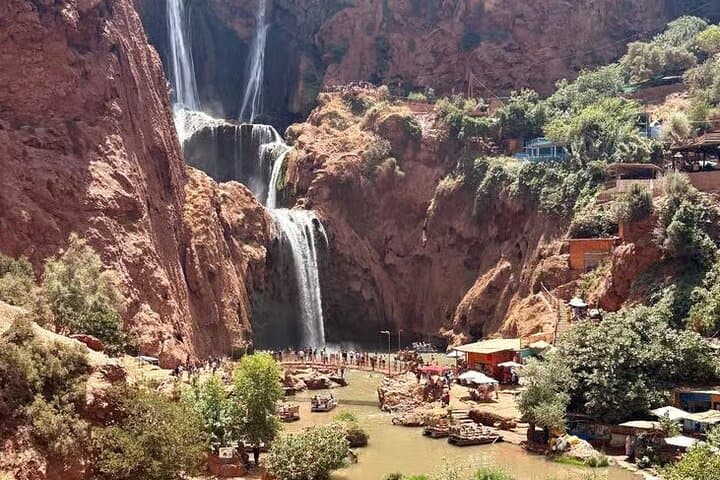
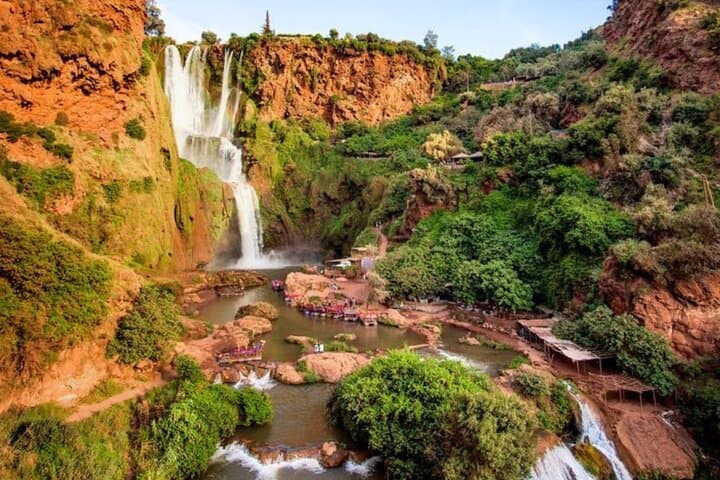
You arrive to the low, steady roar before you see the falls — a long exhale of water and spray that cuts through olive terraces and the chatter of a village market. The path down to Ouzoud threads between stone houses and terraced groves; the air is cool with mist and the scent of damp earth. From the main lookout the cascade reads in layers: bright white water, dark basalt lip, green pockets of fig and olive clinging to cliffs. Monkeys move like punctuation across branches, testing the air and the patience of onlookers.
Verified experiences and guided adventures in the surrounding area.
Operated by Morocco Mosaic Tours · Ouzoud, Marrakesh-Safi
You arrive to the low, steady roar before you see the falls — a long exhale of water and spray that cuts through olive terraces and the chatter of a village market. The path down to Ouzoud threads between stone houses and terraced groves; the air is cool with mist and the scent of damp earth. From the main lookout the cascade reads in layers: bright white water, dark basalt lip, green pockets of fig and olive clinging to cliffs. Monkeys move like punctuation across branches, testing the air and the patience of onlookers.
The Ouzoud area sits on the southern edge of the Middle Atlas foothills where rivers have sliced red-brown rock into steps over millennia. The falls themselves drop roughly 110–120 meters in cascades and plunge into a palm-lined canyon that local Berber communities have farmed for generations. Historically these waterfalls were the lifeblood of nearby villages — the mills along the river powered olive presses and sustained small hamlets that still retain many traditional crafts and cuisines.
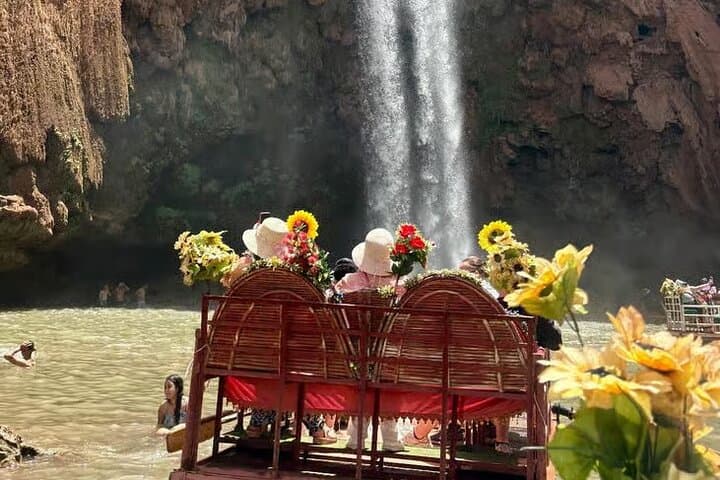
On this guided day trip from Marrakech, the emphasis is practical: a guided descent to several viewpoints, a short riverside hike through olive groves, and a boat ride that threads beneath the lower curtain of water. Geologically, the falls expose layers of volcanic and sedimentary rock; biologically, the spray zone hosts a pocket of riparian vegetation unusually lush for the region. Culturally, the route passes family-run cafés where you’ll find fresh mint tea and bread baked in village ovens.
Expect about 10 hours door-to-door from Marrakech, with roughly 2–4 km of walking on uneven stone steps and dirt trails and an estimated 200–300 meters of elevation change on the main loop. The boat ride is brief — typically 10–15 minutes — but gets you under the mist where rainbows form in midday sun.
Practical tips: wear sturdy, grippy shoes for steep, often slippery steps; carry at least 1.5 liters of water and a lightweight rain shell for spray; bring small bills for tea, tips, and the occasional local snack. Don’t feed the Barbary macaques; it alters their behavior and increases conflict with people. Go early to avoid crowds and to catch better light for photos — late afternoon softens the canyon and cools the route.
For photographers, the best shots come from the upper platforms at sunrise or late afternoon, and from the riverside during midday when sunlight creates a crisp rainbow through the spray. Respect local customs — dress modestly when passing through villages — and pack out what you bring in. Ouzoud hits a sweet point between easy access and raw natural force: it asks little of the traveler and gives much in return.
moderate.
10 hours (including travel).
Moderate fitness for uphill/downhill walking on uneven steps and dirt trails
The roundtrip is about 2–2.5 hours each way depending on traffic; the full excursion typically runs around 10 hours including stops.
Barbary macaques are wild and can be bold; they can bite if provoked or fed—keep distance and do not offer food.
Yes, operators provide short, supervised rides under the falls, but bring a life jacket for young children and secure valuables from spray.
Basic snacks and bottled water are useful; there are village cafés and small restaurants near the falls for lunch.
Access to main viewpoints is uneven with many steps; travelers with limited mobility may find parts inaccessible—check with the operator beforehand.
Swimming is not generally recommended due to strong currents and rocks; wading near the riverbanks is possible in shallow areas but exercise caution.
Local Berber communities have farmed the canyon for centuries; old olive presses and stone mills dot the river, reflecting traditional agrarian life.
Increased visitation pressures trails and wildlife; avoid feeding animals, stay on designated paths, and support local guides to ensure sustainable benefits.
Morocco Mosaic Tours operates guided outdoor trips and adventures with an emphasis on safety, stewardship, and memorable experiences.
You arrive to the low, steady roar before you see the falls — a long exhale of water and spray that cuts through olive terraces and the chatter of a village market. The path down to Ouzoud threads between stone houses and terraced groves; the air is cool with mist and the scent of damp earth. From the main lookout the cascade reads in layers: bright white water, dark basalt lip, green pockets of fig and olive clinging to cliffs. Monkeys move like punctuation across branches, testing the air and the patience of onlookers.
You arrive to the low, steady roar before you see the falls — a long exhale of water and spray that cuts through olive terraces and the chatter of a village market. The path down to Ouzoud threads between stone houses and terraced groves; the air is cool with mist and the scent of damp earth. From the main lookout the cascade reads in layers: bright white water, dark basalt lip, green pockets of fig and olive clinging to cliffs. Monkeys move like punctuation across branches, testing the air and the patience of onlookers.
The Ouzoud area sits on the southern edge of the Middle Atlas foothills where rivers have sliced red-brown rock into steps over millennia. The falls themselves drop roughly 110–120 meters in cascades and plunge into a palm-lined canyon that local Berber communities have farmed for generations. Historically these waterfalls were the lifeblood of nearby villages — the mills along the river powered olive presses and sustained small hamlets that still retain many traditional crafts and cuisines.
On this guided day trip from Marrakech, the emphasis is practical: a guided descent to several viewpoints, a short riverside hike through olive groves, and a boat ride that threads beneath the lower curtain of water. Geologically, the falls expose layers of volcanic and sedimentary rock; biologically, the spray zone hosts a pocket of riparian vegetation unusually lush for the region. Culturally, the route passes family-run cafés where you’ll find fresh mint tea and bread baked in village ovens.
Expect about 10 hours door-to-door from Marrakech, with roughly 2–4 km of walking on uneven stone steps and dirt trails and an estimated 200–300 meters of elevation change on the main loop. The boat ride is brief — typically 10–15 minutes — but gets you under the mist where rainbows form in midday sun.
Practical tips: wear sturdy, grippy shoes for steep, often slippery steps; carry at least 1.5 liters of water and a lightweight rain shell for spray; bring small bills for tea, tips, and the occasional local snack. Don’t feed the Barbary macaques; it alters their behavior and increases conflict with people. Go early to avoid crowds and to catch better light for photos — late afternoon softens the canyon and cools the route.
For photographers, the best shots come from the upper platforms at sunrise or late afternoon, and from the riverside during midday when sunlight creates a crisp rainbow through the spray. Respect local customs — dress modestly when passing through villages — and pack out what you bring in. Ouzoud hits a sweet point between easy access and raw natural force: it asks little of the traveler and gives much in return.