THE ADVENTURE COLLECTIVE® · Independent discovery and booking for outdoor travel

See Cappadocia’s must-visit sites in a single day: Uçhisar’s castle, Devrent’s animal rocks, Özkonak’s underground passages and Avanos’ ceramics. This guided Red Tour pairs geology and living craft with practical logistics and photography-friendly stops.
See Cappadocia’s must-visit sites in a single day: Uçhisar’s castle, Devrent’s animal rocks, Özkonak’s underground passages and Avanos’ ceramics. This guided Red Tour pairs geology and living craft with practical logistics and photography-friendly stops.
Morning light slices through a sky that seems to have been carved rather than stretched—the fairy chimneys of Cappadocia stand like weathered columns, each one daring you to invent a story. On the Red Tour, a single day becomes an economy of place: Uçhisar’s high rock keeps watch, Devrent teases with animal silhouettes, the underground city of Özkonak reveals the pragmatic genius of past residents, and Avanos offers clay and craft as a tactile endnote. The guide’s voice moves between geology, history and local anecdotes, turning the day’s rhythm into something that feels both curated and immediate.
Verified experiences and guided adventures in the surrounding area.
Operated by Old town travel · Göreme, Nevşehir
Morning light slices through a sky that seems to have been carved rather than stretched—the fairy chimneys of Cappadocia stand like weathered columns, each one daring you to invent a story. On the Red Tour, a single day becomes an economy of place: Uçhisar’s high rock keeps watch, Devrent teases with animal silhouettes, the underground city of Özkonak reveals the pragmatic genius of past residents, and Avanos offers clay and craft as a tactile endnote. The guide’s voice moves between geology, history and local anecdotes, turning the day’s rhythm into something that feels both curated and immediate.
Cappadocia’s landscape is a product of explosive volcanism and slow erosion. Soft tuff deposited millions of years ago was carved by wind and water into pinnacles, cones and hollowed dwellings. Byzantine settlers chiselled churches and frescoes into those soft walls; later, communities tunneled downward to escape invaders. The region’s pottery tradition in Avanos traces to the Kızılırmak (Red River), whose clay has been shaped into bowls and bowls of stories for millennia.
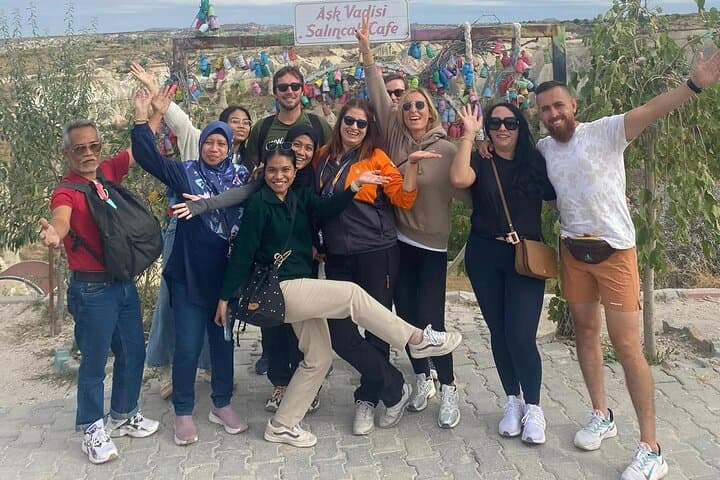
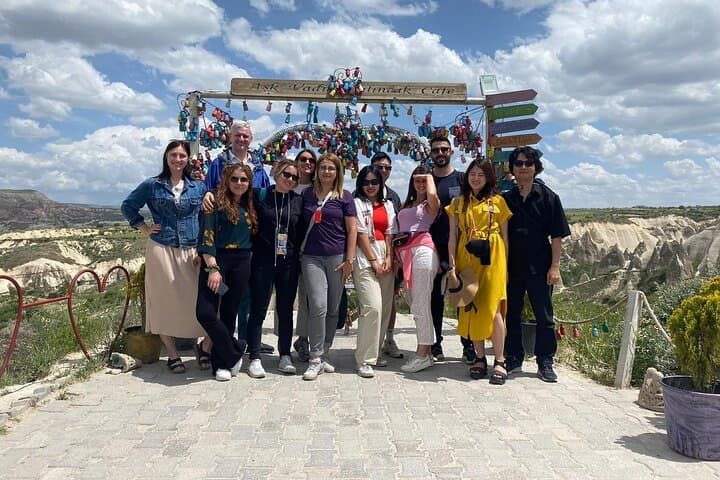
Cultural notes arrive as the tour moves: dovecotes clipped into cliffs where pigeons carried names between lovers; wishing trees threaded with blue nazar beads; and carpet weavers whose patterns map family histories. Özkonak’s underground alleys reveal the practical side of survival—ventilation shafts, rolling stone doors and communal stables—while Devrent invites you to slow down and see animals in stone: a camel, a seal, a dragon, depending on your patience and imagination.
Practical guidance: the Red Tour runs 4–6 hours, with multiple short walks—expect uneven paths and stairs at viewpoints and archaeological sites. Wear sturdy shoes and bring sun protection; Cappadocia’s elevation (around 1,200 m) amplifies sun and wind. Lunch is included in most departures; ask about vegetarian options when booking. Photography opportunities peak at sunrise and late afternoon, but the midday light still renders dramatic textures in the soft rock.
Timing and logistics matter. Many opt for this tour on their first morning to orient themselves to the region—drivers usually offer hotel pickup about 30 minutes before departures. If you plan a hot-air balloon flight, schedule it for sunrise and take the Red Tour afterward; both fit into most two-day itineraries but cram a lot into short legs. Respect fragile sites: stay on marked trails, avoid touching frescoes, and buy local ceramics or rugs directly from artisans to support living traditions.
By day’s end you’ll have walked across eras—prehistoric ash, Byzantine prayer, Ottoman craft—each stop underscoring how people adapted to living with the land rather than against it. The Red Tour is compact, deliberate and practical: a primer on Cappadocia that leaves room for the longer curiosities you’ll want to pursue next.
easy.
4–6 hours.
Suitable for most travelers with light walking ability; must manage short uneven trails and stairs.
The Red Tour runs about 4–6 hours; exact pickup times vary by operator but are typically early morning—plan to be ready 30 minutes before departure.
Yes, most operators include a buffet or set lunch; notify at booking if you need vegetarian or allergy accommodations.
Ticket policies vary—some operators include certain entry fees, but confirm with the provider at booking to avoid surprises.
The tour notes stroller accessibility for infants in prams, but expect steps and uneven terrain—parents should be prepared to carry small children at some sites.
You can visit independently, but the licensed local guide adds geological, historical and cultural context that deepens the experience and streamlines logistics.
Balloon flights are at sunrise; schedule the Red Tour for later in the morning—many travelers do both by planning a relaxed midday start on the tour day.
Cappadocia’s cave churches and underground cities date to Byzantine and earlier periods when communities carved rock to live, worship and hide from invaders.
Erosion and visitor pressure threaten soft tuff formations—stick to marked paths, avoid touching frescoes, and support local artisans to keep cultural practices viable.
Old town travel operates guided outdoor trips and adventures with an emphasis on safety, stewardship, and memorable experiences.
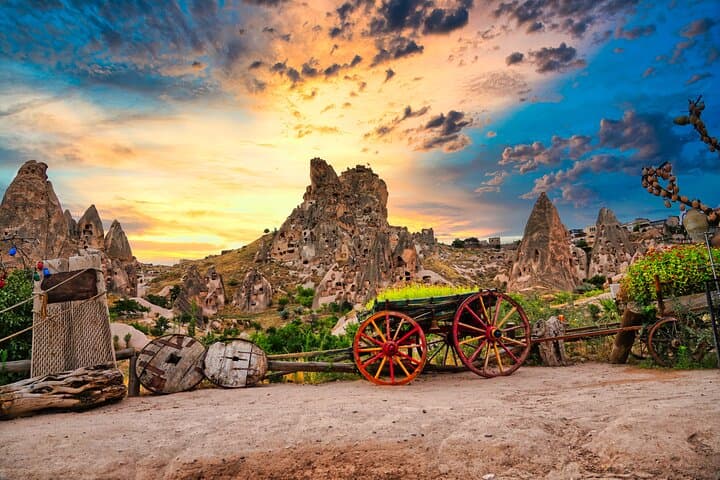
Morning light slices through a sky that seems to have been carved rather than stretched—the fairy chimneys of Cappadocia stand like weathered columns, each one daring you to invent a story. On the Red Tour, a single day becomes an economy of place: Uçhisar’s high rock keeps watch, Devrent teases with animal silhouettes, the underground city of Özkonak reveals the pragmatic genius of past residents, and Avanos offers clay and craft as a tactile endnote. The guide’s voice moves between geology, history and local anecdotes, turning the day’s rhythm into something that feels both curated and immediate.
Morning light slices through a sky that seems to have been carved rather than stretched—the fairy chimneys of Cappadocia stand like weathered columns, each one daring you to invent a story. On the Red Tour, a single day becomes an economy of place: Uçhisar’s high rock keeps watch, Devrent teases with animal silhouettes, the underground city of Özkonak reveals the pragmatic genius of past residents, and Avanos offers clay and craft as a tactile endnote. The guide’s voice moves between geology, history and local anecdotes, turning the day’s rhythm into something that feels both curated and immediate.
Cappadocia’s landscape is a product of explosive volcanism and slow erosion. Soft tuff deposited millions of years ago was carved by wind and water into pinnacles, cones and hollowed dwellings. Byzantine settlers chiselled churches and frescoes into those soft walls; later, communities tunneled downward to escape invaders. The region’s pottery tradition in Avanos traces to the Kızılırmak (Red River), whose clay has been shaped into bowls and bowls of stories for millennia.
Cultural notes arrive as the tour moves: dovecotes clipped into cliffs where pigeons carried names between lovers; wishing trees threaded with blue nazar beads; and carpet weavers whose patterns map family histories. Özkonak’s underground alleys reveal the practical side of survival—ventilation shafts, rolling stone doors and communal stables—while Devrent invites you to slow down and see animals in stone: a camel, a seal, a dragon, depending on your patience and imagination.
Practical guidance: the Red Tour runs 4–6 hours, with multiple short walks—expect uneven paths and stairs at viewpoints and archaeological sites. Wear sturdy shoes and bring sun protection; Cappadocia’s elevation (around 1,200 m) amplifies sun and wind. Lunch is included in most departures; ask about vegetarian options when booking. Photography opportunities peak at sunrise and late afternoon, but the midday light still renders dramatic textures in the soft rock.
Timing and logistics matter. Many opt for this tour on their first morning to orient themselves to the region—drivers usually offer hotel pickup about 30 minutes before departures. If you plan a hot-air balloon flight, schedule it for sunrise and take the Red Tour afterward; both fit into most two-day itineraries but cram a lot into short legs. Respect fragile sites: stay on marked trails, avoid touching frescoes, and buy local ceramics or rugs directly from artisans to support living traditions.
By day’s end you’ll have walked across eras—prehistoric ash, Byzantine prayer, Ottoman craft—each stop underscoring how people adapted to living with the land rather than against it. The Red Tour is compact, deliberate and practical: a primer on Cappadocia that leaves room for the longer curiosities you’ll want to pursue next.