THE ADVENTURE COLLECTIVE® · Independent discovery and booking for outdoor travel

Walk the Siq into Petra at first light, stand before the rose‑colored Treasury, then cross a red desert to watch Wadi Rum turn to gold at sunset. This full‑day route from Amman condenses Nabatean ruins and lunar desert into one epic, manageable day trip.
Walk the Siq into Petra at first light, stand before the rose‑colored Treasury, then cross a red desert to watch Wadi Rum turn to gold at sunset. This full‑day route from Amman condenses Nabatean ruins and lunar desert into one epic, manageable day trip.
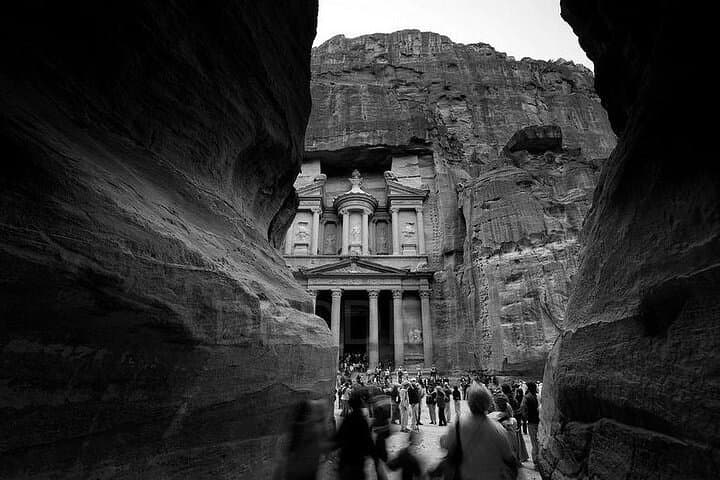
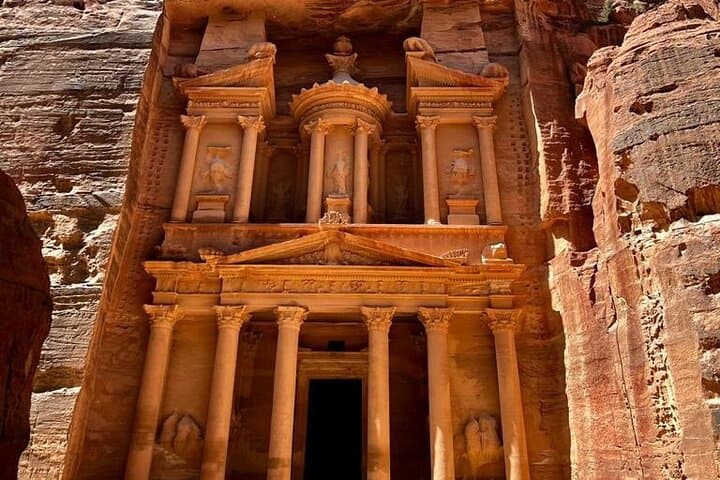
You enter Petra through the Siq as light slices the slot canyon into bands of ochre and shadow. The walk is deliberate — about 1.2 km of narrow stone walls that funnel your pace and attention — and then the Treasury suddenly steps into view: a 42‑meter façade hewn from living rock, its columns and pediments holding centuries of wind and sand. That first view is the moment the day changes from travel to discovery.
Verified experiences and guided adventures in the surrounding area.
Operated by Bridge Travel · Wadi Musa, Ma'an Governorate
You enter Petra through the Siq as light slices the slot canyon into bands of ochre and shadow. The walk is deliberate — about 1.2 km of narrow stone walls that funnel your pace and attention — and then the Treasury suddenly steps into view: a 42‑meter façade hewn from living rock, its columns and pediments holding centuries of wind and sand. That first view is the moment the day changes from travel to discovery.
The tour threads cultural history and desert geology in one long arc. Petra began as a Nabatean trading hub in the first millennium BCE; its facades are both tombs and displays, carved to impress caravans that moved incense, spices and textiles across the Arabian trade routes. The carved streets lead to a Roman theater carved into the mountain side and to royal tombs whose staircases climb into sandstone faces. After lunch, a two‑hour drive takes you deeper south to Wadi Rum, where granite and sandstone domes rise like weathered monuments and wind has sanded the desert into rippled dunes and natural arches.
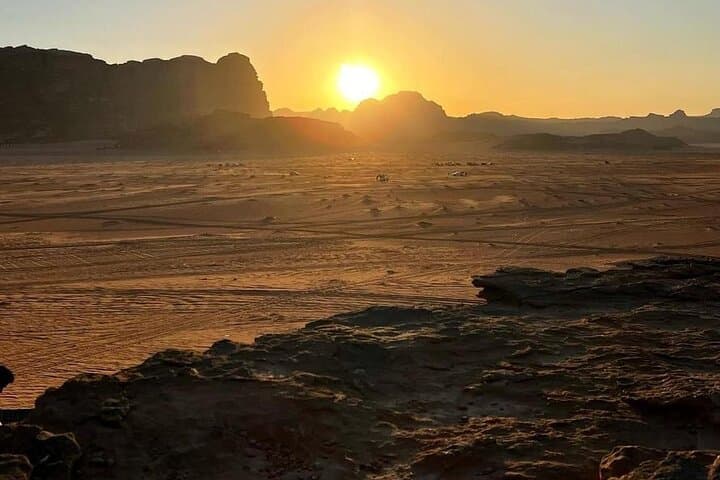
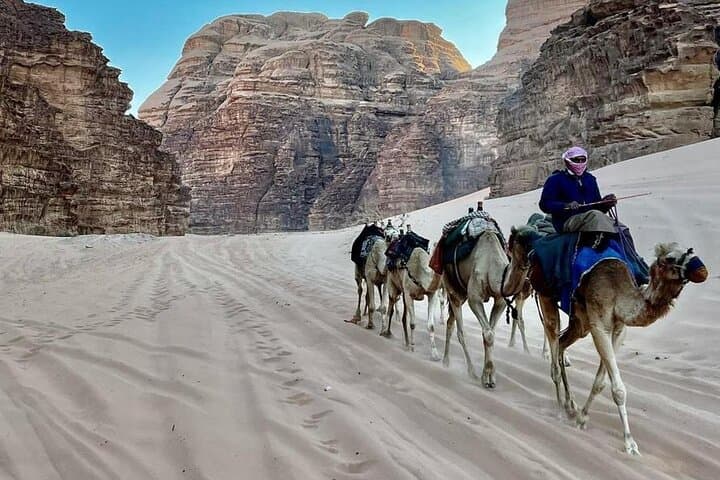
Wadi Rum’s geology reads like a slow-motion sculpture: vertical cliffs, tafoni caves and plateau edges shaped by eons of wind and thermal stress. A two‑hour jeep safari moves across corridors of sand and gravel, pauses at a Bedouin tent for sweet tea, and times its final stop for sunset when the desert pushes back heat and color with dramatic speed.
Practicalities matter on a long day that typically runs 12–14 hours. Expect roughly three hours driving from Amman to Petra (approximately 230 km), then about 1.5–2 hours from Petra to Wadi Rum (roughly 120 km). Terrain in Petra is uneven stone, short stair sections and occasional steep paths if you push to higher viewpoints; total on‑foot distance inside Petra for a thorough visit can be 5–7 km with intermittent elevation gain of 100–300 m depending on detours. Wadi Rum travel is off‑road; expect bumps in a 4x4 and short hikes over sand and small scree.
Comfort and timing make the day enjoyable: start early to beat crowds in the Siq, carry sun protection and 2–3 liters of water, and plan to use the Jordan Pass or carry cash for Petra entry if it’s not included. The tour pairs archaeological spectacle with desert drama — it’s physically moderate and logistically long, but the sequence of rock, light and Bedouin hospitality makes the long hours on the road feel like part of the story rather than interruption.
moderate.
12–14 hours.
Suitable for travelers with moderate fitness who can walk 5–7 km on uneven ground and tolerate long vehicle transfers
Not always—check your booking. Many tours don’t include park fees, so buy the Jordan Pass beforehand if you can.
The Siq is about 1.2 km long and leads directly to the Treasury; it’s a mostly flat walk with occasional narrow sections.
Yes, but consider the long day and vehicle time—children should be comfortable with multiple hours of travel and walking.
Lunch inside Petra is usually included on the itinerary, but confirm with the supplier for any dietary needs.
The ride is off‑road and can be bumpy; it’s not recommended for travelers with spinal injuries.
Local guides enrich the experience and are required for some group sizes per the tour details; for small private groups an English‑speaking guide may be provided at Petra site.
Petra rose as a Nabatean trade capital where sandstone was carved into civic and funerary architecture; later Roman, Byzantine and Ottoman layers added to the site’s complexity.
High visitor numbers stress fragile sandstone surfaces—stay on marked paths, avoid touching carved facades, and support local Bedouin guides to funnel tourism benefits locally.
Bridge Travel operates guided outdoor trips and adventures with an emphasis on safety, stewardship, and memorable experiences.
You enter Petra through the Siq as light slices the slot canyon into bands of ochre and shadow. The walk is deliberate — about 1.2 km of narrow stone walls that funnel your pace and attention — and then the Treasury suddenly steps into view: a 42‑meter façade hewn from living rock, its columns and pediments holding centuries of wind and sand. That first view is the moment the day changes from travel to discovery.
You enter Petra through the Siq as light slices the slot canyon into bands of ochre and shadow. The walk is deliberate — about 1.2 km of narrow stone walls that funnel your pace and attention — and then the Treasury suddenly steps into view: a 42‑meter façade hewn from living rock, its columns and pediments holding centuries of wind and sand. That first view is the moment the day changes from travel to discovery.
The tour threads cultural history and desert geology in one long arc. Petra began as a Nabatean trading hub in the first millennium BCE; its facades are both tombs and displays, carved to impress caravans that moved incense, spices and textiles across the Arabian trade routes. The carved streets lead to a Roman theater carved into the mountain side and to royal tombs whose staircases climb into sandstone faces. After lunch, a two‑hour drive takes you deeper south to Wadi Rum, where granite and sandstone domes rise like weathered monuments and wind has sanded the desert into rippled dunes and natural arches.
Wadi Rum’s geology reads like a slow-motion sculpture: vertical cliffs, tafoni caves and plateau edges shaped by eons of wind and thermal stress. A two‑hour jeep safari moves across corridors of sand and gravel, pauses at a Bedouin tent for sweet tea, and times its final stop for sunset when the desert pushes back heat and color with dramatic speed.
Practicalities matter on a long day that typically runs 12–14 hours. Expect roughly three hours driving from Amman to Petra (approximately 230 km), then about 1.5–2 hours from Petra to Wadi Rum (roughly 120 km). Terrain in Petra is uneven stone, short stair sections and occasional steep paths if you push to higher viewpoints; total on‑foot distance inside Petra for a thorough visit can be 5–7 km with intermittent elevation gain of 100–300 m depending on detours. Wadi Rum travel is off‑road; expect bumps in a 4x4 and short hikes over sand and small scree.
Comfort and timing make the day enjoyable: start early to beat crowds in the Siq, carry sun protection and 2–3 liters of water, and plan to use the Jordan Pass or carry cash for Petra entry if it’s not included. The tour pairs archaeological spectacle with desert drama — it’s physically moderate and logistically long, but the sequence of rock, light and Bedouin hospitality makes the long hours on the road feel like part of the story rather than interruption.