THE ADVENTURE COLLECTIVE® · Independent discovery and booking for outdoor travel

See Cappadocia’s must-visit sites in a single, well-paced day: Goreme Open-Air Museum, Uchisar Castle, Pasabag’s fairy chimneys and Devrent’s imaginative rock shapes. This eight-hour tour pairs geology and early-Christian history with practical logistics so you cover the highlights efficiently.
See Cappadocia’s must-visit sites in a single, well-paced day: Goreme Open-Air Museum, Uchisar Castle, Pasabag’s fairy chimneys and Devrent’s imaginative rock shapes. This eight-hour tour pairs geology and early-Christian history with practical logistics so you cover the highlights efficiently.
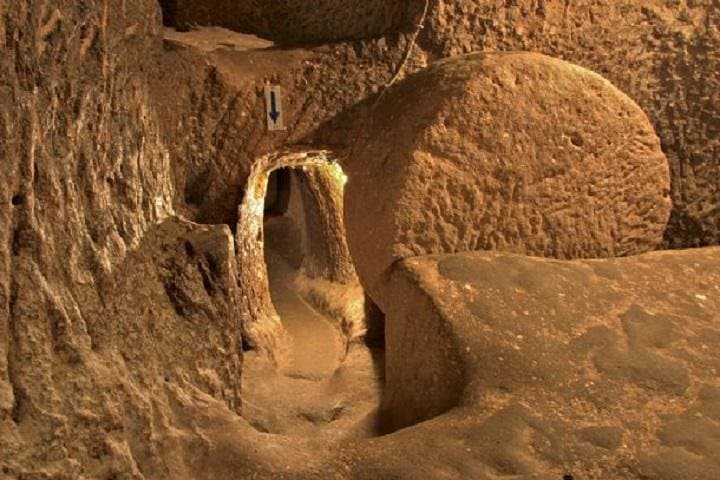
Morning fog lifts off an alien landscape and the bus slips out of Goreme before most travelers have finished breakfast. The air smells faintly of baked stone; the valley walls, sculpted by millennia of wind and river, seem to rearrange themselves with every turn of the road. On this compact, eight-hour circuit, visitors move like historians and hikers at once—peering into carved churches, climbing to a castle turret for wind-battered views, and standing where an underground city once sheltered generations.
Verified experiences and guided adventures in the surrounding area.
Operated by FABULOUS TRAVEL · Goreme, Nevşehir
Morning fog lifts off an alien landscape and the bus slips out of Goreme before most travelers have finished breakfast. The air smells faintly of baked stone; the valley walls, sculpted by millennia of wind and river, seem to rearrange themselves with every turn of the road. On this compact, eight-hour circuit, visitors move like historians and hikers at once—peering into carved churches, climbing to a castle turret for wind-battered views, and standing where an underground city once sheltered generations.
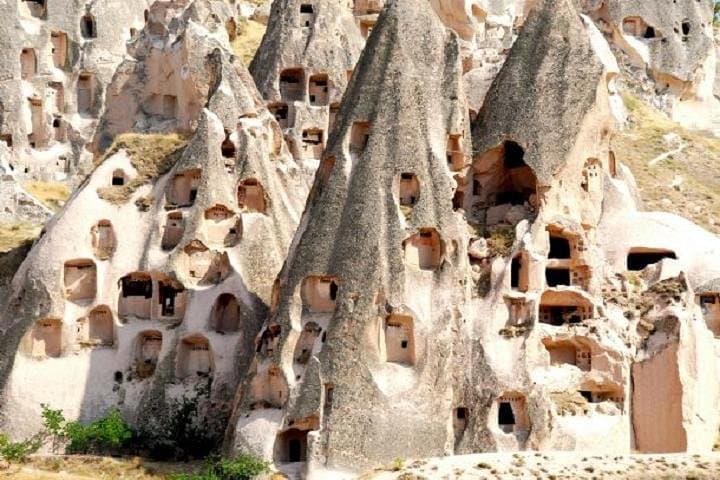
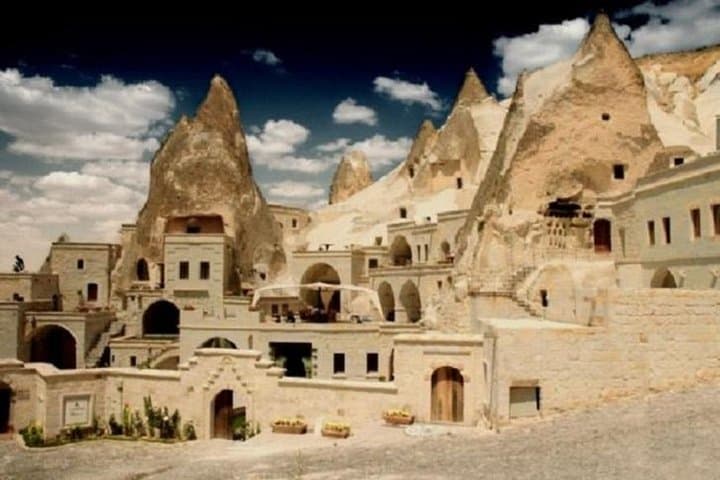
The itinerary threads together the region’s three main stories: volcanic geology, early Christianity, and continuous human adaptation. Cappadocia’s fairy chimneys are volcanic tuff—ash and pumice compacted after eruptions from Mount Erciyes and Erci. Over time, rain and frost carved cones and pillars; people carved back into them. By the Byzantine era, monks had hollowed entire complexes out of the soft rock, painting frescoes that still hold color thanks to the interior microclimate.
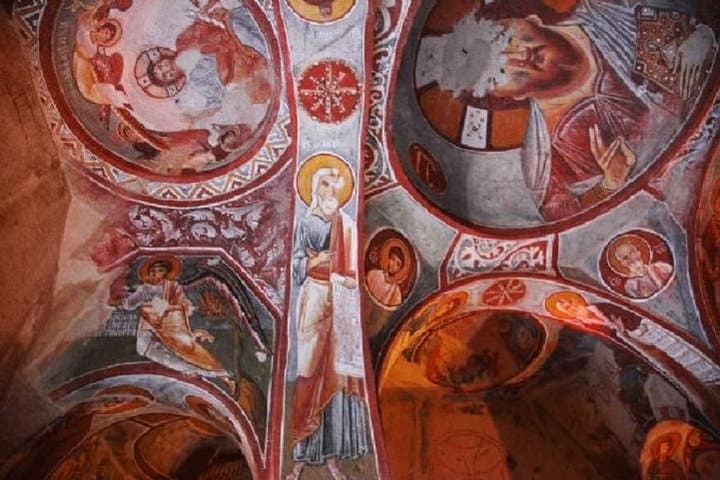
Goreme Open-Air Museum is the day’s spiritual anchor. The cluster of rock-cut churches reads like a classroom in medieval liturgy—narrow naves, faded saints, and iconographic cycles that survived underground storage of faith and fresco pigments. Uchisar Castle, the region’s high point, obliges with a sweeping, almost cinematic panorama: valleys radiate out like folds, and on clear days Mount Erciyes punctures the horizon.
Pasabag and Devrent present two different acts of the same play. At Pasabag (Monks Valley) the formations strut with an almost architectural dignity—columns wearing stone caps like hats. Devrent, by contrast, invites pareidolia: a camel, a sleeping lion, and a rock that might be the outline of a medieval crowd—nature daring you to name what you see.
Practical edge: the day is paced and crowded; the tour handles logistics—air-conditioned transport, a guided sequence of stops, and lunch—so visitors cover more ground than on a self-guided loop. Still, this is not passive sightseeing. Expect short walks on uneven paths, stair climbs in carved stone, and dusty viewpoints.
Tips for planning: start with layers (morning chill, afternoon heat), bring a daypack with water and sun protection, and give priority to the museum if frescoes are a primary interest—the light and the rooms reward time and attention. Respect the sites: frescoes are fragile, and many caves have restricted access. For travelers with limited time, this one-day route is a practical way to sample the geology, history, and scale of Cappadocia without losing the sense of place that makes the region feel like another world.
moderate.
8 hours.
Moderate fitness—able to walk short uneven trails, climb stairs and stand for guided explanations
The tour runs approximately eight hours, with multiple one-hour stops at key sites and transit between locations included.
Yes, admission to the Goreme Open-Air Museum is included as listed in the itinerary.
Yes—air-conditioned transport and a midday lunch are provided; pickup from hotels in Goreme, Urgup and Avanos is available.
Not recommended for those with serious spinal or mobility problems due to uneven terrain and steps in rock-cut sites.
Infants are allowed but must sit on an adult’s lap; confirm specifics when booking for car-seat needs.
Layered clothing is best—mornings can be cool, afternoons warm; closed-toe shoes are strongly recommended.
Cappadocia’s carved churches and underground cities reflect centuries of Hittite roots, Roman and Byzantine adaptations, and early Christian monastic communities who used the soft tuff to settle and worship.
Erosion of fragile tuff and wear on frescoes are ongoing concerns; visitors should stay on marked paths, avoid touching painted surfaces, and follow site rules to minimize impact.
FABULOUS TRAVEL operates guided outdoor trips and adventures with an emphasis on safety, stewardship, and memorable experiences.
Morning fog lifts off an alien landscape and the bus slips out of Goreme before most travelers have finished breakfast. The air smells faintly of baked stone; the valley walls, sculpted by millennia of wind and river, seem to rearrange themselves with every turn of the road. On this compact, eight-hour circuit, visitors move like historians and hikers at once—peering into carved churches, climbing to a castle turret for wind-battered views, and standing where an underground city once sheltered generations.
Morning fog lifts off an alien landscape and the bus slips out of Goreme before most travelers have finished breakfast. The air smells faintly of baked stone; the valley walls, sculpted by millennia of wind and river, seem to rearrange themselves with every turn of the road. On this compact, eight-hour circuit, visitors move like historians and hikers at once—peering into carved churches, climbing to a castle turret for wind-battered views, and standing where an underground city once sheltered generations.
The itinerary threads together the region’s three main stories: volcanic geology, early Christianity, and continuous human adaptation. Cappadocia’s fairy chimneys are volcanic tuff—ash and pumice compacted after eruptions from Mount Erciyes and Erci. Over time, rain and frost carved cones and pillars; people carved back into them. By the Byzantine era, monks had hollowed entire complexes out of the soft rock, painting frescoes that still hold color thanks to the interior microclimate.
Goreme Open-Air Museum is the day’s spiritual anchor. The cluster of rock-cut churches reads like a classroom in medieval liturgy—narrow naves, faded saints, and iconographic cycles that survived underground storage of faith and fresco pigments. Uchisar Castle, the region’s high point, obliges with a sweeping, almost cinematic panorama: valleys radiate out like folds, and on clear days Mount Erciyes punctures the horizon.
Pasabag and Devrent present two different acts of the same play. At Pasabag (Monks Valley) the formations strut with an almost architectural dignity—columns wearing stone caps like hats. Devrent, by contrast, invites pareidolia: a camel, a sleeping lion, and a rock that might be the outline of a medieval crowd—nature daring you to name what you see.
Practical edge: the day is paced and crowded; the tour handles logistics—air-conditioned transport, a guided sequence of stops, and lunch—so visitors cover more ground than on a self-guided loop. Still, this is not passive sightseeing. Expect short walks on uneven paths, stair climbs in carved stone, and dusty viewpoints.
Tips for planning: start with layers (morning chill, afternoon heat), bring a daypack with water and sun protection, and give priority to the museum if frescoes are a primary interest—the light and the rooms reward time and attention. Respect the sites: frescoes are fragile, and many caves have restricted access. For travelers with limited time, this one-day route is a practical way to sample the geology, history, and scale of Cappadocia without losing the sense of place that makes the region feel like another world.