THE ADVENTURE COLLECTIVE® · Independent discovery and booking for outdoor travel

Spend a single day chasing three of Antalya’s most dramatic cascades—Lower Düden’s cliff plunge, the forested serenity of Kurşunlu, and the powerful drop at Karpuzkaldıran. This guided tour pairs short walks with dramatic viewpoints and a local lunch.
Spend a single day chasing three of Antalya’s most dramatic cascades—Lower Düden’s cliff plunge, the forested serenity of Kurşunlu, and the powerful drop at Karpuzkaldıran. This guided tour pairs short walks with dramatic viewpoints and a local lunch.
You step off the air-conditioned minibus into a hush of pine and the steady hiss of falling water—the sound that strings together a single day of three of Antalya’s most productive cascades. First stop, Düden’s lower cliffs: the river rushes to the city's edge and launches itself over limestone teeth, misting the promenade and daring you to get close enough to feel it on your skin. Later, a short drive leads into a fir-and-cypress bowl at Kurşunlu, where boardwalks thread through wetlands and the falls fall into calm, mossy pools. The final scene rises: Karpuzkaldıran (Upper Düden) drops from a greater height, throwing water against boulders with force that makes the air bristle.
Verified experiences and guided adventures in the surrounding area.
Operated by White Wolf Travel · Antalya, Antalya Province
You step off the air-conditioned minibus into a hush of pine and the steady hiss of falling water—the sound that strings together a single day of three of Antalya’s most productive cascades. First stop, Düden’s lower cliffs: the river rushes to the city's edge and launches itself over limestone teeth, misting the promenade and daring you to get close enough to feel it on your skin. Later, a short drive leads into a fir-and-cypress bowl at Kurşunlu, where boardwalks thread through wetlands and the falls fall into calm, mossy pools. The final scene rises: Karpuzkaldıran (Upper Düden) drops from a greater height, throwing water against boulders with force that makes the air bristle.
These falls are younger than the Lycian ruins that pepper Turkey’s coast but older than the modern resorts that ring Antalya. Geologically, they’re the work of karstic limestone and the region’s quick-draining rivers—Aksu and Düden—carving channels and creating plunge pools where groundwater meets impermeable rock. Culturally, the sites have long been local picnic and ritual places; posters in small cafés advertise ayran and gözleme for visitors drying off after a summer splash.
The tour stitches short walking legs—boardwalks, packed dirt, and staircases—into a six-hour loop with roughly 2–3 km of walking total and minimal elevation gain, though expect steps at viewpoints and wet, uneven surfaces near the rocks. The pace is easy but engaging: viewpoints, a picnic-lunch stop, and time for photos.
Practical guidance: go early to beat the midday heat and crowds; the falls are at their most dramatic in spring when snowmelt fattens the rivers. Wear grippy shoes—trail runners or hiking sandals with tread—and a light waterproof layer for the spray. Bring sunscreen, a refillable water bottle, and a small daypack for your camera and lunch. If you plan to wade, check signage: some pools are protected and swimming is discouraged to preserve the habitat.
For timing, expect pickup around central Antalya neighborhoods with return by early evening. The tour is family-friendly and accessible for most fitness levels but carries natural-surface paths that can be slippery after rain. Local guides often point out endemic birdlife and small freshwater turtles; listen for kingfishers and watch for water beetles at pool edges.
This itinerary is an efficient way to sample Antalya’s freshwater geology and coastal drama in one day—splashing into cool pools, catching the spray against a cliff-top promenade, and walking forested paths that feel a world apart from the city’s hotel strip. Come prepared, keep your camera handy, and let the water lead the rhythm of your day.
easy.
5–6 hours.
Suitable for most people who can handle short walks and stairs; not strenuous but requires stable footing.
The tour runs about six hours with roughly 2–3 km of walking across short boardwalks, viewpoints, and stairs—suitable for most fitness levels.
Yes—pickup is provided from most hotels in Antalya (Lara, Kundu, Konyaaltı, town center); times depend on hotel location.
Swimming is generally discouraged at these sites to protect habitats and for safety; some shallow areas may allow wading—follow local signs and guides.
Some viewpoints and promenade areas (especially Lower Düden) are accessible, but many forested paths and boardwalks at Kurşunlu have steps and uneven surfaces.
Yes—lunch is included on the tour and typically features local dishes; vegetarian options are usually available if requested in advance.
Spring delivers the fullest flows and lush greenery; summer is busy and hot but still good for clear skies—autumn offers mild weather and fewer crowds.
The falls sit on ancient Anatolian routes and near agricultural lands historically used for milling; local villages historically used these rivers for irrigation and small-scale fisheries.
These freshwater systems are sensitive to tourism and upstream development—stay on trails, avoid littering, and respect protected pools to limit erosion and habitat disruption.
White Wolf Travel operates guided outdoor trips and adventures with an emphasis on safety, stewardship, and memorable experiences.
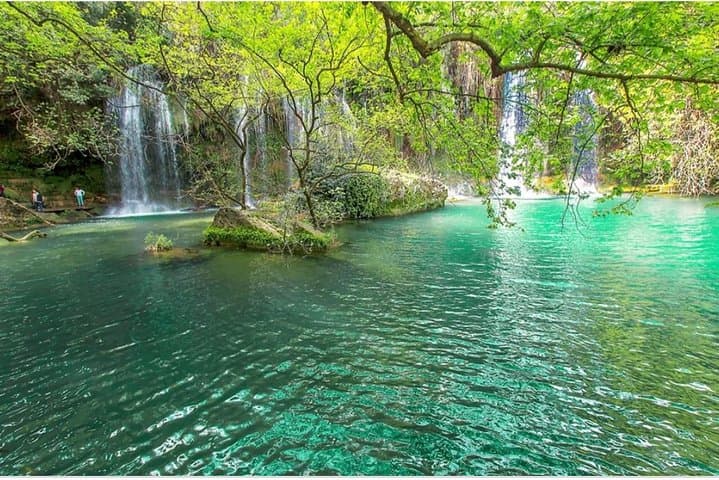
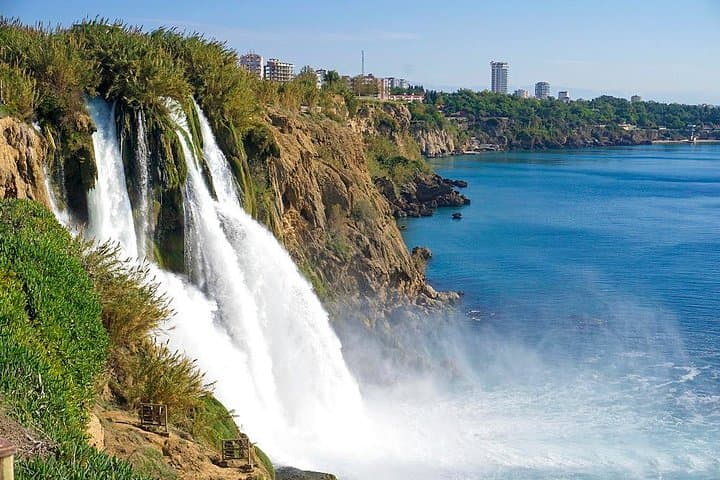
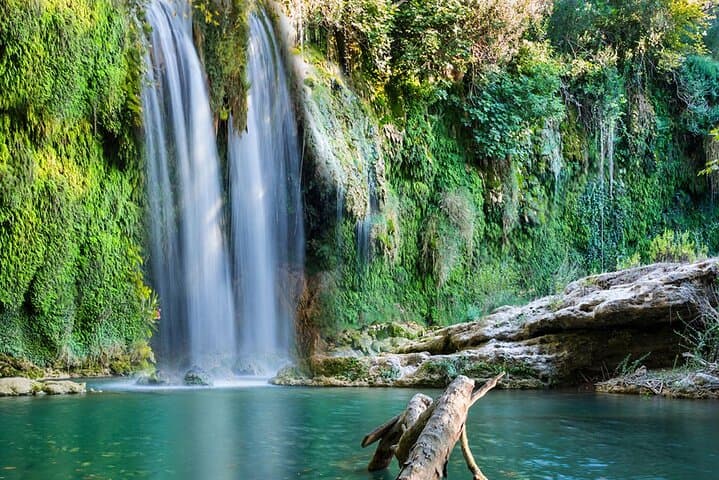
You step off the air-conditioned minibus into a hush of pine and the steady hiss of falling water—the sound that strings together a single day of three of Antalya’s most productive cascades. First stop, Düden’s lower cliffs: the river rushes to the city's edge and launches itself over limestone teeth, misting the promenade and daring you to get close enough to feel it on your skin. Later, a short drive leads into a fir-and-cypress bowl at Kurşunlu, where boardwalks thread through wetlands and the falls fall into calm, mossy pools. The final scene rises: Karpuzkaldıran (Upper Düden) drops from a greater height, throwing water against boulders with force that makes the air bristle.
You step off the air-conditioned minibus into a hush of pine and the steady hiss of falling water—the sound that strings together a single day of three of Antalya’s most productive cascades. First stop, Düden’s lower cliffs: the river rushes to the city's edge and launches itself over limestone teeth, misting the promenade and daring you to get close enough to feel it on your skin. Later, a short drive leads into a fir-and-cypress bowl at Kurşunlu, where boardwalks thread through wetlands and the falls fall into calm, mossy pools. The final scene rises: Karpuzkaldıran (Upper Düden) drops from a greater height, throwing water against boulders with force that makes the air bristle.
These falls are younger than the Lycian ruins that pepper Turkey’s coast but older than the modern resorts that ring Antalya. Geologically, they’re the work of karstic limestone and the region’s quick-draining rivers—Aksu and Düden—carving channels and creating plunge pools where groundwater meets impermeable rock. Culturally, the sites have long been local picnic and ritual places; posters in small cafés advertise ayran and gözleme for visitors drying off after a summer splash.
The tour stitches short walking legs—boardwalks, packed dirt, and staircases—into a six-hour loop with roughly 2–3 km of walking total and minimal elevation gain, though expect steps at viewpoints and wet, uneven surfaces near the rocks. The pace is easy but engaging: viewpoints, a picnic-lunch stop, and time for photos.
Practical guidance: go early to beat the midday heat and crowds; the falls are at their most dramatic in spring when snowmelt fattens the rivers. Wear grippy shoes—trail runners or hiking sandals with tread—and a light waterproof layer for the spray. Bring sunscreen, a refillable water bottle, and a small daypack for your camera and lunch. If you plan to wade, check signage: some pools are protected and swimming is discouraged to preserve the habitat.
For timing, expect pickup around central Antalya neighborhoods with return by early evening. The tour is family-friendly and accessible for most fitness levels but carries natural-surface paths that can be slippery after rain. Local guides often point out endemic birdlife and small freshwater turtles; listen for kingfishers and watch for water beetles at pool edges.
This itinerary is an efficient way to sample Antalya’s freshwater geology and coastal drama in one day—splashing into cool pools, catching the spray against a cliff-top promenade, and walking forested paths that feel a world apart from the city’s hotel strip. Come prepared, keep your camera handy, and let the water lead the rhythm of your day.