THE ADVENTURE COLLECTIVE® · Independent discovery and booking for outdoor travel

Experience Olympic National Park in a single long day from Seattle: ferry across Puget Sound, stand on the wind-scoured Hurricane Ridge, peer into glacier-clear Lake Crescent, and walk to Marymere Falls. This guided small-group tour delivers varied terrain, local insights, and practical logistics for a one-day PNW immersion.
Experience Olympic National Park in a single long day from Seattle: ferry across Puget Sound, stand on the wind-scoured Hurricane Ridge, peer into glacier-clear Lake Crescent, and walk to Marymere Falls. This guided small-group tour delivers varied terrain, local insights, and practical logistics for a one-day PNW immersion.
The bus eases away from downtown Seattle, the skyline shrinking as the ferry cuts a silver path across Puget Sound. Salt air and the low rumble of the ferry engines set the tone: this is a day built around movement — boat, van, short walks — and a rapid succession of environments. By midmorning the forest closes in, and the Olympic Mountains rise like a hardened green wall, daring visitors to look closer.
Verified experiences and guided adventures in the surrounding area.
Operated by Jupiter Legend Corporation · Port Angeles, Washington
The bus eases away from downtown Seattle, the skyline shrinking as the ferry cuts a silver path across Puget Sound. Salt air and the low rumble of the ferry engines set the tone: this is a day built around movement — boat, van, short walks — and a rapid succession of environments. By midmorning the forest closes in, and the Olympic Mountains rise like a hardened green wall, daring visitors to look closer.
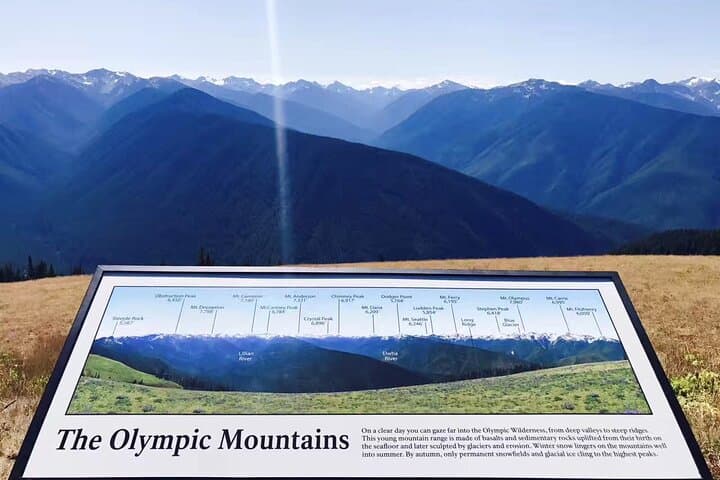
On a single full-day loop the itinerary stitches three of the park’s most readable landscapes: the alpine sweep of Hurricane Ridge, the glacier-carved clarity of Lake Crescent, and the moss-dark old-growth that funnels into Marymere Falls. Each stop speaks to a different chapter of the peninsula’s geologic story. The Olympics are a pile-up of tectonic forces and glacial scraping; crescent-shaped basins and steep ridgelines record ice and uplift, while rivers worked the lowlands into the wet temperate forests that dominate the western slopes.
The human history here is compact but layered. Indigenous communities — including the Lower Elwha Klallam and Skokomish peoples — stewarded these places for millennia, drawing food and ceremony from sea and forest long before park lines were drawn in the 20th century. The early park-era roads and visitor structures reflect a period when conservation and recreation began to overlap, and the ferry ride from Seattle is a reminder that access to wild land in the Pacific Northwest has always depended on water and transport.
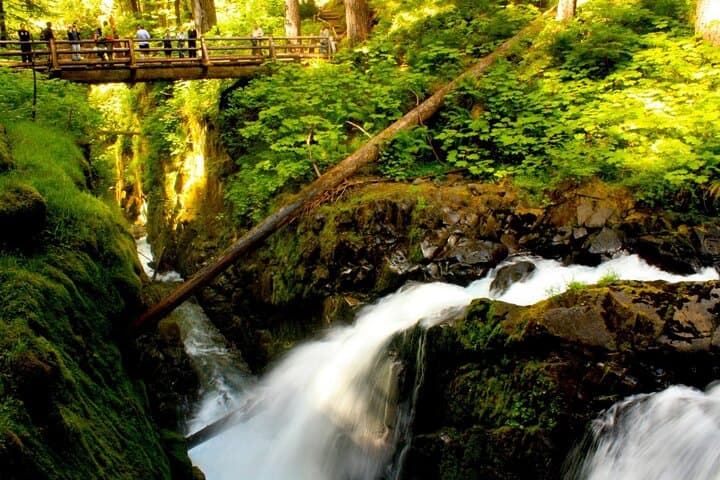
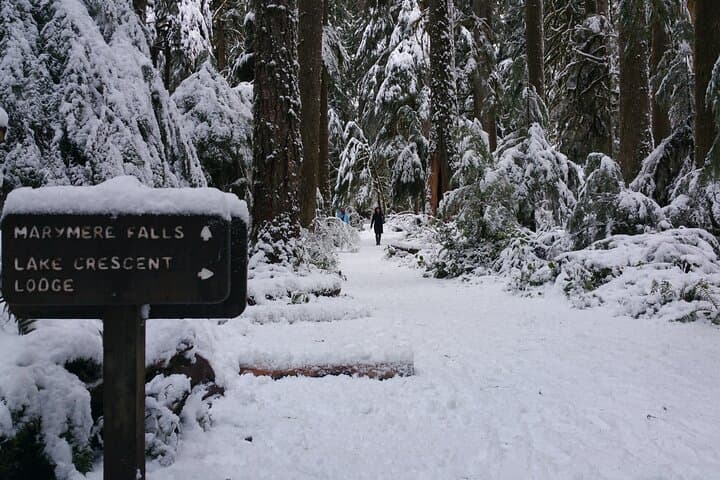
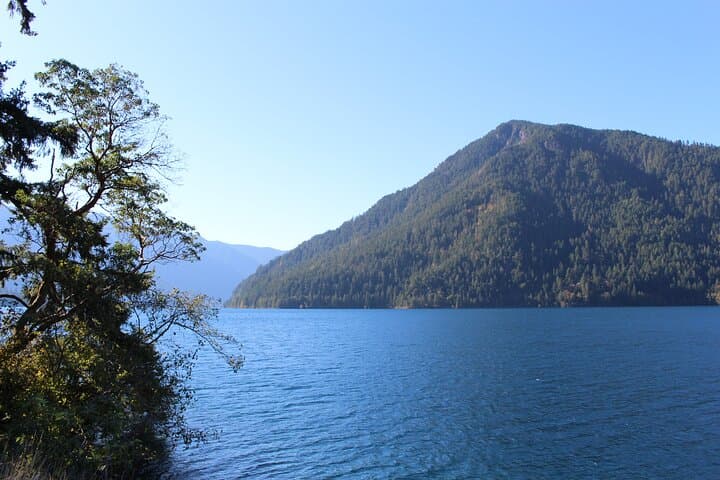
On the ground, experiences are tactile and weather-driven. Hurricane Ridge is wind-swept and panoramic; expect strong gusts and rapidly changing visibility. Lake Crescent’s water stays cold and impossibly clear, a mirror framing old-growth slopes. Marymere Falls is an easy, child-friendly walk through dense forest that ends at a curtain of water throwing cool mist into the air. In winter, guides swap boots for snowshoes and the ridge becomes a quiet, monochrome world.
Practical notes: this is a long day — plan for 10 to 11 hours including ferry time. Comfortable, waterproof footwear matters more than fashion; layers are essential because coastal marine air and alpine gusts demand quick adjustments. The tour includes ferry tickets, park admission, bottled water, a sandwich-style lunch and a guide, but bring extra snacks, a daypack, and a charged phone for photos and navigation. If you prefer less time sitting, request hiking-heavy stops when you book; if roads to Hurricane Ridge close, the operator pivots to coastal viewpoints such as Ediz Hook and East Beach.
For photographers and first-timers, the payoff is the variety: alpine vistas that swallow the horizon, a lake so clear it reads like glass, and a short forest hike that ends at a waterfall. The day moves fast; come with shoes that grip, a rain shell, and the patience to let weather decide which face of the Olympics you get to take home.
moderate.
10–11 hours.
Suitable for people in average physical condition; expect short hikes with modest elevation and periods of standing and walking.
Expect about 10–11 hours. Typical stops include a ferry to Bainbridge Island, Hurricane Ridge, Lake Crescent, and Marymere Falls; itinerary adjusts for weather.
Yes — Olympic National Park admission is included in the tour price.
Strollers are allowed for short walks, and infants must sit on an adult’s lap; contact the operator about booster seats for young children.
If the ridge is inaccessible due to weather, the tour redirects to coastal alternatives such as Ediz Hook and East Beach.
Yes — during winter months the tour supplies snowshoes when conditions require them.
The operator lists multiple pickup points across downtown and near Sea-Tac; confirm your pickup location at least 3 days in advance or accept the default meeting point.
The Olympics were set aside as a national park in 1938 after decades of conservation advocacy; Indigenous peoples have inhabited the peninsula for millennia and continue cultural stewardship.
Stay on designated trails to protect fragile understory and prevent erosion; pack out all waste and follow Leave No Trace principles in sensitive alpine and shoreline zones.
Jupiter Legend Corporation operates guided outdoor trips and adventures with an emphasis on safety, stewardship, and memorable experiences.
The bus eases away from downtown Seattle, the skyline shrinking as the ferry cuts a silver path across Puget Sound. Salt air and the low rumble of the ferry engines set the tone: this is a day built around movement — boat, van, short walks — and a rapid succession of environments. By midmorning the forest closes in, and the Olympic Mountains rise like a hardened green wall, daring visitors to look closer.
The bus eases away from downtown Seattle, the skyline shrinking as the ferry cuts a silver path across Puget Sound. Salt air and the low rumble of the ferry engines set the tone: this is a day built around movement — boat, van, short walks — and a rapid succession of environments. By midmorning the forest closes in, and the Olympic Mountains rise like a hardened green wall, daring visitors to look closer.
On a single full-day loop the itinerary stitches three of the park’s most readable landscapes: the alpine sweep of Hurricane Ridge, the glacier-carved clarity of Lake Crescent, and the moss-dark old-growth that funnels into Marymere Falls. Each stop speaks to a different chapter of the peninsula’s geologic story. The Olympics are a pile-up of tectonic forces and glacial scraping; crescent-shaped basins and steep ridgelines record ice and uplift, while rivers worked the lowlands into the wet temperate forests that dominate the western slopes.
The human history here is compact but layered. Indigenous communities — including the Lower Elwha Klallam and Skokomish peoples — stewarded these places for millennia, drawing food and ceremony from sea and forest long before park lines were drawn in the 20th century. The early park-era roads and visitor structures reflect a period when conservation and recreation began to overlap, and the ferry ride from Seattle is a reminder that access to wild land in the Pacific Northwest has always depended on water and transport.
On the ground, experiences are tactile and weather-driven. Hurricane Ridge is wind-swept and panoramic; expect strong gusts and rapidly changing visibility. Lake Crescent’s water stays cold and impossibly clear, a mirror framing old-growth slopes. Marymere Falls is an easy, child-friendly walk through dense forest that ends at a curtain of water throwing cool mist into the air. In winter, guides swap boots for snowshoes and the ridge becomes a quiet, monochrome world.
Practical notes: this is a long day — plan for 10 to 11 hours including ferry time. Comfortable, waterproof footwear matters more than fashion; layers are essential because coastal marine air and alpine gusts demand quick adjustments. The tour includes ferry tickets, park admission, bottled water, a sandwich-style lunch and a guide, but bring extra snacks, a daypack, and a charged phone for photos and navigation. If you prefer less time sitting, request hiking-heavy stops when you book; if roads to Hurricane Ridge close, the operator pivots to coastal viewpoints such as Ediz Hook and East Beach.
For photographers and first-timers, the payoff is the variety: alpine vistas that swallow the horizon, a lake so clear it reads like glass, and a short forest hike that ends at a waterfall. The day moves fast; come with shoes that grip, a rain shell, and the patience to let weather decide which face of the Olympics you get to take home.