THE ADVENTURE COLLECTIVE® · Independent discovery and booking for outdoor travel

Set out from Cody before dawn for an all-day expedition across Yellowstone’s northern range. This Upper Loop tour focuses on wildlife-rich Lamar and Hayden Valleys, key waterfalls and canyon viewpoints, and expert-guided spotting with scopes and binoculars.
Set out from Cody before dawn for an all-day expedition across Yellowstone’s northern range. This Upper Loop tour focuses on wildlife-rich Lamar and Hayden Valleys, key waterfalls and canyon viewpoints, and expert-guided spotting with scopes and binoculars.
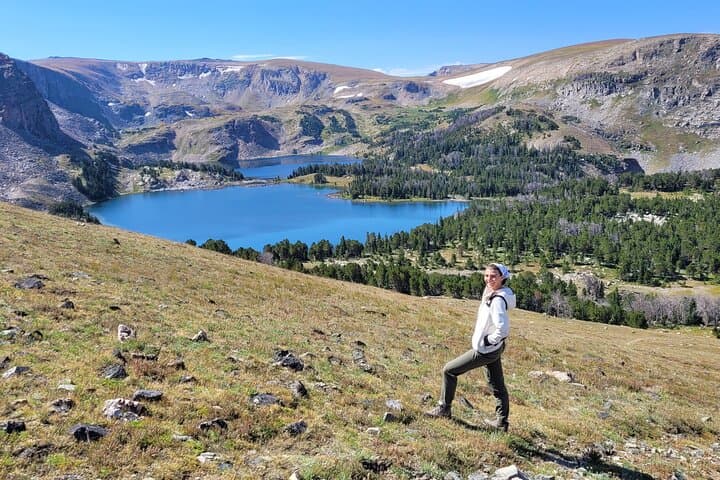
At 6 a.m. the parking lot at the southwest corner of Cody’s Walmart feels less like a commercial hub and more like a staging ground for something older: layered light, cold breath, and the quiet promise of wild animals. You board an air-conditioned van with binoculars and a spotting scope already waiting; the guide checks the day’s route, and the road unfurls — Chief Joseph Scenic Byway, Dead Indian Pass, Pilot Peak — a corridor that moves you away from town and into the high, jagged country that feeds Yellowstone’s northern range.
Verified experiences and guided adventures in the surrounding area.
Operated by CoveredGround Tours · Cody, Wyoming
At 6 a.m. the parking lot at the southwest corner of Cody’s Walmart feels less like a commercial hub and more like a staging ground for something older: layered light, cold breath, and the quiet promise of wild animals. You board an air-conditioned van with binoculars and a spotting scope already waiting; the guide checks the day’s route, and the road unfurls — Chief Joseph Scenic Byway, Dead Indian Pass, Pilot Peak — a corridor that moves you away from town and into the high, jagged country that feeds Yellowstone’s northern range.
The trip is as much about geology and history as it is about animal sightings. You are traversing the edge of the Yellowstone caldera, a landscape carved by volcanic heat and glacial polish, then crossing what Theodore Roosevelt called the “most scenic drive in America” through Shoshone National Forest. Artists and explorers in the 19th century painted Tower Fall and the canyon walls, images that fed the early conservation movement and helped establish Yellowstone as the first national park.
Enter the park through the lesser-used Northeast gate and the scenery opens into Lamar Valley — wide, wind-scoured grasslands where bison graze in slow, deliberate herds and wolves, if the season is right, cut silhouettes against the horizon. Later stops include Tower Fall, Dunraven Pass (prime wildflower and bighorn country), the Grand Canyon of the Yellowstone with its thunderous Lower Falls, and the sweeping Hayden Valley where Bison crossings are routine. Along the way you’ll also drive through areas linked to Indigenous histories and frontier stories, including the original Pahaska Tepee hunting lodge associated with Buffalo Bill Cody.
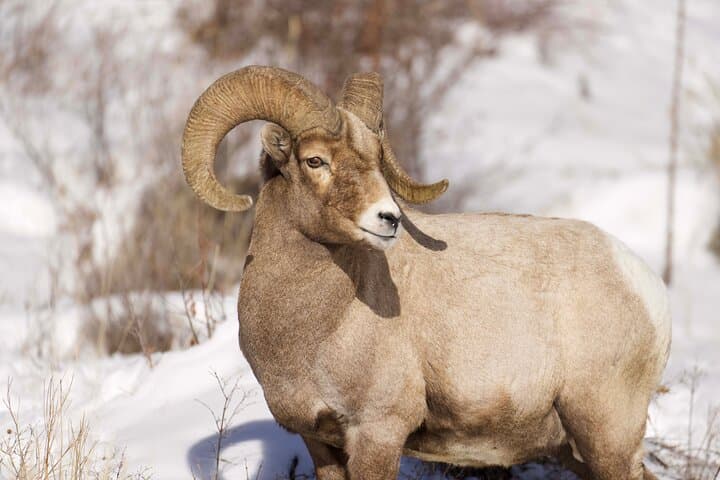
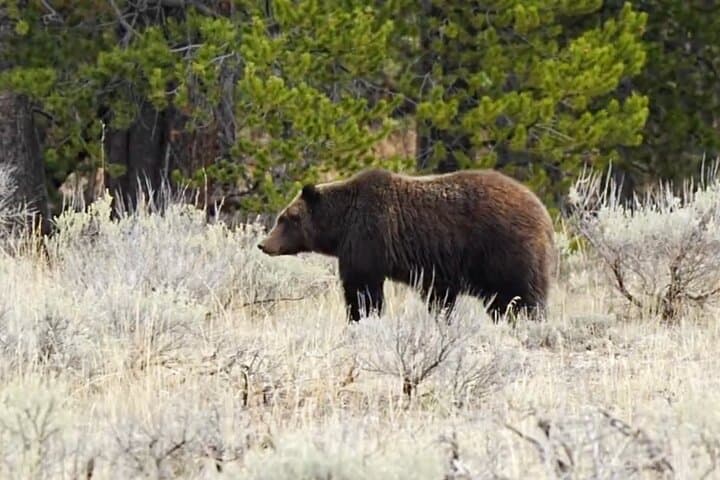
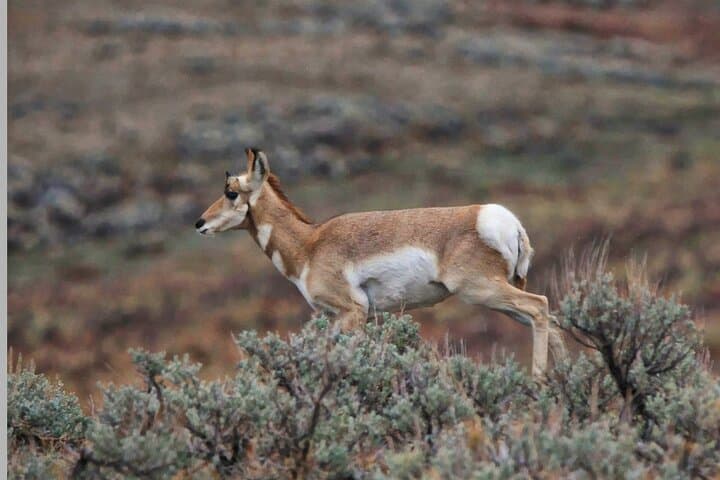
This is a full day: expect about 10–11 hours on the road with roughly 200 miles of driving as the van threads the upper loop. Guides supply lunch, bottled water, snacks, and optics; your best work is to look, listen, and keep your camera — and patience — ready. Wildlife sightings are never guaranteed, but the guide’s experience and the vehicle’s scope substantially increase your odds of seeing black and grizzly bears, wolves, elk, moose, pronghorn, and mountain goats.
Practical advice: dress in layers (mornings can be frosty), bring a warm hat even in summer, and carry a small daypack with sunscreen, extra water, and a charged camera battery. Respect wildlife boundaries — the guide will indicate safe viewing distances — and use quiet voices; the animals notice sound long before you see them. Restroom stops are available at Tower Fall and Fishing Bridge; expect short walks at viewpoints but no lengthy hikes.
By late afternoon you loop back into Cody with new images embedded: a valley full of bison, the canyon’s spray, and the odd bright flash of wolf fur at distance. It’s an efficient, calm way to absorb the northern range — designed for people who want big Yellowstone experiences without bushwhacking, with the practical support to make them happen.
moderate.
10–11 hours.
Suitable for average fitness — mostly seated vehicle time with short, easy walks at viewpoints
The tour meets at the southwest corner of the Walmart parking lot in Cody at 6 a.m. and returns to the same location around 4–5 p.m.; hotel pickup in Cody is available.
Park admission is typically not included—check your booking details or bring a valid park pass; guides may advise on entry procedures.
Common sightings include bison, elk, pronghorn, mule deer, and often bears; wolves and moose are possible but less predictable.
Yes—infants can ride in strollers or sit on laps; the operator notes it’s physically easy, but long hours may be challenging for very young children.
Restroom stops occur at Tower Fall and Fishing Bridge; lunch (sandwich options) and bottled water are provided by the tour.
Bring anti-nausea medication or acupressure bands; request a seat near the front of the vehicle and focus on the horizon when driving on winding roads.
Artists and early explorers publicized Tower Fall and the canyon’s landscapes in the late 19th century, helping catalyze Yellowstone’s creation as the world’s first national park; nearby Cody carries frontier history tied to Buffalo Bill.
Respect park rules about distances and food storage—human behavior directly influences wildlife habituation; choosing guided tours reduces off-road disturbance and concentrates viewing to lower-impact sites.
CoveredGround Tours operates guided outdoor trips and adventures with an emphasis on safety, stewardship, and memorable experiences.
At 6 a.m. the parking lot at the southwest corner of Cody’s Walmart feels less like a commercial hub and more like a staging ground for something older: layered light, cold breath, and the quiet promise of wild animals. You board an air-conditioned van with binoculars and a spotting scope already waiting; the guide checks the day’s route, and the road unfurls — Chief Joseph Scenic Byway, Dead Indian Pass, Pilot Peak — a corridor that moves you away from town and into the high, jagged country that feeds Yellowstone’s northern range.
At 6 a.m. the parking lot at the southwest corner of Cody’s Walmart feels less like a commercial hub and more like a staging ground for something older: layered light, cold breath, and the quiet promise of wild animals. You board an air-conditioned van with binoculars and a spotting scope already waiting; the guide checks the day’s route, and the road unfurls — Chief Joseph Scenic Byway, Dead Indian Pass, Pilot Peak — a corridor that moves you away from town and into the high, jagged country that feeds Yellowstone’s northern range.
The trip is as much about geology and history as it is about animal sightings. You are traversing the edge of the Yellowstone caldera, a landscape carved by volcanic heat and glacial polish, then crossing what Theodore Roosevelt called the “most scenic drive in America” through Shoshone National Forest. Artists and explorers in the 19th century painted Tower Fall and the canyon walls, images that fed the early conservation movement and helped establish Yellowstone as the first national park.
Enter the park through the lesser-used Northeast gate and the scenery opens into Lamar Valley — wide, wind-scoured grasslands where bison graze in slow, deliberate herds and wolves, if the season is right, cut silhouettes against the horizon. Later stops include Tower Fall, Dunraven Pass (prime wildflower and bighorn country), the Grand Canyon of the Yellowstone with its thunderous Lower Falls, and the sweeping Hayden Valley where Bison crossings are routine. Along the way you’ll also drive through areas linked to Indigenous histories and frontier stories, including the original Pahaska Tepee hunting lodge associated with Buffalo Bill Cody.
This is a full day: expect about 10–11 hours on the road with roughly 200 miles of driving as the van threads the upper loop. Guides supply lunch, bottled water, snacks, and optics; your best work is to look, listen, and keep your camera — and patience — ready. Wildlife sightings are never guaranteed, but the guide’s experience and the vehicle’s scope substantially increase your odds of seeing black and grizzly bears, wolves, elk, moose, pronghorn, and mountain goats.
Practical advice: dress in layers (mornings can be frosty), bring a warm hat even in summer, and carry a small daypack with sunscreen, extra water, and a charged camera battery. Respect wildlife boundaries — the guide will indicate safe viewing distances — and use quiet voices; the animals notice sound long before you see them. Restroom stops are available at Tower Fall and Fishing Bridge; expect short walks at viewpoints but no lengthy hikes.
By late afternoon you loop back into Cody with new images embedded: a valley full of bison, the canyon’s spray, and the odd bright flash of wolf fur at distance. It’s an efficient, calm way to absorb the northern range — designed for people who want big Yellowstone experiences without bushwhacking, with the practical support to make them happen.