THE ADVENTURE COLLECTIVE® · Independent discovery and booking for outdoor travel

Stand inches from roaring curtains of water hardened by winter and learn the stories of daredevils and hydropower on this small-group winter tour of Niagara Falls. Guided stops include Goat Island, Prospect Point, Observation Deck and Cave of the Winds (condition permitting).
Stand inches from roaring curtains of water hardened by winter and learn the stories of daredevils and hydropower on this small-group winter tour of Niagara Falls. Guided stops include Goat Island, Prospect Point, Observation Deck and Cave of the Winds (condition permitting).
The wind off the gorge grabs at your hood before you even see the falls. In winter the mist hardens into lace and the roar arrives as an all-consuming presence — a white noise you can feel in your chest. This small-group winter tour threads you across Goat Island and along Prospect Point with a guide who times stops for the best views and tells the stories that make the place more than a postcard: daredevils, engineers, and the factory-to-grid evolution of hydropower that began here.
Verified experiences and guided adventures in the surrounding area.
Operated by Niagara Regional Tours · Niagara Falls, New York
The wind off the gorge grabs at your hood before you even see the falls. In winter the mist hardens into lace and the roar arrives as an all-consuming presence — a white noise you can feel in your chest. This small-group winter tour threads you across Goat Island and along Prospect Point with a guide who times stops for the best views and tells the stories that make the place more than a postcard: daredevils, engineers, and the factory-to-grid evolution of hydropower that began here.
Geology and history are in plain sight. The falls are a moving face of bedrock and ice — Niagara is the last gasp of glacial melt sculpting soft shale and dolomite, retreating upriver a foot or two per year for millennia and carving the Niagara Gorge. You’ll hear about the tightrope walkers and the barrel-riding stunts of the late 1800s and how Niagara’s turbines changed industry. The Whirlpool Rapids and Three Sisters Islands offer geology lessons you can see: currents that still cut and ice that pins and pushes the river into new shapes each winter.
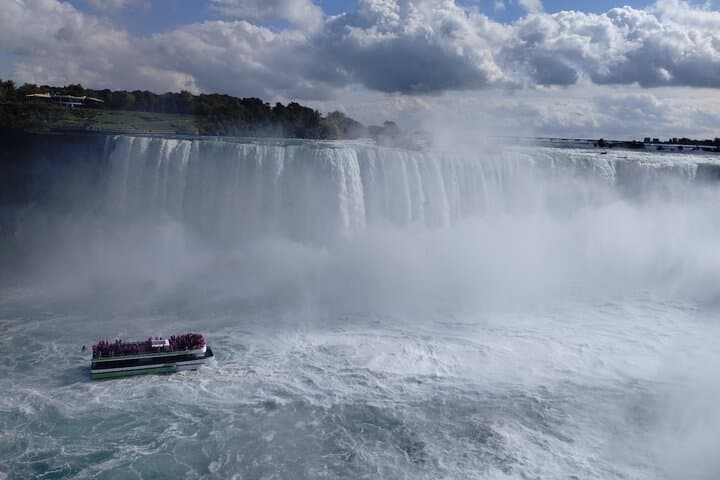
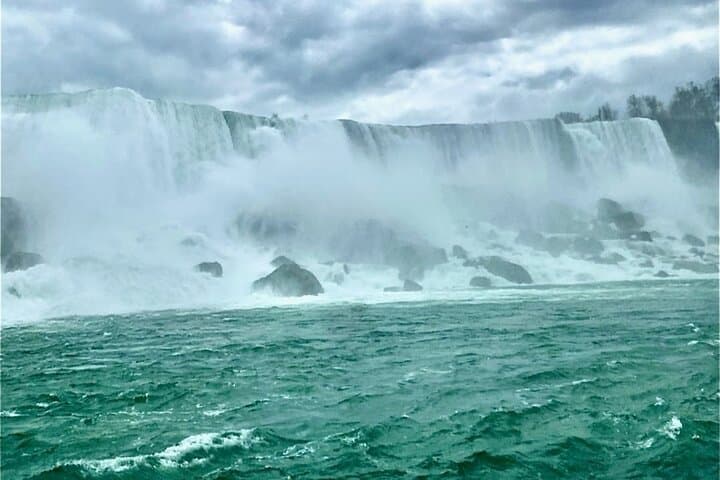
Culturally, the park sits on Haudenosaunee land; local Indigenous perspectives on the river’s power and stewardship remain an important layer often shared by guides. The tour also gestures to the modern economy of the falls — hydroelectric plants, tourism infrastructure, and cross-border dynamics — and concentrates on the American-side vantage points: Bridal Veil, American Falls, Horseshoe Falls from a distance, the Observation Deck, and the Cave of the Winds walkway when conditions allow.
Practicalities are straightforward and comforting in cold weather: the tour lasts about 200 minutes, covers roughly 1–2 miles of mostly paved paths with some steps near viewing decks, and shuttles you from a convenient downtown pickup (hotel pick-up available; no Canadian pickups). Expect sustained cold, spray, and icy patches. Wear waterproof boots with good tread, add microspikes if temperatures are below freezing, and layer aggressively — wind-cutting outer shells and insulated mid-layers keep you present at the viewpoints longer. Bring a weatherproof camera or a phone with protective case; long exposures of the falls’ motion produce the most dramatic winter shots.
Accessibility is better than many natural attractions: much of the park is wheelchair accessible, but slippery surfaces and stairs near the waterline can limit movement. Guides balance storytelling with safety, and the operator will cancel in extreme weather. For photographers, aim for late morning light on brighter days or the golden hour when the low winter sun slants across ice formations.
This tour is an efficient, intimate way to absorb Niagara’s winter character — the elements demanding respect, and the river continuing to do what it’s done for ages: push forward, re-shape, and astonish.
moderate.
3–3.5 hours.
Moderate fitness — able to walk 1–2 miles on icy or uneven surfaces and navigate short flights of stairs.
The tour includes Cave of the Winds when conditions permit; access can be limited in extreme cold or heavy ice, and the operator will advise on availability before departure.
No passport is required for this American-side tour, but if you plan independent cross-border travel to the Canadian side, bring valid ID or a passport for re-entry to the U.S.
Much of Niagara Falls State Park is wheelchair accessible, and the tour notes wheelchair access; however, icy sections and stairs near the waterline can restrict access to certain decks.
Layered clothing with an insulated mid-layer, a windproof waterproof shell, waterproof boots, warm gloves, and a hat are recommended; bring microspikes if temperatures are below freezing.
This is a small-group tour capped at seven travelers, keeping stops efficient and allowing time for questions and photos.
No — this tour operates entirely on the U.S. side of the falls; views of Horseshoe Falls are from American vantage points only.
Niagara’s modern tourism and industrial narratives grew alongside early hydropower experiments; daredevils and engineers both made the falls a global spectacle in the 19th century.
Niagara Falls State Park is managed to protect ecology and visitor safety; in winter, stick to maintained paths to avoid fragile ice and vegetation.
Niagara Regional Tours operates guided outdoor trips and adventures with an emphasis on safety, stewardship, and memorable experiences.
The wind off the gorge grabs at your hood before you even see the falls. In winter the mist hardens into lace and the roar arrives as an all-consuming presence — a white noise you can feel in your chest. This small-group winter tour threads you across Goat Island and along Prospect Point with a guide who times stops for the best views and tells the stories that make the place more than a postcard: daredevils, engineers, and the factory-to-grid evolution of hydropower that began here.
The wind off the gorge grabs at your hood before you even see the falls. In winter the mist hardens into lace and the roar arrives as an all-consuming presence — a white noise you can feel in your chest. This small-group winter tour threads you across Goat Island and along Prospect Point with a guide who times stops for the best views and tells the stories that make the place more than a postcard: daredevils, engineers, and the factory-to-grid evolution of hydropower that began here.
Geology and history are in plain sight. The falls are a moving face of bedrock and ice — Niagara is the last gasp of glacial melt sculpting soft shale and dolomite, retreating upriver a foot or two per year for millennia and carving the Niagara Gorge. You’ll hear about the tightrope walkers and the barrel-riding stunts of the late 1800s and how Niagara’s turbines changed industry. The Whirlpool Rapids and Three Sisters Islands offer geology lessons you can see: currents that still cut and ice that pins and pushes the river into new shapes each winter.
Culturally, the park sits on Haudenosaunee land; local Indigenous perspectives on the river’s power and stewardship remain an important layer often shared by guides. The tour also gestures to the modern economy of the falls — hydroelectric plants, tourism infrastructure, and cross-border dynamics — and concentrates on the American-side vantage points: Bridal Veil, American Falls, Horseshoe Falls from a distance, the Observation Deck, and the Cave of the Winds walkway when conditions allow.
Practicalities are straightforward and comforting in cold weather: the tour lasts about 200 minutes, covers roughly 1–2 miles of mostly paved paths with some steps near viewing decks, and shuttles you from a convenient downtown pickup (hotel pick-up available; no Canadian pickups). Expect sustained cold, spray, and icy patches. Wear waterproof boots with good tread, add microspikes if temperatures are below freezing, and layer aggressively — wind-cutting outer shells and insulated mid-layers keep you present at the viewpoints longer. Bring a weatherproof camera or a phone with protective case; long exposures of the falls’ motion produce the most dramatic winter shots.
Accessibility is better than many natural attractions: much of the park is wheelchair accessible, but slippery surfaces and stairs near the waterline can limit movement. Guides balance storytelling with safety, and the operator will cancel in extreme weather. For photographers, aim for late morning light on brighter days or the golden hour when the low winter sun slants across ice formations.
This tour is an efficient, intimate way to absorb Niagara’s winter character — the elements demanding respect, and the river continuing to do what it’s done for ages: push forward, re-shape, and astonish.