THE ADVENTURE COLLECTIVE® · Independent discovery and booking for outdoor travel

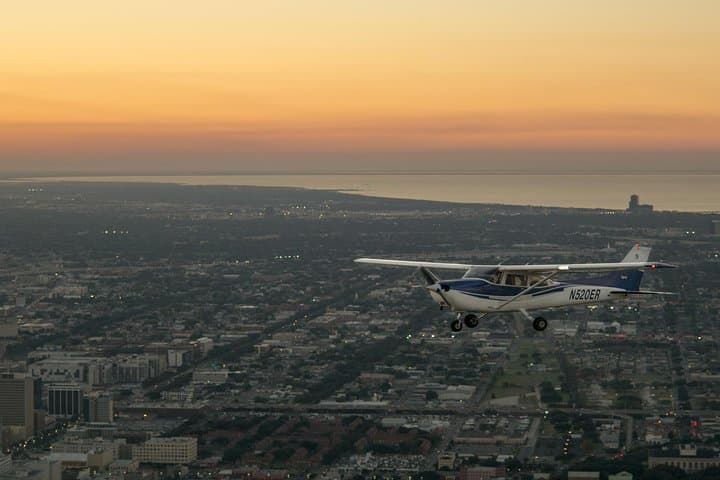
Soar over the French Quarter and the Mississippi on a private 30–45 minute night flight from Lakefront Airport. This guided aerial tour pairs pilot commentary with close-up views of the Superdome, river bends, and the illuminated grid of New Orleans.
Soar over the French Quarter and the Mississippi on a private 30–45 minute night flight from Lakefront Airport. This guided aerial tour pairs pilot commentary with close-up views of the Superdome, river bends, and the illuminated grid of New Orleans.
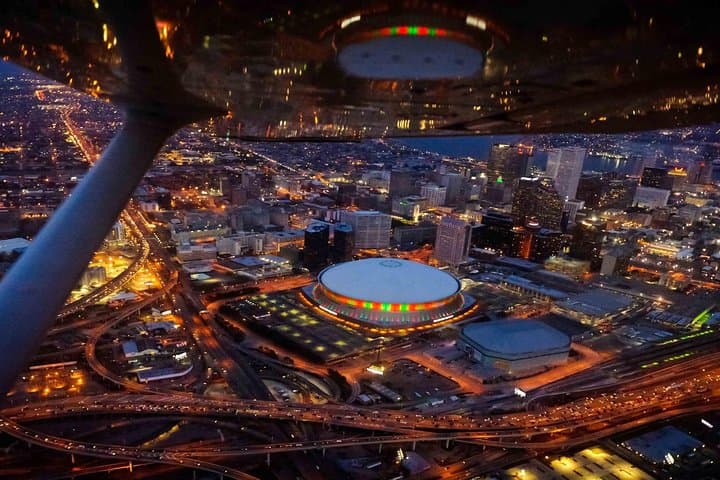
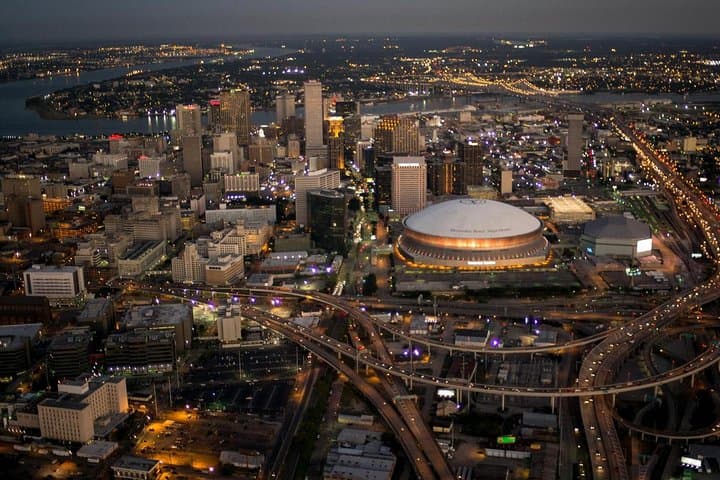
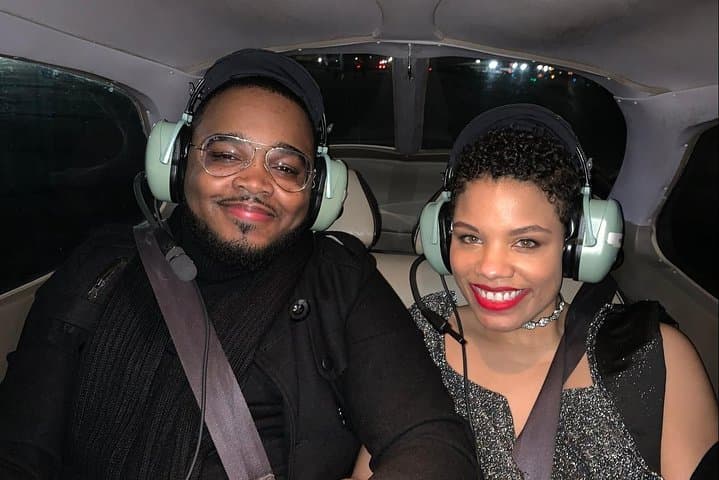
The plane lifts, the runway becomes a ribbon of amber, and New Orleans opens beneath you like a city learning to sing after dark. Headsets click on and the pilot’s voice filters through: a living map of lights, a running commentary that points out the Superdome’s glowing ring, the slow, brooding arc of the Mississippi, and the tight grid of the French Quarter where gaslamps and neon argue for attention.
Verified experiences and guided adventures in the surrounding area.
Operated by New Orleans Aerial Tours & Flight Training · New Orleans, Louisiana
The plane lifts, the runway becomes a ribbon of amber, and New Orleans opens beneath you like a city learning to sing after dark. Headsets click on and the pilot’s voice filters through: a living map of lights, a running commentary that points out the Superdome’s glowing ring, the slow, brooding arc of the Mississippi, and the tight grid of the French Quarter where gaslamps and neon argue for attention.
This isn’t a sanitized panorama; it’s a working port and river, a city built on shifting silt and stubborn optimism. From the air you can read geological chapters: the river’s meander that made the Crescent City, the faint line where reclaimed land meets older ground, the checkerboard of neighborhoods that grew around commerce and music. Fly low enough and you’ll pick out cemetery plots arranged like small cities—New Orleans’ above-ground tombs are a byproduct of high water tables and a local approach to life and death that blends French, Spanish, African, and American traditions.
The history below is audible in the place names—the Quarter, Jackson Square—and visible in the contrast between old warehouses along the river and modern stadium lights. Cultural notes come through in the pilot’s anecdotes: the jazz standard tucked into a street name, the docks that once fed steamboats. At night the city’s energy is literal; lights pulse from clubs and late-night kitchens, and the Mississippi dares you to follow its curve downstream.
Practicalities anchor the romance. Tours depart from New Orleans Lakefront Airport; choose 30- or 45-minute options and expect a private plane with seating for up to three guests. Call the supplier 12 hours before your flight to confirm the time, and be upfront about passenger weights—combined limits apply and safety depends on accurate numbers. There are no restrooms on board, no large bags, and no in-flight food or drink. Rental headsets are provided and the pilot offers live commentary tailored to your group.
For photographers: low-light work benefits from fast lenses and high-ISO settings; window glare drops after takeoff so position yourself to catch river reflections and the Quarter’s blocks of light. Motion-sensitive travelers should plan accordingly—this short flight can still test stomachs, and refunds won’t cover motion-sickness issues. Dress in layers: the cabin can be cool in winter and warm in summer without air conditioning.
This flight is less about altitude and more about orientation—an intense, brief way to see how history, geography, and nightlife stitch together in New Orleans. It’s an evening primer for first-time visitors and a new perspective for returnees, one that makes the city’s angles, waterways, and lights feel like elements of a story you’re passing through.
easy.
30–45 minutes.
No special fitness required; suitable for all physical levels though boarding involves a small step.
Flights are private with a maximum of three passengers per plane and a minimum of two required per booking.
Yes—if weather prevents flying the supplier will reschedule to another date within two weeks at no charge; refunds are not issued for weather-related reschedules.
No, there are no restrooms on the aircraft—plan accordingly before arrival.
Infants may sit on an adult’s lap; children under 5 must bring a DOT-approved car seat and children count toward the passenger maximum.
No large bags are allowed—only small purses or compact camera bags. Leave bulky luggage at your accommodation.
No—aviation headsets are provided and cleaned; one new microphone cover per passenger is supplied.
New Orleans grew around the Mississippi’s bend; its architecture and funeral customs reflect French, Spanish, Creole, and American influences shaped by a deltaic landscape.
Night flights are short to limit fuel use; operators comply with local noise and airspace rules—avoid low passes over residential areas and respect pilot guidance.
New Orleans Aerial Tours & Flight Training operates guided outdoor trips and adventures with an emphasis on safety, stewardship, and memorable experiences.
The plane lifts, the runway becomes a ribbon of amber, and New Orleans opens beneath you like a city learning to sing after dark. Headsets click on and the pilot’s voice filters through: a living map of lights, a running commentary that points out the Superdome’s glowing ring, the slow, brooding arc of the Mississippi, and the tight grid of the French Quarter where gaslamps and neon argue for attention.
The plane lifts, the runway becomes a ribbon of amber, and New Orleans opens beneath you like a city learning to sing after dark. Headsets click on and the pilot’s voice filters through: a living map of lights, a running commentary that points out the Superdome’s glowing ring, the slow, brooding arc of the Mississippi, and the tight grid of the French Quarter where gaslamps and neon argue for attention.
This isn’t a sanitized panorama; it’s a working port and river, a city built on shifting silt and stubborn optimism. From the air you can read geological chapters: the river’s meander that made the Crescent City, the faint line where reclaimed land meets older ground, the checkerboard of neighborhoods that grew around commerce and music. Fly low enough and you’ll pick out cemetery plots arranged like small cities—New Orleans’ above-ground tombs are a byproduct of high water tables and a local approach to life and death that blends French, Spanish, African, and American traditions.
The history below is audible in the place names—the Quarter, Jackson Square—and visible in the contrast between old warehouses along the river and modern stadium lights. Cultural notes come through in the pilot’s anecdotes: the jazz standard tucked into a street name, the docks that once fed steamboats. At night the city’s energy is literal; lights pulse from clubs and late-night kitchens, and the Mississippi dares you to follow its curve downstream.
Practicalities anchor the romance. Tours depart from New Orleans Lakefront Airport; choose 30- or 45-minute options and expect a private plane with seating for up to three guests. Call the supplier 12 hours before your flight to confirm the time, and be upfront about passenger weights—combined limits apply and safety depends on accurate numbers. There are no restrooms on board, no large bags, and no in-flight food or drink. Rental headsets are provided and the pilot offers live commentary tailored to your group.
For photographers: low-light work benefits from fast lenses and high-ISO settings; window glare drops after takeoff so position yourself to catch river reflections and the Quarter’s blocks of light. Motion-sensitive travelers should plan accordingly—this short flight can still test stomachs, and refunds won’t cover motion-sickness issues. Dress in layers: the cabin can be cool in winter and warm in summer without air conditioning.
This flight is less about altitude and more about orientation—an intense, brief way to see how history, geography, and nightlife stitch together in New Orleans. It’s an evening primer for first-time visitors and a new perspective for returnees, one that makes the city’s angles, waterways, and lights feel like elements of a story you’re passing through.