THE ADVENTURE COLLECTIVE® · Independent discovery and booking for outdoor travel

Spend a private day in the high tea country of Munnar, moving from spice gardens and working tea factories to the glinting Mattupetty Dam and misty Top Station viewpoints. This practical guide tells you what to expect, when to go, and what to bring.
Spend a private day in the high tea country of Munnar, moving from spice gardens and working tea factories to the glinting Mattupetty Dam and misty Top Station viewpoints. This practical guide tells you what to expect, when to go, and what to bring.
The morning arrives like a soft exhale over Munnar: layers of mist lift from the valleys and reveal rows of tightly clipped tea bushes that roll away to the horizon. You meet your driver-guide at the tourist office and, within minutes, the town gives way to narrow roads threaded through silver oak and shola forest. The air smells faintly of wet earth and green tea — the scent of industry and landscape braided together.
Verified experiences and guided adventures in the surrounding area.
Operated by Munnar Info · Munnar, Kerala
The morning arrives like a soft exhale over Munnar: layers of mist lift from the valleys and reveal rows of tightly clipped tea bushes that roll away to the horizon. You meet your driver-guide at the tourist office and, within minutes, the town gives way to narrow roads threaded through silver oak and shola forest. The air smells faintly of wet earth and green tea — the scent of industry and landscape braided together.
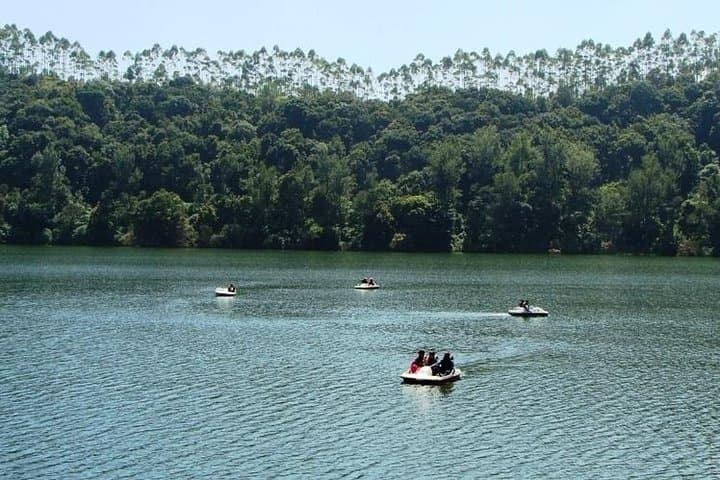
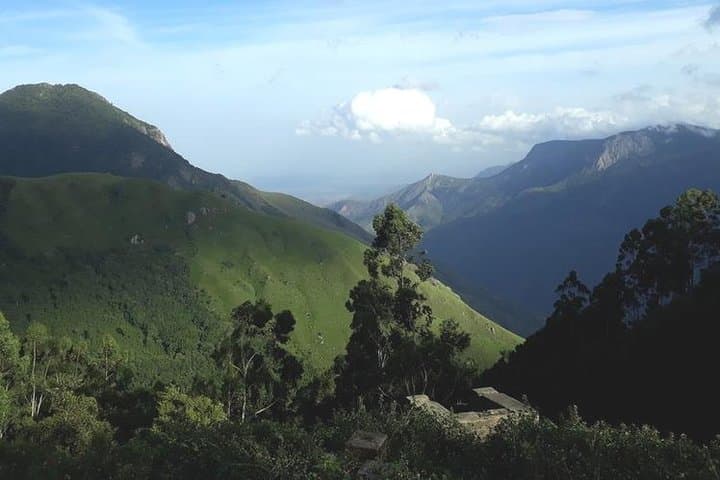
This full-day, private taxi tour stitches together Munnar’s most cinematic stops: manicured spice gardens, the manic rhythm of a working tea factory, the broad mirror of Mattupetty Dam, and the high, wind-swept vantage at Top Station. The route is a primer on the Western Ghats’ geology — steep ridgelines worn into deep valleys, laterite soils holding terraces of tea where tropical montane forests once dominated.
Tea shaped Munnar’s modern history. British planters carved estates here in the late 19th and early 20th centuries; Tata and regional growers later industrialized processing while local communities adapted to plantation rhythms. Today the Tata Tea Museum and KDHP-run Mattupetty factory give visitors a practical look at how plucked leaves travel from field to cup, and the flower garden at the KFDC offers a quieter botanical counterpoint.
Culturally the area is a working landscape. Plantations employ fieldhands whose knowledge of plucking patterns and seasonal growth is part labor, part craft. Nature here retains its own agency: elephants still cross lower slopes, monsoon storms can arrive in a single sweep, and clouds at Top Station sometimes sit at eye level, daring you closer to the edge.
Practical note: this is not a hike but a paced sightseeing day — expect several short walks and lots of roadside viewpoints. Admission fees to attractions like the tea factory and flower garden are extra. The tour runs roughly 6–8 hours and includes bottled water and a driver-guide; pickup from most Munnar hotels within 5 km is usually included.
Timing matters. Early starts catch the valley mist and quieter roads; afternoons work well for Top Station when clouds break for long views. Wear sturdy walking shoes for factory floors and dam paths, bring a light rain layer during the monsoon, and carry local currency for small entrance fees and market stalls. If you want a quieter experience, ask to linger at the lesser-visited lanes between estates — they are where the plantations still hum with daily life.
By sunset, the tea fields flatten into a green net and the town’s lights begin to blink. You return with a few things in your hands — a packet of freshly blended tea, a handful of photographs, and a clearer sense of how labor, landscape, and weather conspire to make Munnar’s tea valleys one of South India’s most intimate mountain experiences.
easy.
6–8 hours.
Light fitness — mostly seated car travel with short flat walks and steps at viewpoints
No—small local entrance fees (flower garden, tea factory) are typically paid on-site and are not included in the tour price.
Yes—pickup is included within a roughly 5 km radius of Munnar town; confirm your exact pickup point at booking.
Yes—the tour is family-friendly; keep children close near viewpoints and water edges.
Only light walking—short walks at viewpoints, gardens, and factory floors; no long treks are required.
The tour may be canceled in heavy rain; light showers are common and a rain jacket is recommended. Cancellation policy allows refund if canceled 24 hours prior.
You may spot wildlife like elephants from a distance; sightings are unpredictable and briefs from your guide will cover safety.
Munnar’s tea estates were expanded by British planters in the late 1800s; Tata and regional companies later modernized processing while local communities continued plantation labor traditions.
The Western Ghats are ecologically sensitive—stay on roads and paths, avoid feeding wildlife, and choose local services that support community livelihoods.
Munnar Info operates guided outdoor trips and adventures with an emphasis on safety, stewardship, and memorable experiences.

The morning arrives like a soft exhale over Munnar: layers of mist lift from the valleys and reveal rows of tightly clipped tea bushes that roll away to the horizon. You meet your driver-guide at the tourist office and, within minutes, the town gives way to narrow roads threaded through silver oak and shola forest. The air smells faintly of wet earth and green tea — the scent of industry and landscape braided together.
The morning arrives like a soft exhale over Munnar: layers of mist lift from the valleys and reveal rows of tightly clipped tea bushes that roll away to the horizon. You meet your driver-guide at the tourist office and, within minutes, the town gives way to narrow roads threaded through silver oak and shola forest. The air smells faintly of wet earth and green tea — the scent of industry and landscape braided together.
This full-day, private taxi tour stitches together Munnar’s most cinematic stops: manicured spice gardens, the manic rhythm of a working tea factory, the broad mirror of Mattupetty Dam, and the high, wind-swept vantage at Top Station. The route is a primer on the Western Ghats’ geology — steep ridgelines worn into deep valleys, laterite soils holding terraces of tea where tropical montane forests once dominated.
Tea shaped Munnar’s modern history. British planters carved estates here in the late 19th and early 20th centuries; Tata and regional growers later industrialized processing while local communities adapted to plantation rhythms. Today the Tata Tea Museum and KDHP-run Mattupetty factory give visitors a practical look at how plucked leaves travel from field to cup, and the flower garden at the KFDC offers a quieter botanical counterpoint.
Culturally the area is a working landscape. Plantations employ fieldhands whose knowledge of plucking patterns and seasonal growth is part labor, part craft. Nature here retains its own agency: elephants still cross lower slopes, monsoon storms can arrive in a single sweep, and clouds at Top Station sometimes sit at eye level, daring you closer to the edge.
Practical note: this is not a hike but a paced sightseeing day — expect several short walks and lots of roadside viewpoints. Admission fees to attractions like the tea factory and flower garden are extra. The tour runs roughly 6–8 hours and includes bottled water and a driver-guide; pickup from most Munnar hotels within 5 km is usually included.
Timing matters. Early starts catch the valley mist and quieter roads; afternoons work well for Top Station when clouds break for long views. Wear sturdy walking shoes for factory floors and dam paths, bring a light rain layer during the monsoon, and carry local currency for small entrance fees and market stalls. If you want a quieter experience, ask to linger at the lesser-visited lanes between estates — they are where the plantations still hum with daily life.
By sunset, the tea fields flatten into a green net and the town’s lights begin to blink. You return with a few things in your hands — a packet of freshly blended tea, a handful of photographs, and a clearer sense of how labor, landscape, and weather conspire to make Munnar’s tea valleys one of South India’s most intimate mountain experiences.