THE ADVENTURE COLLECTIVE® · Independent discovery and booking for outdoor travel

Walk Munich’s old town with an expert guide and see the physical traces of the Third Reich — from Marienplatz to Hofbräuhaus — in a focused two-hour tour. Practical pacing and local context make this a clear-eyed introduction to a difficult chapter of city history.
Walk Munich’s old town with an expert guide and see the physical traces of the Third Reich — from Marienplatz to Hofbräuhaus — in a focused two-hour tour. Practical pacing and local context make this a clear-eyed introduction to a difficult chapter of city history.
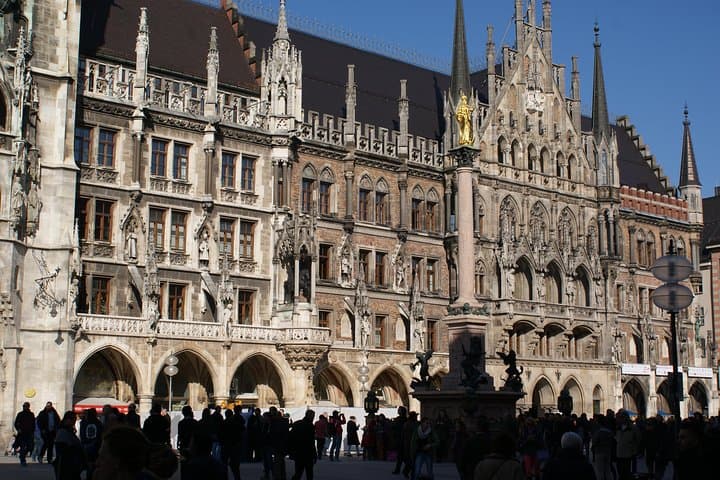
Standing in Marienplatz as trams hum and tourists drift, the guide draws a straight line between Munich's bright façades and a darker twentieth-century history.
This two-hour small-group walk threads through the old town: the square outside the old town hall where decisions led to the 1938 pogrom, past the Hofbräuhaus where Hitler spoke, and along the alleys that witnessed the 1923 Beer Hall Putsch and its gun battle with Bavarian police.
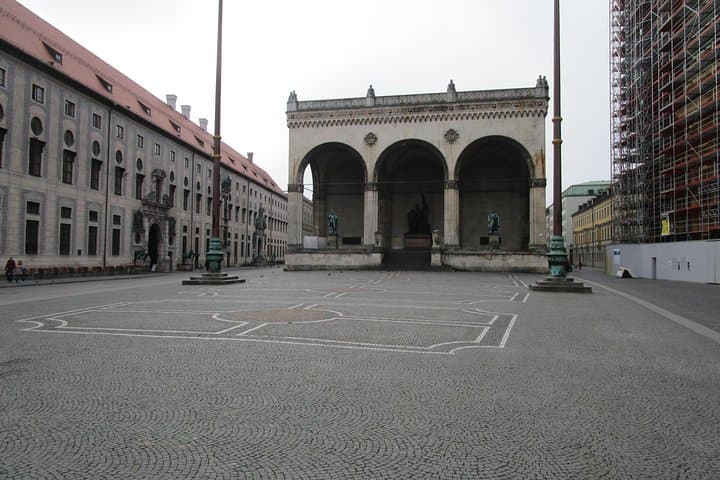
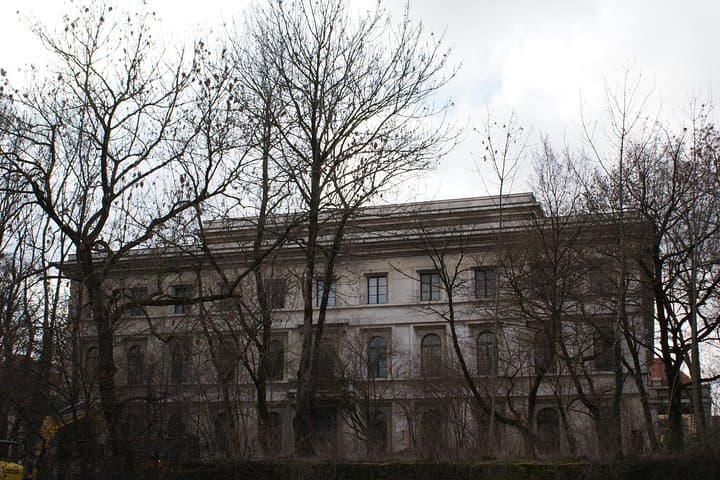
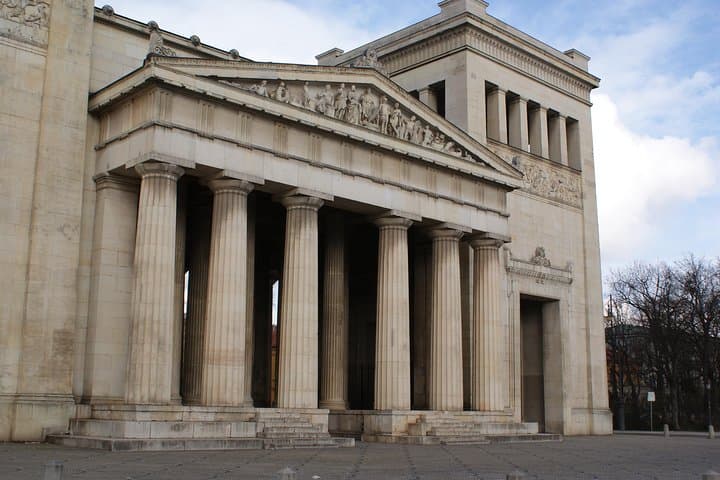
The route follows intact civic architecture — administrative blocks, beer halls, ceremonial plazas — that make the ideology visible in stone and street. Geologically unremarkable, Munich's compact city center lets you cover crucial sites on foot; culturally the tour balances biography, politics and civic memory, often finishing near the Documentation Centre for National Socialism for those who want more context.
Expect a sober, fact-driven narrative from an English-speaking local guide who frames events chronologically and points to plaques, building façades and squares as primary sources. The walk moves at a steady pace on cobblestones and sidewalks; participants should be able to stand and walk for two hours and step up curbs.
Practical tips: bring a rain layer and comfortable shoes; avoid large backpacks that block narrow pavements. Morning departures beat the busiest mid-day crowds; allow time afterward to visit the Documentation Centre or the nearby Residenz.
This is not a celebratory tour but an interpretive urban history walk — best for travelers seeking a clear-eyed, contextual exploration of Munich's role in twentieth-century Europe. Photography is allowed, but always be respectful at memorials and plaques.
Verified experiences and guided adventures in the surrounding area.
Operated by Alun Evans Personal Tour Guiding Munich · Munich, Bavaria
Standing in Marienplatz as trams hum and tourists drift, the guide draws a straight line between Munich's bright façades and a darker twentieth-century history.
This two-hour small-group walk threads through the old town: the square outside the old town hall where decisions led to the 1938 pogrom, past the Hofbräuhaus where Hitler spoke, and along the alleys that witnessed the 1923 Beer Hall Putsch and its gun battle with Bavarian police.
The route follows intact civic architecture — administrative blocks, beer halls, ceremonial plazas — that make the ideology visible in stone and street. Geologically unremarkable, Munich's compact city center lets you cover crucial sites on foot; culturally the tour balances biography, politics and civic memory, often finishing near the Documentation Centre for National Socialism for those who want more context.
Expect a sober, fact-driven narrative from an English-speaking local guide who frames events chronologically and points to plaques, building façades and squares as primary sources. The walk moves at a steady pace on cobblestones and sidewalks; participants should be able to stand and walk for two hours and step up curbs.
Practical tips: bring a rain layer and comfortable shoes; avoid large backpacks that block narrow pavements. Morning departures beat the busiest mid-day crowds; allow time afterward to visit the Documentation Centre or the nearby Residenz.
This is not a celebratory tour but an interpretive urban history walk — best for travelers seeking a clear-eyed, contextual exploration of Munich's role in twentieth-century Europe. Photography is allowed, but always be respectful at memorials and plaques.
moderate.
2 hours.
Good urban fitness—able to stand, walk on uneven cobblestones and climb short flights of steps over two hours.
Most departures meet at Marienplatz and the walk concludes near the Documentation Centre for National Socialism or another central location in the old town.
No—this walking tour visits exterior sites; admission to museums like the Documentation Centre is optional and paid separately.
The content is serious and may be distressing for young children; teens can benefit if accompanied by adults who can discuss difficult topics.
Cobblestones, curbs and occasional stairs mean the route has limited accessibility—contact the operator for specific accommodations.
Munich was a political center for the early Nazi movement; key events include the Beer Hall Putsch (1923) and decisions around 1938 that advanced anti-Jewish measures.
Treat historic façades and memorials with care—avoid touching plaques and follow local signage; keep groups small to reduce wear on narrow streets.
Alun Evans Personal Tour Guiding Munich operates guided outdoor trips and adventures with an emphasis on safety, stewardship, and memorable experiences.
Standing in Marienplatz as trams hum and tourists drift, the guide draws a straight line between Munich's bright façades and a darker twentieth-century history.
This two-hour small-group walk threads through the old town: the square outside the old town hall where decisions led to the 1938 pogrom, past the Hofbräuhaus where Hitler spoke, and along the alleys that witnessed the 1923 Beer Hall Putsch and its gun battle with Bavarian police.
The route follows intact civic architecture — administrative blocks, beer halls, ceremonial plazas — that make the ideology visible in stone and street. Geologically unremarkable, Munich's compact city center lets you cover crucial sites on foot; culturally the tour balances biography, politics and civic memory, often finishing near the Documentation Centre for National Socialism for those who want more context.
Expect a sober, fact-driven narrative from an English-speaking local guide who frames events chronologically and points to plaques, building façades and squares as primary sources. The walk moves at a steady pace on cobblestones and sidewalks; participants should be able to stand and walk for two hours and step up curbs.
Practical tips: bring a rain layer and comfortable shoes; avoid large backpacks that block narrow pavements. Morning departures beat the busiest mid-day crowds; allow time afterward to visit the Documentation Centre or the nearby Residenz.
This is not a celebratory tour but an interpretive urban history walk — best for travelers seeking a clear-eyed, contextual exploration of Munich's role in twentieth-century Europe. Photography is allowed, but always be respectful at memorials and plaques.
Standing in Marienplatz as trams hum and tourists drift, the guide draws a straight line between Munich's bright façades and a darker twentieth-century history.
This two-hour small-group walk threads through the old town: the square outside the old town hall where decisions led to the 1938 pogrom, past the Hofbräuhaus where Hitler spoke, and along the alleys that witnessed the 1923 Beer Hall Putsch and its gun battle with Bavarian police.
The route follows intact civic architecture — administrative blocks, beer halls, ceremonial plazas — that make the ideology visible in stone and street. Geologically unremarkable, Munich's compact city center lets you cover crucial sites on foot; culturally the tour balances biography, politics and civic memory, often finishing near the Documentation Centre for National Socialism for those who want more context.
Expect a sober, fact-driven narrative from an English-speaking local guide who frames events chronologically and points to plaques, building façades and squares as primary sources. The walk moves at a steady pace on cobblestones and sidewalks; participants should be able to stand and walk for two hours and step up curbs.
Practical tips: bring a rain layer and comfortable shoes; avoid large backpacks that block narrow pavements. Morning departures beat the busiest mid-day crowds; allow time afterward to visit the Documentation Centre or the nearby Residenz.
This is not a celebratory tour but an interpretive urban history walk — best for travelers seeking a clear-eyed, contextual exploration of Munich's role in twentieth-century Europe. Photography is allowed, but always be respectful at memorials and plaques.