THE ADVENTURE COLLECTIVE® · Independent discovery and booking for outdoor travel

Escape Tokyo for a private, full-day sweep of Mount Fuji and Hakone’s volcanic theater — ropeway panoramas, a Lake Ashi cruise, shrine gates at water’s edge, and a visit to the 5th Station. This guided tour pairs convenience with cultural context for travelers who want big views in a single day.
Escape Tokyo for a private, full-day sweep of Mount Fuji and Hakone’s volcanic theater — ropeway panoramas, a Lake Ashi cruise, shrine gates at water’s edge, and a visit to the 5th Station. This guided tour pairs convenience with cultural context for travelers who want big views in a single day.
You step out of the city and into another Japan within the hour: the highway unspools, office towers shrink, and by mid-morning cedar forests frame a mountain that seems to watch your progress. On a private one-day run from Tokyo, the itinerary stitches together volcanic theater, shrine-lined lakeshores and village ponds — each stop a different shade of the same ancient landscape.
Verified experiences and guided adventures in the surrounding area.
Operated by IV Tokyo Travel · Hakone, Kanagawa
You step out of the city and into another Japan within the hour: the highway unspools, office towers shrink, and by mid-morning cedar forests frame a mountain that seems to watch your progress. On a private one-day run from Tokyo, the itinerary stitches together volcanic theater, shrine-lined lakeshores and village ponds — each stop a different shade of the same ancient landscape.
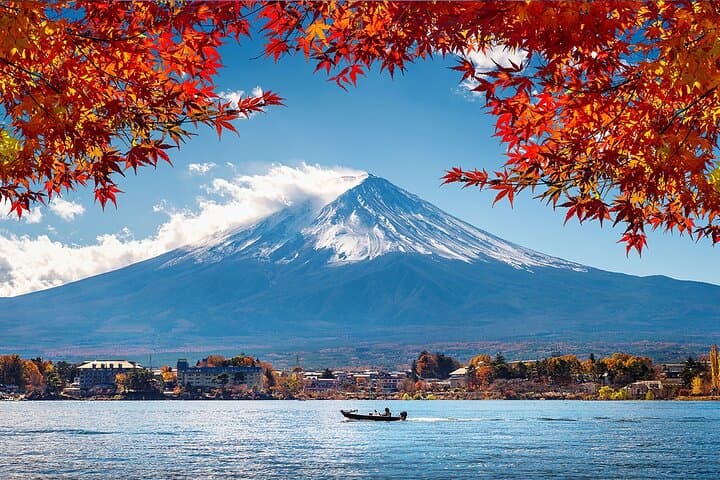
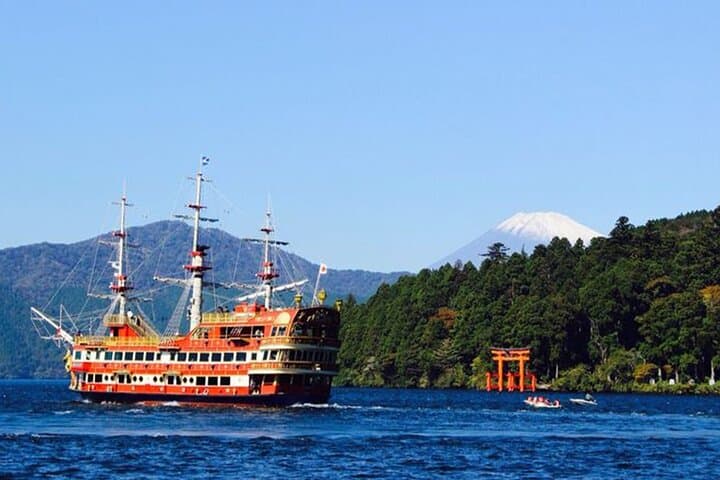
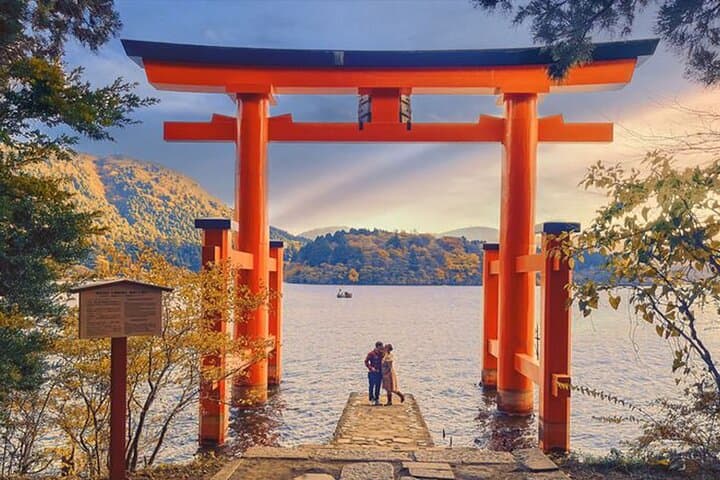
The tour moves at the rhythm of visibility. Owakudani’s fumaroles breathe sulfur-scented steam into a valley that still smells like the earth is working under your feet; the Hakone Ropeway arcs above that activity for nearly 4 km of aerial theater, the cabins rolling over steaming vents and lava-scarred ridgelines. Lake Ashi waits below, its surface daring you to stand at the red torii of Hakone Shrine and frame Mount Fuji in a single, precise composition. Later, the 5th Station of Mount Fuji—sitting near 2,300 m—gives you a close sense of scale: the volcano’s full height is 3,776 m, and even viewed from mid-flank its geometry still seems deliberate.
This corridor between Kanagawa and the Fuji Five Lakes has been a travel route for centuries. Hakone was a crucial checkpoint on the Tōkaidō road connecting Edo (Tokyo) and Kyoto; its shrines and old post towns keep that traffic-shaped cultural layer visible. Geologically, Hakone is a caldera complex adjacent to Fuji’s stratovolcano — the contrast between slow-built cone and jagged caldera explains the area's hot springs, black eggs at Owakudani, and lake basins carved by eruptions and landslides.
Practical edge: expect eleven hours on the road with guided commentary, private transport and included fees for the Hakone cruise, ropeway and Kawaguchiko sightseeing boat. Visibility for Fuji is the variable that makes or breaks photos; clear winter mornings are best, while spring’s cherry blossoms and autumn’s foliage add color but sometimes obscure the peak.
Plan layers — mornings near the 5th Station are cold even on warm Tokyo days — and comfortable shoes for uneven walkways in lakeside villages and shrines. Bring motion-sickness remedies if you're prone to choppy-ship feeling on Lake Ashi’s cruise or the ropeway on windy days. Cash for small vendors and black eggs at Owakudani helps; most major fees are included but souvenirs and extra snacks are not.
The private format is ideal for families or travelers who want time and flexibility: ask your licensed guide to linger at a pond in Oshino Hakkai or to time the ropeway for clearer Fuji light. Respect onsen etiquette and local signs in volcanic areas — places like Owakudani still carry legitimate hazards.
By dusk the guide returns you toward Tokyo, the mountain shrinking into the dark but leaving a precise impression: a day that folds geology, culture and easy adventure into a single, manageable loop.
moderate.
10–12 hours.
Light to moderate fitness; able to walk short, uneven distances and tolerate several hours in a vehicle.
No — the tour includes a visit to a Mt. Fuji viewing area and the 5th Station, but not the summit climb (which requires overnight planning and seasonal restrictions).
Yes — admissions for the Hakone cruise, Hakone Ropeway and Kawaguchiko sightseeing boat are included in the tour price.
Yes — pickup and drop-off within Tokyo’s 23 wards are provided; confirm your hotel name and lobby meeting point when booking.
Yes — the private format allows flexibility; discuss priorities with your guide when you book to adjust stops or timing.
Generally yes for both groups, but travelers should be able to tolerate an 11-hour day with some walking; the supplier notes it’s not recommended for pregnant travelers or those with serious heart conditions.
Guides will adjust timing or swap stops when possible; consider returning on a different day if Mt. Fuji photography is the primary goal.
Hakone was a major checkpoint on the historic Tōkaidō road; shrines and stone paths still mark its role as a travel corridor to Edo (old Tokyo).
High visitor numbers put pressure on onsen and fragile volcanic areas — stay on trails, follow signage, and avoid disturbing wildlife or hot-spring habitats.
IV Tokyo Travel operates guided outdoor trips and adventures with an emphasis on safety, stewardship, and memorable experiences.

You step out of the city and into another Japan within the hour: the highway unspools, office towers shrink, and by mid-morning cedar forests frame a mountain that seems to watch your progress. On a private one-day run from Tokyo, the itinerary stitches together volcanic theater, shrine-lined lakeshores and village ponds — each stop a different shade of the same ancient landscape.
You step out of the city and into another Japan within the hour: the highway unspools, office towers shrink, and by mid-morning cedar forests frame a mountain that seems to watch your progress. On a private one-day run from Tokyo, the itinerary stitches together volcanic theater, shrine-lined lakeshores and village ponds — each stop a different shade of the same ancient landscape.
The tour moves at the rhythm of visibility. Owakudani’s fumaroles breathe sulfur-scented steam into a valley that still smells like the earth is working under your feet; the Hakone Ropeway arcs above that activity for nearly 4 km of aerial theater, the cabins rolling over steaming vents and lava-scarred ridgelines. Lake Ashi waits below, its surface daring you to stand at the red torii of Hakone Shrine and frame Mount Fuji in a single, precise composition. Later, the 5th Station of Mount Fuji—sitting near 2,300 m—gives you a close sense of scale: the volcano’s full height is 3,776 m, and even viewed from mid-flank its geometry still seems deliberate.
This corridor between Kanagawa and the Fuji Five Lakes has been a travel route for centuries. Hakone was a crucial checkpoint on the Tōkaidō road connecting Edo (Tokyo) and Kyoto; its shrines and old post towns keep that traffic-shaped cultural layer visible. Geologically, Hakone is a caldera complex adjacent to Fuji’s stratovolcano — the contrast between slow-built cone and jagged caldera explains the area's hot springs, black eggs at Owakudani, and lake basins carved by eruptions and landslides.
Practical edge: expect eleven hours on the road with guided commentary, private transport and included fees for the Hakone cruise, ropeway and Kawaguchiko sightseeing boat. Visibility for Fuji is the variable that makes or breaks photos; clear winter mornings are best, while spring’s cherry blossoms and autumn’s foliage add color but sometimes obscure the peak.
Plan layers — mornings near the 5th Station are cold even on warm Tokyo days — and comfortable shoes for uneven walkways in lakeside villages and shrines. Bring motion-sickness remedies if you're prone to choppy-ship feeling on Lake Ashi’s cruise or the ropeway on windy days. Cash for small vendors and black eggs at Owakudani helps; most major fees are included but souvenirs and extra snacks are not.
The private format is ideal for families or travelers who want time and flexibility: ask your licensed guide to linger at a pond in Oshino Hakkai or to time the ropeway for clearer Fuji light. Respect onsen etiquette and local signs in volcanic areas — places like Owakudani still carry legitimate hazards.
By dusk the guide returns you toward Tokyo, the mountain shrinking into the dark but leaving a precise impression: a day that folds geology, culture and easy adventure into a single, manageable loop.