THE ADVENTURE COLLECTIVE® · Independent discovery and booking for outdoor travel

Visit Sicily’s volatile giant and a clifftop town in one day. Hike across black lava and vineyard terraces on Etna, then step into Taormina’s ancient theatre with sea views.
Visit Sicily’s volatile giant and a clifftop town in one day. Hike across black lava and vineyard terraces on Etna, then step into Taormina’s ancient theatre with sea views.
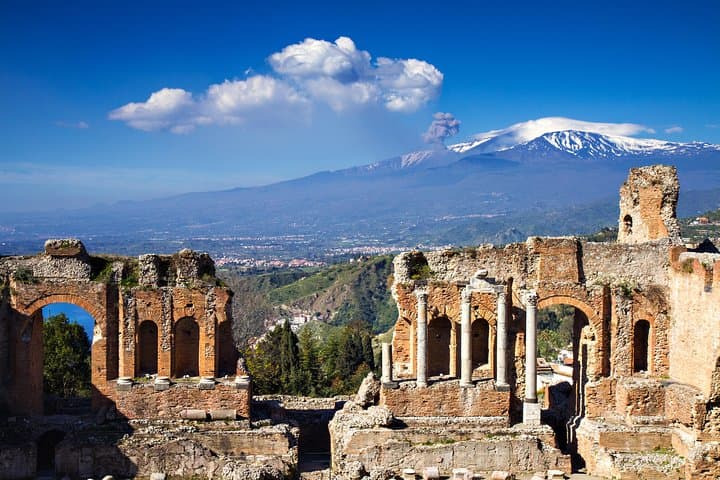
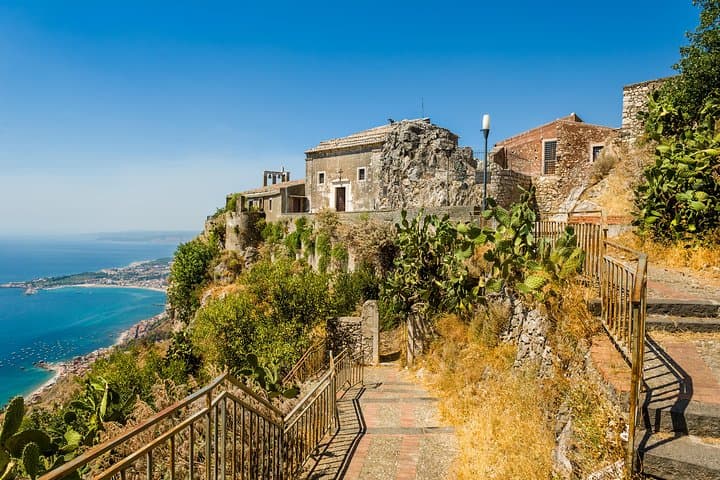
A wind off the Ionian Sea lifts dust and the scent of burnt rock as you approach Mt. Etna, the island’s restless spine. Basalt fields stretch like a dark ocean, and vineyards cling to terraces where volcanic ash feeds grapes that make Sicily’s distinctive DOC wines. Later the road drops toward Taormina, where a cliffside theatre opens its stage to the sea and sky.
Verified experiences and guided adventures in the surrounding area.
Operated by Joe Banana Limos · Catania, Sicily
A wind off the Ionian Sea lifts dust and the scent of burnt rock as you approach Mt. Etna, the island’s restless spine. Basalt fields stretch like a dark ocean, and vineyards cling to terraces where volcanic ash feeds grapes that make Sicily’s distinctive DOC wines. Later the road drops toward Taormina, where a cliffside theatre opens its stage to the sea and sky.
Geology here is immediate: Etna is one of Europe’s most active stratovolcanoes, a layered cone built by repeated eruptions and lava flows. Human history bends around that volatility — villages rebuilt on older flows, winegrowers planting tolerant vines in mineral soils, towns like Taormina developing as cultural waypoints with an ancient theatre used since antiquity for drama and music.
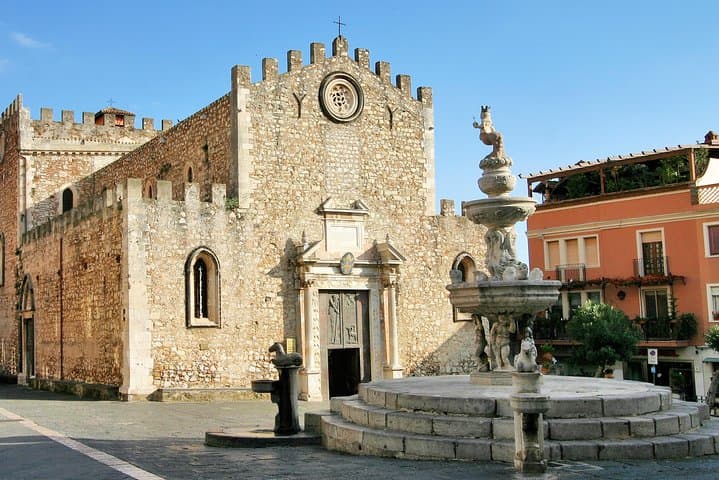
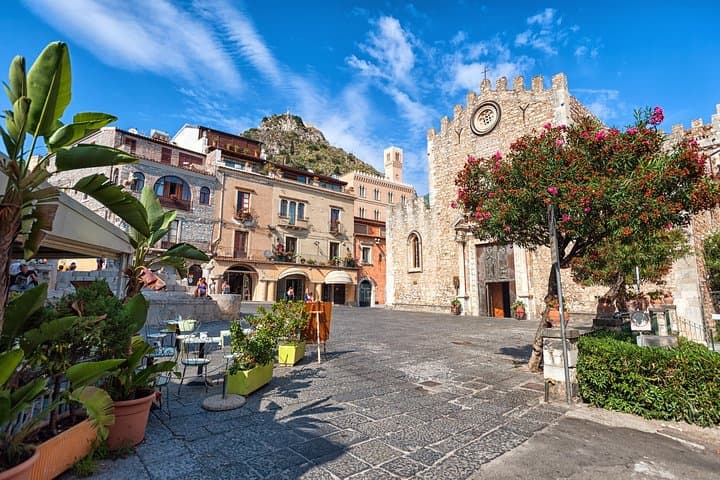
Culturally, expect warm hospitality and a strong food-and-wine thread; vineyards beneath Etna produce crisp white and mineral reds, and Taormina’s streets remain lively with cafés and artisan shops. Local guides point out recent lava flows, botanical surprises on the slopes, and the theatre’s vantage over the bay.
Practical guidance: this is a full-day, private tour (roughly 8–9 hours). Terrain ranges from paved lanes and vineyard tracks to rocky, uneven paths near craters — bring sturdy shoes, sun protection, and 1–2 liters of water. Temperatures fall with elevation, so layer up. Access to crater rims may depend on recent activity and weather; follow your guide’s safety instructions. Time your visit for morning light on Etna and late-afternoon calm in Taormina to avoid crowds and heat.
moderate.
8–9 hours.
Moderate fitness: able to walk on uneven ground for a few hours and handle short elevation changes.
The full-day private tour runs about 8–9 hours (480–540 minutes), combining time on Etna and in Taormina.
Visits to crater areas depend on current volcanic activity and weather; guides will provide alternatives if access is closed.
Most travelers base themselves in Catania or Taormina; Catania is the usual arrival city with airport connections.
Moderate fitness is recommended — expect walking on uneven ground and short elevation gains; no technical climbing skills required.
Etna has shaped human settlement and agriculture for millennia; villages and vineyards adapted to periodic eruptions and rich volcanic soils.
Tour operators often follow rules to keep paths clear of erosion and discourage off-trail walking; support local producers to sustain terrace agriculture.
Joe Banana Limos operates guided outdoor trips and adventures with an emphasis on safety, stewardship, and memorable experiences.
A wind off the Ionian Sea lifts dust and the scent of burnt rock as you approach Mt. Etna, the island’s restless spine. Basalt fields stretch like a dark ocean, and vineyards cling to terraces where volcanic ash feeds grapes that make Sicily’s distinctive DOC wines. Later the road drops toward Taormina, where a cliffside theatre opens its stage to the sea and sky.
A wind off the Ionian Sea lifts dust and the scent of burnt rock as you approach Mt. Etna, the island’s restless spine. Basalt fields stretch like a dark ocean, and vineyards cling to terraces where volcanic ash feeds grapes that make Sicily’s distinctive DOC wines. Later the road drops toward Taormina, where a cliffside theatre opens its stage to the sea and sky.
Geology here is immediate: Etna is one of Europe’s most active stratovolcanoes, a layered cone built by repeated eruptions and lava flows. Human history bends around that volatility — villages rebuilt on older flows, winegrowers planting tolerant vines in mineral soils, towns like Taormina developing as cultural waypoints with an ancient theatre used since antiquity for drama and music.
Culturally, expect warm hospitality and a strong food-and-wine thread; vineyards beneath Etna produce crisp white and mineral reds, and Taormina’s streets remain lively with cafés and artisan shops. Local guides point out recent lava flows, botanical surprises on the slopes, and the theatre’s vantage over the bay.
Practical guidance: this is a full-day, private tour (roughly 8–9 hours). Terrain ranges from paved lanes and vineyard tracks to rocky, uneven paths near craters — bring sturdy shoes, sun protection, and 1–2 liters of water. Temperatures fall with elevation, so layer up. Access to crater rims may depend on recent activity and weather; follow your guide’s safety instructions. Time your visit for morning light on Etna and late-afternoon calm in Taormina to avoid crowds and heat.