THE ADVENTURE COLLECTIVE® · Independent discovery and booking for outdoor travel

A four-day, high-altitude trek from Momella Gate to Socialist Peak on Mount Meru that blends rainforest, alpine saddle, and summit sunrise. Expect long ascents, changing terrain, and strong porter support—ideal for fit hikers ready for altitude.
A four-day, high-altitude trek from Momella Gate to Socialist Peak on Mount Meru that blends rainforest, alpine saddle, and summit sunrise. Expect long ascents, changing terrain, and strong porter support—ideal for fit hikers ready for altitude.
On a cool pre-dawn outside Arusha the trail smells of wet earth and resin; cooks stoke small fires, porters lash final packs, and guides check headlamps one last time. You climb out of the savanna—elephant tracks pockmark the dirt road—and enter a band of tall East African yellowwood that pins the sky with dark trunks. Over four days the mountain changes its character repeatedly: rainforest that hushes conversation, a jagged ash cone that sharpens the light, a high alpine saddle where wind dares you to keep moving, and finally the volcanic crown of Socialist Peak (4,566 m) where Kilimanjaro occasionally reveals itself across the plain.
Verified experiences and guided adventures in the surrounding area.
Operated by Guide Private · Arusha, Arusha Region
On a cool pre-dawn outside Arusha the trail smells of wet earth and resin; cooks stoke small fires, porters lash final packs, and guides check headlamps one last time. You climb out of the savanna—elephant tracks pockmark the dirt road—and enter a band of tall East African yellowwood that pins the sky with dark trunks. Over four days the mountain changes its character repeatedly: rainforest that hushes conversation, a jagged ash cone that sharpens the light, a high alpine saddle where wind dares you to keep moving, and finally the volcanic crown of Socialist Peak (4,566 m) where Kilimanjaro occasionally reveals itself across the plain.
Mount Meru is a stratovolcano and the region’s second sentinel—about 70 km west of Kilimanjaro—whose last minor eruption was recorded in 1910. European climbers first recorded a summit in the early 20th century (Fritz Jäger, 1904), but for local Maasai and Meru communities the mountain has long marked seasonal grazing and water sources fed by its forested slopes. Today the route runs through Arusha National Park: volcanic geology gives way to fertile forest that supports buffalo, monkeys, and migratory birdlife, and the Miriakamba and Saddle huts serve as basecamps for the ascent.
Expect three full days of walking with steeper summit-night push. Day one (Momella gate, 1,650 m) takes the long route—roughly 12 km/7 hours—through rainforest to Miriakamba Hut (2,500 m) for overnight. Day two moves higher: 4–5 hours to Saddle Hut (3,500 m) with a side climb to Little Meru (3,801 m) for acclimatization; midnight starts and a 6–7 hour push (about 6 km) from the saddle gains the summit by sunrise. Descents are faster but still demanding—plan 2–4 hours between huts and a final 3.5–4 hour route out to Momella gate the last day.
Practical edge: altitude is the real challenge—hydrate, pace carefully, and treat the saddle-to-summit push like an alpine climb. Porters and cooks handle logistics, but bring personal layers, a reliable headlamp, and a snug sleeping liner; mountain weather is mercurial and temperatures can swing from baking sun to freezing wind within hours. Permits and park fees are required; most operators include these and hotel transfers to/from Arusha or Moshi.
Because the trail crosses protected forest, follow your guide and leave no trace: stick to trails, pack out waste, and tip fairly—porters make the ascent possible. For travelers willing to earn the views, Mount Meru delivers clear-time panoramas of Kilimanjaro, intimate wildlife encounters in lower forest, and the rare satisfaction of reaching one of East Africa’s high volcanic summits.
challenging.
4 days.
Good aerobic fitness and experience with multi-day hikes at altitude; ability to hike 6–7 hours with elevation gain
From the Saddle Hut expect a 6–7 hour ascent (about 6 km) with steep, loose volcanic scree; it is physically demanding and done at night to reach sunrise.
No technical climbing skills are required, but prior multi-day trekking experience and good aerobic fitness are highly recommended.
The driest months (June–August and January–February) offer the most reliable trail conditions and visibility; avoid the long rains (March–May) if possible.
Most operators include Arusha National Park permits; the standard route begins at Momella gate (about 1,650 m) after registration at Ngongongare gate.
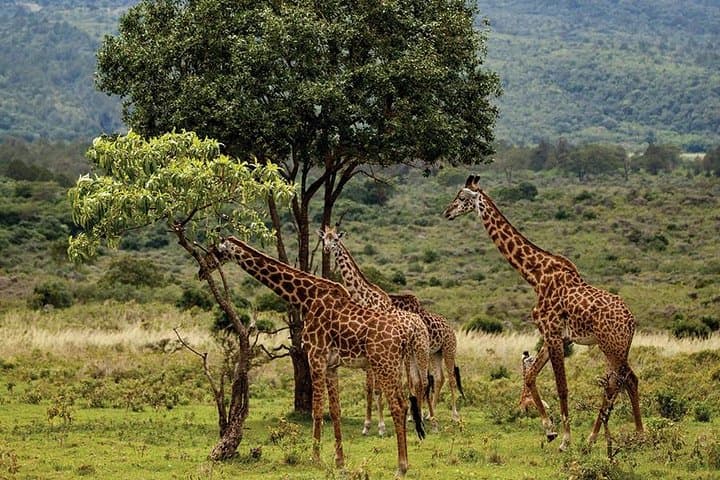
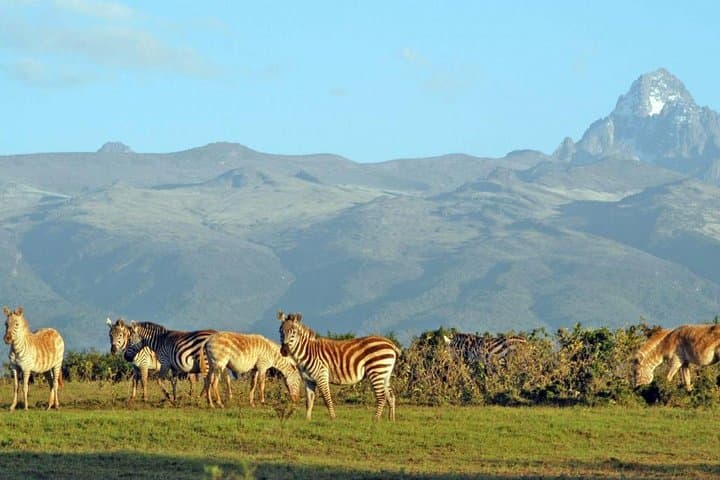
Lower forest and park road sections commonly host elephants, buffalo, blue monkeys, and a rich bird population—observe from a distance and follow guide instructions.
Hydrate, eat well, ascend slowly, use the acclimatization day (Little Meru), recognize symptoms early, and descend immediately if severe signs appear.
Mount Meru is a stratovolcano whose recorded eruptions date to the early 20th century; Fritz Jäger made an early ascent in 1904 and the mountain sits within Arusha National Park.
Trekking impacts are managed through park permits and hut systems—support local conservation by staying on trail, using operator services that pay fair porter wages, and packing out waste.
Guide Private operates guided outdoor trips and adventures with an emphasis on safety, stewardship, and memorable experiences.
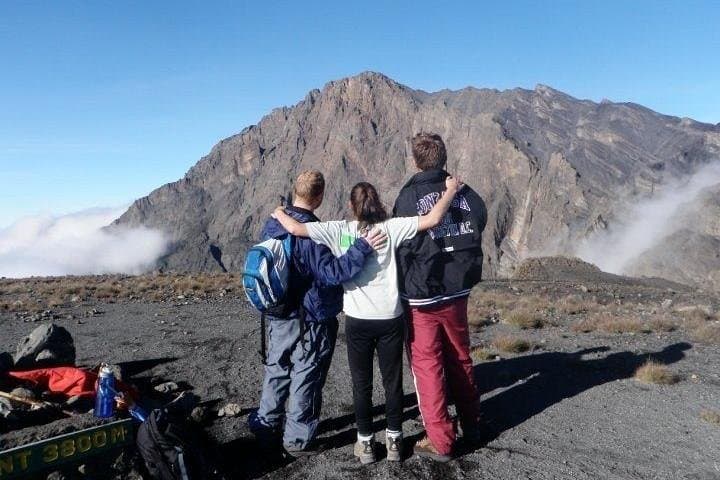
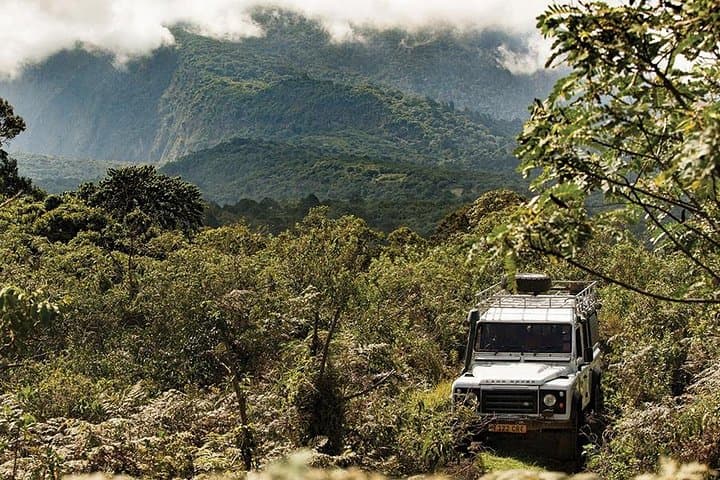
On a cool pre-dawn outside Arusha the trail smells of wet earth and resin; cooks stoke small fires, porters lash final packs, and guides check headlamps one last time. You climb out of the savanna—elephant tracks pockmark the dirt road—and enter a band of tall East African yellowwood that pins the sky with dark trunks. Over four days the mountain changes its character repeatedly: rainforest that hushes conversation, a jagged ash cone that sharpens the light, a high alpine saddle where wind dares you to keep moving, and finally the volcanic crown of Socialist Peak (4,566 m) where Kilimanjaro occasionally reveals itself across the plain.
On a cool pre-dawn outside Arusha the trail smells of wet earth and resin; cooks stoke small fires, porters lash final packs, and guides check headlamps one last time. You climb out of the savanna—elephant tracks pockmark the dirt road—and enter a band of tall East African yellowwood that pins the sky with dark trunks. Over four days the mountain changes its character repeatedly: rainforest that hushes conversation, a jagged ash cone that sharpens the light, a high alpine saddle where wind dares you to keep moving, and finally the volcanic crown of Socialist Peak (4,566 m) where Kilimanjaro occasionally reveals itself across the plain.
Mount Meru is a stratovolcano and the region’s second sentinel—about 70 km west of Kilimanjaro—whose last minor eruption was recorded in 1910. European climbers first recorded a summit in the early 20th century (Fritz Jäger, 1904), but for local Maasai and Meru communities the mountain has long marked seasonal grazing and water sources fed by its forested slopes. Today the route runs through Arusha National Park: volcanic geology gives way to fertile forest that supports buffalo, monkeys, and migratory birdlife, and the Miriakamba and Saddle huts serve as basecamps for the ascent.
Expect three full days of walking with steeper summit-night push. Day one (Momella gate, 1,650 m) takes the long route—roughly 12 km/7 hours—through rainforest to Miriakamba Hut (2,500 m) for overnight. Day two moves higher: 4–5 hours to Saddle Hut (3,500 m) with a side climb to Little Meru (3,801 m) for acclimatization; midnight starts and a 6–7 hour push (about 6 km) from the saddle gains the summit by sunrise. Descents are faster but still demanding—plan 2–4 hours between huts and a final 3.5–4 hour route out to Momella gate the last day.
Practical edge: altitude is the real challenge—hydrate, pace carefully, and treat the saddle-to-summit push like an alpine climb. Porters and cooks handle logistics, but bring personal layers, a reliable headlamp, and a snug sleeping liner; mountain weather is mercurial and temperatures can swing from baking sun to freezing wind within hours. Permits and park fees are required; most operators include these and hotel transfers to/from Arusha or Moshi.
Because the trail crosses protected forest, follow your guide and leave no trace: stick to trails, pack out waste, and tip fairly—porters make the ascent possible. For travelers willing to earn the views, Mount Meru delivers clear-time panoramas of Kilimanjaro, intimate wildlife encounters in lower forest, and the rare satisfaction of reaching one of East Africa’s high volcanic summits.