THE ADVENTURE COLLECTIVE® · Independent discovery and booking for outdoor travel

Pedal (with help from an e-motor) up Montjuïc to panoramic viewpoints, museums and a tapas pause. This three-hour guided ride blends easy climbing with history and city views.
Pedal (with help from an e-motor) up Montjuïc to panoramic viewpoints, museums and a tapas pause. This three-hour guided ride blends easy climbing with history and city views.
You start on two wheels at the base of Montjuïc with the city unfolding below: tile roofs, the glint of the Mediterranean, and a breeze that pushes you up the hill. Electric bikes ease the climb to about 150–175 m of elevation, turning steep switchbacks and wide park roads into a leisurely spin. Along the way the group pauses at fountains, viewpoints and sculpted gardens, the guide pointing out vantage lines and photo angles.
Verified experiences and guided adventures in the surrounding area.
Operated by Tres Gatos Bike Tours · Barcelona, Catalonia
You start on two wheels at the base of Montjuïc with the city unfolding below: tile roofs, the glint of the Mediterranean, and a breeze that pushes you up the hill. Electric bikes ease the climb to about 150–175 m of elevation, turning steep switchbacks and wide park roads into a leisurely spin. Along the way the group pauses at fountains, viewpoints and sculpted gardens, the guide pointing out vantage lines and photo angles.
Montjuïc is stamped by industry, war and spectacle: a former military stronghold with a 17th-century fortress, later reshaped for the 1929 International Exposition and the 1992 Olympics. Geologically the hill is a low coastal massif of ancient metamorphic rock; culturally it’s layered with museums—from the Palau Nacional to the Joan Miró Foundation—and working gardens that reflect Catalonia’s horticultural experiments.
Expect paved avenues, gravel garden paths and short cobbled stretches, roughly 6–8 km covered over three hours with intermittent stops (total climb ~150 m). The tour includes helmeted e-bike use and a guided food pause for tapas and cava (not included). Practical tips: bring a small daypack with a refillable water bottle, wear closed-toe shoes with decent tread and carry a light waterproof—Montjuïc’s microclimate can be cooler and windier than the beachfront. Morning or late-afternoon departures offer the best light and cooler temperatures; aim to avoid midday heat in summer.
This ride mixes low-impact exercise with cultural context, making Montjuïc’s slopes accessible without sacrificing the sweep of Barcelona below.
easy.
3 hours.
Suitable for casual cyclists and walkers in reasonable health; e-assist handles hills so little prior fitness is required.
No—the tour includes a guided food stop but the cost of tapas and drinks is paid on-site by participants.
No—the e-bikes provide pedal assist and the route uses mostly paved park roads; the tour is suitable for beginners.
Yes—helmets are supplied, though many riders prefer to bring their own for comfort and fit.
Meet near Plaça d'Espanya or the Palau Nacional area; public transport (metro and buses) serves Plaça d'Espanya with short walking access to the start.
Montjuïc has been a military lookout and execution site, later reshaped for the 1929 Exposition and extensively redeveloped for the 1992 Summer Olympics.
Stay on paved paths and marked trails to limit erosion; follow local waste rules and avoid feeding wildlife to protect urban ecosystems.
Tres Gatos Bike Tours operates guided outdoor trips and adventures with an emphasis on safety, stewardship, and memorable experiences.
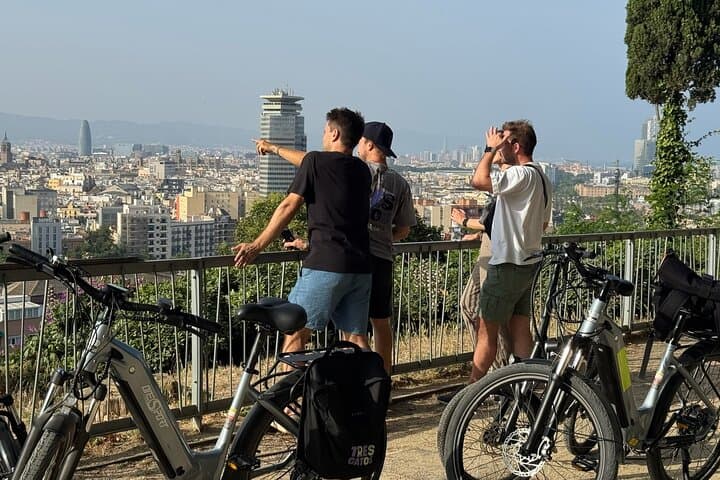
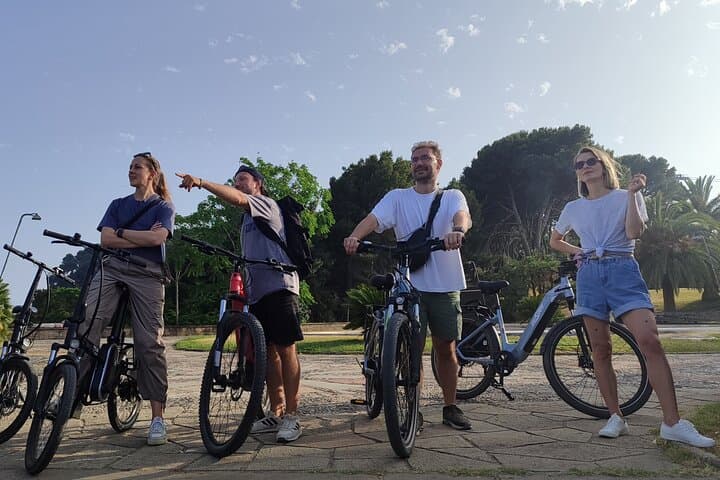
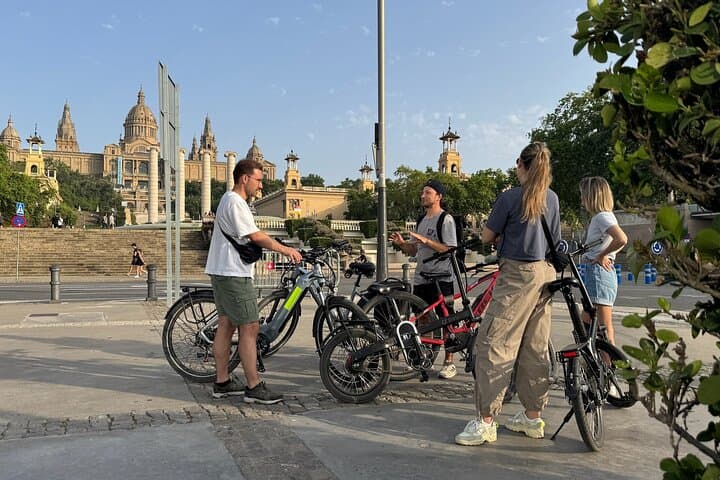
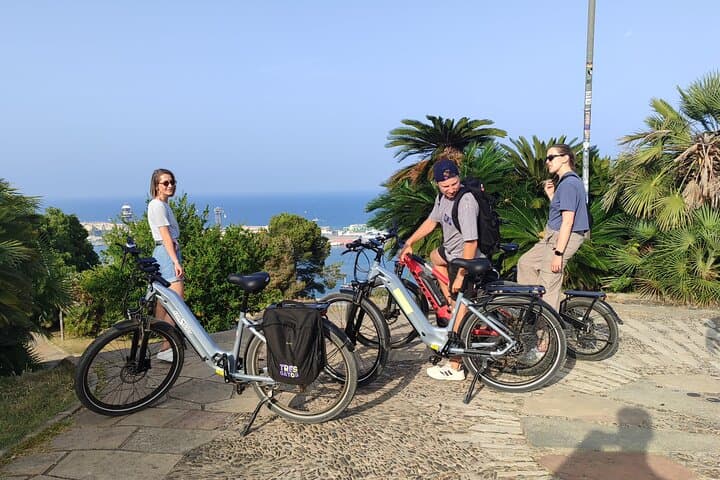
You start on two wheels at the base of Montjuïc with the city unfolding below: tile roofs, the glint of the Mediterranean, and a breeze that pushes you up the hill. Electric bikes ease the climb to about 150–175 m of elevation, turning steep switchbacks and wide park roads into a leisurely spin. Along the way the group pauses at fountains, viewpoints and sculpted gardens, the guide pointing out vantage lines and photo angles.
You start on two wheels at the base of Montjuïc with the city unfolding below: tile roofs, the glint of the Mediterranean, and a breeze that pushes you up the hill. Electric bikes ease the climb to about 150–175 m of elevation, turning steep switchbacks and wide park roads into a leisurely spin. Along the way the group pauses at fountains, viewpoints and sculpted gardens, the guide pointing out vantage lines and photo angles.
Montjuïc is stamped by industry, war and spectacle: a former military stronghold with a 17th-century fortress, later reshaped for the 1929 International Exposition and the 1992 Olympics. Geologically the hill is a low coastal massif of ancient metamorphic rock; culturally it’s layered with museums—from the Palau Nacional to the Joan Miró Foundation—and working gardens that reflect Catalonia’s horticultural experiments.
Expect paved avenues, gravel garden paths and short cobbled stretches, roughly 6–8 km covered over three hours with intermittent stops (total climb ~150 m). The tour includes helmeted e-bike use and a guided food pause for tapas and cava (not included). Practical tips: bring a small daypack with a refillable water bottle, wear closed-toe shoes with decent tread and carry a light waterproof—Montjuïc’s microclimate can be cooler and windier than the beachfront. Morning or late-afternoon departures offer the best light and cooler temperatures; aim to avoid midday heat in summer.
This ride mixes low-impact exercise with cultural context, making Montjuïc’s slopes accessible without sacrificing the sweep of Barcelona below.