THE ADVENTURE COLLECTIVE® · Independent discovery and booking for outdoor travel

Spend a half-day exploring Monte Albán’s hilltop plazas, ballcourts, and carved stones with a certified guide. This four-hour walking tour from Oaxaca includes transport and entrance — ideal for a concise, informative visit to one of Mexico’s oldest cities.
Spend a half-day exploring Monte Albán’s hilltop plazas, ballcourts, and carved stones with a certified guide. This four-hour walking tour from Oaxaca includes transport and entrance — ideal for a concise, informative visit to one of Mexico’s oldest cities.
You arrive on a plateau above Oaxaca as wind brushes across low scrub and the pale stones of plazas sit open to the sky. The guide points out a broad plaza where ceremonies once pushed whole communities forward; beyond, terraces drop away and the valley stretches toward the Sierra Madre, the land itself nudging you into scale.
Verified experiences and guided adventures in the surrounding area.
You arrive on a plateau above Oaxaca as wind brushes across low scrub and the pale stones of plazas sit open to the sky. The guide points out a broad plaza where ceremonies once pushed whole communities forward; beyond, terraces drop away and the valley stretches toward the Sierra Madre, the land itself nudging you into scale.
Monte Albán stands as one of Mesoamerica’s earliest urban centers, founded by the Zapotec around 500 BCE and occupied for more than a millennium. The site’s carved stairways, ball courts, and glyph-studded stones speak to complex politics and astronomy. The hilltop is a worked landscape — terraces and carved bedrock that reveal both the geology of uplifted volcanic soils and the labor of generations.
Culturally, Monte Albán is a place of ritual and competition; the ballcourt echoes games that settled disputes and affirmed status. Local communities in Oaxaca still prize these ruins as a living link to Zapotec identity, and small craft markets at the site offer textiles and carved wood by regional artisans.
Practicalities: this guided walking tour runs about four hours, includes transport from Oaxaca, entrance, and a certified guide. Paths are uneven flagstone and packed earth with short climbs and panoramic viewpoints — sturdy shoes and 1–2 liters of water are recommended. Favor mornings to avoid heat and busier midday crowds; bring sun protection and modest layers for wind on the ridge. Photography is allowed, but treat carvings and structures respectfully. For a compact cultural day out from Oaxaca city, this tour packs history, geology, and clear logistics into a single half-day excursion.
moderate.
4 hours.
Moderate — expect several short climbs, walking on uneven stone, and standing during talks; basic mobility required.
Yes — the tour price includes the site entrance fee; your guide handles tickets and permits.
This tour includes round-trip transportation from central Oaxaca, typically by van or minibus as part of the package.
Much of the site is uneven and involves short climbs; those with significant mobility limitations should check with the operator, as full accessibility is limited.
Photography for personal use is generally allowed; bring snacks but pack out trash and avoid touching or climbing on structures.
Monte Albán was a political and ceremonial capital of the Zapotecs from about 500 BCE to 900 CE, later influenced by Mixtec presence; its plazas and tombs record a shifting social landscape.
The site is managed to protect fragile architecture; visitors should stick to paths, avoid touching carvings, and support local guides and artisans who contribute to sustainable heritage tourism.
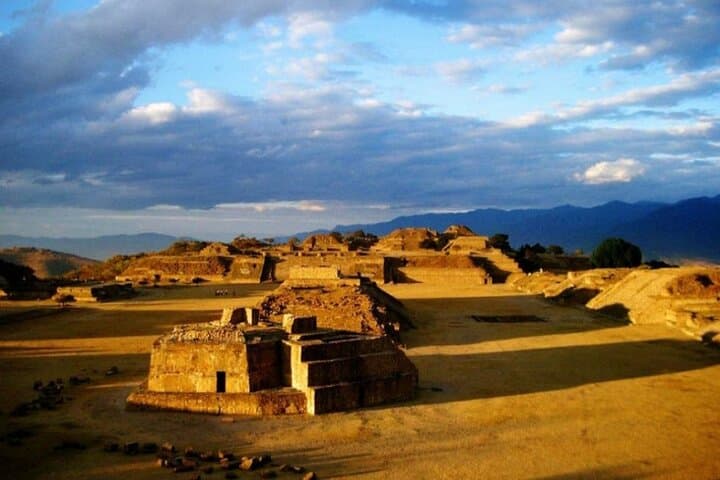
You arrive on a plateau above Oaxaca as wind brushes across low scrub and the pale stones of plazas sit open to the sky. The guide points out a broad plaza where ceremonies once pushed whole communities forward; beyond, terraces drop away and the valley stretches toward the Sierra Madre, the land itself nudging you into scale.
You arrive on a plateau above Oaxaca as wind brushes across low scrub and the pale stones of plazas sit open to the sky. The guide points out a broad plaza where ceremonies once pushed whole communities forward; beyond, terraces drop away and the valley stretches toward the Sierra Madre, the land itself nudging you into scale.
Monte Albán stands as one of Mesoamerica’s earliest urban centers, founded by the Zapotec around 500 BCE and occupied for more than a millennium. The site’s carved stairways, ball courts, and glyph-studded stones speak to complex politics and astronomy. The hilltop is a worked landscape — terraces and carved bedrock that reveal both the geology of uplifted volcanic soils and the labor of generations.
Culturally, Monte Albán is a place of ritual and competition; the ballcourt echoes games that settled disputes and affirmed status. Local communities in Oaxaca still prize these ruins as a living link to Zapotec identity, and small craft markets at the site offer textiles and carved wood by regional artisans.
Practicalities: this guided walking tour runs about four hours, includes transport from Oaxaca, entrance, and a certified guide. Paths are uneven flagstone and packed earth with short climbs and panoramic viewpoints — sturdy shoes and 1–2 liters of water are recommended. Favor mornings to avoid heat and busier midday crowds; bring sun protection and modest layers for wind on the ridge. Photography is allowed, but treat carvings and structures respectfully. For a compact cultural day out from Oaxaca city, this tour packs history, geology, and clear logistics into a single half-day excursion.