THE ADVENTURE COLLECTIVE® · Independent discovery and booking for outdoor travel

Spend four hours moving from colonial ruins to broad parkland and a hilltop monument with views of the Andes. This guided Mendoza half-day tour delivers history, engineered oasis landscapes, and practical local insight with hotel pickup included.
Spend four hours moving from colonial ruins to broad parkland and a hilltop monument with views of the Andes. This guided Mendoza half-day tour delivers history, engineered oasis landscapes, and practical local insight with hotel pickup included.
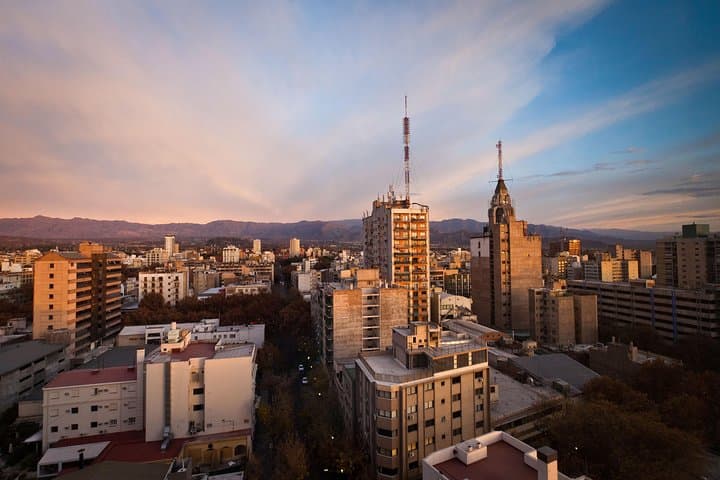
The coach pulls away from a quiet hotel street just as the morning light sharpens the Andes’ knife-edge on the horizon. Air conditioning hums, passports are checked at reception desks, and in forty-five minutes the city unfolds—broad avenues, tile-roofed casas, and a public square where locals walk dogs and vendors stack empanadas. This is Mendoza on a four-hour gaze: compact, resilient and quietly irrigated into abundance.
Verified experiences and guided adventures in the surrounding area.
Operated by Tangol · Mendoza, Mendoza
The coach pulls away from a quiet hotel street just as the morning light sharpens the Andes’ knife-edge on the horizon. Air conditioning hums, passports are checked at reception desks, and in forty-five minutes the city unfolds—broad avenues, tile-roofed casas, and a public square where locals walk dogs and vendors stack empanadas. This is Mendoza on a four-hour gaze: compact, resilient and quietly irrigated into abundance.
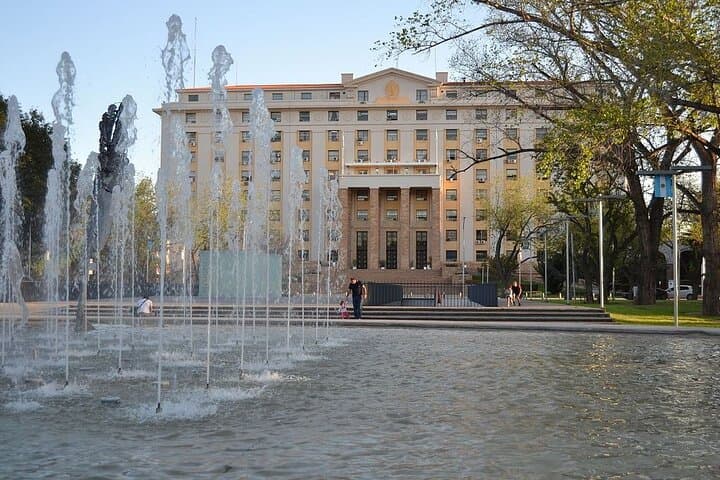
You begin at the foundational ruins of San Francisco, where stone walls from the 17th century still stand like a lesson in survival. The guide lays out the city’s story with the kind of detail that explains both the ruins and the modern grid: the 1861 earthquake flattened Mendoza and triggered a redesign that emphasized green lungs and canals. Plaza Independencia follows—its fountain and satellite plazas illustrate civic life here, from lunchtime choruses of office workers to weekend art markets.
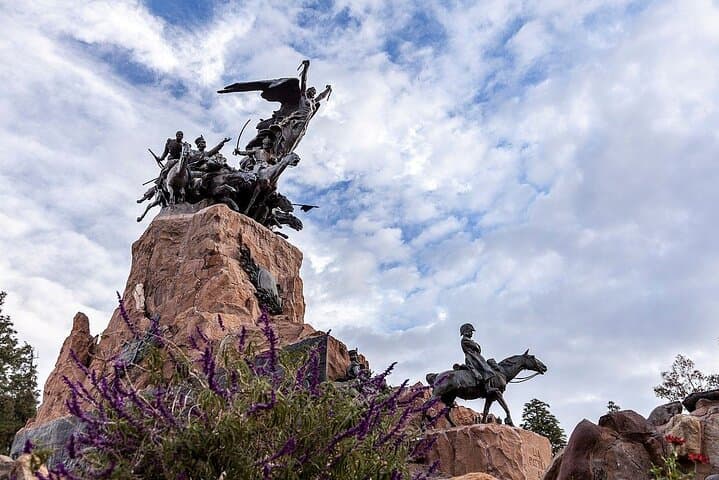
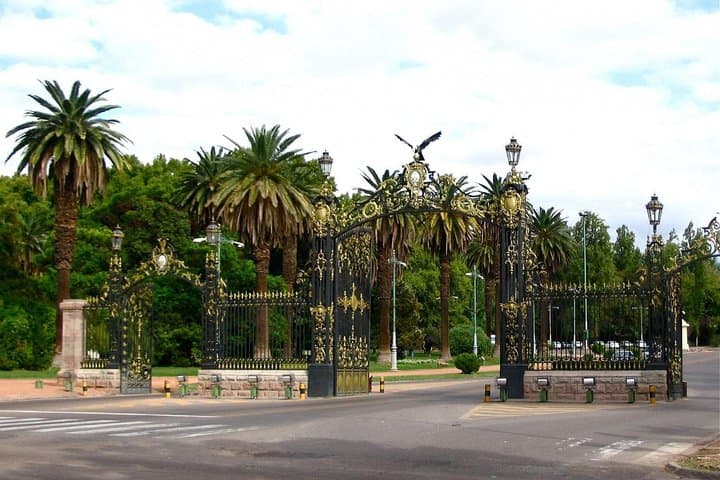
Geology edges every view. Mendoza sits on an alluvial plain fed by meltwater from the high Andes; the park systems and irrigation channels—acequias—are human responses to a semi-arid climate that refuses to give up its water quietly. Parque General San Martín, created in the late 19th century by landscape architect Carlos Thays, is the city’s lung—open lawns, a rose garden (El Rosedal) and a small lake where waterbirds inspect the morning. Paths here give way to an ascent: a short climb to Cerro de la Gloria where a bronze-and-stone monument honors General José de San Martín and his crossing of the Andes. From the monument the foothills press close to the city; the Andes no longer a distant line but an active presence.
Culturally, the tour stitches colonial history to contemporary Mendoza—winemaking estates are a short drive away, local cuisine borrows from Spanish and Andean practices, and public art frequently references the independence era. The guide’s bilingual narration makes the arc of urban recovery tangible: irrigation engineering, urban planning, and a civic belief in green public space.
Practical takeaways: the tour walks roughly 2–3 km with paved streets and park paths; the Cerro de la Gloria climb adds about 60–100 m of elevation gain on steps and graded trails. Wear comfortable walking shoes, layer for sun and wind, and bring water—the semi-arid air dehydrates quickly. Hotel pickup and drop-off are included for centrally located hotels; expect to be ready 30 minutes before departure. The excursion is wheelchair-accessible on the vehicle, but assistance boarding is limited by insurance rules. For a focused half-day in Mendoza, this tour pairs history, engineered landscapes, and a clear view of the mountains that keep the city alive.
easy.
4 hours.
Suitable for most fitness levels; able to walk short uphill sections and climb steps.
The tour lasts about 4 hours and includes hotel pickup/drop-off (selected hotels), an air-conditioned coach, and a bilingual professional guide.
Vehicles are collapsible wheelchair accessible, but drivers cannot assist boarding or disembarking due to insurance—confirm special needs when booking.
A monument honoring General José de San Martín with panoramic views of Mendoza and the nearby foothills of the Andes; access may be limited in adverse weather.
Expect approximately 2–3 km of walking with paved sections and park trails; the hill climb includes steps and a short graded ascent.
Pickup is from centrally located hotels; if your hotel is outside the service area the operator will confirm the nearest meeting point.
For a full refund cancel at least 24 hours before the scheduled departure time; cancellations within 24 hours are not refundable.
Mendoza was largely rebuilt after the 1861 earthquake; urban planning and the park system that followed were influenced by 19th-century designers like Carlos Thays.
Mendoza’s green spaces rely on historic irrigation canals; visitors are asked to stay on paths, conserve water, and avoid littering to protect park ecosystems.
Tangol operates guided outdoor trips and adventures with an emphasis on safety, stewardship, and memorable experiences.
The coach pulls away from a quiet hotel street just as the morning light sharpens the Andes’ knife-edge on the horizon. Air conditioning hums, passports are checked at reception desks, and in forty-five minutes the city unfolds—broad avenues, tile-roofed casas, and a public square where locals walk dogs and vendors stack empanadas. This is Mendoza on a four-hour gaze: compact, resilient and quietly irrigated into abundance.
The coach pulls away from a quiet hotel street just as the morning light sharpens the Andes’ knife-edge on the horizon. Air conditioning hums, passports are checked at reception desks, and in forty-five minutes the city unfolds—broad avenues, tile-roofed casas, and a public square where locals walk dogs and vendors stack empanadas. This is Mendoza on a four-hour gaze: compact, resilient and quietly irrigated into abundance.
You begin at the foundational ruins of San Francisco, where stone walls from the 17th century still stand like a lesson in survival. The guide lays out the city’s story with the kind of detail that explains both the ruins and the modern grid: the 1861 earthquake flattened Mendoza and triggered a redesign that emphasized green lungs and canals. Plaza Independencia follows—its fountain and satellite plazas illustrate civic life here, from lunchtime choruses of office workers to weekend art markets.
Geology edges every view. Mendoza sits on an alluvial plain fed by meltwater from the high Andes; the park systems and irrigation channels—acequias—are human responses to a semi-arid climate that refuses to give up its water quietly. Parque General San Martín, created in the late 19th century by landscape architect Carlos Thays, is the city’s lung—open lawns, a rose garden (El Rosedal) and a small lake where waterbirds inspect the morning. Paths here give way to an ascent: a short climb to Cerro de la Gloria where a bronze-and-stone monument honors General José de San Martín and his crossing of the Andes. From the monument the foothills press close to the city; the Andes no longer a distant line but an active presence.
Culturally, the tour stitches colonial history to contemporary Mendoza—winemaking estates are a short drive away, local cuisine borrows from Spanish and Andean practices, and public art frequently references the independence era. The guide’s bilingual narration makes the arc of urban recovery tangible: irrigation engineering, urban planning, and a civic belief in green public space.
Practical takeaways: the tour walks roughly 2–3 km with paved streets and park paths; the Cerro de la Gloria climb adds about 60–100 m of elevation gain on steps and graded trails. Wear comfortable walking shoes, layer for sun and wind, and bring water—the semi-arid air dehydrates quickly. Hotel pickup and drop-off are included for centrally located hotels; expect to be ready 30 minutes before departure. The excursion is wheelchair-accessible on the vehicle, but assistance boarding is limited by insurance rules. For a focused half-day in Mendoza, this tour pairs history, engineered landscapes, and a clear view of the mountains that keep the city alive.