THE ADVENTURE COLLECTIVE® · Independent discovery and booking for outdoor travel

Trade wine tastings for river spray and high-mountain air with five days of rafting, ziplining, and trekking from Mendoza to Aconcagua. Expect big views, dry desert air, and smart logistics that let you focus on the adventure.
Trade wine tastings for river spray and high-mountain air with five days of rafting, ziplining, and trekking from Mendoza to Aconcagua. Expect big views, dry desert air, and smart logistics that let you focus on the adventure.
Morning hits different in Mendoza. The irrigation canals murmur through tree-lined streets while the Andes stack the horizon in clean blue layers, calm and colossal. This five-day itinerary trades wine glasses for river spray and high-mountain air, moving from the city’s plazas to Potrerillos’ granite folds and the wide vault of Aconcagua Provincial Park—home to the highest peak in the Western Hemisphere.
Verified experiences and guided adventures in the surrounding area.
Operated by Tangol · Mendoza, Mendoza
Morning hits different in Mendoza. The irrigation canals murmur through tree-lined streets while the Andes stack the horizon in clean blue layers, calm and colossal. This five-day itinerary trades wine glasses for river spray and high-mountain air, moving from the city’s plazas to Potrerillos’ granite folds and the wide vault of Aconcagua Provincial Park—home to the highest peak in the Western Hemisphere.
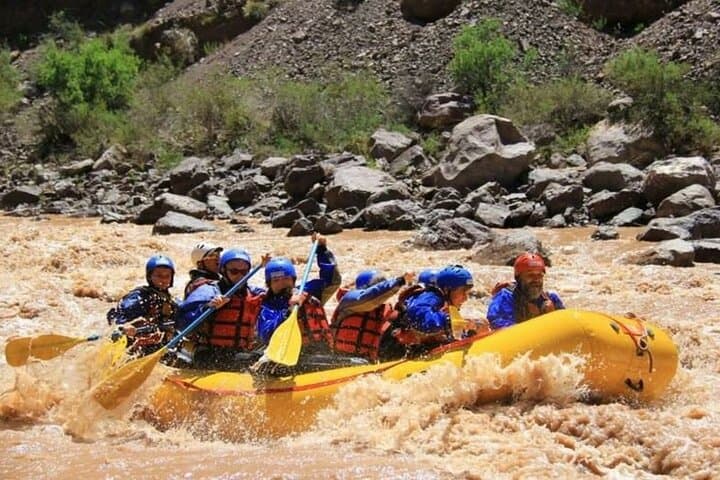
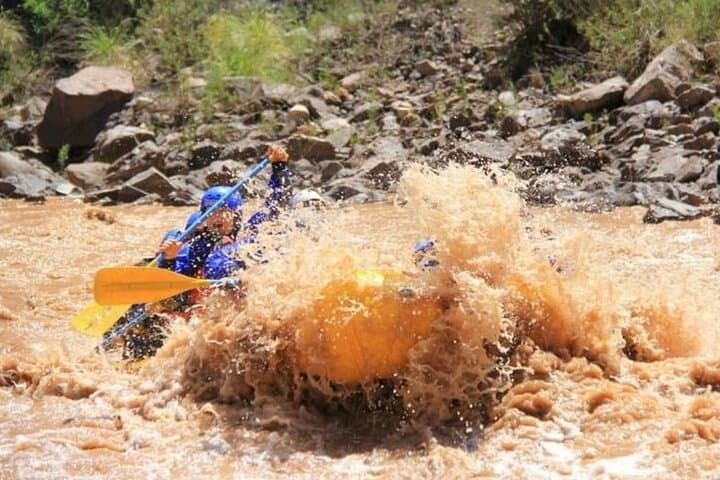
Day two is the trip’s spark: the Mendoza River wakes with snowmelt energy, nudging rafts into forgiving Class II waves that still ask you to paddle with intent. Guides deliver a clear safety briefing before you slip into the current; the river pushes forward, throwing a cool shoulder against the raft and daring you to hit the next tongue of white. Up above, a 1.4-kilometer zipline strings across ochre hillsides. Clipped in, you step off—wind lifts, the reservoir flashes below, and the Cordón del Plata slides past like a moving mural.
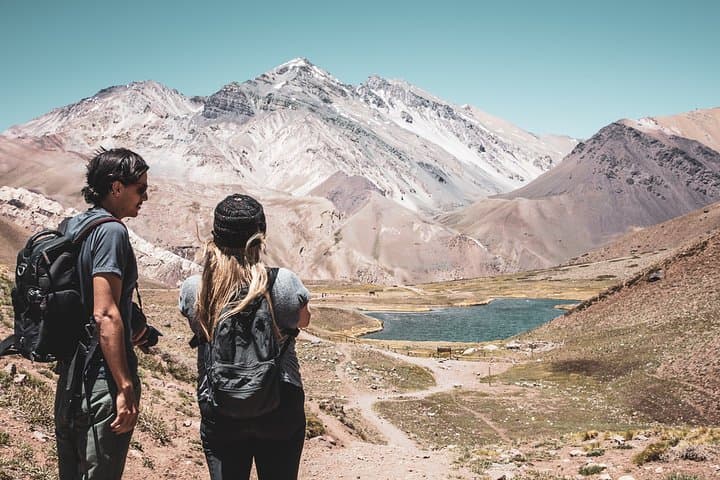
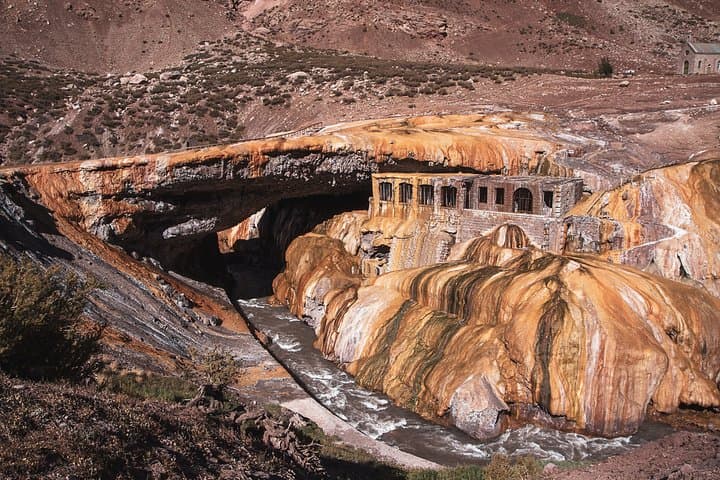
The high Andes set the tone on day three. Route 7 climbs through Uspallata, where the old Inca road once threaded traders over precordillera passes. Puente del Inca arches in mineral-rich oranges and golds—a natural bridge shaped by hot springs that still steam in the morning chill. Farther on, the Aconcagua Viewpoint frames the 6,960-meter giant. On clear days, light rakes over its glaciers and talus slopes, revealing the sheer scale that draws climbers each summer. If conditions allow (typically January–March), the road crests to Cristo Redentor, a high pass monument where winds sharpen, clouds race, and the border ridgeline feels almost within reach.
Between adventures, Mendoza offers a soft landing: café cortados, shaded sidewalks, and late dinners that stretch into the night. Potrerillos’ lakeshore carries the scent of sun-warmed sage; condors ride thermals overhead, scanning the valley with patient circles. Geology is always in the frame—faulted limestone, volcanic layers, and river-carved canyons that explain both the rafting and the fertile oasis that built this city.
Practical notes matter at altitude and in desert air. Hydration is essential; the climate is dry year-round, and winds can arrive suddenly. Sun exposure is strong—bring a brimmed hat, high-SPF sunscreen, and lip balm. Layering helps with the fast temperature swing from cool mornings to warm afternoons, and closed-toe shoes that can get wet are your friend on the river. While specialized equipment is provided for rafting and ziplining, a small daypack, reusable bottle, and quick-dry clothing make each segment smoother.
It’s a compact, high-reward circuit: river, ridge, and road, stitched together by smart logistics and local guides who read the weather, the river, and the rhythm of the mountains. The Andes do the rest.
moderate.
5 days.
Comfortable walking 2–4 hours at elevations up to ~3,000 m, able to paddle steadily and manage stairs/ladders for ziplines.
Round-trip airport transfers, hotel accommodation with breakfasts, local guides, rafting and zipline equipment, and park entry for Aconcagua Provincial Park are typically included. One boxed or sit-down lunch is often provided on the high mountain day.
Mendoza sits around 750 m; Uspallata is ~1,900 m; Aconcagua viewpoints reach ~2,800–3,000 m, and Cristo Redentor pass is ~3,832 m when open. Most travelers feel only mild effects—pace yourself and hydrate.
No. The Mendoza River section is usually Class II, suitable for beginners. Guides provide a safety briefing and all technical gear.
Quick-dry layers (no cotton), a secure swimsuit, and closed-toe shoes or strap sandals. Bring a towel and a dry change of clothes for after.
October–April offers warmer temps and more activity options. Summer is prime for high passes; winter can bring closures but crisp mountain views.
Shared departures typically run with up to 10–15 travelers, with guides adjusting pacing and instruction to group ability.
Uspallata sits on the southern reaches of the Qhapaq Ñan (Inca Road), later used by San Martín’s Army of the Andes during the independence campaigns.
Aconcagua Provincial Park protects fragile alpine zones—stay on marked paths, pack out all trash, and be conservative with water in this drought-prone region.
Tangol operates guided outdoor trips and adventures with an emphasis on safety, stewardship, and memorable experiences.
Morning hits different in Mendoza. The irrigation canals murmur through tree-lined streets while the Andes stack the horizon in clean blue layers, calm and colossal. This five-day itinerary trades wine glasses for river spray and high-mountain air, moving from the city’s plazas to Potrerillos’ granite folds and the wide vault of Aconcagua Provincial Park—home to the highest peak in the Western Hemisphere.
Morning hits different in Mendoza. The irrigation canals murmur through tree-lined streets while the Andes stack the horizon in clean blue layers, calm and colossal. This five-day itinerary trades wine glasses for river spray and high-mountain air, moving from the city’s plazas to Potrerillos’ granite folds and the wide vault of Aconcagua Provincial Park—home to the highest peak in the Western Hemisphere.
Day two is the trip’s spark: the Mendoza River wakes with snowmelt energy, nudging rafts into forgiving Class II waves that still ask you to paddle with intent. Guides deliver a clear safety briefing before you slip into the current; the river pushes forward, throwing a cool shoulder against the raft and daring you to hit the next tongue of white. Up above, a 1.4-kilometer zipline strings across ochre hillsides. Clipped in, you step off—wind lifts, the reservoir flashes below, and the Cordón del Plata slides past like a moving mural.
The high Andes set the tone on day three. Route 7 climbs through Uspallata, where the old Inca road once threaded traders over precordillera passes. Puente del Inca arches in mineral-rich oranges and golds—a natural bridge shaped by hot springs that still steam in the morning chill. Farther on, the Aconcagua Viewpoint frames the 6,960-meter giant. On clear days, light rakes over its glaciers and talus slopes, revealing the sheer scale that draws climbers each summer. If conditions allow (typically January–March), the road crests to Cristo Redentor, a high pass monument where winds sharpen, clouds race, and the border ridgeline feels almost within reach.
Between adventures, Mendoza offers a soft landing: café cortados, shaded sidewalks, and late dinners that stretch into the night. Potrerillos’ lakeshore carries the scent of sun-warmed sage; condors ride thermals overhead, scanning the valley with patient circles. Geology is always in the frame—faulted limestone, volcanic layers, and river-carved canyons that explain both the rafting and the fertile oasis that built this city.
Practical notes matter at altitude and in desert air. Hydration is essential; the climate is dry year-round, and winds can arrive suddenly. Sun exposure is strong—bring a brimmed hat, high-SPF sunscreen, and lip balm. Layering helps with the fast temperature swing from cool mornings to warm afternoons, and closed-toe shoes that can get wet are your friend on the river. While specialized equipment is provided for rafting and ziplining, a small daypack, reusable bottle, and quick-dry clothing make each segment smoother.
It’s a compact, high-reward circuit: river, ridge, and road, stitched together by smart logistics and local guides who read the weather, the river, and the rhythm of the mountains. The Andes do the rest.