THE ADVENTURE COLLECTIVE® · Independent discovery and booking for outdoor travel

Spend six hours moving between Medellín’s cultivated botanical beds and the forested trails of Arví Park. Ride the Metrocable for high-angle city views, learn urban conservation stories, and walk easy trails through protected cloud forest.
Spend six hours moving between Medellín’s cultivated botanical beds and the forested trails of Arví Park. Ride the Metrocable for high-angle city views, learn urban conservation stories, and walk easy trails through protected cloud forest.
You step out of the car and the city exhales. Traffic hums a few blocks away; here, the air smells of damp soil and flowering orchids. The guide waves you toward a glasshouse glinting under the highland sun—the Botanical Garden Joaquín Antonio Uribe is the day's first passport, a curated slice of Antioquia's biodiversity where hummingbirds dart like punctuation and palms lift their fronds over paved paths.
Verified experiences and guided adventures in the surrounding area.
Operated by Gran Colombia Tours · Medellín, Antioquia
You step out of the car and the city exhales. Traffic hums a few blocks away; here, the air smells of damp soil and flowering orchids. The guide waves you toward a glasshouse glinting under the highland sun—the Botanical Garden Joaquín Antonio Uribe is the day's first passport, a curated slice of Antioquia's biodiversity where hummingbirds dart like punctuation and palms lift their fronds over paved paths.
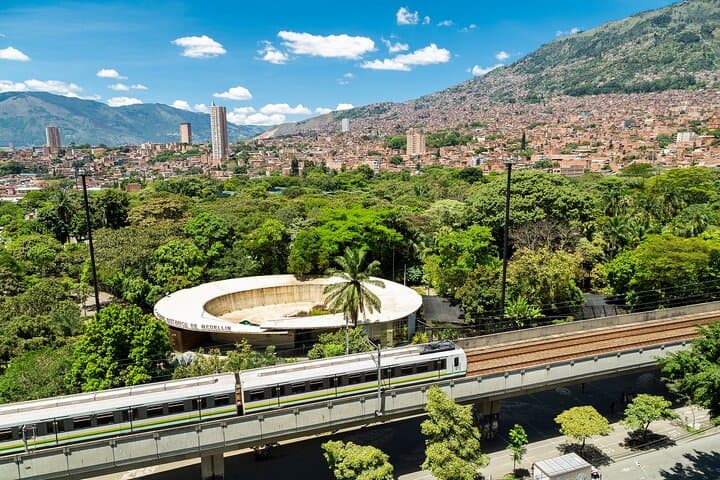
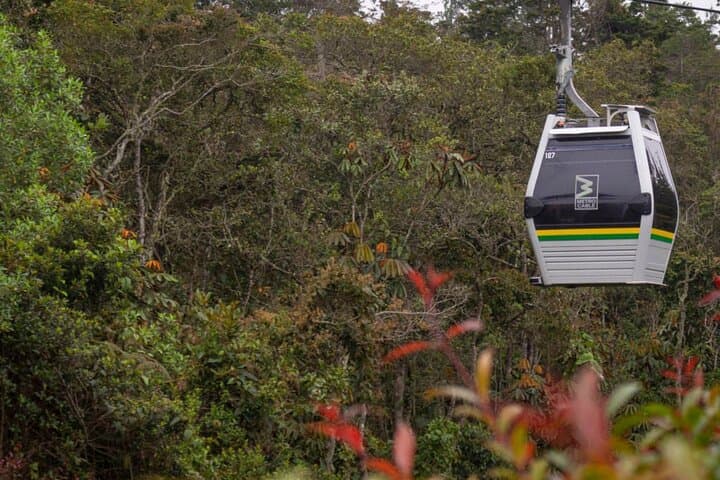
The route reads like Medellín's geological and cultural condensed course. From the garden's cultivated beds the tour moves to the Metrocable: a cable car that has become both transit and lookout. Suspended over the city’s steep urban valleys, you get a tactical view of Medellín’s transformation—factory roofs, painted houses climbing hillsides, and river corridors that once defined the valley floor.
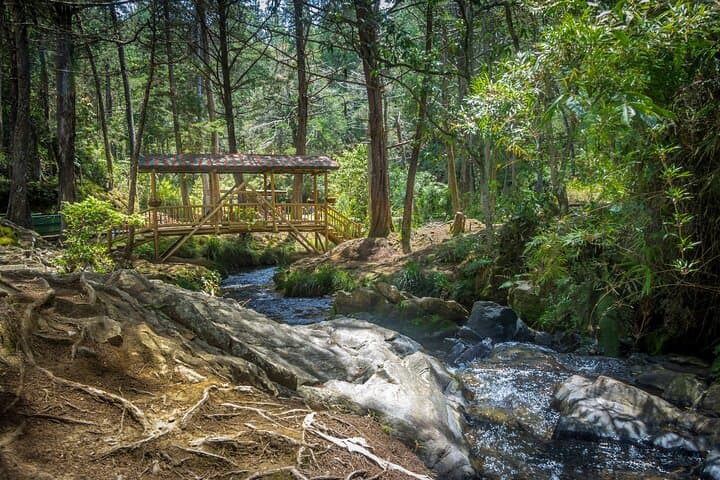
Arví Park, reachable by cable and a short transfer, flips the script. The city gives way to a protected forest reserve and ecotourism network where pre-Hispanic trails were once used for trade and ritual. The landscape is rooted in Andean geology: folded mountain slopes, deep ravines, and soils that support cloud forest fragments. Local campesino communities and municipal conservation programs have shaped Arví into a place for controlled recreation—interpretive trails, native plant nurseries, and weekend markets that showcase local food and artisan crafts.
The guide intersperses natural history with practical context: why the botanical collection matters for urban biodiversity, how the Metrocable expanded mobility and changed neighborhoods, and what visitors can do to respect fragile habitats. The tour emphasizes short, manageable hikes—firm dirt trails, occasional roots and slick spots after rain—and plenty of viewpoints for city panoramas and birdwatching.
Practical advice: wear a good pair of trail shoes or sturdy sneakers; even the easiest trails have uneven ground and occasional mud. Bring water, sun protection and a light rain shell—the valley weather is notoriously fickle. Carry small local currency for the Arví craft market and for snacks at the park's kiosks. The Botanical Garden is closed on some Mondays, so confirm availability before booking.
The day finishes with a relaxed descent and a drop-off back in the city, hips tired from walking but eyes full of green. For travelers who want a concise primer on Medellín’s natural side without leaving the metropolitan footprint, this six-hour loop—botanical beds, a cable ride above the city, and forested trails—delivers both perspective and practical exploration.
easy.
6 hours.
Suitable for most fitness levels; involves short to moderate walks on mostly groomed trails with some elevation change on forest paths.
The tour lasts about six hours and includes hotel pickup/drop-off, Metrocable tickets, entrance to the Botanical Garden and Arví Park, a guide, and all-risk insurance.
Yes; the itinerary is rated easy and appropriate for most ages, though participants should be able to walk short distances on uneven ground.
No—if the Botanical Garden is closed on the scheduled day the tour operator will advise or reschedule; confirm garden opening before booking.
Meals are not included—there are small kiosks and a craft market in Arví where you can buy snacks and local food.
The Metrocable segments are short (minutes each) and are a standard part of Medellín’s transit network; they are safe and operated regularly by the city transit authority.
Carry your ID and confirmation voucher; no special permits are required for the public garden or Arví Park visits included in the tour.
The Metrocable was introduced as a mobility solution to connect hillside communities to the metro, reshaping social and economic access across Medellín.
Arví is managed as a protected ecotourism reserve with reforestation and native species programs; visitors are encouraged to stay on trails and minimize waste.
Gran Colombia Tours operates guided outdoor trips and adventures with an emphasis on safety, stewardship, and memorable experiences.
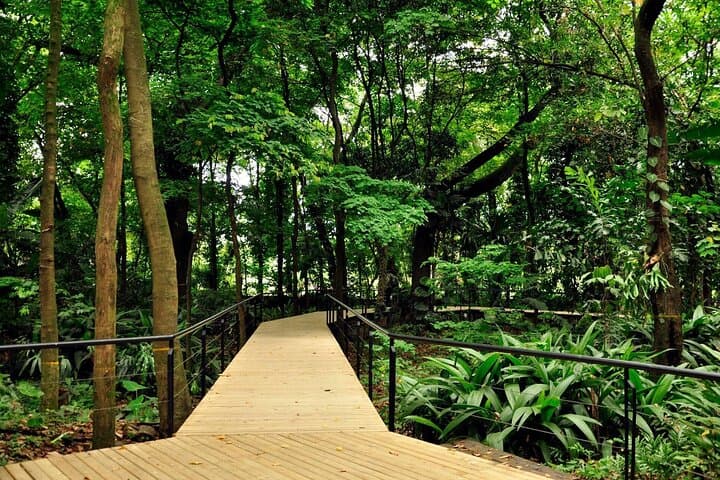
You step out of the car and the city exhales. Traffic hums a few blocks away; here, the air smells of damp soil and flowering orchids. The guide waves you toward a glasshouse glinting under the highland sun—the Botanical Garden Joaquín Antonio Uribe is the day's first passport, a curated slice of Antioquia's biodiversity where hummingbirds dart like punctuation and palms lift their fronds over paved paths.
You step out of the car and the city exhales. Traffic hums a few blocks away; here, the air smells of damp soil and flowering orchids. The guide waves you toward a glasshouse glinting under the highland sun—the Botanical Garden Joaquín Antonio Uribe is the day's first passport, a curated slice of Antioquia's biodiversity where hummingbirds dart like punctuation and palms lift their fronds over paved paths.
The route reads like Medellín's geological and cultural condensed course. From the garden's cultivated beds the tour moves to the Metrocable: a cable car that has become both transit and lookout. Suspended over the city’s steep urban valleys, you get a tactical view of Medellín’s transformation—factory roofs, painted houses climbing hillsides, and river corridors that once defined the valley floor.
Arví Park, reachable by cable and a short transfer, flips the script. The city gives way to a protected forest reserve and ecotourism network where pre-Hispanic trails were once used for trade and ritual. The landscape is rooted in Andean geology: folded mountain slopes, deep ravines, and soils that support cloud forest fragments. Local campesino communities and municipal conservation programs have shaped Arví into a place for controlled recreation—interpretive trails, native plant nurseries, and weekend markets that showcase local food and artisan crafts.
The guide intersperses natural history with practical context: why the botanical collection matters for urban biodiversity, how the Metrocable expanded mobility and changed neighborhoods, and what visitors can do to respect fragile habitats. The tour emphasizes short, manageable hikes—firm dirt trails, occasional roots and slick spots after rain—and plenty of viewpoints for city panoramas and birdwatching.
Practical advice: wear a good pair of trail shoes or sturdy sneakers; even the easiest trails have uneven ground and occasional mud. Bring water, sun protection and a light rain shell—the valley weather is notoriously fickle. Carry small local currency for the Arví craft market and for snacks at the park's kiosks. The Botanical Garden is closed on some Mondays, so confirm availability before booking.
The day finishes with a relaxed descent and a drop-off back in the city, hips tired from walking but eyes full of green. For travelers who want a concise primer on Medellín’s natural side without leaving the metropolitan footprint, this six-hour loop—botanical beds, a cable ride above the city, and forested trails—delivers both perspective and practical exploration.