THE ADVENTURE COLLECTIVE® · Independent discovery and booking for outdoor travel

Stand beneath Africa’s tallest indigenous tree and feel the spray from Mbokomu Waterfall on a half-day tour from Moshi. This easy-to-reach outing pairs a short rainforest hike with coffee farms, local culture, and the 81.5 m Entandrophragma excelsum.
Stand beneath Africa’s tallest indigenous tree and feel the spray from Mbokomu Waterfall on a half-day tour from Moshi. This easy-to-reach outing pairs a short rainforest hike with coffee farms, local culture, and the 81.5 m Entandrophragma excelsum.
You arrive under a green ceiling. The trail slips between coffee and banana plots, the air thick with roasted bean and wet earth, and then the forest opens onto a column of trunk that seems to pull the sky down toward the mountain. At 81.5 meters the Entandrophragma excelsum — locally called Mkukusu — dwarfs the surrounding canopy; its crown trims clouds that float off Kilimanjaro's slopes.
Verified experiences and guided adventures in the surrounding area.
Operated by Sere adventure Safari · Moshi, Kilimanjaro Region
You arrive under a green ceiling. The trail slips between coffee and banana plots, the air thick with roasted bean and wet earth, and then the forest opens onto a column of trunk that seems to pull the sky down toward the mountain. At 81.5 meters the Entandrophragma excelsum — locally called Mkukusu — dwarfs the surrounding canopy; its crown trims clouds that float off Kilimanjaro's slopes.
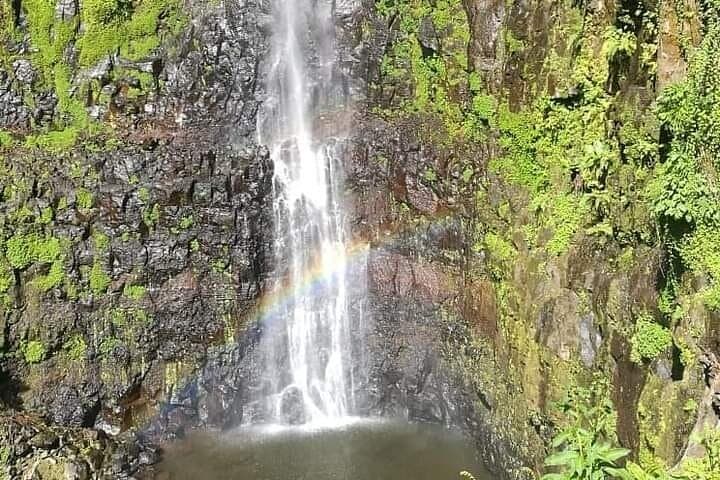
A short scramble downstream answers in white noise: Mbokomu Waterfall folds over volcanic rock, a cool curtain that will soak your boots if you edge too close. Birds puncture the air — sunbirds flit, and turacos call from dark understory — while banana leaves slap softly in afternoon wind. Local farmers watch from a distance; a low-key bar and a handful of homesteads keep a human rhythm that’s more conversation than commerce.
Geology here is simple and decisive: Kilimanjaro’s volcanic soils feed streams that have carved narrow, shaded gullies and pocket waterfalls. Entandrophragma excelsum, a giant of East Africa’s mid-altitude and montane forests, finds its best footing where deep soil and regular moisture meet — the slopes between roughly 900 and 2,150 meters above sea level. Culturally the land belongs to Chagga farming communities whose terraced coffee and banana plots have been tended for generations; visiting supports those livelihoods and gives you a chance to sample real mountain coffee.
Practically, this is a half-day outing centered on a 2–4 km network of paths that are uneven, root-strewn and sometimes muddy after rain. Expect gentle to moderate climbs and an elevation change of a few hundred meters depending on trailheads and your chosen loop. Guides — recommended and often provided by the operator — point out the best photo angles, locate the tallest tree, and lead safe approaches to the waterfall; climbing the tree is both illegal and unsafe.
Bring sturdy trail shoes, a lightweight rain shell, insect repellent and at least 1–2 liters of water. Go early for clearer light and active birds; late afternoon brings softer light but more biting insects. Cash is useful for small purchases and tipping guides; camping near the site is possible with the operator if you want a night under the trees and a fireside swap of stories. Weather on Kilimanjaro’s lower slopes changes fast: a warm, sunny morning can end in a chilly, misty dusk. Respect trail markers, stay out of fenced coffee plots unless invited, and pack out any trash. The payback is immediate — the silence beneath that huge trunk, the spray of Mbokomu’s falls, and the feeling of standing beside a living thing that has been growing toward the sky for centuries.
moderate.
3–5 hours.
Suitable for travelers with moderate fitness — able to walk uneven trails and manage short climbs.
Most visiting loops are 2–4 km and take 3–5 hours round-trip including stops; timings vary with your pace and guide.
The tour price normally covers access; if camping or arranging private guides, confirm permit or site fees with the operator ahead of time.
Yes — children who can manage uneven terrain and short climbs can join; inform the operator about ages so they can plan appropriately.
Swimming is usually possible in rock pools after assessing safety, but current and water depth vary — follow your guide’s advice and avoid after heavy rain.
The site is roughly 14 km from the main highway near Moshi; many operators include hotel pickup within Moshi and surrounding areas.
Yes, the location allows camping with a guide/operator; bring warm layers for cool nights and confirm equipment and fire rules in advance.
The Chagga communities have shaped these slopes for generations with terraced farming; the area’s forests have long been valued for timber and traditional uses.
The forest fragments here are fragile; stick to trails, avoid disturbing nesting birds, and support local guides whose fees fund stewardship and community benefits.
Sere adventure Safari operates guided outdoor trips and adventures with an emphasis on safety, stewardship, and memorable experiences.
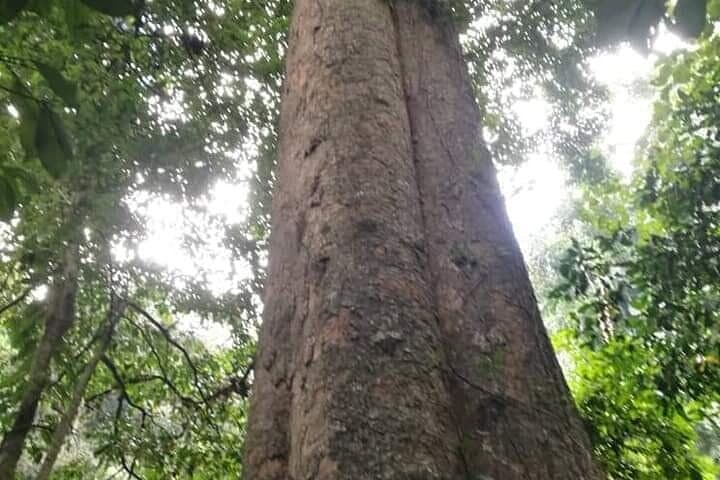
You arrive under a green ceiling. The trail slips between coffee and banana plots, the air thick with roasted bean and wet earth, and then the forest opens onto a column of trunk that seems to pull the sky down toward the mountain. At 81.5 meters the Entandrophragma excelsum — locally called Mkukusu — dwarfs the surrounding canopy; its crown trims clouds that float off Kilimanjaro's slopes.
You arrive under a green ceiling. The trail slips between coffee and banana plots, the air thick with roasted bean and wet earth, and then the forest opens onto a column of trunk that seems to pull the sky down toward the mountain. At 81.5 meters the Entandrophragma excelsum — locally called Mkukusu — dwarfs the surrounding canopy; its crown trims clouds that float off Kilimanjaro's slopes.
A short scramble downstream answers in white noise: Mbokomu Waterfall folds over volcanic rock, a cool curtain that will soak your boots if you edge too close. Birds puncture the air — sunbirds flit, and turacos call from dark understory — while banana leaves slap softly in afternoon wind. Local farmers watch from a distance; a low-key bar and a handful of homesteads keep a human rhythm that’s more conversation than commerce.
Geology here is simple and decisive: Kilimanjaro’s volcanic soils feed streams that have carved narrow, shaded gullies and pocket waterfalls. Entandrophragma excelsum, a giant of East Africa’s mid-altitude and montane forests, finds its best footing where deep soil and regular moisture meet — the slopes between roughly 900 and 2,150 meters above sea level. Culturally the land belongs to Chagga farming communities whose terraced coffee and banana plots have been tended for generations; visiting supports those livelihoods and gives you a chance to sample real mountain coffee.
Practically, this is a half-day outing centered on a 2–4 km network of paths that are uneven, root-strewn and sometimes muddy after rain. Expect gentle to moderate climbs and an elevation change of a few hundred meters depending on trailheads and your chosen loop. Guides — recommended and often provided by the operator — point out the best photo angles, locate the tallest tree, and lead safe approaches to the waterfall; climbing the tree is both illegal and unsafe.
Bring sturdy trail shoes, a lightweight rain shell, insect repellent and at least 1–2 liters of water. Go early for clearer light and active birds; late afternoon brings softer light but more biting insects. Cash is useful for small purchases and tipping guides; camping near the site is possible with the operator if you want a night under the trees and a fireside swap of stories. Weather on Kilimanjaro’s lower slopes changes fast: a warm, sunny morning can end in a chilly, misty dusk. Respect trail markers, stay out of fenced coffee plots unless invited, and pack out any trash. The payback is immediate — the silence beneath that huge trunk, the spray of Mbokomu’s falls, and the feeling of standing beside a living thing that has been growing toward the sky for centuries.