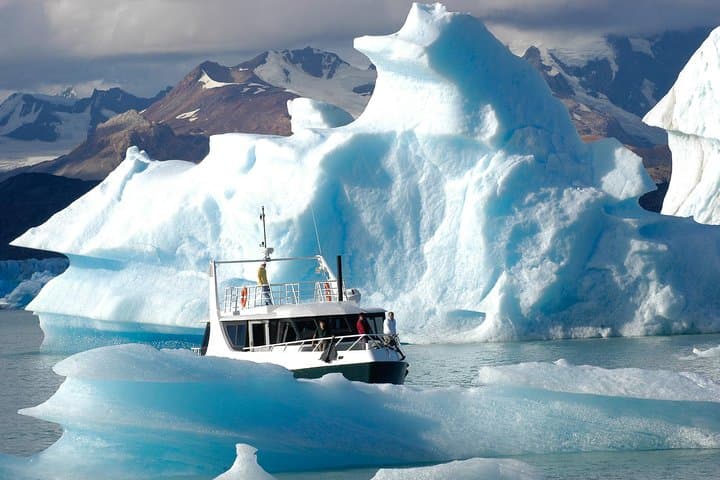
On a gray-blue morning the Zodiac cuts across Lake Argentino’s wide shoulder, the boat’s bow drawing a fine mist as Cerro Mayo and its hanging icefields loom ahead.
You step ashore at Bahía Toro; the forest closes in—lenga and ñire trunks slick with spray—as the guide points to "El Abuelo," a cherry tree whose trunk is wider than a car.
Two low-difficulty walks thread river margins and waterfalls, giving time to listen for the steady drip of meltwater and the distant groan of ice shelves.
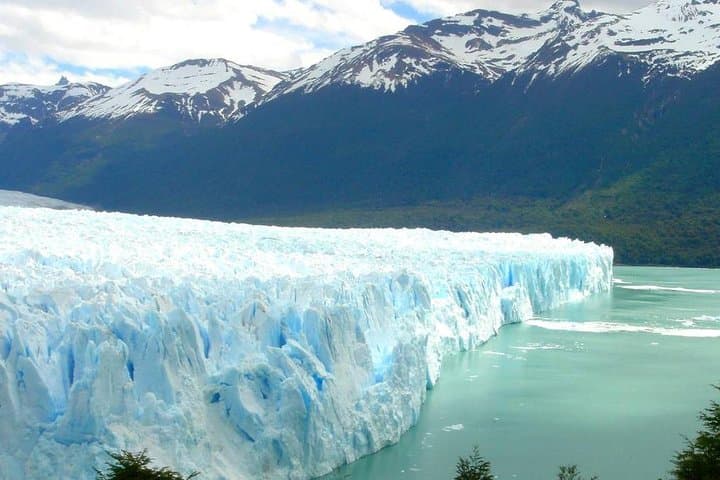
Los Glaciares National Park was created in 1937 and contains some of Patagonia’s most active temperate glaciers; the Perito Moreno—famous for periodic ruptures—anchors the park’s northern wall and feeds the Canal de los Témpanos.
Geologically, the landscape is carved by repeated glaciations: steep cirques, hanging glaciers on Cerro Negro, and broad proglacial lakes that reflect heavy Patagonian sky.
Culturally, this coast sits within Tehuelche territory and later European exploration routes; trails follow old animal tracks now used for interpretation.
Practical guidance: the full excursion runs about 10 hours, combining calm lake navigation with three short landings and an extended stop at the Perito Moreno catwalks.
Wear waterproof layers, sturdy shoes with good traction, and bring binoculars and a hat—weather shifts fast here.
Expect uneven, sometimes muddy trails with short climbs; guides provide interpretive talks in English and Spanish and snacks are included.
Plan an early pickup from El Calafate, bring your passport for park access, and allow time for photo stops—the glacier views reward patience.