THE ADVENTURE COLLECTIVE® · Independent discovery and booking for outdoor travel

Walk on blue ice, peer into crevasses and stand below an ice fall on this guided 7-hour trek to Matanuska Glacier. With crampons, helmets and local guides, it’s a hands-on introduction to glacial terrain that’s accessible for fit beginners.
Walk on blue ice, peer into crevasses and stand below an ice fall on this guided 7-hour trek to Matanuska Glacier. With crampons, helmets and local guides, it’s a hands-on introduction to glacial terrain that’s accessible for fit beginners.
The van eases off the Glenn Highway and the air shifts—crisper, metallic, carrying the faint scent of crushed stone and meltwater. By the time the glacier appears, a hulking river of blue-white, you feel its scale more than see it: an ice field that dares you to measure it. On the Matanuska Glacier Ice Fall Trek, guides rope groups into helmets and crampons, hand out trekking poles, and lead you onto ice that still remembers the weight of winter.
Verified experiences and guided adventures in the surrounding area.
Operated by Planet Earth Adventures, LLC · Palmer, Alaska
The van eases off the Glenn Highway and the air shifts—crisper, metallic, carrying the faint scent of crushed stone and meltwater. By the time the glacier appears, a hulking river of blue-white, you feel its scale more than see it: an ice field that dares you to measure it. On the Matanuska Glacier Ice Fall Trek, guides rope groups into helmets and crampons, hand out trekking poles, and lead you onto ice that still remembers the weight of winter.
Matanuska is one of Alaska’s largest valley glaciers, carved by millennia of cold and motion. It fills a broad U-shaped valley cut during the last ice age and pours down from the Chugach and Talkeetna foothills like a slow, living waterfall. Indigenous peoples in the region—Dena'ina and Ahtna relatives—have long observed these ice flows, and later prospectors and homesteaders used the surrounding moraines and outwash plains for travel and grazing. Today the glacier is a frontline classroom for glaciology; the tour’s guides explain how crevasses open and close, why ice turns startling blue, and how climate shifts are changing the travel routes year to year.
The hike itself is purposeful and practical: expect 2–3 miles of walking on variable ice over roughly three hours on the glacier, within a 7-hour round-trip trip from Anchorage including pickups. Terrain ranges from hard-packed ice and gentle slopes to short steeper steps around seracs and crevasse edges; the high point offers a close-up view of an ice fall—jagged teeth of fractured glacier that look like a frozen rush of water. Guides choose routes daily to balance safety and spectacle, so every trek is slightly different.
For planners: the operator meets at the Egan Center in Anchorage for morning pickup, provides crampons, helmets, light snacks and water, and requires sturdy hiking boots that cover the ankle. The trek is rated easy/moderate—good for anyone comfortable walking several miles on uneven surfaces—but it’s not recommended for pregnant travelers or people with serious heart or back conditions. Minimum age for the shared tour is 10.
Practical preparation matters: layer for wind and sun, bring sunglasses and sunscreen (ice reflects light), pack a heavy snack or lunch, and be ready to move steadily for a few hours. Photographers will want a wide lens for the icefall and a polarizer to deepen the blues. Above all, listen to your guide: glaciers are continuously changing terrain, and the best memories come from respectful, well-led exploration of that moving world.
moderate.
Approximately 7 hours (3 hours on glacier).
Moderate fitness: able to walk 2–3 miles on uneven, icy terrain and handle short steep sections
The glacier portion is typically 2–3 miles total over a three-hour window; daily route varies with conditions and group ability.
No prior experience required; guides will teach basic crampon and rope techniques used on the trek.
Guides supply crampons, helmets, and light snacks/water; bring hiking boots, warm layers, sunglasses, sunscreen, and a heavy snack or lunch.
Minimum age for the shared group tour is 10 years old; private treks may allow younger children—contact the operator for details.
The activity runs in most weather, but operators will alter or cancel the trip for unsafe conditions; cancellations due to weather offer alternatives or refunds per policy.
Rated easy/moderate: it requires steady walking on uneven icy surfaces and short climbs; participants with heart or back issues should not join.
The Matanuska Glacier is a classic valley glacier formed during the Pleistocene; the surrounding valley was a travel corridor for Indigenous peoples and later settlers.
Glaciers are sensitive to foot traffic and warming temperatures—stay on guide-selected routes, pack out waste, and avoid fragile meltwater channels.
Planet Earth Adventures, LLC operates guided outdoor trips and adventures with an emphasis on safety, stewardship, and memorable experiences.
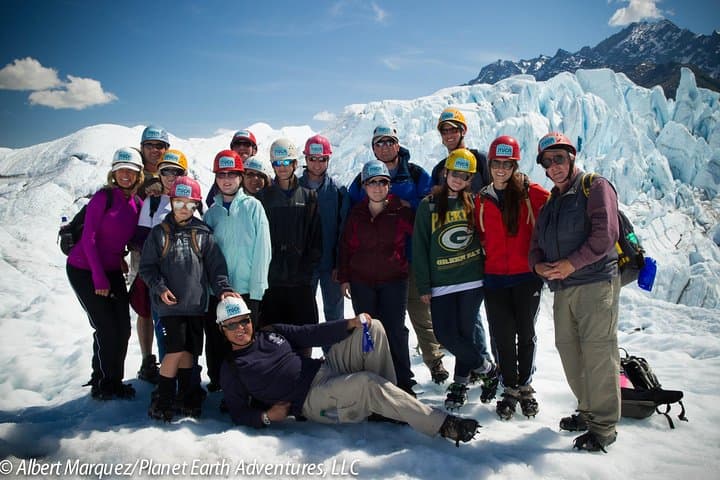
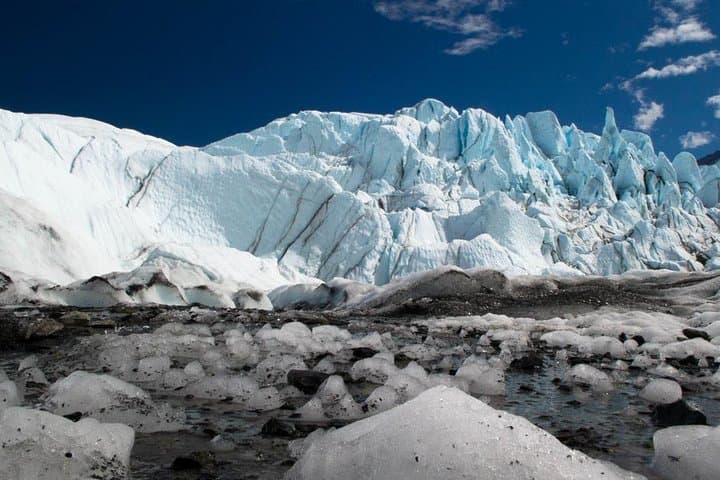
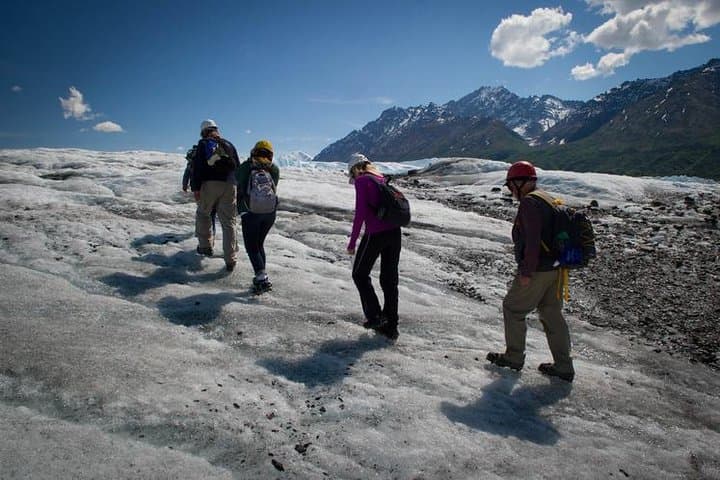
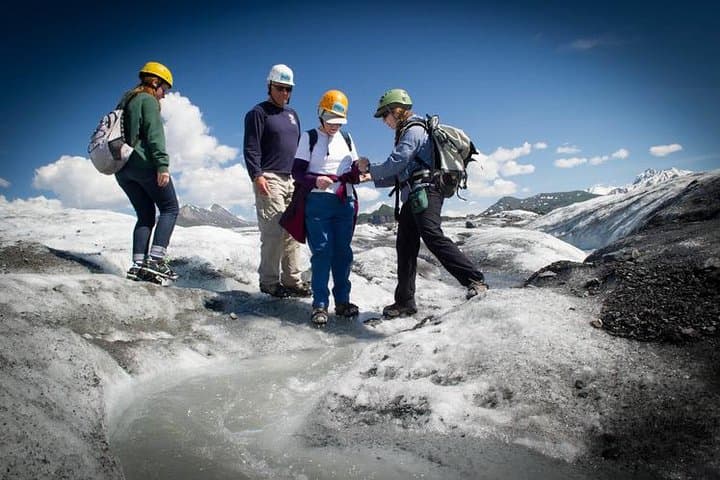
The van eases off the Glenn Highway and the air shifts—crisper, metallic, carrying the faint scent of crushed stone and meltwater. By the time the glacier appears, a hulking river of blue-white, you feel its scale more than see it: an ice field that dares you to measure it. On the Matanuska Glacier Ice Fall Trek, guides rope groups into helmets and crampons, hand out trekking poles, and lead you onto ice that still remembers the weight of winter.
The van eases off the Glenn Highway and the air shifts—crisper, metallic, carrying the faint scent of crushed stone and meltwater. By the time the glacier appears, a hulking river of blue-white, you feel its scale more than see it: an ice field that dares you to measure it. On the Matanuska Glacier Ice Fall Trek, guides rope groups into helmets and crampons, hand out trekking poles, and lead you onto ice that still remembers the weight of winter.
Matanuska is one of Alaska’s largest valley glaciers, carved by millennia of cold and motion. It fills a broad U-shaped valley cut during the last ice age and pours down from the Chugach and Talkeetna foothills like a slow, living waterfall. Indigenous peoples in the region—Dena'ina and Ahtna relatives—have long observed these ice flows, and later prospectors and homesteaders used the surrounding moraines and outwash plains for travel and grazing. Today the glacier is a frontline classroom for glaciology; the tour’s guides explain how crevasses open and close, why ice turns startling blue, and how climate shifts are changing the travel routes year to year.
The hike itself is purposeful and practical: expect 2–3 miles of walking on variable ice over roughly three hours on the glacier, within a 7-hour round-trip trip from Anchorage including pickups. Terrain ranges from hard-packed ice and gentle slopes to short steeper steps around seracs and crevasse edges; the high point offers a close-up view of an ice fall—jagged teeth of fractured glacier that look like a frozen rush of water. Guides choose routes daily to balance safety and spectacle, so every trek is slightly different.
For planners: the operator meets at the Egan Center in Anchorage for morning pickup, provides crampons, helmets, light snacks and water, and requires sturdy hiking boots that cover the ankle. The trek is rated easy/moderate—good for anyone comfortable walking several miles on uneven surfaces—but it’s not recommended for pregnant travelers or people with serious heart or back conditions. Minimum age for the shared tour is 10.
Practical preparation matters: layer for wind and sun, bring sunglasses and sunscreen (ice reflects light), pack a heavy snack or lunch, and be ready to move steadily for a few hours. Photographers will want a wide lens for the icefall and a polarizer to deepen the blues. Above all, listen to your guide: glaciers are continuously changing terrain, and the best memories come from respectful, well-led exploration of that moving world.