THE ADVENTURE COLLECTIVE® · Independent discovery and booking for outdoor travel

Leave Marrakech for a day among Atlas foothills, olive groves, and the thunderous Ouzoud Falls. This full-day tour combines a short boat approach, guided walks, and a late Berber lunch with sweeping valley views.
Leave Marrakech for a day among Atlas foothills, olive groves, and the thunderous Ouzoud Falls. This full-day tour combines a short boat approach, guided walks, and a late Berber lunch with sweeping valley views.
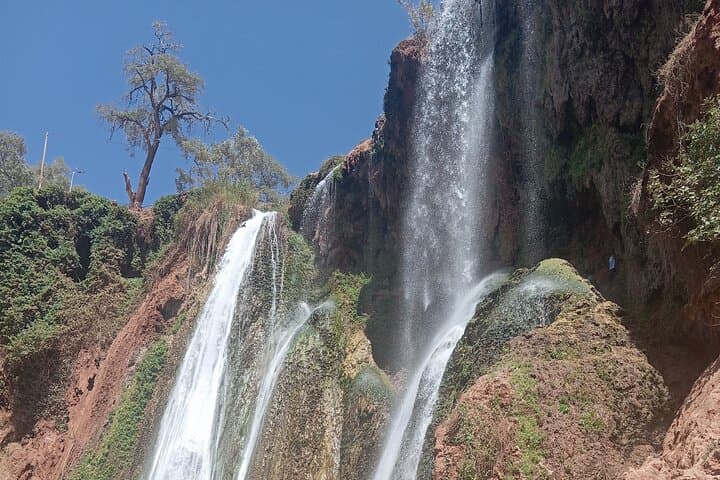
The van eases out of Marrakech before dawn and the city’s ochre roofs recede into a ribbon of highway and almond trees. By mid-morning the road cinches into the foothills of the High Atlas and the world opens: terraces and olive groves step down toward a cleft in the rock where water has been carving for millennia. At the rim, the Ouzoud cascades announce themselves with a steady roar; spray hangs in the air like fine dust that answers the sun.
Verified experiences and guided adventures in the surrounding area.
Operated by Sahara Desert Trip · Ouzoud, Azilal Province
The van eases out of Marrakech before dawn and the city’s ochre roofs recede into a ribbon of highway and almond trees. By mid-morning the road cinches into the foothills of the High Atlas and the world opens: terraces and olive groves step down toward a cleft in the rock where water has been carving for millennia. At the rim, the Ouzoud cascades announce themselves with a steady roar; spray hangs in the air like fine dust that answers the sun.
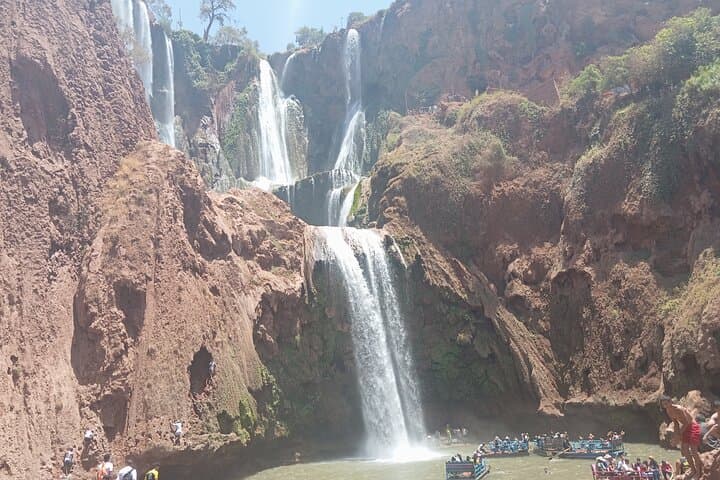
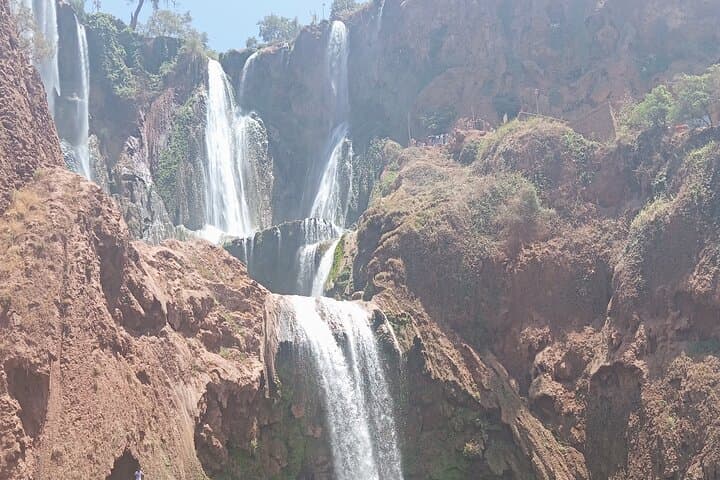
Walk with your guide down the stone stairway and the falls change with each bend—wide, then narrow, then spilling in silver ribbons over travertine shelves. These falls sit on limestone formed during the Miocene, a landscape folded by the same tectonic forces that lifted the Atlas range. Local Berber families have farmed these slopes for generations; the terraces you pass are as much cultural infrastructure as scenery, hand-built to wring water from a steep land.
Wildlife threads the scene. Barbary macaques puzzle and play in shaded trees, and kingfishers and bee-eaters dart along the plunge pools. The river dares you closer at the base of the main drop; small motorized boats take visitors to the mist line so you can feel the falls’ push on your shoulders without getting lost in it.
Lunch is a practical celebration: tagine, fresh bread, olives, and a steaming mint tea served at a restaurant perched above the chasm where views stretch back across the valley to olive-dotted ridgelines. Conversation often turns to water management—the very reason these groves exist—and to the resilient ways of rural Berber life, which still turns on the seasons.
Practical side: this is a full-day outing—expect about ten hours door-to-door from Marrakech, with roughly two hours each way in the vehicle and several hours exploring the falls. The trail and stair sections include uneven stone, packed dirt, and brief slips of mud after rain. Footwear with good grip and a moderate level of fitness make the day smooth. Carry water, sun protection, and a light layer; mornings in the Atlas foothills can be cool and afternoons warm.
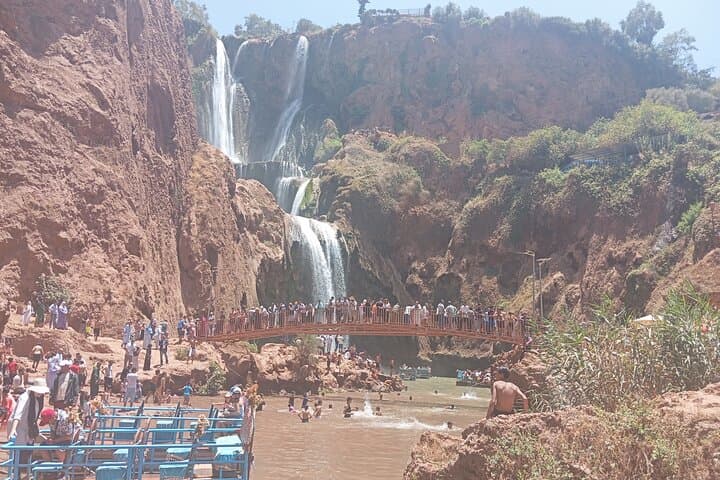
Tips for timing and etiquette: arrive early to avoid crowding at the boat dock and be ready to negotiate small purchases modestly—local vendors rely on day-tour trade. Respect wildlife by observing macaques from a distance (don’t feed them). If you want a quieter experience, midweek departures and shoulder-season months thin the crowds.
For travelers wanting a compact introduction to Morocco’s highland landscapes, the Marrakech to Ouzoud day tour delivers scenery, cultural context, and a bit of adventure—no technical skills required, just good shoes and curiosity.
moderate.
10 hours.
Suitable for travelers with moderate fitness—able to manage several hundred stone steps, uneven footing, and a few short climbs.
Expect roughly two hours each way by air-conditioned vehicle depending on traffic, with a total door-to-door duration of about 10 hours.
A short boat approach to the waterfall base is part of the experience as described, though specifics can vary—confirm with the operator on booking.
Yes—visitors descend and ascend several hundred stone steps into the gorge; the path can be steep in places but is well used and marked.
Infants are allowed but must sit on an adult’s lap; the walk includes steps and terrain requiring close supervision of young children.
Yes—restaurants and basic restroom facilities are available near the main viewpoints; bring small change for entry or tips.
Barbary macaques are wild animals—do not feed them, keep a respectful distance, and secure valuables as they may investigate bags.
The falls sit within traditional Berber farmland in the Azilal province; the terraces and irrigation reflect centuries of local land use in the Atlas foothills.
Tourism supports local economies but increases pressure on water and waste systems—choose operators who limit plastic use and follow trail etiquette.
Sahara Desert Trip operates guided outdoor trips and adventures with an emphasis on safety, stewardship, and memorable experiences.
The van eases out of Marrakech before dawn and the city’s ochre roofs recede into a ribbon of highway and almond trees. By mid-morning the road cinches into the foothills of the High Atlas and the world opens: terraces and olive groves step down toward a cleft in the rock where water has been carving for millennia. At the rim, the Ouzoud cascades announce themselves with a steady roar; spray hangs in the air like fine dust that answers the sun.
The van eases out of Marrakech before dawn and the city’s ochre roofs recede into a ribbon of highway and almond trees. By mid-morning the road cinches into the foothills of the High Atlas and the world opens: terraces and olive groves step down toward a cleft in the rock where water has been carving for millennia. At the rim, the Ouzoud cascades announce themselves with a steady roar; spray hangs in the air like fine dust that answers the sun.
Walk with your guide down the stone stairway and the falls change with each bend—wide, then narrow, then spilling in silver ribbons over travertine shelves. These falls sit on limestone formed during the Miocene, a landscape folded by the same tectonic forces that lifted the Atlas range. Local Berber families have farmed these slopes for generations; the terraces you pass are as much cultural infrastructure as scenery, hand-built to wring water from a steep land.
Wildlife threads the scene. Barbary macaques puzzle and play in shaded trees, and kingfishers and bee-eaters dart along the plunge pools. The river dares you closer at the base of the main drop; small motorized boats take visitors to the mist line so you can feel the falls’ push on your shoulders without getting lost in it.
Lunch is a practical celebration: tagine, fresh bread, olives, and a steaming mint tea served at a restaurant perched above the chasm where views stretch back across the valley to olive-dotted ridgelines. Conversation often turns to water management—the very reason these groves exist—and to the resilient ways of rural Berber life, which still turns on the seasons.
Practical side: this is a full-day outing—expect about ten hours door-to-door from Marrakech, with roughly two hours each way in the vehicle and several hours exploring the falls. The trail and stair sections include uneven stone, packed dirt, and brief slips of mud after rain. Footwear with good grip and a moderate level of fitness make the day smooth. Carry water, sun protection, and a light layer; mornings in the Atlas foothills can be cool and afternoons warm.
Tips for timing and etiquette: arrive early to avoid crowding at the boat dock and be ready to negotiate small purchases modestly—local vendors rely on day-tour trade. Respect wildlife by observing macaques from a distance (don’t feed them). If you want a quieter experience, midweek departures and shoulder-season months thin the crowds.
For travelers wanting a compact introduction to Morocco’s highland landscapes, the Marrakech to Ouzoud day tour delivers scenery, cultural context, and a bit of adventure—no technical skills required, just good shoes and curiosity.