THE ADVENTURE COLLECTIVE® · Independent discovery and booking for outdoor travel

A full-day escape from Marrakech, this shared trip delivers one of Morocco's most dramatic waterfalls, close encounters with Barbary macaques and a traditional Berber lunch with views over the plunge. Expect a scenic 2.5–3 hour drive, guided walks along rim trails and optional summer swims.
A full-day escape from Marrakech, this shared trip delivers one of Morocco's most dramatic waterfalls, close encounters with Barbary macaques and a traditional Berber lunch with views over the plunge. Expect a scenic 2.5–3 hour drive, guided walks along rim trails and optional summer swims.
You leave Marrakech before the medina has heated up, the minarets shrinking in the rearview as the road climbs toward the Atlas foothills. By mid-morning the bus slows and the soundscape shifts: car horns fade, birds take over, and then the falls announce themselves — a white vertical ribbon cutting into olive groves, the river daring you to step closer.
Verified experiences and guided adventures in the surrounding area.
Operated by Toubkal Guide · Ouzoud, Azilal Province
You leave Marrakech before the medina has heated up, the minarets shrinking in the rearview as the road climbs toward the Atlas foothills. By mid-morning the bus slows and the soundscape shifts: car horns fade, birds take over, and then the falls announce themselves — a white vertical ribbon cutting into olive groves, the river daring you to step closer.
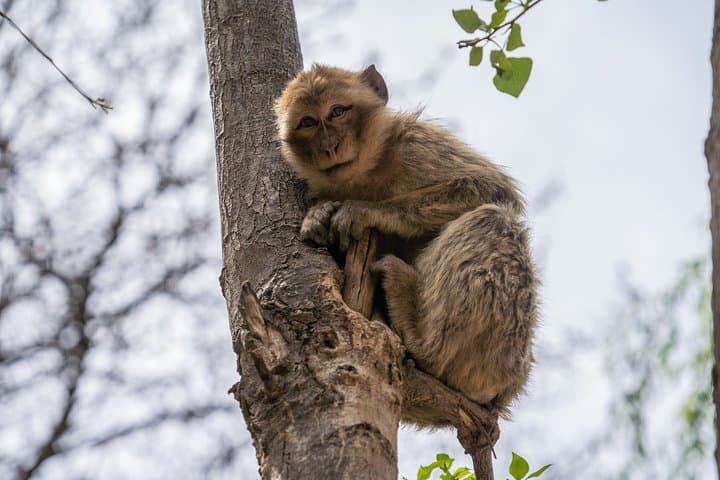
Ouzoud (often called Cascades d'Ouzoud) drops over 100 meters across several tiers, fed by streams that have carved terraces into Miocene-era limestone. Local Berber villages sit on the rim and along the valley; ancient olive presses and stone mills once powered by the same water speak to a long human relationship with this landscape. The resident Barbary macaques — often misnamed apes — move like small weather systems, appearing on cliffs and terraces to drink from the river and eye your camera.
Geology here is straightforward and readable: layers of sedimentary rock fractured by slow uplift and the steady work of water. Culturally, Ouzoud has been a gathering place for market days and seasonal olive harvests; today tourism supports local guides and family-run restaurants perched above the main plunge, where mint tea is poured in chipped glasses.
The day trip rhythm is practical. Expect 2.5–3 hours of driving each way from Marrakech, a 2–3 hour guided walk along maintained trails and viewpoints, and a leisurely lunch with views of the falls. Guides point out hidden springs and the small press museums tucked into nearby villages, and they’ll advise on routes that avoid the busiest terraces.
Bring a good pair of shoes — the paths are rocky and can be slippery — and keep your belongings zipped; the macaques are bold and curious. If it’s summer, pack a swimsuit and towel: there are calm pools below the falls that invite a cool dip. Photographers chase the rainbows that form in the mist; the falls seem to play with light, offering a new face every hour.
Practical notes: the tour includes hotel pickup and drop-off, lunch, and a local guide. Wear sun protection, carry water, and leave food for the restaurants — feeding wildlife harms the macaques and local ecosystems. For a quieter experience, request an early pickup or visit in shoulder seasons when crowds thin and the river runs fuller.
Ouzoud is straightforward but generous: it gives scale (a hundred-meter drop), movement (river and wildlife that won’t stand still), and human context (Berber terraces and kitchen tables). It’s an easy, full-day escape from Marrakech that rewards simple preparation with memorable views and a real taste of rural Morocco.
easy.
8–10 hours.
Suitable for most fitness levels; requires standing, short uphill/downhill walks and uneven surfaces.
The transfer is about 2.5 to 3 hours each way depending on traffic and stops, with hotel pickup in the morning.
Yes—during summer the lower pools are popular for swimming; bring a towel and footwear for slippery rocks.
They’re not usually aggressive but are wild animals: don’t feed them, keep distance, and secure loose belongings.
Yes, a traditional Berber lunch at a restaurant overlooking the falls is included in this trip.
The tour is rated easy and suitable for most ages, though there are uneven sections—children should be supervised.
Late morning to mid-afternoon often produces rainbows in the mist; early visits can be quieter for composition.
The valley near Ouzoud has long supported Berber agriculture—stone mills and olive presses attest to centuries of human use of the water.
Tourism supports local families but creates pressure on water and wildlife; avoid feeding macaques, pack out trash, and use established trails.
Toubkal Guide operates guided outdoor trips and adventures with an emphasis on safety, stewardship, and memorable experiences.

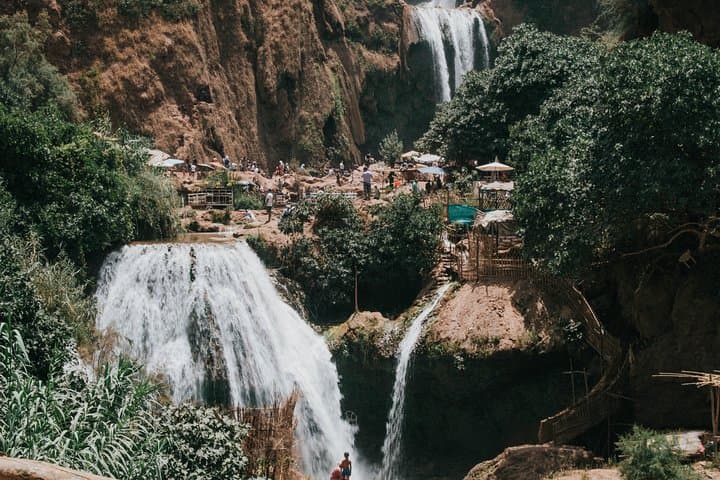

You leave Marrakech before the medina has heated up, the minarets shrinking in the rearview as the road climbs toward the Atlas foothills. By mid-morning the bus slows and the soundscape shifts: car horns fade, birds take over, and then the falls announce themselves — a white vertical ribbon cutting into olive groves, the river daring you to step closer.
You leave Marrakech before the medina has heated up, the minarets shrinking in the rearview as the road climbs toward the Atlas foothills. By mid-morning the bus slows and the soundscape shifts: car horns fade, birds take over, and then the falls announce themselves — a white vertical ribbon cutting into olive groves, the river daring you to step closer.
Ouzoud (often called Cascades d'Ouzoud) drops over 100 meters across several tiers, fed by streams that have carved terraces into Miocene-era limestone. Local Berber villages sit on the rim and along the valley; ancient olive presses and stone mills once powered by the same water speak to a long human relationship with this landscape. The resident Barbary macaques — often misnamed apes — move like small weather systems, appearing on cliffs and terraces to drink from the river and eye your camera.
Geology here is straightforward and readable: layers of sedimentary rock fractured by slow uplift and the steady work of water. Culturally, Ouzoud has been a gathering place for market days and seasonal olive harvests; today tourism supports local guides and family-run restaurants perched above the main plunge, where mint tea is poured in chipped glasses.
The day trip rhythm is practical. Expect 2.5–3 hours of driving each way from Marrakech, a 2–3 hour guided walk along maintained trails and viewpoints, and a leisurely lunch with views of the falls. Guides point out hidden springs and the small press museums tucked into nearby villages, and they’ll advise on routes that avoid the busiest terraces.
Bring a good pair of shoes — the paths are rocky and can be slippery — and keep your belongings zipped; the macaques are bold and curious. If it’s summer, pack a swimsuit and towel: there are calm pools below the falls that invite a cool dip. Photographers chase the rainbows that form in the mist; the falls seem to play with light, offering a new face every hour.
Practical notes: the tour includes hotel pickup and drop-off, lunch, and a local guide. Wear sun protection, carry water, and leave food for the restaurants — feeding wildlife harms the macaques and local ecosystems. For a quieter experience, request an early pickup or visit in shoulder seasons when crowds thin and the river runs fuller.
Ouzoud is straightforward but generous: it gives scale (a hundred-meter drop), movement (river and wildlife that won’t stand still), and human context (Berber terraces and kitchen tables). It’s an easy, full-day escape from Marrakech that rewards simple preparation with memorable views and a real taste of rural Morocco.