THE ADVENTURE COLLECTIVE® · Independent discovery and booking for outdoor travel

Escape Marrakech for a full-day loop to Ouzoud Falls: an 8–9 hour trip of limestone ledges, olive groves, and plunging waterfalls. Hike the trails, take a short boat ride toward the base, and cap the day with a traditional Berber lunch.
Escape Marrakech for a full-day loop to Ouzoud Falls: an 8–9 hour trip of limestone ledges, olive groves, and plunging waterfalls. Hike the trails, take a short boat ride toward the base, and cap the day with a traditional Berber lunch.
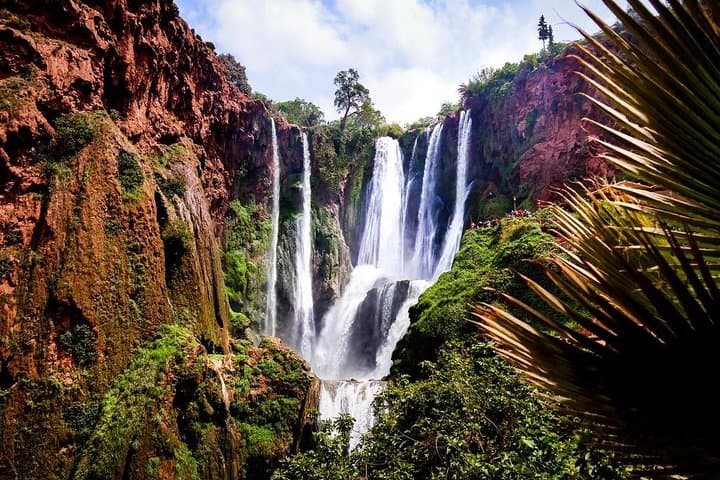
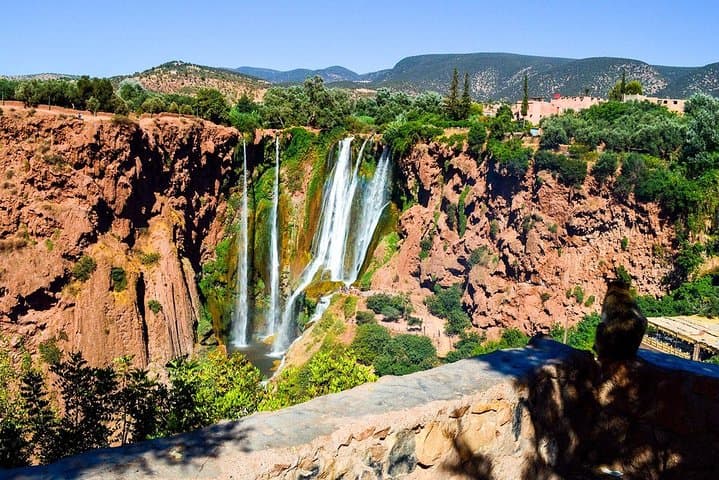
The day begins before the medina wakes. A minibus hums away from Marrakech at first light, the city’s ochre walls shrinking into a patchwork of farmland and scrub. By midmorning the air tastes greener—olive and tilled earth—and a distant roar grows until the canyon opens and the Cascades d’Ouzoud reveal themselves: water cleaving the cliff in white sheets, plunging roughly 110 meters into a bowl of rock and forest.
Verified experiences and guided adventures in the surrounding area.
Operated by Awesome Morocco Tours · Ouzoud, Marrakech-Safi
The day begins before the medina wakes. A minibus hums away from Marrakech at first light, the city’s ochre walls shrinking into a patchwork of farmland and scrub. By midmorning the air tastes greener—olive and tilled earth—and a distant roar grows until the canyon opens and the Cascades d’Ouzoud reveal themselves: water cleaving the cliff in white sheets, plunging roughly 110 meters into a bowl of rock and forest.
Visitors thread narrow alleys lined with craft stalls, then spill onto viewpoints where the falls command silence. Guides point out old stone mills perched along terraces—remnants of a centuries-old rural economy that harnessed the flow for grain and olive oil. Geologically, Ouzoud is a working landscape: limestone benches and erosive action have carved stepped drops and plunge pools that catch the water like basins. The river pushes forward, impatient and alive, drawing people to the lip and the ledge.
Culturally the valley is Berber country. Small villages ring the falls and the local cuisine reflects mountain life—slow-cooked tagines, charcoal-grilled meats, and flatbreads baked with locally pressed olive oil. The name Ouzoud points to the olives that cling to the hills, and village watermills (moulins) remain a practical and visual link to the area’s past.
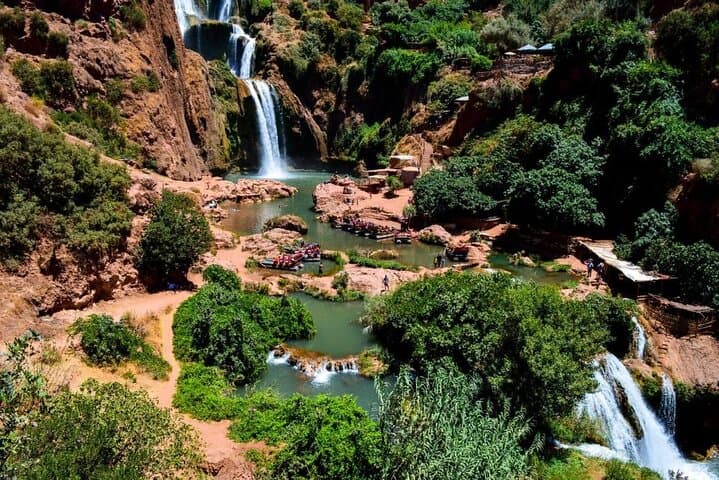
The experience balances easy sightseeing with active hiking. After viewpoints and quick photos, the trail descends through olive groves and shade, following paths that can be slick where spray settles. Guides typically lead a two-hour loop that samples the main cascades, side falls and natural pools. For those who want a closer look, small motorized skiffs ferry visitors toward the base—expect spray that feels like a cold slap on warm skin—and opportunities to swim in calm pools when weather permits.
Practicalities: the shared tour runs 8–9 hours roundtrip from Marrakech with hotel pickup starting around 08:00 and departure by 08:45. Wear grippy shoes—the rocky routes and wooden steps demand them—and bring cash for small restaurants, tips and optional boat rides. Summer brings the chance to swim; spring and autumn are cooler and excellent for photography. Respect wildlife—don’t feed the macaques—and stay on marked trails to protect fragile terraces.
This is a day that moves from urban heat to a canyon cool enough to make you slow down. The falls are scenic and social, geological and cultural, and best enjoyed with a local guide who knows where the quiet viewpoints, the freshest tagines, and the safest pools hide.
moderate.
8–9 hours.
Moderate fitness—able to manage uneven paths, steps and a hilly 2-hour guided walk.
Expect roughly 2.5 to 3 hours each way depending on traffic—total tour time runs about 8–9 hours including hiking and breaks.
The guided loop includes uneven, sometimes steep trails but is suitable for most people with moderate fitness; wear good shoes.
Yes—there are natural pools at the base and along the river; swimming is weather-dependent and not supervised, so assess conditions and follow local advice.
Yes, Barbary macaques are commonly seen around the falls; do not feed them and keep a respectful distance.
Most shared tours include a stop for a local Berber lunch but confirm with the operator; small cafes sell snacks throughout the village.
Yes; pickup starts at about 08:00 with departure around 08:45—private transfers are often available on request.
Ouzoud’s watermills and terraced fields reflect a rural Berber economy that has shaped land use here for centuries, using the river’s power to grind grain and press olives.
Stay on marked paths, avoid feeding wildlife and use local guides to support community-led tourism that limits erosion and protects native vegetation.
Awesome Morocco Tours operates guided outdoor trips and adventures with an emphasis on safety, stewardship, and memorable experiences.
The day begins before the medina wakes. A minibus hums away from Marrakech at first light, the city’s ochre walls shrinking into a patchwork of farmland and scrub. By midmorning the air tastes greener—olive and tilled earth—and a distant roar grows until the canyon opens and the Cascades d’Ouzoud reveal themselves: water cleaving the cliff in white sheets, plunging roughly 110 meters into a bowl of rock and forest.
The day begins before the medina wakes. A minibus hums away from Marrakech at first light, the city’s ochre walls shrinking into a patchwork of farmland and scrub. By midmorning the air tastes greener—olive and tilled earth—and a distant roar grows until the canyon opens and the Cascades d’Ouzoud reveal themselves: water cleaving the cliff in white sheets, plunging roughly 110 meters into a bowl of rock and forest.
Visitors thread narrow alleys lined with craft stalls, then spill onto viewpoints where the falls command silence. Guides point out old stone mills perched along terraces—remnants of a centuries-old rural economy that harnessed the flow for grain and olive oil. Geologically, Ouzoud is a working landscape: limestone benches and erosive action have carved stepped drops and plunge pools that catch the water like basins. The river pushes forward, impatient and alive, drawing people to the lip and the ledge.
Culturally the valley is Berber country. Small villages ring the falls and the local cuisine reflects mountain life—slow-cooked tagines, charcoal-grilled meats, and flatbreads baked with locally pressed olive oil. The name Ouzoud points to the olives that cling to the hills, and village watermills (moulins) remain a practical and visual link to the area’s past.
The experience balances easy sightseeing with active hiking. After viewpoints and quick photos, the trail descends through olive groves and shade, following paths that can be slick where spray settles. Guides typically lead a two-hour loop that samples the main cascades, side falls and natural pools. For those who want a closer look, small motorized skiffs ferry visitors toward the base—expect spray that feels like a cold slap on warm skin—and opportunities to swim in calm pools when weather permits.
Practicalities: the shared tour runs 8–9 hours roundtrip from Marrakech with hotel pickup starting around 08:00 and departure by 08:45. Wear grippy shoes—the rocky routes and wooden steps demand them—and bring cash for small restaurants, tips and optional boat rides. Summer brings the chance to swim; spring and autumn are cooler and excellent for photography. Respect wildlife—don’t feed the macaques—and stay on marked trails to protect fragile terraces.
This is a day that moves from urban heat to a canyon cool enough to make you slow down. The falls are scenic and social, geological and cultural, and best enjoyed with a local guide who knows where the quiet viewpoints, the freshest tagines, and the safest pools hide.