THE ADVENTURE COLLECTIVE® · Independent discovery and booking for outdoor travel

Climb the first reaches of the Marangu Route on a private day hike to Mandara Huts—forest trails, monkeys, and a picnic with Kilimanjaro in view. Ideal for beginners or travelers short on time who want a compact taste of the mountain’s ecosystems.
Climb the first reaches of the Marangu Route on a private day hike to Mandara Huts—forest trails, monkeys, and a picnic with Kilimanjaro in view. Ideal for beginners or travelers short on time who want a compact taste of the mountain’s ecosystems.
The trail starts under a green ceiling. Rainforest leaves drip sunlight onto a narrow footpath and the air smells of wet earth and coffee blossoms. On the Marangu Route the jungle crowds close, vines like old ropes, and Kilimanjaro’s snowy crown peeks between trunks—an impatient companion rising above the forest.
Verified experiences and guided adventures in the surrounding area.
Operated by Kiliclimb Africa Safaris · Moshi, Kilimanjaro Region
The trail starts under a green ceiling. Rainforest leaves drip sunlight onto a narrow footpath and the air smells of wet earth and coffee blossoms. On the Marangu Route the jungle crowds close, vines like old ropes, and Kilimanjaro’s snowy crown peeks between trunks—an impatient companion rising above the forest.
This private half-day trek takes hikers up the first leg of the Marangu Route to Mandara Huts, a compact mountain refuge at about 2,700–2,800 meters. The route was carved in colonial times to serve early climbers and porters and later formalized as Kilimanjaro National Park’s main access. Geologically, the massif is a stratovolcano: older lava flows form rolling lower slopes while the peak’s glacial cirques and black volcanic scree tell a story of ice and fire. On the trail the forest gives way to heath and moorland, where giant groundsels and lobelias stand like slow-moving architects shaping the skyline.
Wildlife is a threaded surprise. Birdsong punctuates the ascent—sunbirds flick, turacos call—and small troops of blue and colobus monkeys move with intent through the canopy. Mongoose and other shy mammals sketch the margins; the forest feels alive and quietly assertive, nudging the walker onward.
Practical guidance is straightforward. The private trek is designed for travelers short on time or anyone wanting a taste of Kilimanjaro’s ecosystems without committing to multi-day climbs. Expect 6–8 hours door-to-door depending on pickup, 450–800 meters of elevation gain during the walk, and primarily well-trodden trails with occasional roots and muddy sections. The pace is steady; guides set the rhythm and carry permits and snacks. A picnic at Mandara offers a moment to sit with the mountain and the view before descending.
Prepare for rapid weather shifts—sun can be fierce at lower altitudes and fog can roll in within minutes. Hydrate early, layer for both warmth and ventilation, and bring sturdy boots with good traction. Photography rewards patience: sunlight through mist, monkeys framed against the peak, and wide views from the hut.
Logistics are simple: private transportation from Moshi or Arusha, park fees and a boxed lunch included, and a guide handling permits and wildlife awareness. The hike is accessible to most fit beginners but not recommended for those with serious back problems. For travelers looking to sample Kilimanjaro’s landscapes, culture, and biodiversity in a single day, this trek compresses a full mountain experience into an achievable, spirited outing.
moderate.
6–8 hours.
Suitable for travelers with basic fitness—able to walk uphill for several hours and handle short sections of uneven terrain.
No formal acclimatization is required since the hike reaches mid-elevations, but taking it slow and staying hydrated reduces the risk of mild altitude effects.
Yes—private transportation from agreed pickup points in Moshi or Arusha is included in the tour.
Yes—Kilimanjaro National Park fees are included in the trip price and handled by the guide.
Older children used to hiking can join, but check with the operator about age limits and ensure they can handle several hours of uphill walking.
Bottled water and a picnic lunch are included, but bringing an extra small snack and personal water bottle is recommended.
This trek is not recommended for travelers with significant spinal or severe mobility issues due to uneven terrain and sustained walking.
The Marangu Route was one of the earliest established paths for summiting Kilimanjaro and served colonial-era guides and porters before formal park systems organized protections.
Kilimanjaro National Park manages visitor flow and trail maintenance to protect fragile alpine ecosystems; stick to trails and pack out trash to minimize impact.
Kiliclimb Africa Safaris operates guided outdoor trips and adventures with an emphasis on safety, stewardship, and memorable experiences.
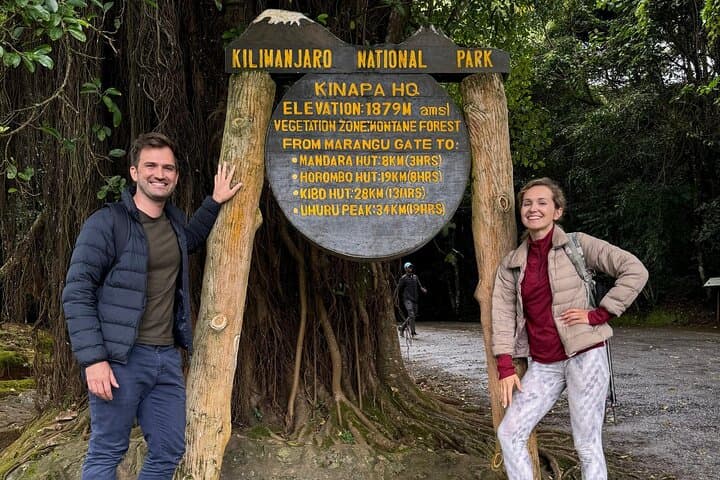
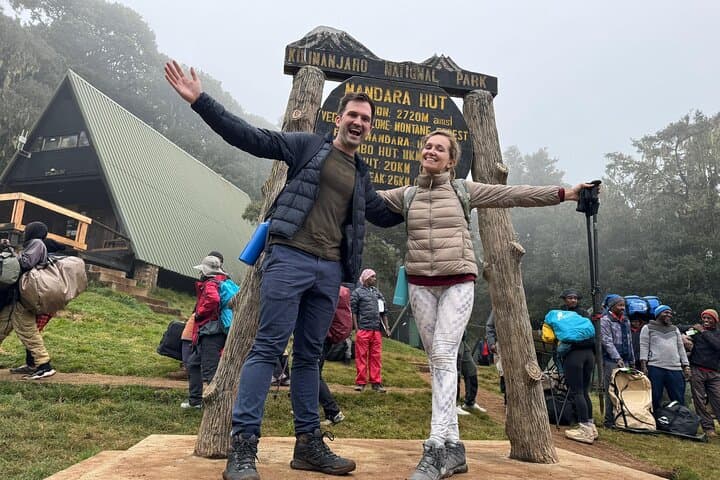
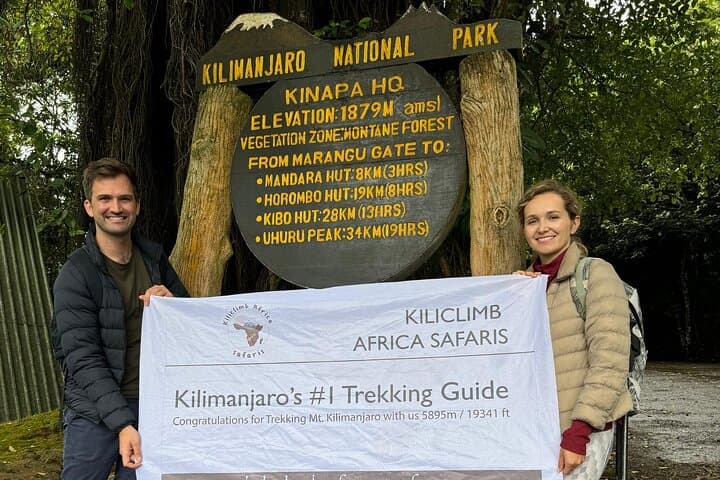
The trail starts under a green ceiling. Rainforest leaves drip sunlight onto a narrow footpath and the air smells of wet earth and coffee blossoms. On the Marangu Route the jungle crowds close, vines like old ropes, and Kilimanjaro’s snowy crown peeks between trunks—an impatient companion rising above the forest.
The trail starts under a green ceiling. Rainforest leaves drip sunlight onto a narrow footpath and the air smells of wet earth and coffee blossoms. On the Marangu Route the jungle crowds close, vines like old ropes, and Kilimanjaro’s snowy crown peeks between trunks—an impatient companion rising above the forest.
This private half-day trek takes hikers up the first leg of the Marangu Route to Mandara Huts, a compact mountain refuge at about 2,700–2,800 meters. The route was carved in colonial times to serve early climbers and porters and later formalized as Kilimanjaro National Park’s main access. Geologically, the massif is a stratovolcano: older lava flows form rolling lower slopes while the peak’s glacial cirques and black volcanic scree tell a story of ice and fire. On the trail the forest gives way to heath and moorland, where giant groundsels and lobelias stand like slow-moving architects shaping the skyline.
Wildlife is a threaded surprise. Birdsong punctuates the ascent—sunbirds flick, turacos call—and small troops of blue and colobus monkeys move with intent through the canopy. Mongoose and other shy mammals sketch the margins; the forest feels alive and quietly assertive, nudging the walker onward.
Practical guidance is straightforward. The private trek is designed for travelers short on time or anyone wanting a taste of Kilimanjaro’s ecosystems without committing to multi-day climbs. Expect 6–8 hours door-to-door depending on pickup, 450–800 meters of elevation gain during the walk, and primarily well-trodden trails with occasional roots and muddy sections. The pace is steady; guides set the rhythm and carry permits and snacks. A picnic at Mandara offers a moment to sit with the mountain and the view before descending.
Prepare for rapid weather shifts—sun can be fierce at lower altitudes and fog can roll in within minutes. Hydrate early, layer for both warmth and ventilation, and bring sturdy boots with good traction. Photography rewards patience: sunlight through mist, monkeys framed against the peak, and wide views from the hut.
Logistics are simple: private transportation from Moshi or Arusha, park fees and a boxed lunch included, and a guide handling permits and wildlife awareness. The hike is accessible to most fit beginners but not recommended for those with serious back problems. For travelers looking to sample Kilimanjaro’s landscapes, culture, and biodiversity in a single day, this trek compresses a full mountain experience into an achievable, spirited outing.