THE ADVENTURE COLLECTIVE® · Independent discovery and booking for outdoor travel

Spend a full day walking through Mai Chau’s patchwork rice fields and White Thai villages. This 8‑hour trek pairs gentle climbs, limestone vistas and visits to traditional weavers for an immersive look at rural northwest Vietnam.
Spend a full day walking through Mai Chau’s patchwork rice fields and White Thai villages. This 8‑hour trek pairs gentle climbs, limestone vistas and visits to traditional weavers for an immersive look at rural northwest Vietnam.
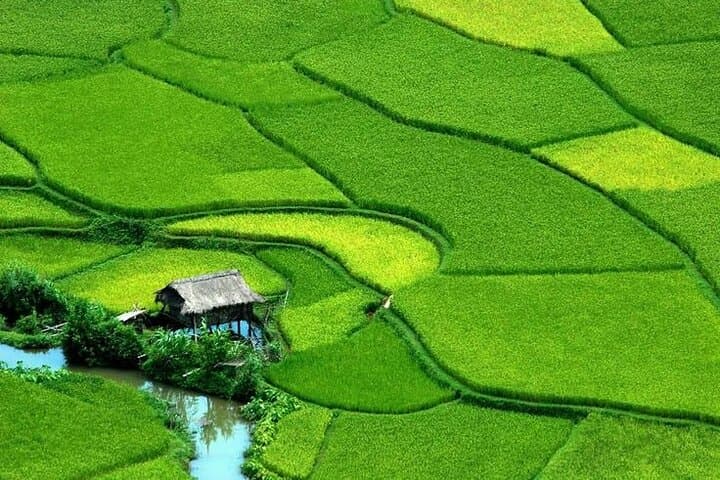
You step off the van and the valley inhales you. Mist lifts from flooded paddies, and a chorus of water—irrigation channels and distant streams—seems to test how far your boots will carry you. This is Mai Chau: a low-lying bowl flanked by steep limestone ridges where White Thai villages punctuate the rice like stitches on a vast, living cloth.
Verified experiences and guided adventures in the surrounding area.
Operated by Panorama Destination Vietnam · Mai Chau, Hoa Binh
You step off the van and the valley inhales you. Mist lifts from flooded paddies, and a chorus of water—irrigation channels and distant streams—seems to test how far your boots will carry you. This is Mai Chau: a low-lying bowl flanked by steep limestone ridges where White Thai villages punctuate the rice like stitches on a vast, living cloth.
The full-day trek threads through Na Phon, Na Meo, Sam Pa, Cha Long and Chieng Sai, taking roughly 8 hours on a mix of dirt lanes, compacted footpaths and short, rocky climbs. Expect an estimated 10–12 km of walking with cumulative elevation gain around 300–400 m—gentle ascents that open into panoramic benches of terraced rice and sudden views of karst teeth slicing the horizon.
This valley is both agricultural stage and cultural archive. The White Thai people here are known for intricate loom work; women still weave pattern-rich textiles that map family histories and seasonal rhythms. Geologically, the surrounding limestone formed in shallow seas millions of years ago; weathering and uplifts left the dramatic karsts that now guard the valley and create the microclimates farmers exploit for wet-rice cultivation.
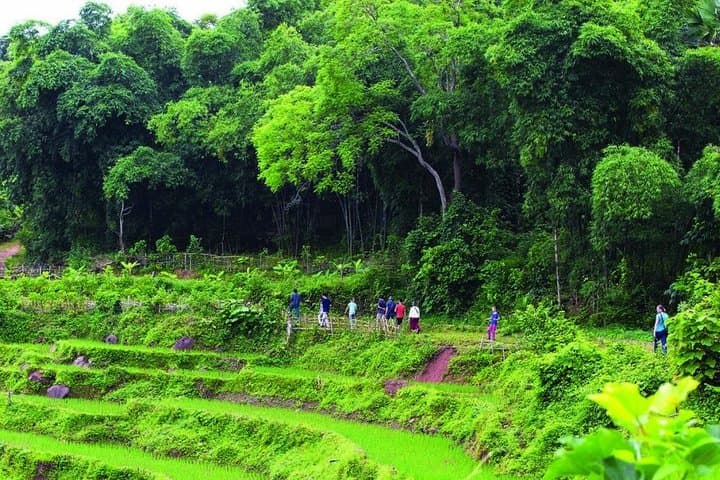
Walking here is slow archaeology. Children wave from stilt houses, water buffalo graze like patient machines, and wooden houses smell of sun-warmed bamboo. The guide explains cropping cycles, points out native medicinal plants, and pauses at weavers’ homes where looms click in a steady, domestic language.
Practicalities matter. Start early to catch cool air and better light for photos; the route is exposed in sections, so midday can be hot. Trails are mostly well trodden but become slippery after rain—good tread on shoes matters. The day includes a simple rural lunch, bottled water, and private transport; bring extra water and cash for market purchases.
Wildlife here is subtle: kingfishers flash along irrigation canals and warblers patrol field margins. Respect village life—ask before photographing people, and avoid stepping through flooded rice terraces. The area is a working landscape: leave no trace, support local artisans with purchases, and follow the guide’s route to minimize erosion on informal paths.
For travelers, this trek is a balance of pace and presence—an attainable, richly textured day that pairs easy physical demands with deep cultural payoff. If you want to swap traffic-clogged sights for the cadence of rural Vietnam—rice, river, and the slow rhythm of village life—Mai Chau delivers it in full measure.
moderate.
8 hours.
Suitable for those with moderate fitness; comfortable walking for 4–6 hours with short climbs and variable terrain.
The tour runs about 8 hours and covers an estimated 10–12 km with moderate, mostly short climbs—suitable for those comfortable walking several hours on uneven terrain.
Yes—lunch and bottled water are included; bring extra water if you drink heavily or plan side purchases.
Infants may join but must sit on laps; the activity is not recommended for pregnant travelers or those with serious back or heart problems.
Private transport is included; pickup is offered from hotels in the area—confirm pickup point when booking.
Light layers, a sun hat, and shoes with good tread; bring a lightweight rain jacket in wet season.
Yes—many Thai women weave for sale. Bring cash and buy directly to support local artisans; avoid bargaining aggressively.
Mai Chau’s White Thai communities migrated through the region centuries ago; their stilt-house architecture and weaving patterns reflect cross-border cultural links with Thailand and Laos.
Rice terraces are a working landscape; stick to established paths to limit erosion and support small-scale tourism that provides income for village conservation.
Panorama Destination Vietnam operates guided outdoor trips and adventures with an emphasis on safety, stewardship, and memorable experiences.
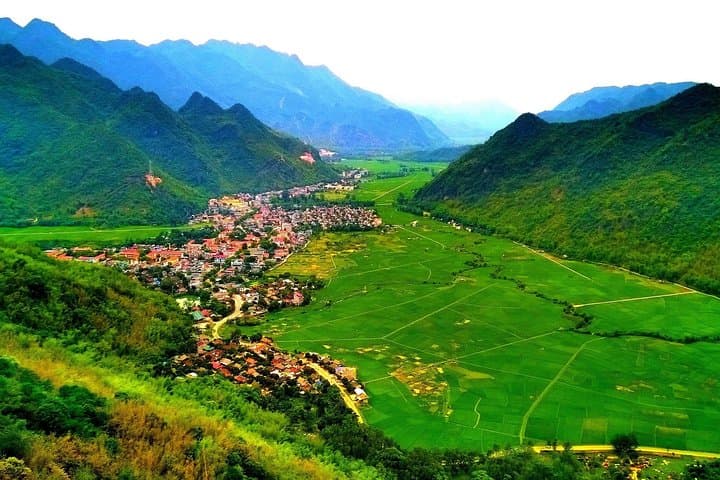
You step off the van and the valley inhales you. Mist lifts from flooded paddies, and a chorus of water—irrigation channels and distant streams—seems to test how far your boots will carry you. This is Mai Chau: a low-lying bowl flanked by steep limestone ridges where White Thai villages punctuate the rice like stitches on a vast, living cloth.
You step off the van and the valley inhales you. Mist lifts from flooded paddies, and a chorus of water—irrigation channels and distant streams—seems to test how far your boots will carry you. This is Mai Chau: a low-lying bowl flanked by steep limestone ridges where White Thai villages punctuate the rice like stitches on a vast, living cloth.
The full-day trek threads through Na Phon, Na Meo, Sam Pa, Cha Long and Chieng Sai, taking roughly 8 hours on a mix of dirt lanes, compacted footpaths and short, rocky climbs. Expect an estimated 10–12 km of walking with cumulative elevation gain around 300–400 m—gentle ascents that open into panoramic benches of terraced rice and sudden views of karst teeth slicing the horizon.
This valley is both agricultural stage and cultural archive. The White Thai people here are known for intricate loom work; women still weave pattern-rich textiles that map family histories and seasonal rhythms. Geologically, the surrounding limestone formed in shallow seas millions of years ago; weathering and uplifts left the dramatic karsts that now guard the valley and create the microclimates farmers exploit for wet-rice cultivation.
Walking here is slow archaeology. Children wave from stilt houses, water buffalo graze like patient machines, and wooden houses smell of sun-warmed bamboo. The guide explains cropping cycles, points out native medicinal plants, and pauses at weavers’ homes where looms click in a steady, domestic language.
Practicalities matter. Start early to catch cool air and better light for photos; the route is exposed in sections, so midday can be hot. Trails are mostly well trodden but become slippery after rain—good tread on shoes matters. The day includes a simple rural lunch, bottled water, and private transport; bring extra water and cash for market purchases.
Wildlife here is subtle: kingfishers flash along irrigation canals and warblers patrol field margins. Respect village life—ask before photographing people, and avoid stepping through flooded rice terraces. The area is a working landscape: leave no trace, support local artisans with purchases, and follow the guide’s route to minimize erosion on informal paths.
For travelers, this trek is a balance of pace and presence—an attainable, richly textured day that pairs easy physical demands with deep cultural payoff. If you want to swap traffic-clogged sights for the cadence of rural Vietnam—rice, river, and the slow rhythm of village life—Mai Chau delivers it in full measure.