THE ADVENTURE COLLECTIVE® · Independent discovery and booking for outdoor travel

Just three hours from Hanoi, Mai Chau opens like a green room: rice flats, limestone ridges and Thai stilt houses. This two-day homestay and cycling tour pairs gentle rides through rice fields with evening Thai dance and village life.
Just three hours from Hanoi, Mai Chau opens like a green room: rice flats, limestone ridges and Thai stilt houses. This two-day homestay and cycling tour pairs gentle rides through rice fields with evening Thai dance and village life.
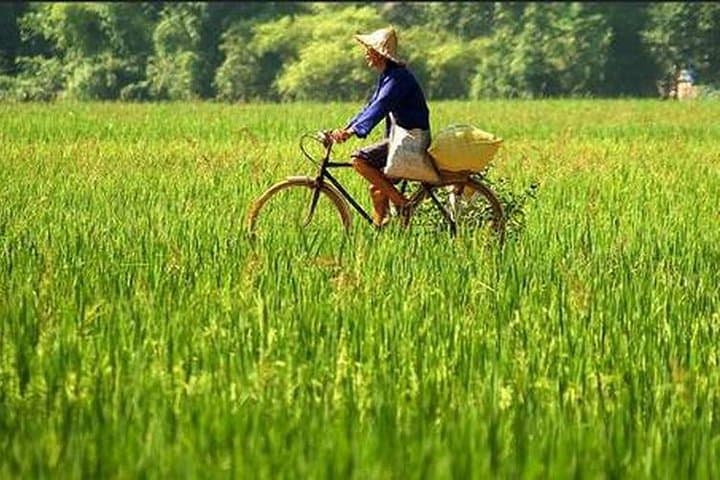
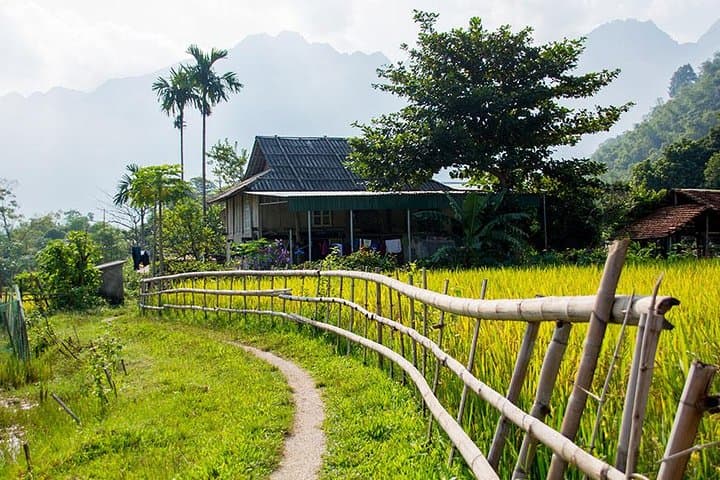
The bus eases out of Hanoi before dawn and the city’s bustle unthreads into a ribbon of highway. By midmorning, jagged limestone ridges lift from a bowl of green—the Mai Chau Valley—where palms and paddy fields flatten into a calm, lived-in landscape. A local guide unlocks a homestay gate and the valley inhales: the scent of wet earth, the distant clack of looms, and the slow pedal rhythm of bicycles on village lanes.
Verified experiences and guided adventures in the surrounding area.
Operated by Vietnam Creative Travel · Mai Chau, Hoa Binh
The bus eases out of Hanoi before dawn and the city’s bustle unthreads into a ribbon of highway. By midmorning, jagged limestone ridges lift from a bowl of green—the Mai Chau Valley—where palms and paddy fields flatten into a calm, lived-in landscape. A local guide unlocks a homestay gate and the valley inhales: the scent of wet earth, the distant clack of looms, and the slow pedal rhythm of bicycles on village lanes.
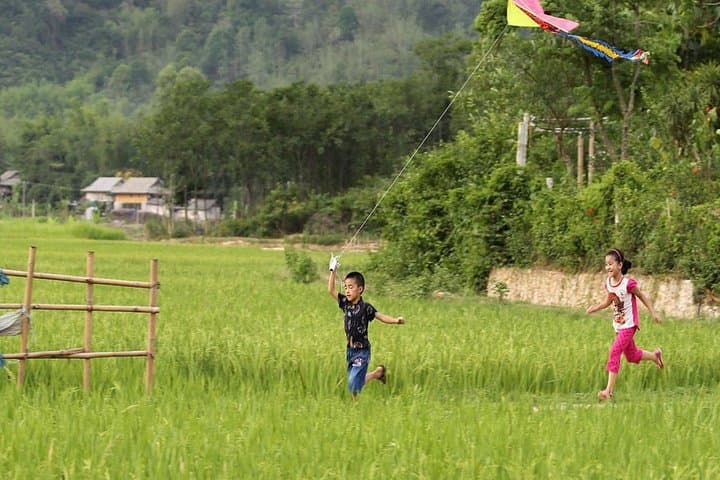
Mai Chau’s valley sits in Hoa Binh province, roughly three hours west of Hanoi, and occupies a geological seam where Mesozoic limestone has been sculpted into cliffs and karst outcrops. The fields themselves are recent on a human scale—centuries of Thai (Tai) cultivation have shaped terraces, irrigation channels and seasonal rhythms that still govern daily life. Visitors move through villages populated by White Thai communities whose weaving, architecture and folk dances remain central to local identity.
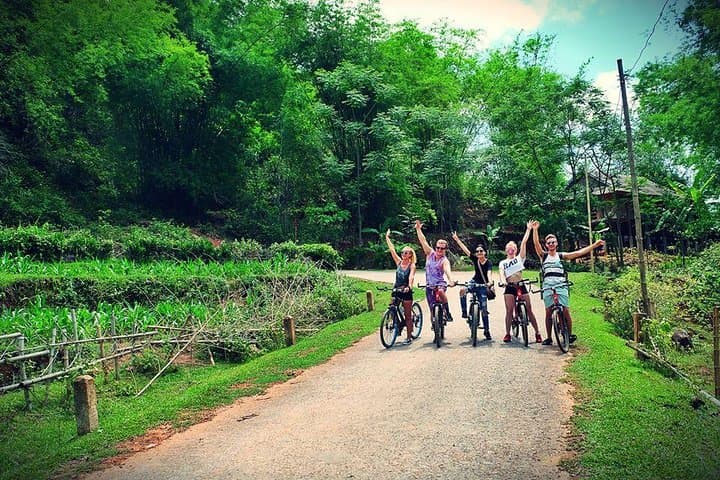
On day one, the itinerary is simple and effective: arrive, share a long communal lunch, then cycle 10–15 km along quiet lanes to watch farmers transplant rice and to visit remote stilt-house villages. Bike routes are mostly flat with occasional short climbs—packed dirt, compacted gravel and narrow paved roads that snake between fields and low ridgelines. Evening falls with a family-style dinner and a performance of traditional Thai songs and dances—an intimate, not staged, display where elders invite guests to join.
Day two widens the loop: a guided ride to Na Meo, Na Mo and Xam Pa for higher terraces and clearer vistas before lunch and a late-afternoon bus back to Hanoi. The trip’s tempo is moderate—a mix of light trekking, cycling and cultural immersion—designed for travelers who want active time without technical demands.
Practical edge: bring a reliable hybrid or front-suspension day bike if you’re picky (the operator provides standard touring bikes), carry a hydration system and a small first-aid kit, and keep cash on hand; ATMs are limited. Footwear should be sturdy sandals or low-profile hiking shoes for homestay comfort and muddy approach trails. Mornings are best for photos and cooler cycling; afternoons heat up and mosquitoes become more active, so bring repellent and a lightweight long sleeve.
For travelers, the reward is straightforward: slow movement through a living agricultural landscape, close contact with local culture, and the uncomplicated pleasure of sleeping in a village home. The Mai Chau Nature 2-day itinerary is equal parts scenery and social exchange—an accessible introduction to northwest Vietnam that leaves room to walk, pedal and listen.
moderate.
2 days.
Suitable for travelers with basic fitness; expect multiple 10–15 km cycling legs and short village hikes.
Pickup is arranged from Hanoi Old Quarter hotels between 7:00–7:30; confirm hotel name and address at booking.
Overnight is in a local homestay—shared rooms on raised wooden floors with basic amenities and family meals included.
Yes—two lunches, two dinners and one breakfast are included, typically prepared by the host family with regional dishes.
Infants are allowed but must sit on an adult’s lap on the bus; specialized infant seats are noted as available—check with the operator.
Cycling is on mostly flat to rolling valley roads with occasional short climbs—no advanced bike-handling skills required.
September–November and March–May offer the most comfortable weather and active agricultural scenes.
Mai Chau is home to several Tai/Thai hill-tribe groups whose stilt-house architecture and weaving traditions reflect centuries of upland-lowland exchange.
Tourism supports village incomes but puts pressure on water and waste systems; travel light, avoid single-use plastics and ask hosts about local recycling or composting efforts.
Vietnam Creative Travel operates guided outdoor trips and adventures with an emphasis on safety, stewardship, and memorable experiences.
The bus eases out of Hanoi before dawn and the city’s bustle unthreads into a ribbon of highway. By midmorning, jagged limestone ridges lift from a bowl of green—the Mai Chau Valley—where palms and paddy fields flatten into a calm, lived-in landscape. A local guide unlocks a homestay gate and the valley inhales: the scent of wet earth, the distant clack of looms, and the slow pedal rhythm of bicycles on village lanes.
The bus eases out of Hanoi before dawn and the city’s bustle unthreads into a ribbon of highway. By midmorning, jagged limestone ridges lift from a bowl of green—the Mai Chau Valley—where palms and paddy fields flatten into a calm, lived-in landscape. A local guide unlocks a homestay gate and the valley inhales: the scent of wet earth, the distant clack of looms, and the slow pedal rhythm of bicycles on village lanes.
Mai Chau’s valley sits in Hoa Binh province, roughly three hours west of Hanoi, and occupies a geological seam where Mesozoic limestone has been sculpted into cliffs and karst outcrops. The fields themselves are recent on a human scale—centuries of Thai (Tai) cultivation have shaped terraces, irrigation channels and seasonal rhythms that still govern daily life. Visitors move through villages populated by White Thai communities whose weaving, architecture and folk dances remain central to local identity.
On day one, the itinerary is simple and effective: arrive, share a long communal lunch, then cycle 10–15 km along quiet lanes to watch farmers transplant rice and to visit remote stilt-house villages. Bike routes are mostly flat with occasional short climbs—packed dirt, compacted gravel and narrow paved roads that snake between fields and low ridgelines. Evening falls with a family-style dinner and a performance of traditional Thai songs and dances—an intimate, not staged, display where elders invite guests to join.
Day two widens the loop: a guided ride to Na Meo, Na Mo and Xam Pa for higher terraces and clearer vistas before lunch and a late-afternoon bus back to Hanoi. The trip’s tempo is moderate—a mix of light trekking, cycling and cultural immersion—designed for travelers who want active time without technical demands.
Practical edge: bring a reliable hybrid or front-suspension day bike if you’re picky (the operator provides standard touring bikes), carry a hydration system and a small first-aid kit, and keep cash on hand; ATMs are limited. Footwear should be sturdy sandals or low-profile hiking shoes for homestay comfort and muddy approach trails. Mornings are best for photos and cooler cycling; afternoons heat up and mosquitoes become more active, so bring repellent and a lightweight long sleeve.
For travelers, the reward is straightforward: slow movement through a living agricultural landscape, close contact with local culture, and the uncomplicated pleasure of sleeping in a village home. The Mai Chau Nature 2-day itinerary is equal parts scenery and social exchange—an accessible introduction to northwest Vietnam that leaves room to walk, pedal and listen.