THE ADVENTURE COLLECTIVE® · Independent discovery and booking for outdoor travel

Escape Hanoi for 48 hours and trade the city’s rush for the quiet geometry of rice paddies, stilt houses, and village lanes. This two-day Mai Chau tour pairs homestay hospitality with easy rides and short treks — ideal for travelers seeking an authentic cultural short-break.
Escape Hanoi for 48 hours and trade the city’s rush for the quiet geometry of rice paddies, stilt houses, and village lanes. This two-day Mai Chau tour pairs homestay hospitality with easy rides and short treks — ideal for travelers seeking an authentic cultural short-break.
You wake before dawn in Hanoi and the city’s noise thins to a hum as the minivan eases onto Highway 6. By mid-morning the pavement gives way to a landscape that seems to breathe — wide green paddies, low ridges of limestone, and small bamboo-framed houses that peer across narrow lanes. The Mai Chau Valley doesn’t so much arrive as it asserts itself: a calm lowland enclosed by higher, forested hills where local life follows the rhythm of rice and season.
Verified experiences and guided adventures in the surrounding area.
Operated by Asia Travel Links · Mai Chau, Hoa Binh
You wake before dawn in Hanoi and the city’s noise thins to a hum as the minivan eases onto Highway 6. By mid-morning the pavement gives way to a landscape that seems to breathe — wide green paddies, low ridges of limestone, and small bamboo-framed houses that peer across narrow lanes. The Mai Chau Valley doesn’t so much arrive as it asserts itself: a calm lowland enclosed by higher, forested hills where local life follows the rhythm of rice and season.
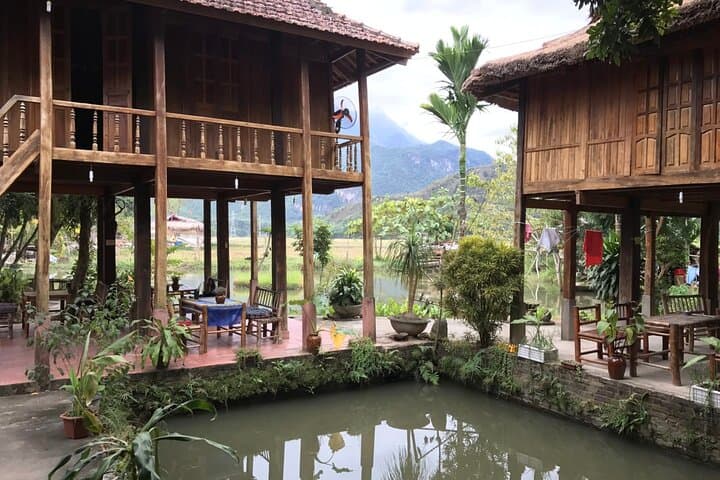
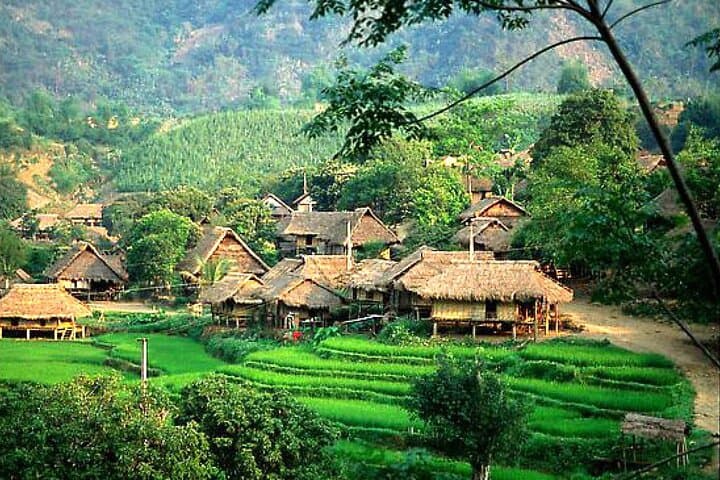
Mai Chau sits in Hoa Binh province and is populated largely by the White Thai people, an ethic group with a long tradition of wet-rice agriculture, stilt houses, and woven brocade. Geologically the valley is cradled in an upland basin with karst outcrops—the same limestone processes that shape northern Vietnam’s famed cliffs here create softer, rolling ridgelines and aquifers that feed the rice terraces.
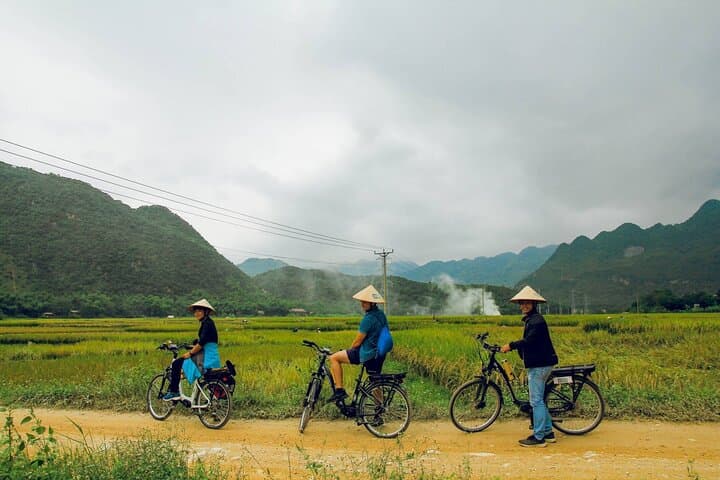
The tour’s first afternoon unfolds like a short book: an authentic lunch with a host family, a slow bicycle ride along village paths, and pauses to photograph thatched roofs and terraces reflecting the sky. Dinner is communal and hands-on—guests are invited to help prepare traditional dishes—then an overnight in a local homestay offers a close-up view of daily life, from the wood-fired stove to morning chores.
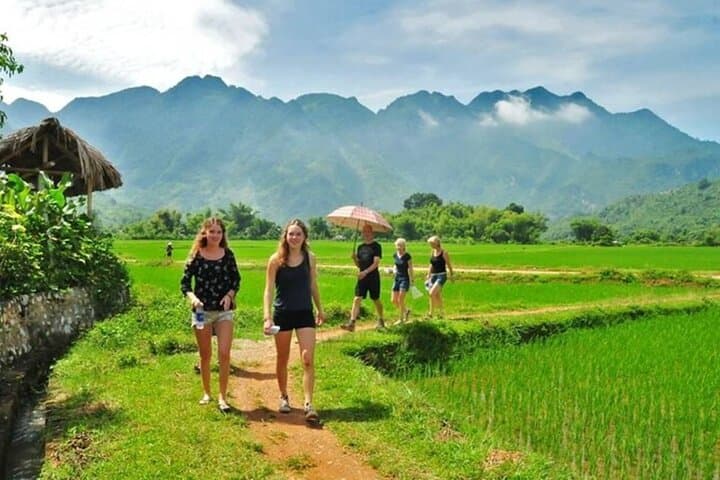
On day two the valley opens on foot. A series of short treks and winding lanes lead to Cum and Sam Khoe villages where the guide explains local customs and weaving techniques before the group returns to Hanoi in the late afternoon.
Practical matters are straightforward. The drive from Hanoi takes roughly 3.5–4 hours each way depending on traffic; plan for early departure and a return that lands you back in the city by late afternoon. Expect mixed terrain: paved rural roads, compacted dirt village lanes, and short stepped paths through rice paddies. Elevation is modest—around 350–500 meters—so altitude is not a factor, but bring footwear with traction for the muddy season.
Respect is part of the program: ask before photographing people, remove shoes at a host’s threshold, and follow your guide’s lead when joining household activities. Cash is useful in small denominations for village purchases and tips.
Timing counts. Visit in spring for planting colors or late summer for full, emerald paddies; the monsoon months will be wetter and slipperier underfoot. With an overnight homestay and a mix of cycling and hiking, the Mai Chau two-day trip is both accessible and intimate — a compact cultural immersion that makes the valley’s landscapes, people, and food the point of the journey.
moderate.
2 days (approx. 8–10 hours of light activity spread across two days).
Suitable for travelers in average fitness; able to ride a bicycle on flat village lanes and walk short, sometimes uneven trails.
The valley is roughly 140 km from central Hanoi; travel time is about 3.5–4 hours by road depending on traffic.
The tour includes an overnight homestay with a local family in Mai Chau, offering basic but comfortable rooms and breakfast.
Yes—the itinerary includes an easy bicycle ride on flat village lanes; bikes and helmets are provided and routes are suitable for casual cyclists.
Meals listed in the program are included: lunch and dinner on day one, breakfast and lunch on day two, with local home-cooked menus.
Families can join, but infants must sit on laps and the operator advises it’s unsuitable for travelers with serious back or heart problems.
Bring modest clothing, a small gift or cash for your host if desired, a personal towel, and any toiletries you prefer—some items may be limited in villages.
Mai Chau has long been a center of White Thai culture; stilt houses and brocade weaving reflect centuries of agrarian life in northern Vietnam.
Tourism supports village incomes but can strain local waste systems; choose operators who respect village rules, avoid single-use plastics, and follow trail etiquette.
Asia Travel Links operates guided outdoor trips and adventures with an emphasis on safety, stewardship, and memorable experiences.
You wake before dawn in Hanoi and the city’s noise thins to a hum as the minivan eases onto Highway 6. By mid-morning the pavement gives way to a landscape that seems to breathe — wide green paddies, low ridges of limestone, and small bamboo-framed houses that peer across narrow lanes. The Mai Chau Valley doesn’t so much arrive as it asserts itself: a calm lowland enclosed by higher, forested hills where local life follows the rhythm of rice and season.
You wake before dawn in Hanoi and the city’s noise thins to a hum as the minivan eases onto Highway 6. By mid-morning the pavement gives way to a landscape that seems to breathe — wide green paddies, low ridges of limestone, and small bamboo-framed houses that peer across narrow lanes. The Mai Chau Valley doesn’t so much arrive as it asserts itself: a calm lowland enclosed by higher, forested hills where local life follows the rhythm of rice and season.
Mai Chau sits in Hoa Binh province and is populated largely by the White Thai people, an ethic group with a long tradition of wet-rice agriculture, stilt houses, and woven brocade. Geologically the valley is cradled in an upland basin with karst outcrops—the same limestone processes that shape northern Vietnam’s famed cliffs here create softer, rolling ridgelines and aquifers that feed the rice terraces.
The tour’s first afternoon unfolds like a short book: an authentic lunch with a host family, a slow bicycle ride along village paths, and pauses to photograph thatched roofs and terraces reflecting the sky. Dinner is communal and hands-on—guests are invited to help prepare traditional dishes—then an overnight in a local homestay offers a close-up view of daily life, from the wood-fired stove to morning chores.
On day two the valley opens on foot. A series of short treks and winding lanes lead to Cum and Sam Khoe villages where the guide explains local customs and weaving techniques before the group returns to Hanoi in the late afternoon.
Practical matters are straightforward. The drive from Hanoi takes roughly 3.5–4 hours each way depending on traffic; plan for early departure and a return that lands you back in the city by late afternoon. Expect mixed terrain: paved rural roads, compacted dirt village lanes, and short stepped paths through rice paddies. Elevation is modest—around 350–500 meters—so altitude is not a factor, but bring footwear with traction for the muddy season.
Respect is part of the program: ask before photographing people, remove shoes at a host’s threshold, and follow your guide’s lead when joining household activities. Cash is useful in small denominations for village purchases and tips.
Timing counts. Visit in spring for planting colors or late summer for full, emerald paddies; the monsoon months will be wetter and slipperier underfoot. With an overnight homestay and a mix of cycling and hiking, the Mai Chau two-day trip is both accessible and intimate — a compact cultural immersion that makes the valley’s landscapes, people, and food the point of the journey.