THE ADVENTURE COLLECTIVE® · Independent discovery and booking for outdoor travel

A two-day escape from Hanoi into the rice-bowl valleys of Mai Chau—this trip pairs easy cycling with a scenic 7 km village trek, a night in a Thai homestay and local music and wine. Read on for what to expect on the road, the trail and around the family table.
A two-day escape from Hanoi into the rice-bowl valleys of Mai Chau—this trip pairs easy cycling with a scenic 7 km village trek, a night in a Thai homestay and local music and wine. Read on for what to expect on the road, the trail and around the family table.
You leave Hanoi before dawn and watch the city’s neon recede into a long ribbon of highway. By midmorning the van slips into a bowl of green—flat rice paddies like mirrors, low limestone ridges pinching the horizon, and stilt houses dotting lanes that refuse to stay straight. The valley breathes around you; wind from the surrounding karst lifts a faint scent of wet earth and fires where families cook.
Verified experiences and guided adventures in the surrounding area.
Operated by Local Tours PU LUONG · Mai Chau, Hoa Binh
You leave Hanoi before dawn and watch the city’s neon recede into a long ribbon of highway. By midmorning the van slips into a bowl of green—flat rice paddies like mirrors, low limestone ridges pinching the horizon, and stilt houses dotting lanes that refuse to stay straight. The valley breathes around you; wind from the surrounding karst lifts a faint scent of wet earth and fires where families cook.
Mai Chau sits roughly 140 km northwest of Hanoi in Hoa Binh province. Geologically the valley is a shallow depression carved between limestone outcrops and older alluvial deposits; farmers have worked these soils for centuries, turning steep slopes into terraces and low plains into irrigated paddies. Culturally, this is Thailand (Thai) ethnic country—distinct from the country—whose longhouses, intricate weaving and seasonal festivals still structure daily life here.
On day one the tour sketches a simple arc: a scenic photo stop, a family-style lunch in a homestay, then about 10 km of biking on quiet rural roads. Cyclists pass buffalo tethered like patient props, women at looms in shaded doorways, and fields that seem to ripple according to the rice cycle—bright green in the growing months, burnished gold just before harvest. Evening is for food and, if your group is large enough, a traditional Thai dance and the local rice wine, ruou can, served from long-necked jars.
Day two pulls you away from main tracks: a short 2 km ride followed by a 7 km trek into Na Meo, Na Mo and Xam Pa villages. Trails climb gently, offering pocket views of terraces cut into slopes and narrow ravines that channel the monsoon. Guides—usually local Thai—explain customs, teach basic greetings and show how scarves are woven and used in daily ritual. The trek keeps its pace pragmatic: enough ascent to earn a view, not enough to demand mountaineering gear.
Practical edge: expect simple homestay accommodation with shared or private rooms, included meals and roundtrip transport from Hanoi. The activity suits travelers comfortable on a casual bike and capable of walking 7–10 km on uneven trail. Pack a light rain jacket in summer, sturdy shoes for the trek, and carry water and sunscreen. Respect local etiquette—ask before photographing people—and prepare small bills for market purchases or tips.
The Mai Chau two-day tour is compact but deliberately paced: a connective slice of rural northern Vietnam that combines easy activity, cultural exchange and landscape that feels both sculpted by geology and by human hands. For travelers short on time but hungry for a tactile, low-impact slice of countryside life, it’s a straightforward, richly rewarding escape from Hanoi.
moderate.
2 days (active: ~6–10 hours across two days).
Good for travelers with basic fitness who can cycle 10 km and hike 7 km on uneven terrain; comfortable on gradual climbs.
Day 1 includes roughly 10 km of cycling through villages; day 2 begins with a short 2 km ride and about 7 km of trekking across rural trails.
Overnight is in a local Mai Chau homestay or guesthouse with options from dorm to private standard or deluxe rooms depending on booking.
The tour is rated physically easy by the operator and suitable for a broad range of fitness levels, but families with very young children or mobility issues should consider the walking and rural terrain.
Breakfast, two lunches and one dinner are included; the operator notes vegetarian options—notify dietary requirements when booking.
Dress modestly—cover shoulders and avoid revealing clothing. A light long-sleeved shirt protects against sun and insects during trekking.
The transfer is about 4 hours each way with a rest stop en route; pickup is generally from Hanoi Old Quarter or Hanoi Opera House if outside the Old Quarter.
Mai Chau's valley has been an agricultural and trading corridor for ethnic Thai communities for centuries; stilt-house architecture and weaving patterns reflect local lineage and social structures.
Tourism here is low-impact but growing; support homestays and buy locally made textiles to keep economic benefits in the community and reduce pressure for commercial development.
Local Tours PU LUONG operates guided outdoor trips and adventures with an emphasis on safety, stewardship, and memorable experiences.

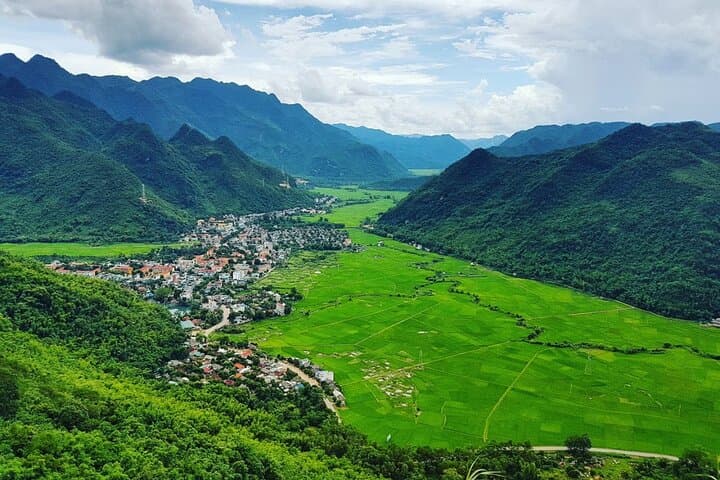

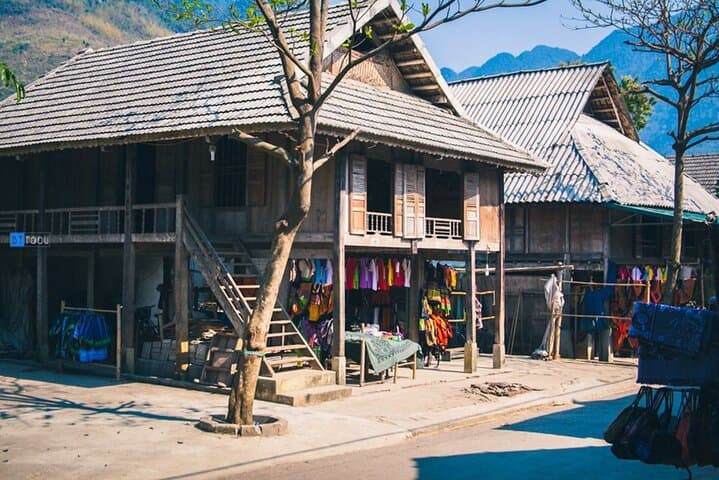
You leave Hanoi before dawn and watch the city’s neon recede into a long ribbon of highway. By midmorning the van slips into a bowl of green—flat rice paddies like mirrors, low limestone ridges pinching the horizon, and stilt houses dotting lanes that refuse to stay straight. The valley breathes around you; wind from the surrounding karst lifts a faint scent of wet earth and fires where families cook.
You leave Hanoi before dawn and watch the city’s neon recede into a long ribbon of highway. By midmorning the van slips into a bowl of green—flat rice paddies like mirrors, low limestone ridges pinching the horizon, and stilt houses dotting lanes that refuse to stay straight. The valley breathes around you; wind from the surrounding karst lifts a faint scent of wet earth and fires where families cook.
Mai Chau sits roughly 140 km northwest of Hanoi in Hoa Binh province. Geologically the valley is a shallow depression carved between limestone outcrops and older alluvial deposits; farmers have worked these soils for centuries, turning steep slopes into terraces and low plains into irrigated paddies. Culturally, this is Thailand (Thai) ethnic country—distinct from the country—whose longhouses, intricate weaving and seasonal festivals still structure daily life here.
On day one the tour sketches a simple arc: a scenic photo stop, a family-style lunch in a homestay, then about 10 km of biking on quiet rural roads. Cyclists pass buffalo tethered like patient props, women at looms in shaded doorways, and fields that seem to ripple according to the rice cycle—bright green in the growing months, burnished gold just before harvest. Evening is for food and, if your group is large enough, a traditional Thai dance and the local rice wine, ruou can, served from long-necked jars.
Day two pulls you away from main tracks: a short 2 km ride followed by a 7 km trek into Na Meo, Na Mo and Xam Pa villages. Trails climb gently, offering pocket views of terraces cut into slopes and narrow ravines that channel the monsoon. Guides—usually local Thai—explain customs, teach basic greetings and show how scarves are woven and used in daily ritual. The trek keeps its pace pragmatic: enough ascent to earn a view, not enough to demand mountaineering gear.
Practical edge: expect simple homestay accommodation with shared or private rooms, included meals and roundtrip transport from Hanoi. The activity suits travelers comfortable on a casual bike and capable of walking 7–10 km on uneven trail. Pack a light rain jacket in summer, sturdy shoes for the trek, and carry water and sunscreen. Respect local etiquette—ask before photographing people—and prepare small bills for market purchases or tips.
The Mai Chau two-day tour is compact but deliberately paced: a connective slice of rural northern Vietnam that combines easy activity, cultural exchange and landscape that feels both sculpted by geology and by human hands. For travelers short on time but hungry for a tactile, low-impact slice of countryside life, it’s a straightforward, richly rewarding escape from Hanoi.