THE ADVENTURE COLLECTIVE® · Independent discovery and booking for outdoor travel

Two days of cycling, village hikes, and a Pu Luong nature trek that pairs cultural immersion with terrace-top vistas. Ideal for travelers who want homestay authenticity without roughing it for nights on end.
Two days of cycling, village hikes, and a Pu Luong nature trek that pairs cultural immersion with terrace-top vistas. Ideal for travelers who want homestay authenticity without roughing it for nights on end.
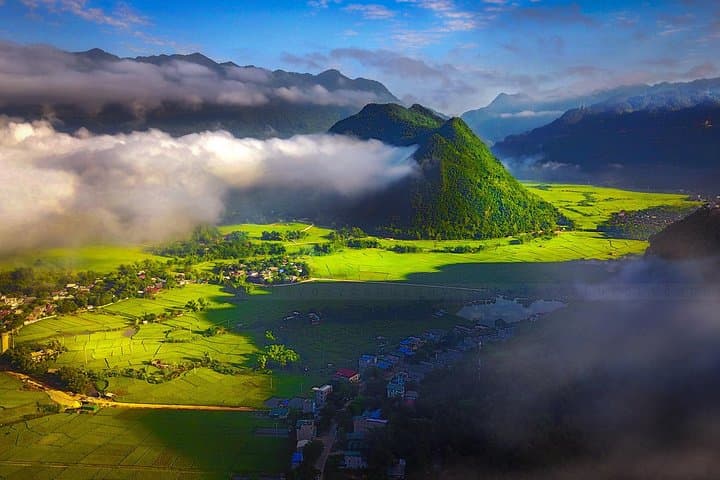
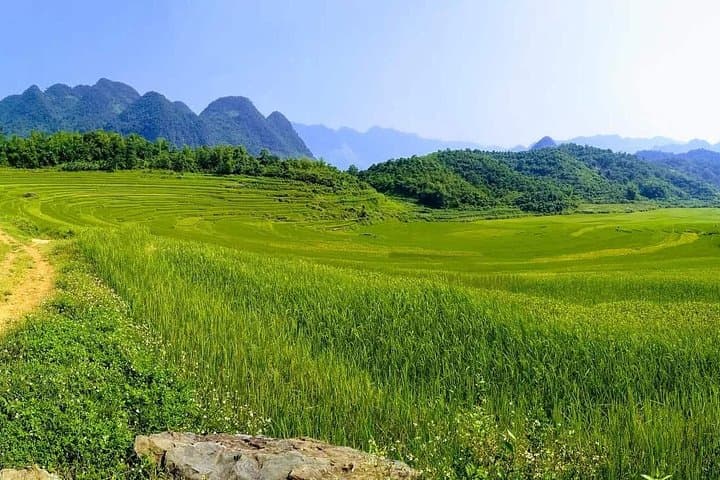
The van eases out of Hanoi before dawn and the city’s honk and neon drop away, replaced by a corridor of limestone ridges and rice paddies that seem to rearrange themselves as you climb. By midafternoon you’re cycling a narrow lane between flooded terraces; water reflects sky like a second horizon, and local children slow their games to study the lone tourist moving through the valley. That contrast — active, working landscapes against quiet village life — is the pulse of this two-day route from Mai Chau to Pu Luong.
Verified experiences and guided adventures in the surrounding area.
Operated by Eco Travel Go Green VietNam · Mai Chau, Hoa Binh
The van eases out of Hanoi before dawn and the city’s honk and neon drop away, replaced by a corridor of limestone ridges and rice paddies that seem to rearrange themselves as you climb. By midafternoon you’re cycling a narrow lane between flooded terraces; water reflects sky like a second horizon, and local children slow their games to study the lone tourist moving through the valley. That contrast — active, working landscapes against quiet village life — is the pulse of this two-day route from Mai Chau to Pu Luong.
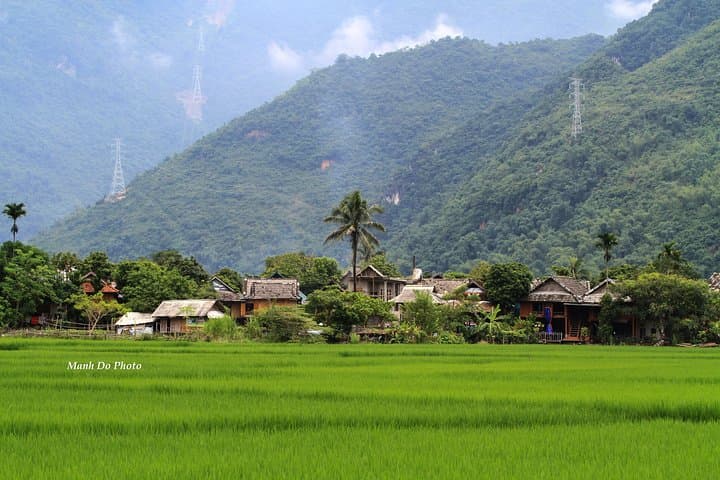
Mai Chau sits on the western edge of the Red River Delta’s uplift, where rolling karst bluffs give way to broad valleys farmed by the White Thai people. Historically a crossroads between highland communities and lowland traders, the valley’s stilt villages, woven brocade shops, and rice-terraced slopes tell a practical story: people shaping land for generations. A short transfer from Mai Chau pushes you into Pu Luong Nature Reserve, where older limestone and limestone caves wear steeper faces and the terraces narrow into amphitheaters that hang above ravines.
On the trail, nature takes on a personality: a steep hill dares you to keep moving; a rushing stream insists you stop and cool off. Villages like Kho Muong feel lived-in rather than curated; you may be the only outsider on the lane, which makes conversations, a cup of coffee, or a tour of a family’s brocade loom feel immediate and real.
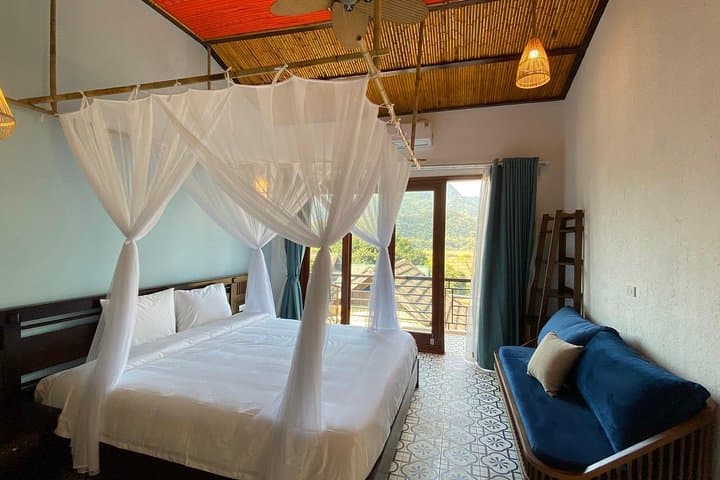
The itinerary is compact and purposeful. Day one centers on cycling through Mai Chau valley in the afternoon, visiting local weaving workshops, and sleeping in a traditional stilt homestay — simple comforts, an evening of kettle-steamed rice and conversation. Day two starts early: a short transfer to Pu Luong, a hill-top trek to rice-terrace viewpoints, a possible cave visit depending on weather, and a late-afternoon return to Hanoi.
Practical edge: trails are mostly well-formed village paths and ridge tracks, but expect uneven surfaces and short steep sections; moderate fitness and confidence on a bicycle are required. Bring sturdy shoes for walking, a light rain layer for sudden tropical showers, and local currency — small shops and tea stops don’t always take cards. Hydrate between climbs; bottled water is provided, but carry a refill bottle.
Timing matters: early morning light on terraces is sublime and cooler for walking; afternoons can be humid and sharp with sun. Respect local customs — ask before photographing people’s homes, and accept invitations with a smile. With the right preparation, two days here feel longer: the pace of the land stretches the clock, and you return to Hanoi with clearer lungs and a better sense of how people and rice live together on Vietnam’s highland edge.
moderate.
2 days.
Moderate — you should be comfortable cycling 15–25 km on gentle country roads and hiking 3–6 km with short climbs.
Yes — small-group departures welcome solo travelers; homestays are safe and often host one or two guests at a time.
Expect moderate walking with some short, steep sections and uneven steps; a basic level of fitness is recommended.
Yes — breakfasts and lunches are provided as noted; meals are local and can accommodate vegetarian requests if advised at booking.
Most operators provide hotel pickup and can hold sizable luggage in the tour vehicle; pack a small overnight bag for homestay nights.
Weather varies by season: warm and humid in summer with sudden rains, cooler and drier in winter—layers are recommended.
Children can join but must be supervised; the itinerary notes that infants sit on laps and children should be accompanied by an adult.
Mai Chau has long been a settlement hub for the White Thai people; the region’s stilt houses and weaving techniques reflect generations of upland agricultural life.
Pu Luong Reserve is managed for both biodiversity and sustainable agriculture; staying in local homestays helps funnel tourism income to village communities while reducing pressure on sensitive areas.
Eco Travel Go Green VietNam operates guided outdoor trips and adventures with an emphasis on safety, stewardship, and memorable experiences.
The van eases out of Hanoi before dawn and the city’s honk and neon drop away, replaced by a corridor of limestone ridges and rice paddies that seem to rearrange themselves as you climb. By midafternoon you’re cycling a narrow lane between flooded terraces; water reflects sky like a second horizon, and local children slow their games to study the lone tourist moving through the valley. That contrast — active, working landscapes against quiet village life — is the pulse of this two-day route from Mai Chau to Pu Luong.
The van eases out of Hanoi before dawn and the city’s honk and neon drop away, replaced by a corridor of limestone ridges and rice paddies that seem to rearrange themselves as you climb. By midafternoon you’re cycling a narrow lane between flooded terraces; water reflects sky like a second horizon, and local children slow their games to study the lone tourist moving through the valley. That contrast — active, working landscapes against quiet village life — is the pulse of this two-day route from Mai Chau to Pu Luong.
Mai Chau sits on the western edge of the Red River Delta’s uplift, where rolling karst bluffs give way to broad valleys farmed by the White Thai people. Historically a crossroads between highland communities and lowland traders, the valley’s stilt villages, woven brocade shops, and rice-terraced slopes tell a practical story: people shaping land for generations. A short transfer from Mai Chau pushes you into Pu Luong Nature Reserve, where older limestone and limestone caves wear steeper faces and the terraces narrow into amphitheaters that hang above ravines.
On the trail, nature takes on a personality: a steep hill dares you to keep moving; a rushing stream insists you stop and cool off. Villages like Kho Muong feel lived-in rather than curated; you may be the only outsider on the lane, which makes conversations, a cup of coffee, or a tour of a family’s brocade loom feel immediate and real.
The itinerary is compact and purposeful. Day one centers on cycling through Mai Chau valley in the afternoon, visiting local weaving workshops, and sleeping in a traditional stilt homestay — simple comforts, an evening of kettle-steamed rice and conversation. Day two starts early: a short transfer to Pu Luong, a hill-top trek to rice-terrace viewpoints, a possible cave visit depending on weather, and a late-afternoon return to Hanoi.
Practical edge: trails are mostly well-formed village paths and ridge tracks, but expect uneven surfaces and short steep sections; moderate fitness and confidence on a bicycle are required. Bring sturdy shoes for walking, a light rain layer for sudden tropical showers, and local currency — small shops and tea stops don’t always take cards. Hydrate between climbs; bottled water is provided, but carry a refill bottle.
Timing matters: early morning light on terraces is sublime and cooler for walking; afternoons can be humid and sharp with sun. Respect local customs — ask before photographing people’s homes, and accept invitations with a smile. With the right preparation, two days here feel longer: the pace of the land stretches the clock, and you return to Hanoi with clearer lungs and a better sense of how people and rice live together on Vietnam’s highland edge.