THE ADVENTURE COLLECTIVE® · Independent discovery and booking for outdoor travel

Escape Hanoi for a day and trade traffic for the slow sweep of Mai Chau’s rice fields. This full-day tour combines a Thung Khe Pass viewpoint, a traditional lunch in Lac Village, and a gentle cycling loop past Thai stilt houses and weaving stalls.
Escape Hanoi for a day and trade traffic for the slow sweep of Mai Chau’s rice fields. This full-day tour combines a Thung Khe Pass viewpoint, a traditional lunch in Lac Village, and a gentle cycling loop past Thai stilt houses and weaving stalls.
The bus eases out of Hanoi before dawn and the city’s clatter fades into long bands of green. By the time the road climbs to Thung Khe Pass, the valley below spreads like a living map — terraces and fields that seem to breathe with the day. On a clear morning the limestone ridges of Hoa Binh push into the sky; in mist they appear to be sculpted clouds, rising and then giving way to the valley.
Verified experiences and guided adventures in the surrounding area.
Operated by VN Bike Tour · Mai Chau, Hoa Binh
The bus eases out of Hanoi before dawn and the city’s clatter fades into long bands of green. By the time the road climbs to Thung Khe Pass, the valley below spreads like a living map — terraces and fields that seem to breathe with the day. On a clear morning the limestone ridges of Hoa Binh push into the sky; in mist they appear to be sculpted clouds, rising and then giving way to the valley.
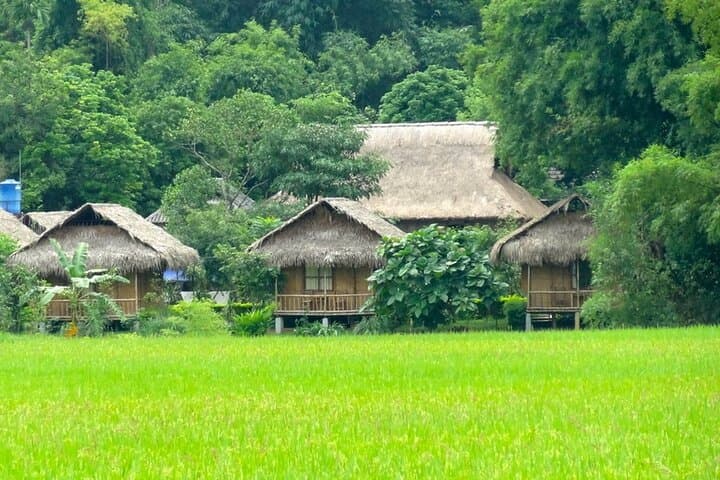
Mai Chau’s pocket of lowlands and karst outcrops has long been home to the White Thai and Black Thai communities. The valley’s geology — weathered limestone and alluvial soil — created the shelves needed for rice terraces and the shallow irrigation channels that crisscross the plain. For centuries, the Thai people built elevated wooden houses on stilts to stay above seasonal water and to storage grain beneath the floor; those stilt houses still define Lac Village and its neighbors.
The region is both agricultural and artisanal. Brocade and hemp weaving are not tourist add-ons here but living skills: family-run looms flash color outside houses, and older women will explain plant dyes and the small, exacting movements that produce traditional patterns. Mai Chau’s modern economy leans on this craft and on visitors who come to pedal between fields, to learn, and to buy directly from makers.
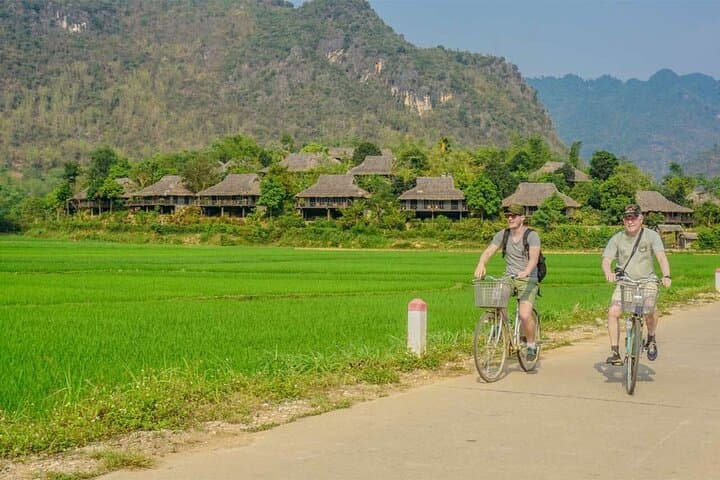
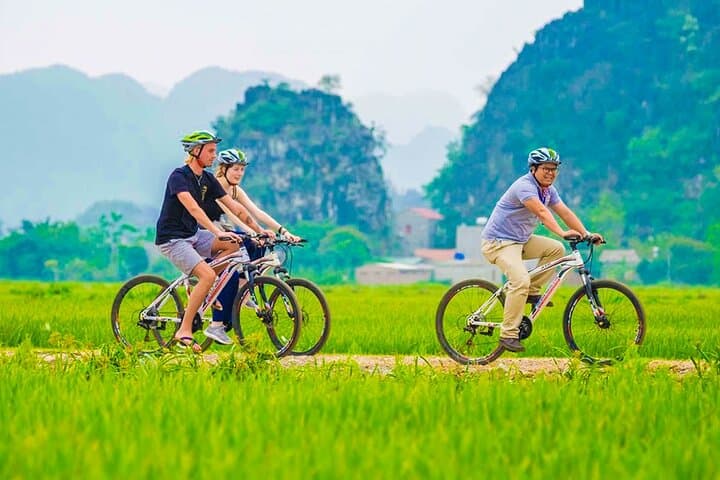
The day tour balances driving with active exploration. Expect roughly 8–10 hours from Hanoi, including a 2–3 hour stretch of highway and winding mountain roads to the pass, a 20–30 minute stop at Thung Khe for panoramic photos, and a 2–3 hour cycling loop around Lac Village. The valley ride is largely flat with occasional short rises — plan for 10–20 km of cycling and roughly 100–150 m of cumulative elevation gain on mixed pavement and compact dirt. Riders move at an easy to steady pace, crossing wooden footbridges and narrow lanes where water buffalo might watch from a distance.
Practical planning is straightforward: set out early to avoid midday heat, bring layered clothing for the cool mountain morning and warmed valley afternoons, and carry water — there are limited reliable taps on the cycling loop. Respect local customs at stilt houses (ask before photographing inside) and support artisans by purchasing directly if you can.
For travelers who want an authentic, accessible slice of northern Vietnam — a day where mountains frame rice fields and craft lives under raised floors — Mai Chau delivers. It’s not a strenuous expedition so much as a series of quiet discoveries: farmers tending terraces, brocade threaded by hand, and a valley that keeps its own slow rhythm.
moderate.
8–10 hours.
Suitable for people who can ride a bike for 10–20 km on mixed surfaces and are comfortable with a full day of activity
The guided cycling loop is typically 10–20 km with mostly flat terrain and short, gentle rises; riders should be comfortable on mixed pavement and packed dirt.
A traditional lunch in Lac Village is included in the itinerary; vegetarian options are available but notify the operator in advance if you have dietary restrictions.
Pick-up is offered from central Hanoi hotels; the guide will confirm the exact time and meeting point the day before the tour.
Yes — the tour is family-friendly, but parents should assess their child’s ability to ride for up to a couple of hours and handle traffic in village lanes.
Public restrooms are limited; you’ll have stops at the pass and Lac Village where facilities vary in comfort and cleanliness.
Yes — small vendors in villages typically accept cash only; bring Vietnamese dong in small denominations for textiles and refreshments.
Mai Chau has long been home to the Thai ethnic groups who raised stilt houses and developed brocade weaving as family trades.
Tourism helps local incomes but can strain water and waste systems; prioritize buying directly from artisan stalls and avoid single-use plastics.
VN Bike Tour operates guided outdoor trips and adventures with an emphasis on safety, stewardship, and memorable experiences.
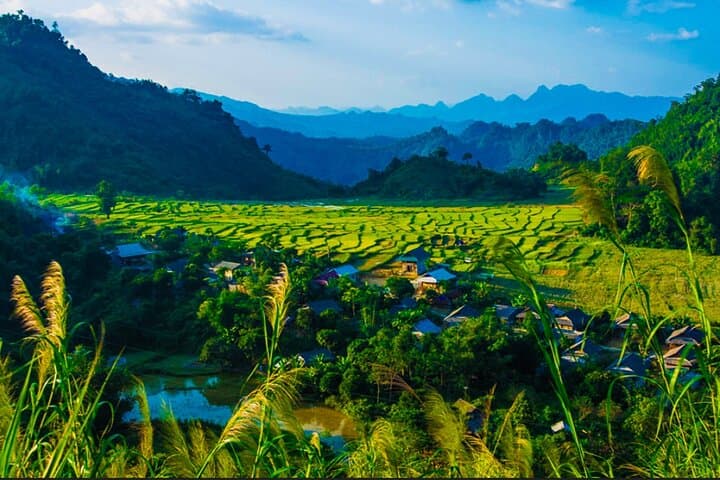
The bus eases out of Hanoi before dawn and the city’s clatter fades into long bands of green. By the time the road climbs to Thung Khe Pass, the valley below spreads like a living map — terraces and fields that seem to breathe with the day. On a clear morning the limestone ridges of Hoa Binh push into the sky; in mist they appear to be sculpted clouds, rising and then giving way to the valley.
The bus eases out of Hanoi before dawn and the city’s clatter fades into long bands of green. By the time the road climbs to Thung Khe Pass, the valley below spreads like a living map — terraces and fields that seem to breathe with the day. On a clear morning the limestone ridges of Hoa Binh push into the sky; in mist they appear to be sculpted clouds, rising and then giving way to the valley.
Mai Chau’s pocket of lowlands and karst outcrops has long been home to the White Thai and Black Thai communities. The valley’s geology — weathered limestone and alluvial soil — created the shelves needed for rice terraces and the shallow irrigation channels that crisscross the plain. For centuries, the Thai people built elevated wooden houses on stilts to stay above seasonal water and to storage grain beneath the floor; those stilt houses still define Lac Village and its neighbors.
The region is both agricultural and artisanal. Brocade and hemp weaving are not tourist add-ons here but living skills: family-run looms flash color outside houses, and older women will explain plant dyes and the small, exacting movements that produce traditional patterns. Mai Chau’s modern economy leans on this craft and on visitors who come to pedal between fields, to learn, and to buy directly from makers.
The day tour balances driving with active exploration. Expect roughly 8–10 hours from Hanoi, including a 2–3 hour stretch of highway and winding mountain roads to the pass, a 20–30 minute stop at Thung Khe for panoramic photos, and a 2–3 hour cycling loop around Lac Village. The valley ride is largely flat with occasional short rises — plan for 10–20 km of cycling and roughly 100–150 m of cumulative elevation gain on mixed pavement and compact dirt. Riders move at an easy to steady pace, crossing wooden footbridges and narrow lanes where water buffalo might watch from a distance.
Practical planning is straightforward: set out early to avoid midday heat, bring layered clothing for the cool mountain morning and warmed valley afternoons, and carry water — there are limited reliable taps on the cycling loop. Respect local customs at stilt houses (ask before photographing inside) and support artisans by purchasing directly if you can.
For travelers who want an authentic, accessible slice of northern Vietnam — a day where mountains frame rice fields and craft lives under raised floors — Mai Chau delivers. It’s not a strenuous expedition so much as a series of quiet discoveries: farmers tending terraces, brocade threaded by hand, and a valley that keeps its own slow rhythm.