THE ADVENTURE COLLECTIVE® · Independent discovery and booking for outdoor travel

Swap Hanoi’s honk for rural silence on this private full-day tour to Mai Chau. Ride 7–10 km past rice paddies and Thai villages, stand atop Thung Khe Pass for sweeping valley views, and share lunch in a local homestay.
Swap Hanoi’s honk for rural silence on this private full-day tour to Mai Chau. Ride 7–10 km past rice paddies and Thai villages, stand atop Thung Khe Pass for sweeping valley views, and share lunch in a local homestay.
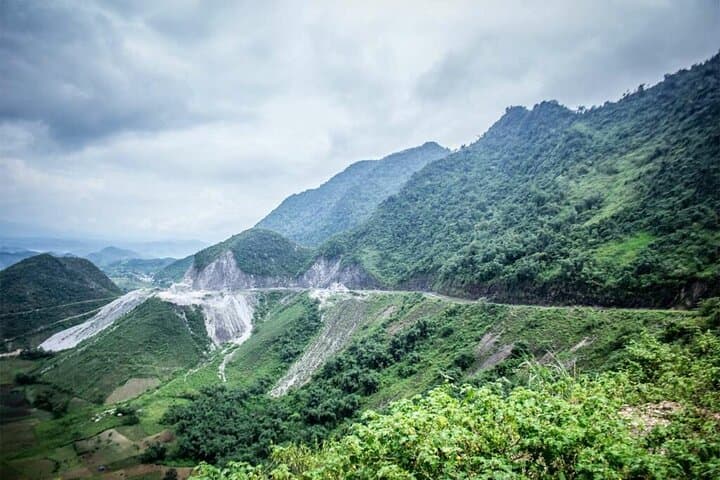
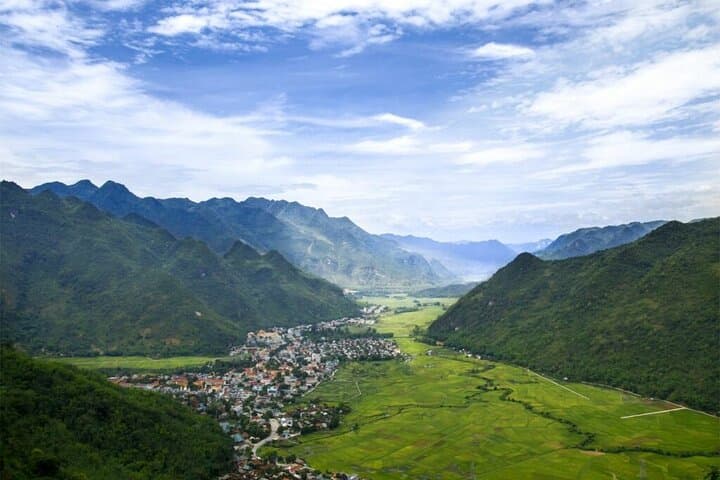
The day begins before dawn in Hanoi, when the city’s exhaust and motorbike chorus still sound like a dream. Your driver eases the minivan onto Highway 6 and the buildings thin into patchworks of green. By the time the road climbs toward Thung Khe Pass, the valley opens beneath a blue-sculpted sky: terraced rice paddies fan out like living steps and small stilt houses sit on the edges of field and forest.
Verified experiences and guided adventures in the surrounding area.
Operated by Authentic MAI CHAU · Mai Chau, Hoa Binh Province
The day begins before dawn in Hanoi, when the city’s exhaust and motorbike chorus still sound like a dream. Your driver eases the minivan onto Highway 6 and the buildings thin into patchworks of green. By the time the road climbs toward Thung Khe Pass, the valley opens beneath a blue-sculpted sky: terraced rice paddies fan out like living steps and small stilt houses sit on the edges of field and forest.
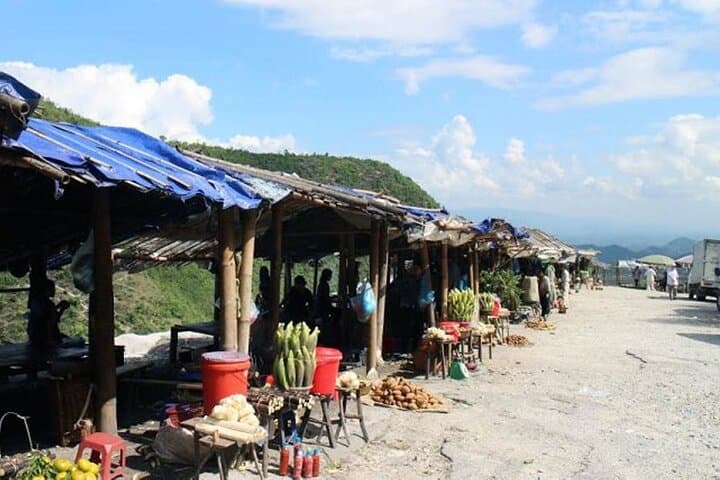
Thung Khe is the first act — a narrow sweep of road where the Muong market clings to the roadside and vendors set out bundles of produce and hand-carved goods. The pass is as much a cultural waypoint as a view: traders from the highlands converge here, and on clear days you can see the Mai Chau bowl below, a low plain ringed by limestone ridges. Geologically the range is a mix of ancient sedimentary layers pushed up by tectonic pressure and carved by monsoon-sculpted erosion — the uplands that frame Mai Chau have the ragged, jagged look of young mountains.
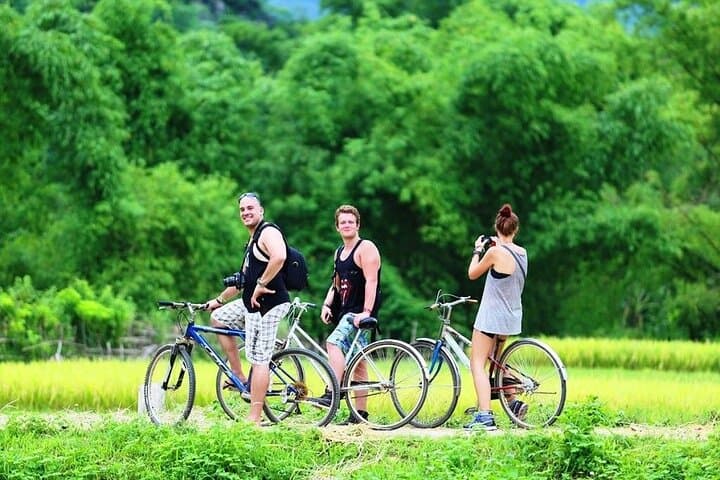
Arriving in Mai Chau, the pace changes. A Thai homestay welcomes you with tea and a family kitchen lunch — simple rice dishes, grilled fish, and vegetables grown a short walk away. After lunch you saddle up for 7–10 km of cycling across flat and gently rolling terrain. The ride threads through Lac and Pom Coong villages, where looms click in open houses and villagers in patterned skirts move between fields. The bicycles are not meant for punishing alpine climbs; this is a cultural ride meant to let you slow down and notice: the way irrigation channels redirect mountain runoff, the water buffalo that graze lazily at field edges, the wind that moves over the paddies like a hand smoothing fabric.
Practical contours: expect a full-day excursion of roughly 11–12 hours door-to-door from Hanoi, including about four hours driving each way and 2–3 hours on-site for cycling and exploring. Terrain is paved and compact dirt; elevation gain during the bike leg is minimal. The tour is private and guided in English, with bottled water and lunch included.
Plan light layers and sun protection; mornings in the pass can be chilly while the valley warms quickly. Bring cash for the Thung Khe market and small purchases in villages, and wear closed-toe shoes for paddies and homestay steps. If you want fewer people and clearer skies, target weekdays outside major Vietnamese holidays.
Mai Chau rewards curiosity: it’s less about conquering landscape than about listening to it — streams daring you to follow them, winds nudging through banana fronds — and learning how local life still moves to the rhythm of rice and season.
moderate.
11–12 hours.
Suitable for travelers with average fitness — able to handle a long car journey and 7–10 km of easy cycling over flat to rolling terrain.
Expect about 3.5–4 hours each way depending on traffic; the tour is full-day (approximately 11–12 hours total including transfers).
Cycling is typically 7–10 km on paved and compact dirt roads with minimal climbing — accessible for most people comfortable on a bike.
Yes — lunch at a Thai homestay and bottled mineral water on transfer are included in the tour price.
Yes. Note dietary needs when booking so the homestay can prepare appropriate dishes, though options in villages may be simple.
Layered, breathable clothing; closed-toe shoes for riding and walking; and sun protection. Mornings at Thung Khe can be chilly, so bring a light fleece if visiting in cooler months.
Restrooms are available at stops: roadside cafés on Thung Khe, the homestay, and some village shops — facilities are basic in rural areas.
Mai Chau has long been home to Thai and Muong communities; the valley’s access routes and pass markets helped link mountain highlands with lowland trade routes during the colonial era.
Tourism here has a direct impact on small communities — support local businesses, avoid single-use plastics, and stay on established paths to protect terraces and irrigation systems.
Authentic MAI CHAU operates guided outdoor trips and adventures with an emphasis on safety, stewardship, and memorable experiences.
The day begins before dawn in Hanoi, when the city’s exhaust and motorbike chorus still sound like a dream. Your driver eases the minivan onto Highway 6 and the buildings thin into patchworks of green. By the time the road climbs toward Thung Khe Pass, the valley opens beneath a blue-sculpted sky: terraced rice paddies fan out like living steps and small stilt houses sit on the edges of field and forest.
The day begins before dawn in Hanoi, when the city’s exhaust and motorbike chorus still sound like a dream. Your driver eases the minivan onto Highway 6 and the buildings thin into patchworks of green. By the time the road climbs toward Thung Khe Pass, the valley opens beneath a blue-sculpted sky: terraced rice paddies fan out like living steps and small stilt houses sit on the edges of field and forest.
Thung Khe is the first act — a narrow sweep of road where the Muong market clings to the roadside and vendors set out bundles of produce and hand-carved goods. The pass is as much a cultural waypoint as a view: traders from the highlands converge here, and on clear days you can see the Mai Chau bowl below, a low plain ringed by limestone ridges. Geologically the range is a mix of ancient sedimentary layers pushed up by tectonic pressure and carved by monsoon-sculpted erosion — the uplands that frame Mai Chau have the ragged, jagged look of young mountains.
Arriving in Mai Chau, the pace changes. A Thai homestay welcomes you with tea and a family kitchen lunch — simple rice dishes, grilled fish, and vegetables grown a short walk away. After lunch you saddle up for 7–10 km of cycling across flat and gently rolling terrain. The ride threads through Lac and Pom Coong villages, where looms click in open houses and villagers in patterned skirts move between fields. The bicycles are not meant for punishing alpine climbs; this is a cultural ride meant to let you slow down and notice: the way irrigation channels redirect mountain runoff, the water buffalo that graze lazily at field edges, the wind that moves over the paddies like a hand smoothing fabric.
Practical contours: expect a full-day excursion of roughly 11–12 hours door-to-door from Hanoi, including about four hours driving each way and 2–3 hours on-site for cycling and exploring. Terrain is paved and compact dirt; elevation gain during the bike leg is minimal. The tour is private and guided in English, with bottled water and lunch included.
Plan light layers and sun protection; mornings in the pass can be chilly while the valley warms quickly. Bring cash for the Thung Khe market and small purchases in villages, and wear closed-toe shoes for paddies and homestay steps. If you want fewer people and clearer skies, target weekdays outside major Vietnamese holidays.
Mai Chau rewards curiosity: it’s less about conquering landscape than about listening to it — streams daring you to follow them, winds nudging through banana fronds — and learning how local life still moves to the rhythm of rice and season.