THE ADVENTURE COLLECTIVE® · Independent discovery and booking for outdoor travel

Escape Hanoi for a day of gentle cycling through rice paddies, a hands-on weaving and natural dye workshop, and a homestay lunch with a White Thai family. This full-day trip blends easy bike routes with cultural exchange and rural hospitality.
Escape Hanoi for a day of gentle cycling through rice paddies, a hands-on weaving and natural dye workshop, and a homestay lunch with a White Thai family. This full-day trip blends easy bike routes with cultural exchange and rural hospitality.
You leave Hanoi before sunrise, the city’s concrete blur shrinking behind the van’s windows as karst ridges begin to puncture the horizon. The road climbs toward 800 meters, then falls away sharply into a bowl of terraced rice fields and timber stilt houses where the White Thai people live. By mid-morning the air is cooler, rice-scented and punctuated by the metallic clack of looms; you swap the hum of the highway for bicycles and narrow village lanes.
Verified experiences and guided adventures in the surrounding area.
Operated by DCT Responsible Travel · Mai Chau, Hoa Binh
You leave Hanoi before sunrise, the city’s concrete blur shrinking behind the van’s windows as karst ridges begin to puncture the horizon. The road climbs toward 800 meters, then falls away sharply into a bowl of terraced rice fields and timber stilt houses where the White Thai people live. By mid-morning the air is cooler, rice-scented and punctuated by the metallic clack of looms; you swap the hum of the highway for bicycles and narrow village lanes.
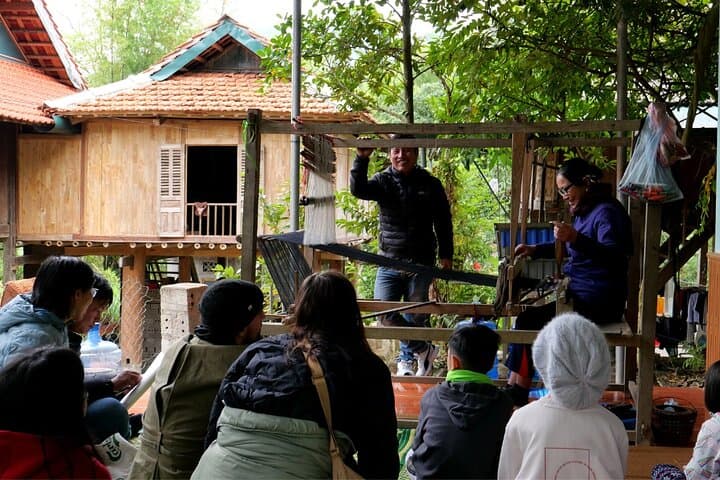
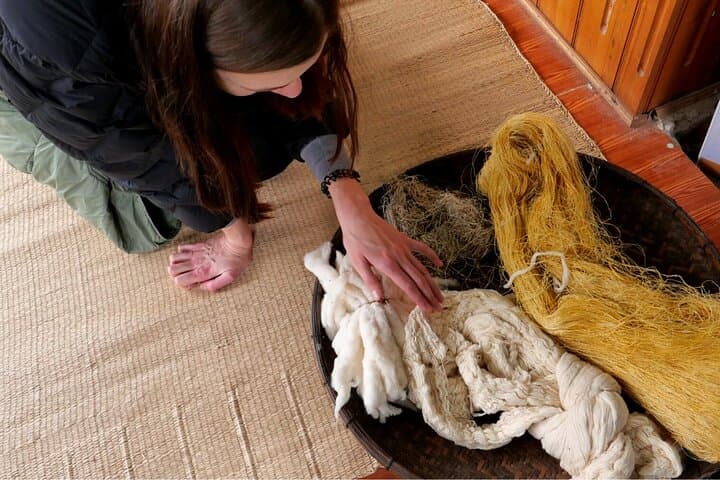
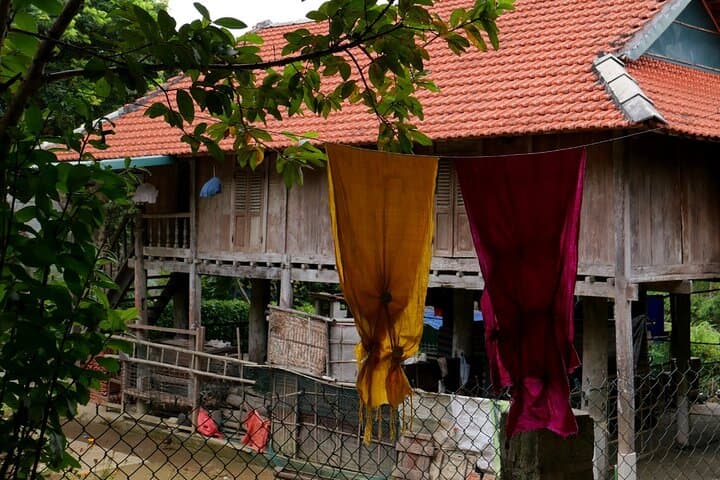
Mai Chau’s valley feels governed by a slower rhythm. The White Thai have farmed these low slopes for centuries; their raised houses—built to ventilate and keep livestock beneath—are as practical as they are photogenic. Geologically the valley sits between limestone outcrops and folded ridgelines carved by seasonal runoff. Culturally, the day centers on two things: movement (the cycling) and making (the handicraft workshop at Na Phon, where natural dyes and embroidery patterns carry intergenerational knowledge).
A local family hosts the midday homestay lunch, serving regional dishes built around sticky rice, smoky grilled pork and fresh herbs. The Hoa Ban social project you visit runs a small weaving workshop that both sustains handicraft skills and offers income to women in the villages—a tangible example of community-led tourism in action.
Practical details matter: the full itinerary is a 12-hour day, departing Hanoi Old Quarter (corner of Cau Go and Ho Hoan Kiem streets) at 7:30 a.m. Expect a 2–2.5 hour drive each way and a few hours of easy cycling on flat valley lanes—roughly 10–15 km of pedaling at a relaxed pace, with stops for the workshop, tea and photos. Trails are compact dirt and paved village lanes; they’re forgiving but can be dusty or damp, depending on season.
Bring layered clothing, a brimmed hat and sunscreen for midday, plus light rain protection during summer months. If you want to photograph village life, ask for permission before shooting people at close range; you’ll often get warm smiles and posed shots if you ask.
This trip is ideal for travelers who want a single-day escape from Hanoi: low-impact cycling, hands-on cultural exchange, and a chance to support local craft. Small group sizes (up to eight) keep the experience personal—so you spend less time on a bus and more time with the people and landscapes that make Mai Chau quietly compelling.
easy.
10–12 hours.
Lightly active — comfortable riding a bike for 2–4 hours total and walking short village paths
Meet at the DCT Responsible Travel office (17 Cau Go) in Hanoi Old Quarter at 7:30 a.m.; the tour returns to the same spot around 7:30 p.m.
Expect roughly 10–15 km of easy cycling on flat valley lanes, spread across the morning and afternoon sessions.
Yes—children are welcome but infants must sit on an adult’s lap during transport; the hands-on weaving activities are appropriate for older children with supervision.
Yes, hosts can provide vegetarian options if advised at booking—use the special requirements field when you reserve.
The trip is rated easy; basic cycling skill and light fitness for a few hours of pedaling are sufficient.
You can cancel for a full refund if you cancel at least 24 hours before departure; weather-dependent cancellations may also apply.
The White Thai communities in Mai Chau have long used raised stilt houses and handwoven textiles as core cultural markers; weaving motifs often tell local stories and lineage.
The workshop supports sustainable livelihoods by empowering women artisans; travelers should avoid single-use plastics and respect village privacy.
DCT Responsible Travel operates guided outdoor trips and adventures with an emphasis on safety, stewardship, and memorable experiences.
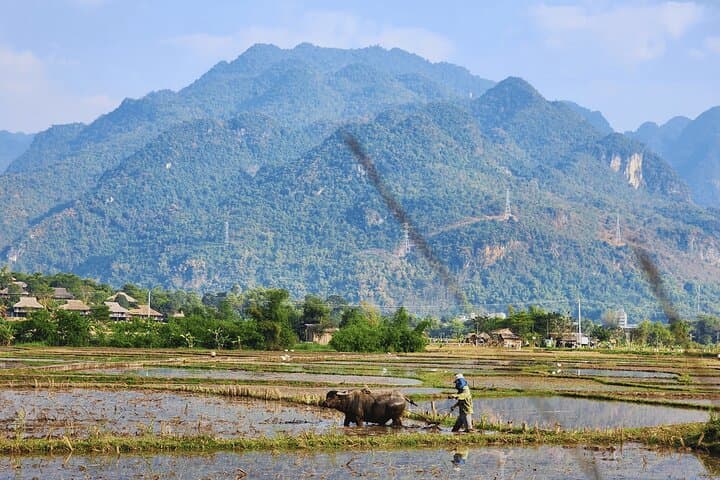
You leave Hanoi before sunrise, the city’s concrete blur shrinking behind the van’s windows as karst ridges begin to puncture the horizon. The road climbs toward 800 meters, then falls away sharply into a bowl of terraced rice fields and timber stilt houses where the White Thai people live. By mid-morning the air is cooler, rice-scented and punctuated by the metallic clack of looms; you swap the hum of the highway for bicycles and narrow village lanes.
You leave Hanoi before sunrise, the city’s concrete blur shrinking behind the van’s windows as karst ridges begin to puncture the horizon. The road climbs toward 800 meters, then falls away sharply into a bowl of terraced rice fields and timber stilt houses where the White Thai people live. By mid-morning the air is cooler, rice-scented and punctuated by the metallic clack of looms; you swap the hum of the highway for bicycles and narrow village lanes.
Mai Chau’s valley feels governed by a slower rhythm. The White Thai have farmed these low slopes for centuries; their raised houses—built to ventilate and keep livestock beneath—are as practical as they are photogenic. Geologically the valley sits between limestone outcrops and folded ridgelines carved by seasonal runoff. Culturally, the day centers on two things: movement (the cycling) and making (the handicraft workshop at Na Phon, where natural dyes and embroidery patterns carry intergenerational knowledge).
A local family hosts the midday homestay lunch, serving regional dishes built around sticky rice, smoky grilled pork and fresh herbs. The Hoa Ban social project you visit runs a small weaving workshop that both sustains handicraft skills and offers income to women in the villages—a tangible example of community-led tourism in action.
Practical details matter: the full itinerary is a 12-hour day, departing Hanoi Old Quarter (corner of Cau Go and Ho Hoan Kiem streets) at 7:30 a.m. Expect a 2–2.5 hour drive each way and a few hours of easy cycling on flat valley lanes—roughly 10–15 km of pedaling at a relaxed pace, with stops for the workshop, tea and photos. Trails are compact dirt and paved village lanes; they’re forgiving but can be dusty or damp, depending on season.
Bring layered clothing, a brimmed hat and sunscreen for midday, plus light rain protection during summer months. If you want to photograph village life, ask for permission before shooting people at close range; you’ll often get warm smiles and posed shots if you ask.
This trip is ideal for travelers who want a single-day escape from Hanoi: low-impact cycling, hands-on cultural exchange, and a chance to support local craft. Small group sizes (up to eight) keep the experience personal—so you spend less time on a bus and more time with the people and landscapes that make Mai Chau quietly compelling.