THE ADVENTURE COLLECTIVE® · Independent discovery and booking for outdoor travel

Swap Hanoi's noise for a day of cool air, rice paddies and stilt houses on a full-day Mai Châu tour. Cycle quiet valley roads, visit a hill-tribe market at Thung Khe Pass and learn traditional weaving over a hearty regional lunch.
Swap Hanoi's noise for a day of cool air, rice paddies and stilt houses on a full-day Mai Châu tour. Cycle quiet valley roads, visit a hill-tribe market at Thung Khe Pass and learn traditional weaving over a hearty regional lunch.
The bus noses out of Hanoi before dawn and the city's roar thins into a softer language — the hum of tires, the lowing of distant water buffalo, the high ridges of karst slipping by like a slow-motion film. By mid-morning the road climbs to Thung Khe Pass; the valley below opens like a folded map, rice paddies catching sunlight in a grid of green. You step off the minibus and the air feels cleaner, cool enough to make you breathe differently.
Verified experiences and guided adventures in the surrounding area.
Operated by Vietnam Explorer · Mai Châu, Hòa Bình Province
The bus noses out of Hanoi before dawn and the city's roar thins into a softer language — the hum of tires, the lowing of distant water buffalo, the high ridges of karst slipping by like a slow-motion film. By mid-morning the road climbs to Thung Khe Pass; the valley below opens like a folded map, rice paddies catching sunlight in a grid of green. You step off the minibus and the air feels cleaner, cool enough to make you breathe differently.
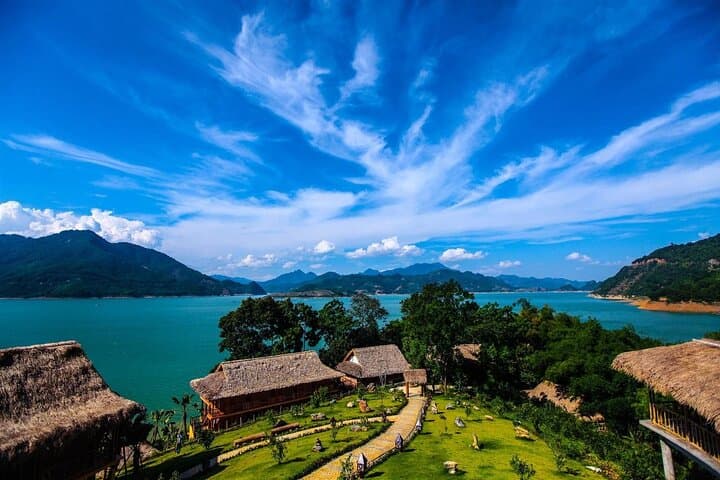
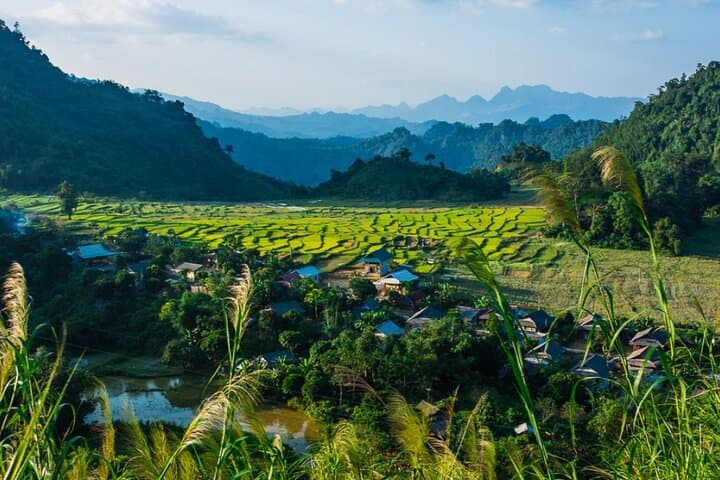
Mai Châu is a working valley inhabited primarily by Thai and Muong communities; wooden stilt houses and looms mark a landscape shaped by rice cultivation and mountain weather. Geologically, the valley sits in a limestone crescent that channels monsoon water into flat, fertile terraces — the gentle slopes and alluvial soil have made this pocket of Hòa Bình province an agricultural hinge between highland and lowland Vietnam.
Culture here is woven into daily life. You’ll see brocade looms in family homes where patterns handed down for generations are still stitched by hand. The temporary stalls at Thung Khe Pass sell hill-tribe produce and woven goods, and a short market visit gives a direct line to local craft production without the curated polish of larger tourist bazaars.
The day's rhythm is practical and unhurried: a scenic drive of roughly three hours each way, a stop at the pass for panorama and snacks, a village lunch in a stilt house, and a 10–12 km gentle bike ride through the valley with a short walk to stretch legs and explore a hamlet. Terrain is mostly flat valley floor with a few short, mellow climbs; elevation in Mai Châu valley sits around 300–400 m, while Thung Khe Pass perches higher, where wind and cloud can make the temperature drop.
For travelers, timing and gear matter. Aim for a weekday or early-season slot to avoid Vietnamese weekend crowds; bring a light rain shell even in summer—the mountains can change mood fast. Shoes with good soles handle village alleys and farm tracks; a reusable water bottle and sun protection keep you comfortable during the cycling leg. Local guides balance cultural sensitivity with practicality: ask before photographing people and support craft makers directly.
Practicalities: expect a 7–8 hour outing with round-trip transport from Hanoi, inclusive of lunch, basic entrance fees, and an English-speaking guide. The tour is deliberately accessible — little technical skill is required — but it rewards curiosity: an ordinary day in the valley unfolds into a close-up of everyday mountain life, where the pace, patterns, and handiwork of the Thai and Muong communities are the true highlights.
easy.
7–8 hours.
Suitable for most fitness levels; participants should be comfortable riding a bicycle for 10–12 km and walking short sections.
Round-trip transport is included; expect about 3–3.5 hours each way depending on traffic, with the whole tour lasting 7–8 hours.
No—most of the cycling is on flat valley roads with 10–12 km of riding at a leisurely pace; basic cycling ability is sufficient.
Yes — the tour can accommodate vegetarian, vegan and gluten-free requests if noted at booking.
Yes; infants must sit on an adult’s lap during transport. The itinerary suits older children who can manage a short bike ride.
Bring small-denomination cash, sunscreen and a hat; bargaining is polite but limited for handmade goods.
The operator may cancel for unsafe conditions; the booking terms indicate cancellations for bad weather or insufficient travelers.
Mai Châu has been home to Thai and Muong communities for centuries; wooden stilt architecture and brocade weaving reflect agricultural rhythms and clan traditions.
Support homestays and buy directly from artisans to keep income local; stick to village paths to avoid trampling small-scale terraces and seedlings.
Vietnam Explorer operates guided outdoor trips and adventures with an emphasis on safety, stewardship, and memorable experiences.
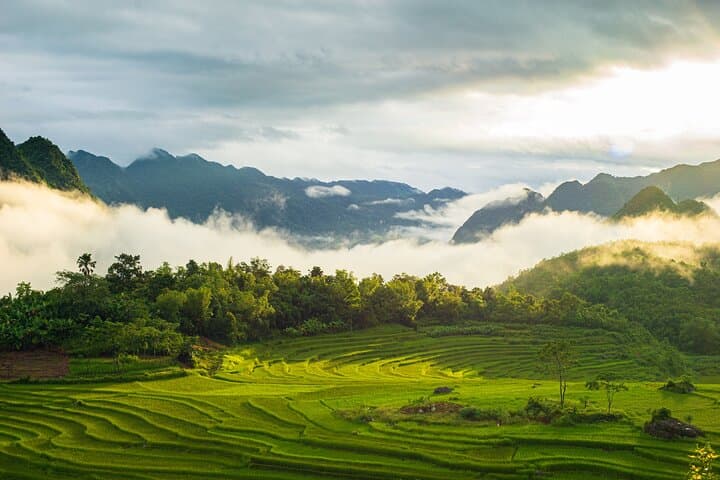
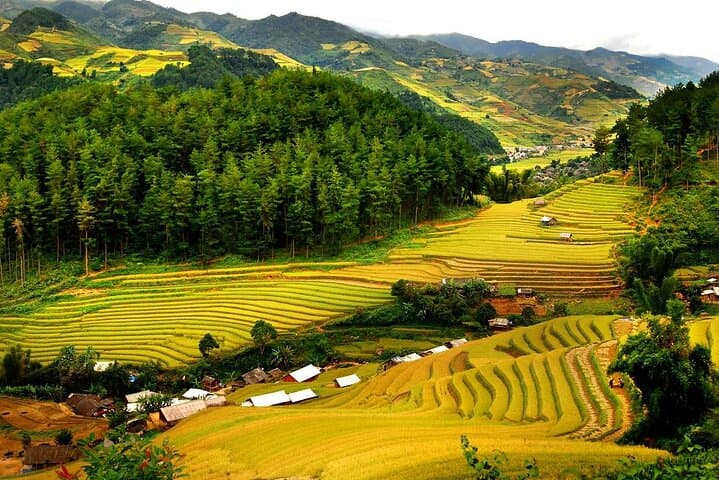
The bus noses out of Hanoi before dawn and the city's roar thins into a softer language — the hum of tires, the lowing of distant water buffalo, the high ridges of karst slipping by like a slow-motion film. By mid-morning the road climbs to Thung Khe Pass; the valley below opens like a folded map, rice paddies catching sunlight in a grid of green. You step off the minibus and the air feels cleaner, cool enough to make you breathe differently.
The bus noses out of Hanoi before dawn and the city's roar thins into a softer language — the hum of tires, the lowing of distant water buffalo, the high ridges of karst slipping by like a slow-motion film. By mid-morning the road climbs to Thung Khe Pass; the valley below opens like a folded map, rice paddies catching sunlight in a grid of green. You step off the minibus and the air feels cleaner, cool enough to make you breathe differently.
Mai Châu is a working valley inhabited primarily by Thai and Muong communities; wooden stilt houses and looms mark a landscape shaped by rice cultivation and mountain weather. Geologically, the valley sits in a limestone crescent that channels monsoon water into flat, fertile terraces — the gentle slopes and alluvial soil have made this pocket of Hòa Bình province an agricultural hinge between highland and lowland Vietnam.
Culture here is woven into daily life. You’ll see brocade looms in family homes where patterns handed down for generations are still stitched by hand. The temporary stalls at Thung Khe Pass sell hill-tribe produce and woven goods, and a short market visit gives a direct line to local craft production without the curated polish of larger tourist bazaars.
The day's rhythm is practical and unhurried: a scenic drive of roughly three hours each way, a stop at the pass for panorama and snacks, a village lunch in a stilt house, and a 10–12 km gentle bike ride through the valley with a short walk to stretch legs and explore a hamlet. Terrain is mostly flat valley floor with a few short, mellow climbs; elevation in Mai Châu valley sits around 300–400 m, while Thung Khe Pass perches higher, where wind and cloud can make the temperature drop.
For travelers, timing and gear matter. Aim for a weekday or early-season slot to avoid Vietnamese weekend crowds; bring a light rain shell even in summer—the mountains can change mood fast. Shoes with good soles handle village alleys and farm tracks; a reusable water bottle and sun protection keep you comfortable during the cycling leg. Local guides balance cultural sensitivity with practicality: ask before photographing people and support craft makers directly.
Practicalities: expect a 7–8 hour outing with round-trip transport from Hanoi, inclusive of lunch, basic entrance fees, and an English-speaking guide. The tour is deliberately accessible — little technical skill is required — but it rewards curiosity: an ordinary day in the valley unfolds into a close-up of everyday mountain life, where the pace, patterns, and handiwork of the Thai and Muong communities are the true highlights.