THE ADVENTURE COLLECTIVE® · Independent discovery and booking for outdoor travel

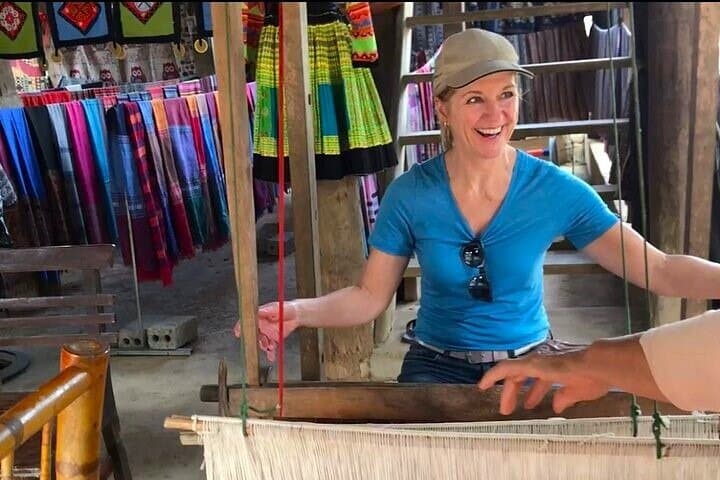
Escape Hanoi for a full day of winding passes, stilt-house hospitality and a leisurely bike ride through Mai Chau’s rice-valley villages. This guided trip pairs cultural encounters—weaving demonstrations and a market at Thung Khe Pass—with low-impact cycling and a regional lunch.
Escape Hanoi for a full day of winding passes, stilt-house hospitality and a leisurely bike ride through Mai Chau’s rice-valley villages. This guided trip pairs cultural encounters—weaving demonstrations and a market at Thung Khe Pass—with low-impact cycling and a regional lunch.
The minivan eases out of Hanoi before dawn, the city’s chatter giving way to a string of rubber trees, limestone ridges and a slow wash of green. By the time the bus threads the hairpins of Thung Khe Pass you’re staring down into a bowl of rice paddies and thatched roofs—Mai Chau announcing itself with a quiet scale that feels at odds with the half-day you left behind.
Verified experiences and guided adventures in the surrounding area.
Operated by Asia Package Travel · Mai Chau, Hoa Binh
The minivan eases out of Hanoi before dawn, the city’s chatter giving way to a string of rubber trees, limestone ridges and a slow wash of green. By the time the bus threads the hairpins of Thung Khe Pass you’re staring down into a bowl of rice paddies and thatched roofs—Mai Chau announcing itself with a quiet scale that feels at odds with the half-day you left behind.
Mai Chau sits in Hoa Binh province, a low valley cut between karst ridges where the White Thai and Muong people have farmed terraces and woven brocade for generations. The geology—limestone towers, narrow passes, and weathered ridgelines—creates micro-climates that hold mist in the mornings and hard light in the afternoon. The tradition of stilt houses here is practical and cultural: raised floors protect against seasonal water while the open communal spaces under the houses remain a place for weaving, conversation and local markets.
This guided day tour balances culture and motion. After a roughly 3.5–4 hour drive from Hanoi (with a comfort stop en route), you pause at Thung Khe Pass for a stretch and a market of Muong vendors selling handmade goods. Arrive in Mai Chau for a regional lunch in a stilt house, then mount a bicycle for a relaxed 2–3 hour ride through flat valley lanes and across narrow footbridges. Expect short, easy trekking options that climb to nearby viewpoints—nothing technical, but a good opportunity to see village life and textile workshops up close.
Practicalities matter on a day like this. Pack layered clothing for the pass (it can be cool at elevation and much warmer in the valley), bring sun protection for long open stretches, and have cash for market purchases—many sellers don’t accept cards. The cycling is low-impact: gravel and paved farm lanes with occasional mud after rain. Guides are bilingual and provide context on weaving techniques, rice cycles and village customs, so you leave with more than photos; you leave with stories.
If you want the most vivid light, aim for early departures—the valley holds its softest colors before noon. Families, solo travelers and small groups will find the day approachable; the bus returns to Hanoi in the evening, so the day is long but contained. For anyone chasing a straightforward, culturally rich escape from the city, Mai Chau’s villages, the slow rhythm of the rice fields and the tactile craft of Thai brocade make this one of the more satisfying day trips out of Hanoi.
easy.
11–12 hours.
Suitable for average fitness; cycling is leisurely on flat valley roads and short hikes are low-impact.
Expect about 3.5–4 hours each way depending on traffic, with a short comfort break en route and a stop at Thung Khe Pass.
No—the tour’s cycling section is designed as a leisurely 2–3 hour ride on flat village lanes suitable for casual riders.
Yes, a regional lunch with vegetarian options is included; indicate dietary needs when booking.
Bring small bills in Vietnamese đồng and a lightweight bag for purchases; many stalls are cash-only.
Yes—the tour is family-friendly and considered easy, though long vehicle time may be tiring for very young children or those sensitive to long drives.
Guides provide commentary in English and Vietnamese.
Mai Chau has long been home to Thai and Muong communities whose stilt-house architecture and brocade weaving reflect centuries of upland agricultural life.
Small-scale tourism supports local craft economies, but stick to marked paths and avoid feeding wildlife; purchase local textiles directly from artisans to ensure fair income.
Asia Package Travel operates guided outdoor trips and adventures with an emphasis on safety, stewardship, and memorable experiences.



The minivan eases out of Hanoi before dawn, the city’s chatter giving way to a string of rubber trees, limestone ridges and a slow wash of green. By the time the bus threads the hairpins of Thung Khe Pass you’re staring down into a bowl of rice paddies and thatched roofs—Mai Chau announcing itself with a quiet scale that feels at odds with the half-day you left behind.
The minivan eases out of Hanoi before dawn, the city’s chatter giving way to a string of rubber trees, limestone ridges and a slow wash of green. By the time the bus threads the hairpins of Thung Khe Pass you’re staring down into a bowl of rice paddies and thatched roofs—Mai Chau announcing itself with a quiet scale that feels at odds with the half-day you left behind.
Mai Chau sits in Hoa Binh province, a low valley cut between karst ridges where the White Thai and Muong people have farmed terraces and woven brocade for generations. The geology—limestone towers, narrow passes, and weathered ridgelines—creates micro-climates that hold mist in the mornings and hard light in the afternoon. The tradition of stilt houses here is practical and cultural: raised floors protect against seasonal water while the open communal spaces under the houses remain a place for weaving, conversation and local markets.
This guided day tour balances culture and motion. After a roughly 3.5–4 hour drive from Hanoi (with a comfort stop en route), you pause at Thung Khe Pass for a stretch and a market of Muong vendors selling handmade goods. Arrive in Mai Chau for a regional lunch in a stilt house, then mount a bicycle for a relaxed 2–3 hour ride through flat valley lanes and across narrow footbridges. Expect short, easy trekking options that climb to nearby viewpoints—nothing technical, but a good opportunity to see village life and textile workshops up close.
Practicalities matter on a day like this. Pack layered clothing for the pass (it can be cool at elevation and much warmer in the valley), bring sun protection for long open stretches, and have cash for market purchases—many sellers don’t accept cards. The cycling is low-impact: gravel and paved farm lanes with occasional mud after rain. Guides are bilingual and provide context on weaving techniques, rice cycles and village customs, so you leave with more than photos; you leave with stories.
If you want the most vivid light, aim for early departures—the valley holds its softest colors before noon. Families, solo travelers and small groups will find the day approachable; the bus returns to Hanoi in the evening, so the day is long but contained. For anyone chasing a straightforward, culturally rich escape from the city, Mai Chau’s villages, the slow rhythm of the rice fields and the tactile craft of Thai brocade make this one of the more satisfying day trips out of Hanoi.