THE ADVENTURE COLLECTIVE® · Independent discovery and booking for outdoor travel

Trade Hanoi’s honk of scooters for a slow pedal through Mai Chau’s emerald valleys. This full-day bicycle tour combines scenic passes, White Thai villages, and hands-on cultural stops for a grounded look at rural northern Vietnam.
Trade Hanoi’s honk of scooters for a slow pedal through Mai Chau’s emerald valleys. This full-day bicycle tour combines scenic passes, White Thai villages, and hands-on cultural stops for a grounded look at rural northern Vietnam.
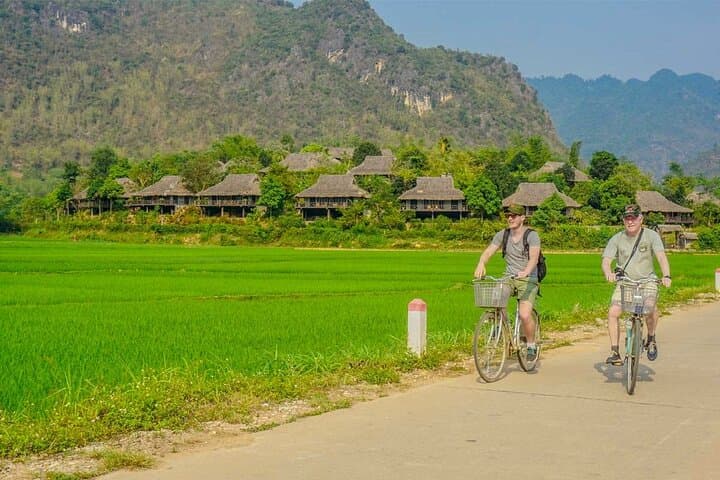
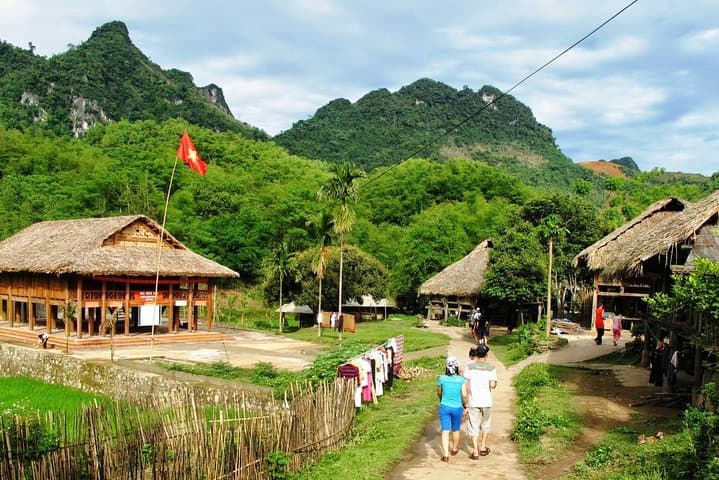
The bus eases out of Hanoi before sunrise, the city roofs sliding behind as limestone ridges begin to puncture the sky. Four hours later, the road climbs the Thung Khe Pass and the valley opens: rice paddies tiered like steps, stilt houses aligned along narrow dirt lanes, and local women moving through fields with practiced rhythm. On two wheels, the valley’s quiet becomes immediate—the rhythm of the pedal, the whisper of wind across young rice stalks, the occasional call of a water buffalo as it lingers by the irrigation ditch.
Verified experiences and guided adventures in the surrounding area.
Operated by Asia Package Travel · Mai Chau, Hoa Binh
The bus eases out of Hanoi before sunrise, the city roofs sliding behind as limestone ridges begin to puncture the sky. Four hours later, the road climbs the Thung Khe Pass and the valley opens: rice paddies tiered like steps, stilt houses aligned along narrow dirt lanes, and local women moving through fields with practiced rhythm. On two wheels, the valley’s quiet becomes immediate—the rhythm of the pedal, the whisper of wind across young rice stalks, the occasional call of a water buffalo as it lingers by the irrigation ditch.
Mai Chau sits on the edge of the northern Vietnamese karst country. The geology—limestone folded and carved over millennia—creates sheltered valleys with fertile soils and a microclimate that supports multiple rice cycles a year. Culturally, this is White Thai country: longhouse architecture, handwoven brocades, and an agricultural calendar that still shapes daily life. Thung Khe Pass, the scenic ridge you cross on the way, has been a trade and transit route since colonial times; today its roadside market offers smoked pork, handmade textiles, and quick insight into local produce.
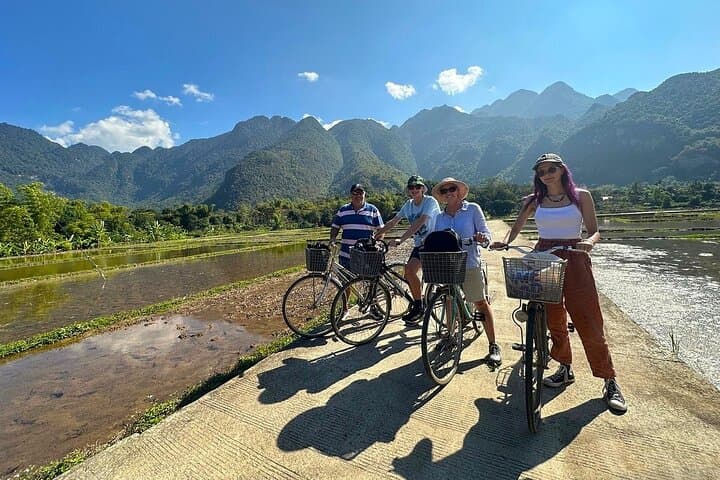
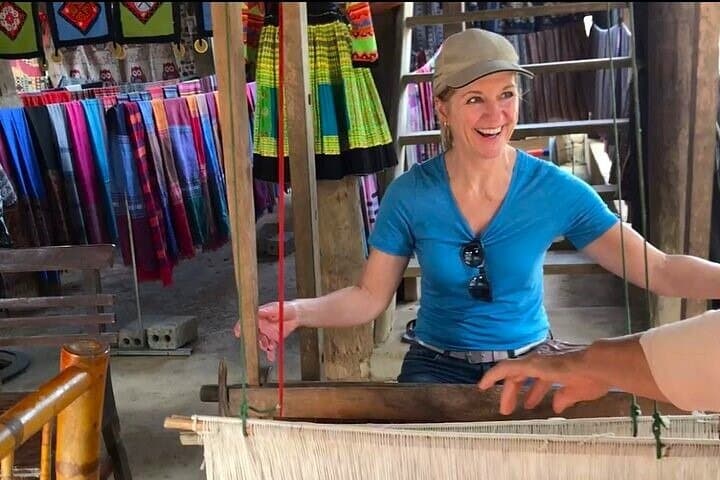
The tour’s cycling leg follows quiet lanes through villages like Pom Coong and Lac, with short stops to watch weaving demonstrations and to step under the broad eaves of a stilt house. The pace is intentionally unhurried—this isn’t a race but a chance to read a landscape: irrigation canals daring your attention, bamboo groves pushing shade across the road, and valley viewpoints that reward a short climb with a sweep of green.
Practical details matter: the full-day itinerary is long (about 11–12 hours door-to-door), so plan for steady energy and sun protection. The terrain is mostly flat to rolling; gravel lanes can be slick after rain. Guides are usually English-speaking and the inclusion of a local lunch offers a taste of regional dishes—sticky rice, braised pork, and seasonal greens—often served family-style.
For photographers, early morning at Thung Khe or late afternoon in the paddies yields the richest light. Pack layers—the valley can be cool in the morning and warm by midday—and bring a refillable water bottle and rain protection in monsoon months. If you want a shorter day, ask about reduced cycling distances; operators can often tailor the route.
The day ends with the bus pulling back toward Hanoi as the valley’s colors compress into dusk. For travelers who want a concentrated encounter with rural northern Vietnam—where landscape, craft, and daily life intersect—the Mai Chau cycling day is a practical, sensory, and surprisingly restorative escape.
moderate.
11–12 hours.
Suitable for travellers with steady fitness who can ride flat to rolling terrain for 1–3 hours at a stretch
Cycling typically lasts 2–3 hours on gentle loops through the valley, with stops for villages and viewpoints.
Yes—routes are mostly flat to rolling and paced for mixed-ability groups; basic cycling competence is enough.
Yes, the included lunch can be prepared vegetarian on request—note dietary needs at booking.
Yes, pickups are arranged from hotels in Hanoi’s Old Quarter or a nearby agreed meeting point.
Operators provide rain jackets or will adjust the route; expect muddier lanes and slower cycling.
Private tours or shorter cycling options may be available—contact the operator to request modifications.
Mai Chau is home to the White Thai people, known for communal stilt houses and centuries-old weaving traditions; Thung Khe Pass was a strategic route during colonial-era road building.
Tourism here is low-impact but growing; support local craft sellers, stick to paths to avoid trampling young rice, and minimize single-use plastics.
Asia Package Travel operates guided outdoor trips and adventures with an emphasis on safety, stewardship, and memorable experiences.
The bus eases out of Hanoi before sunrise, the city roofs sliding behind as limestone ridges begin to puncture the sky. Four hours later, the road climbs the Thung Khe Pass and the valley opens: rice paddies tiered like steps, stilt houses aligned along narrow dirt lanes, and local women moving through fields with practiced rhythm. On two wheels, the valley’s quiet becomes immediate—the rhythm of the pedal, the whisper of wind across young rice stalks, the occasional call of a water buffalo as it lingers by the irrigation ditch.
The bus eases out of Hanoi before sunrise, the city roofs sliding behind as limestone ridges begin to puncture the sky. Four hours later, the road climbs the Thung Khe Pass and the valley opens: rice paddies tiered like steps, stilt houses aligned along narrow dirt lanes, and local women moving through fields with practiced rhythm. On two wheels, the valley’s quiet becomes immediate—the rhythm of the pedal, the whisper of wind across young rice stalks, the occasional call of a water buffalo as it lingers by the irrigation ditch.
Mai Chau sits on the edge of the northern Vietnamese karst country. The geology—limestone folded and carved over millennia—creates sheltered valleys with fertile soils and a microclimate that supports multiple rice cycles a year. Culturally, this is White Thai country: longhouse architecture, handwoven brocades, and an agricultural calendar that still shapes daily life. Thung Khe Pass, the scenic ridge you cross on the way, has been a trade and transit route since colonial times; today its roadside market offers smoked pork, handmade textiles, and quick insight into local produce.
The tour’s cycling leg follows quiet lanes through villages like Pom Coong and Lac, with short stops to watch weaving demonstrations and to step under the broad eaves of a stilt house. The pace is intentionally unhurried—this isn’t a race but a chance to read a landscape: irrigation canals daring your attention, bamboo groves pushing shade across the road, and valley viewpoints that reward a short climb with a sweep of green.
Practical details matter: the full-day itinerary is long (about 11–12 hours door-to-door), so plan for steady energy and sun protection. The terrain is mostly flat to rolling; gravel lanes can be slick after rain. Guides are usually English-speaking and the inclusion of a local lunch offers a taste of regional dishes—sticky rice, braised pork, and seasonal greens—often served family-style.
For photographers, early morning at Thung Khe or late afternoon in the paddies yields the richest light. Pack layers—the valley can be cool in the morning and warm by midday—and bring a refillable water bottle and rain protection in monsoon months. If you want a shorter day, ask about reduced cycling distances; operators can often tailor the route.
The day ends with the bus pulling back toward Hanoi as the valley’s colors compress into dusk. For travelers who want a concentrated encounter with rural northern Vietnam—where landscape, craft, and daily life intersect—the Mai Chau cycling day is a practical, sensory, and surprisingly restorative escape.