THE ADVENTURE COLLECTIVE® · Independent discovery and booking for outdoor travel

Escape Hanoi for a full day of cycling through rice paddies, visiting White Thai homestays and climbing Chieu (Thousand Steps) Cave. This well-paced tour pairs easy terrain with meaningful cultural stops and a traditional northern Vietnamese lunch.
Escape Hanoi for a full day of cycling through rice paddies, visiting White Thai homestays and climbing Chieu (Thousand Steps) Cave. This well-paced tour pairs easy terrain with meaningful cultural stops and a traditional northern Vietnamese lunch.
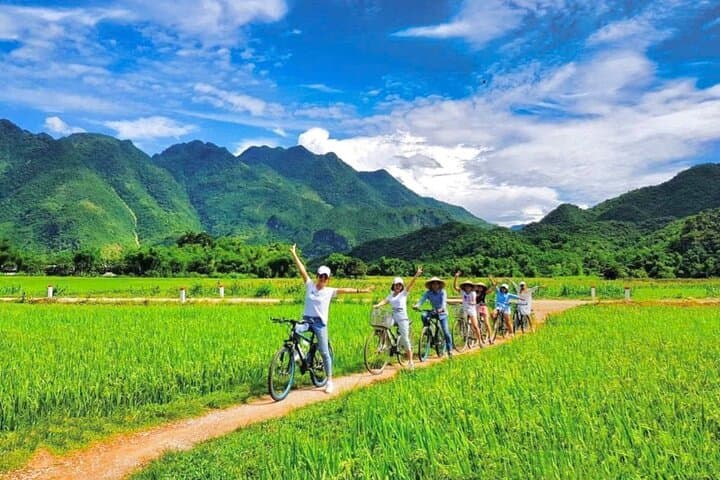
You leave Hanoi before sunrise and the city sheds itself like a coat. The road toward Mai Chau unfurls through low karst ridges and roadside markets, and by the time the bus slides into the valley the noise of the capital feels distant. Rice paddies level with the sky reflect a quiet blue; wooden stilt houses stand on thin stilts as if listening to the wind. This is a day designed to slow you down: pedal, talk with villagers, climb a cave road for a view, then sit for a lunch of northern specialties in a family home.
Verified experiences and guided adventures in the surrounding area.
Operated by Divi Travel · Mai Chau, Hoa Binh Province
You leave Hanoi before sunrise and the city sheds itself like a coat. The road toward Mai Chau unfurls through low karst ridges and roadside markets, and by the time the bus slides into the valley the noise of the capital feels distant. Rice paddies level with the sky reflect a quiet blue; wooden stilt houses stand on thin stilts as if listening to the wind. This is a day designed to slow you down: pedal, talk with villagers, climb a cave road for a view, then sit for a lunch of northern specialties in a family home.
Mai Chau sits in the foothills of northwest Vietnam, where the White Thai people have farmed the flats and carved terraces for generations. Geologically the valley is a gentle basin hemmed by limestone outcrops—karst that has been hollowed into caverns and steps over millennia. Chieu Cave, often called the Thousand Steps Cave, ascends through weathered limestone to a ridge that frames a wide panorama of patchwork fields.
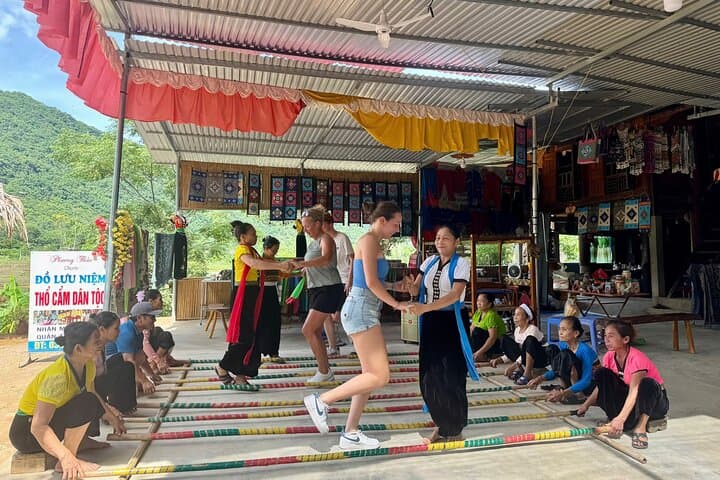
Culturally, the day centers on exchange: you cycle past looms and small workshops where brocade—bright, geometric textiles—are still woven on foot-powered looms. The Thai stilt house is both practical and social: raised floors protect grain from damp and allow rooms under the house for chatting, cooking and repairing tools. Guides here are typically local and English-speaking, and the group dynamic is small—up to a dozen—so you’ll have space to ask questions about weaving patterns, farming rhythms and local rites.
The cycling route is mostly flat with short rolling stretches between villages; the cave visit requires a steady hike and a stair-climb to the ridge—expect a 20–30 minute ascent with roughly 200–300 meters of elevation gain depending on the route. Terrain alternates paved backroads and firm dirt tracks; traffic is light but watch for scooters and farm vehicles.
Practical edge: the trip is long but approachable—600–720 minutes door-to-door. Wear grippy shoes for the cave stairs, bring a refillable water bottle and sunscreen for open paddies, and pack a light rain shell in case the mountain weather shifts. Cash is handy for small craft purchases and tips; toilets along the route can be basic. If you prefer less walking, the operator allows flexible cycling-only options.
For travelers who want an active, culture-forward day out of Hanoi, Mai Chau delivers a compact package: rhythm and view, literal and social elevation, and a chance to leave the main road and learn how a valley’s life is stitched together.
moderate.
10–12 hours.
Suitable for someone with basic cycling stamina and the ability to hike a short steep trail; expect multiple hours on a bike and a 20–30 minute cave climb.
The transfer is approximately 3.5 hours each way depending on traffic; total trip time is around 10–12 hours.
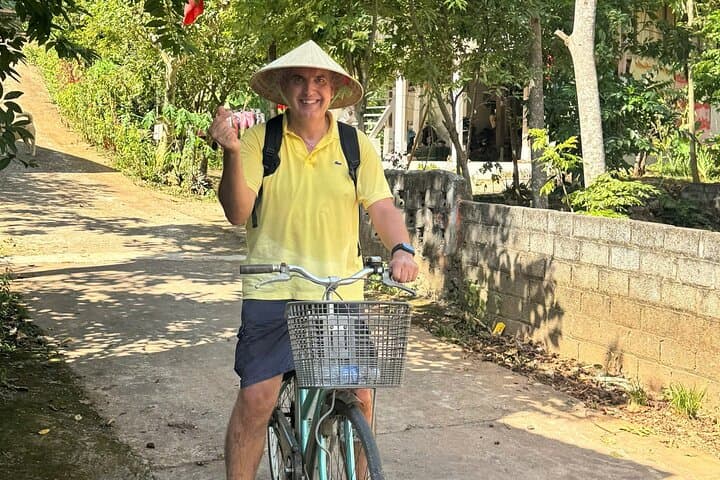
Yes—reliable touring/road bikes are supplied; specify size and any special needs when booking.
If you prefer not to hike, you can stay in the valley and cycle locally; the operator can adjust the itinerary on the day.
A traditional Vietnamese lunch in a Thai stilt house is included, featuring local, seasonal dishes of the northwest.
The tour is suitable for older children who can ride a bike for several hours; infants must sit on an adult’s lap during transfers.
Tips are appreciated but discretionary; budget a small amount in local currency (e.g., VND 50,000–100,000) per person for the guide or homestay hosts.
Mai Chau is home to the Thai ethnic group, whose raised stilt houses and weaving traditions date back several centuries and reflect a rice-based mountain economy.
Tourism is concentrated in a few villages—support local crafts and avoid single-use plastics to reduce pressure; stick to marked paths to protect paddies and soils.
Divi Travel operates guided outdoor trips and adventures with an emphasis on safety, stewardship, and memorable experiences.

You leave Hanoi before sunrise and the city sheds itself like a coat. The road toward Mai Chau unfurls through low karst ridges and roadside markets, and by the time the bus slides into the valley the noise of the capital feels distant. Rice paddies level with the sky reflect a quiet blue; wooden stilt houses stand on thin stilts as if listening to the wind. This is a day designed to slow you down: pedal, talk with villagers, climb a cave road for a view, then sit for a lunch of northern specialties in a family home.
You leave Hanoi before sunrise and the city sheds itself like a coat. The road toward Mai Chau unfurls through low karst ridges and roadside markets, and by the time the bus slides into the valley the noise of the capital feels distant. Rice paddies level with the sky reflect a quiet blue; wooden stilt houses stand on thin stilts as if listening to the wind. This is a day designed to slow you down: pedal, talk with villagers, climb a cave road for a view, then sit for a lunch of northern specialties in a family home.
Mai Chau sits in the foothills of northwest Vietnam, where the White Thai people have farmed the flats and carved terraces for generations. Geologically the valley is a gentle basin hemmed by limestone outcrops—karst that has been hollowed into caverns and steps over millennia. Chieu Cave, often called the Thousand Steps Cave, ascends through weathered limestone to a ridge that frames a wide panorama of patchwork fields.
Culturally, the day centers on exchange: you cycle past looms and small workshops where brocade—bright, geometric textiles—are still woven on foot-powered looms. The Thai stilt house is both practical and social: raised floors protect grain from damp and allow rooms under the house for chatting, cooking and repairing tools. Guides here are typically local and English-speaking, and the group dynamic is small—up to a dozen—so you’ll have space to ask questions about weaving patterns, farming rhythms and local rites.
The cycling route is mostly flat with short rolling stretches between villages; the cave visit requires a steady hike and a stair-climb to the ridge—expect a 20–30 minute ascent with roughly 200–300 meters of elevation gain depending on the route. Terrain alternates paved backroads and firm dirt tracks; traffic is light but watch for scooters and farm vehicles.
Practical edge: the trip is long but approachable—600–720 minutes door-to-door. Wear grippy shoes for the cave stairs, bring a refillable water bottle and sunscreen for open paddies, and pack a light rain shell in case the mountain weather shifts. Cash is handy for small craft purchases and tips; toilets along the route can be basic. If you prefer less walking, the operator allows flexible cycling-only options.
For travelers who want an active, culture-forward day out of Hanoi, Mai Chau delivers a compact package: rhythm and view, literal and social elevation, and a chance to leave the main road and learn how a valley’s life is stitched together.