THE ADVENTURE COLLECTIVE® · Independent discovery and booking for outdoor travel

Escape Hanoi for a day and pedal through Mai Chau’s rice valleys, stop at Thung Khe Pass, visit Thai stilt houses and see traditional brocade weaving. This full-day trip combines cultural stops with a gentle 12–18 km bike route and roundtrip transfer from Hanoi.
Escape Hanoi for a day and pedal through Mai Chau’s rice valleys, stop at Thung Khe Pass, visit Thai stilt houses and see traditional brocade weaving. This full-day trip combines cultural stops with a gentle 12–18 km bike route and roundtrip transfer from Hanoi.
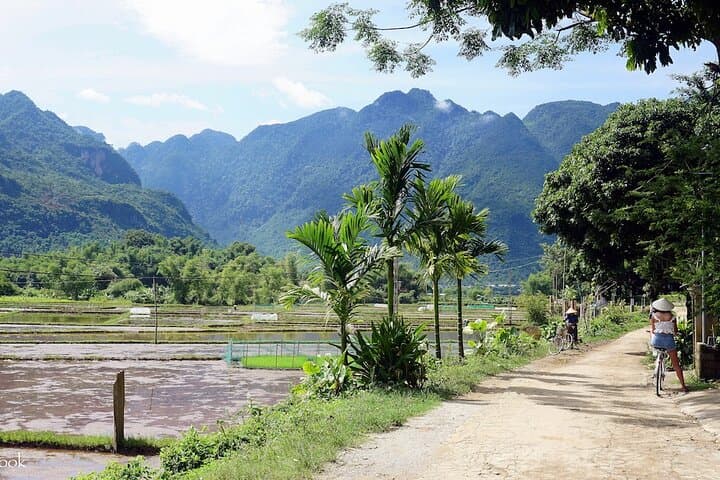
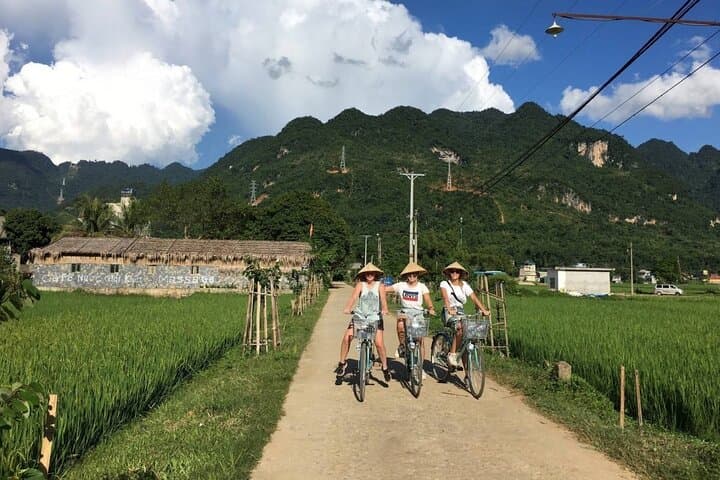
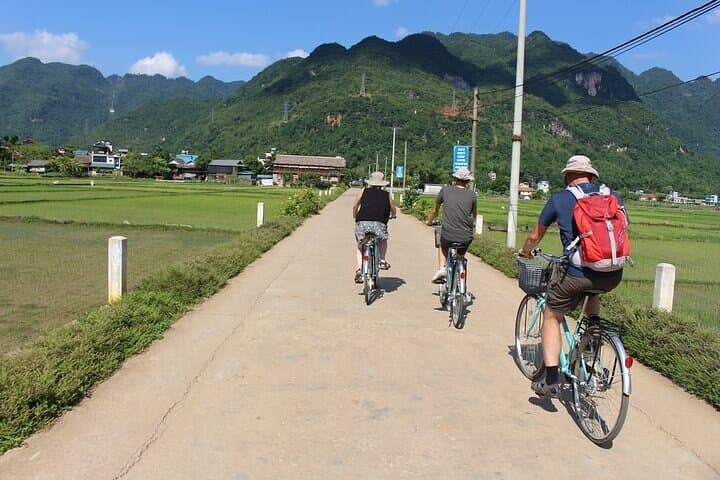
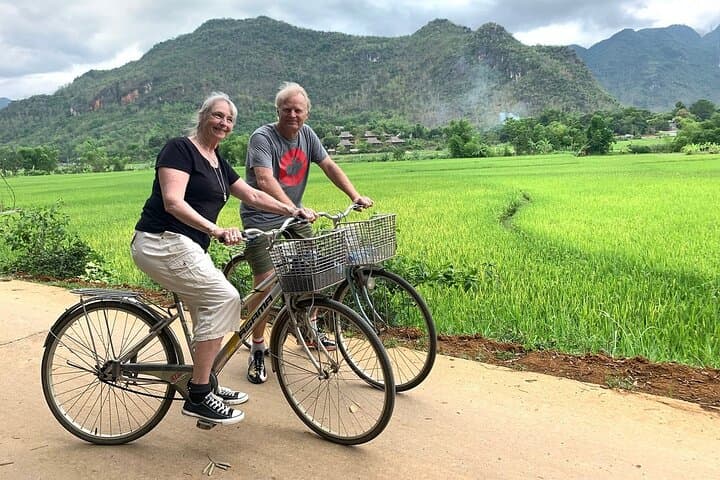
You roll out of Hanoi before dawn, the city’s neon receding as rice paddies and low karst ridges edge in through the minivan window. By mid-morning the driver threads a hairpin at Thung Khe Pass and the air sharpens; vendors set up a market where Muong families trade woven cloth and mountain fruit. The guide hands you a bicycle and the valley opens: lanes skirt water-filled terraces, a lazy river daring you to slow down and look.
Verified experiences and guided adventures in the surrounding area.
Operated by Authentic Travel Ho Chi Minh · Mai Chau, Hoa Binh
You roll out of Hanoi before dawn, the city’s neon receding as rice paddies and low karst ridges edge in through the minivan window. By mid-morning the driver threads a hairpin at Thung Khe Pass and the air sharpens; vendors set up a market where Muong families trade woven cloth and mountain fruit. The guide hands you a bicycle and the valley opens: lanes skirt water-filled terraces, a lazy river daring you to slow down and look.
Mai Chau sits in Hoa Binh province on the fringes of Vietnam’s northern limestone belt. Geology here favors shallow valleys cut between rounded karst outcrops; centuries of Thai and Muong agriculture have smoothed the slopes into rice terraces and broad paddies. The region’s stilt houses—timber structures raised on tall piles—are functional architecture adapted to seasonal flooding and communal life, and local brocade weaving remains an economic and cultural anchor.
The day trip compresses that landscape into an accessible loop. It begins with a roughly 140 km drive from Hanoi (about 3–3.5 hours depending on traffic), a photo stop at Thung Khe Pass for market browsing and views, then a lunch of regional dishes—sticky rice, grilled fish, mountain greens—before a 12–18 km cycle through flat to gently rolling valley lanes. Expect total on-bike elevation gain of roughly 100–200 m: nothing technical, but enough to get the legs working and the scenery changing from paddy margins to village lanes.
Culturally, the Mai Chau valley is a living community. You’ll visit a Thai stilt house where families still dye and weave brocade by hand; ask to see the shuttle loom and bring small bills if you plan to buy. Thung Khe market is a good spot to observe barter-based trade—farmers arriving by motorbike with bamboo loads of produce—and to taste local snacks.
For practical planning: wear sturdy sneakers, bring sun protection and a refillable water bottle, and prepare for crowded minivan transfers on the return. Restroom access is variable between stops; mobile signal can be patchy in the valley. Timing-wise, spring and autumn offer the most comfortable temperatures and photogenic light; summer can be hot with sudden rain, and winter mornings are crisp and fog-prone.
This day trip is ideal for travelers short on time who want a concentrated cultural and active taste of Vietnam’s highland valleys without overnight logistics. It’s an easy-to-moderate cycle that rewards a steady pace and a willingness to hop off the bike for roadside conversations and unexpected viewpoints.
moderate.
8–9 hours.
Suitable for travelers who ride a bike occasionally; able to cycle 12–18 km on mixed flat and rolling terrain.
Pick-up begins between 07:00–07:30 in the Old Quarter; confirm your hotel pick-up time after booking.
The route is easy to moderate—mostly flat valley lanes with a few gentle climbs totaling roughly 100–200 m elevation gain.
Yes; lunch at a local restaurant with traditional dishes is included in the tour price.
Infants must sit on an adult’s lap; check with the operator for child-friendly bike options and age recommendations.
Most operators supply helmets—confirm at booking if you prefer your own or require a child-sized helmet.
The trip generally runs in light rain; for full refund cancel at least 24 hours before departure per the operator policy.
Mai Chau is home to Thai and Muong communities; stilt houses and hand-weaving are centuries-old practices tied to wet-rice agriculture.
Tourism supports local weaving cooperatives and homestays, but visitors should avoid littering, stay on lanes, and buy locally made goods to benefit the community.
Authentic Travel Ho Chi Minh operates guided outdoor trips and adventures with an emphasis on safety, stewardship, and memorable experiences.
You roll out of Hanoi before dawn, the city’s neon receding as rice paddies and low karst ridges edge in through the minivan window. By mid-morning the driver threads a hairpin at Thung Khe Pass and the air sharpens; vendors set up a market where Muong families trade woven cloth and mountain fruit. The guide hands you a bicycle and the valley opens: lanes skirt water-filled terraces, a lazy river daring you to slow down and look.
You roll out of Hanoi before dawn, the city’s neon receding as rice paddies and low karst ridges edge in through the minivan window. By mid-morning the driver threads a hairpin at Thung Khe Pass and the air sharpens; vendors set up a market where Muong families trade woven cloth and mountain fruit. The guide hands you a bicycle and the valley opens: lanes skirt water-filled terraces, a lazy river daring you to slow down and look.
Mai Chau sits in Hoa Binh province on the fringes of Vietnam’s northern limestone belt. Geology here favors shallow valleys cut between rounded karst outcrops; centuries of Thai and Muong agriculture have smoothed the slopes into rice terraces and broad paddies. The region’s stilt houses—timber structures raised on tall piles—are functional architecture adapted to seasonal flooding and communal life, and local brocade weaving remains an economic and cultural anchor.
The day trip compresses that landscape into an accessible loop. It begins with a roughly 140 km drive from Hanoi (about 3–3.5 hours depending on traffic), a photo stop at Thung Khe Pass for market browsing and views, then a lunch of regional dishes—sticky rice, grilled fish, mountain greens—before a 12–18 km cycle through flat to gently rolling valley lanes. Expect total on-bike elevation gain of roughly 100–200 m: nothing technical, but enough to get the legs working and the scenery changing from paddy margins to village lanes.
Culturally, the Mai Chau valley is a living community. You’ll visit a Thai stilt house where families still dye and weave brocade by hand; ask to see the shuttle loom and bring small bills if you plan to buy. Thung Khe market is a good spot to observe barter-based trade—farmers arriving by motorbike with bamboo loads of produce—and to taste local snacks.
For practical planning: wear sturdy sneakers, bring sun protection and a refillable water bottle, and prepare for crowded minivan transfers on the return. Restroom access is variable between stops; mobile signal can be patchy in the valley. Timing-wise, spring and autumn offer the most comfortable temperatures and photogenic light; summer can be hot with sudden rain, and winter mornings are crisp and fog-prone.
This day trip is ideal for travelers short on time who want a concentrated cultural and active taste of Vietnam’s highland valleys without overnight logistics. It’s an easy-to-moderate cycle that rewards a steady pace and a willingness to hop off the bike for roadside conversations and unexpected viewpoints.