THE ADVENTURE COLLECTIVE® · Independent discovery and booking for outdoor travel

Leave Hanoi for a day of rolling valley roads, White Thai villages and a climb into Chieu (Thousand Steps) Cave. This Mai Chau bike tour pairs cultural encounters and a manageable hike with relaxed cycling through emerald rice fields.
Leave Hanoi for a day of rolling valley roads, White Thai villages and a climb into Chieu (Thousand Steps) Cave. This Mai Chau bike tour pairs cultural encounters and a manageable hike with relaxed cycling through emerald rice fields.
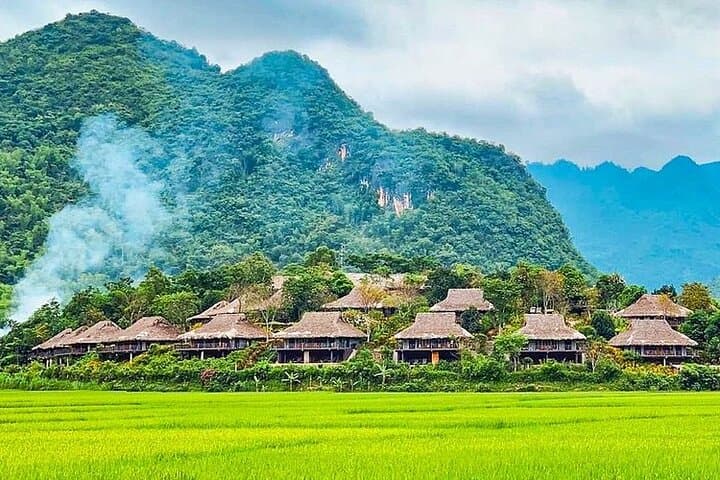
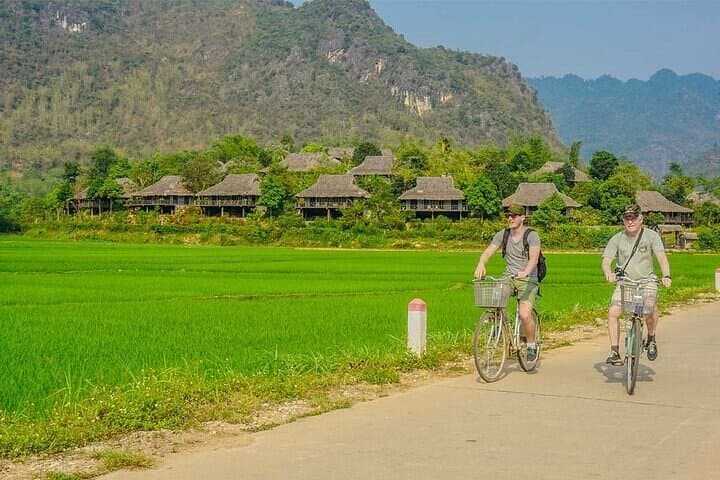
A thin morning mist lifts off the rice paddies as a shuttle eases out of Hanoi, the city’s clamor shrinking behind you. By the time the road turns from tar to narrower valley lanes, the air tastes like wet earth and green tea. Cyclists unload their bikes into a quiet stretch of Mai Chau Valley — an expanse of low, forested ridges, checkerboard rice fields and stilted Thai houses — and push off into a landscape that seems to move at a different pace.
Verified experiences and guided adventures in the surrounding area.
Operated by Charming Tourist · Mai Chau, Hoa Binh Province
A thin morning mist lifts off the rice paddies as a shuttle eases out of Hanoi, the city’s clamor shrinking behind you. By the time the road turns from tar to narrower valley lanes, the air tastes like wet earth and green tea. Cyclists unload their bikes into a quiet stretch of Mai Chau Valley — an expanse of low, forested ridges, checkerboard rice fields and stilted Thai houses — and push off into a landscape that seems to move at a different pace.
Mai Chau has long been a crossroads between lowland traders and highland communities. The White Thai people who farm this valley adapted their houses and weaving techniques for a humid, monsoon climate; local brocade workshops still turn threads into the geometric patterns seen on market shelves across northern Vietnam. The valley sits on folded karst and alluvial soils, where limestone fingers rise in the distance and caves puncture the hillsides. Chieu Cave — sometimes called Thousand Steps Cave — threads into that limestone, and the scramble to its ridge delivers a view back over the valley that explains why generations settled here.
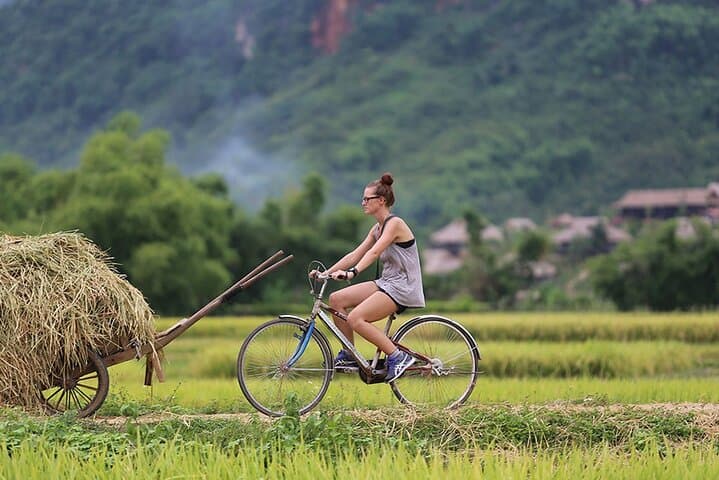
On the ride, the route alternates between hard-packed farm tracks and quiet paved lanes. Fields slope toward irrigation canals where water buffaloes wade and a narrow river dares you to move closer for a better view. Villagers nod from sun-dark porches; at a brocade house you can watch a shuttle loom click under the hands of a weaver who learned the craft from her mother.
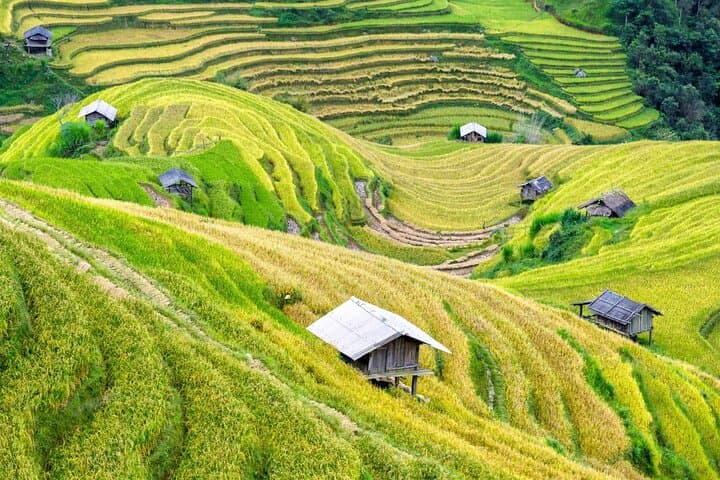
The cave portion demands a short climb — expect 300–500 vertical meters depending on route — with steps and rough trail underfoot. From the ridge above Chieu Cave, the valley opens: a mosaic of green rice terraces, small temples and stilt houses, and the winding road that brought you here.
Practical guidance: this is a full-day trip (10–12 hours) with about 3.5 hours driving each way from Hanoi. The cycling sections are mostly flat to rolling and suitable for riders comfortable on a standard touring bike for distances of 15–30 km at a relaxed pace. The cave climb requires steady footing and a head for short steep sections; hiking poles help. Bring sun protection, a refillable water bottle (aim for at least 2 liters), layered clothing for morning chill and afternoon heat, and cash for small purchases and tips. A modest level of fitness will make the day more enjoyable; guides provide an English-speaking host and a traditional Vietnamese lunch in a local house.
Expect to return to Hanoi by evening, bicycle-scented and with an appreciation for the valley’s slow rhythms — and perhaps a handwoven scarf to remind you of why this place draws people back.
moderate.
10–12 hours.
Good for travelers with moderate fitness who can cycle 15–30 km and manage a short steep hike of 300–500 m elevation gain
Pick-up is from hotels in Hanoi’s Old Quarter; transfer to Mai Chau is approximately 3–3.5 hours each way by shared car.
The cycling is mostly easy to moderate on rolling terrain; riders should be comfortable on a standard bike for up to 30 km at a steady pace.
Wear grippy shoes and layered clothing — the cave climb can be cool and the path uneven; avoid flip-flops.
Yes — a traditional Vietnamese lunch in a local house is included, and dietary requests can be accommodated if noted at booking.
Yes — if you prefer not to cycle you can walk the valley or ride in the support vehicle for parts of the route, and still join the cave hike.
Infants must sit on laps; the tour requires moderate fitness and is not recommended for travelers with serious heart conditions or mobility limits.
Mai Chau is a center of the White Thai people; houses on stilts and local brocade patterns reflect centuries of adaptation to valley agriculture and seasonal monsoons.
Tour operators encourage low-impact visits and support local craft producers; stick to paths, avoid littering, and buy from community-run workshops to keep economic benefits local.
Charming Tourist operates guided outdoor trips and adventures with an emphasis on safety, stewardship, and memorable experiences.
A thin morning mist lifts off the rice paddies as a shuttle eases out of Hanoi, the city’s clamor shrinking behind you. By the time the road turns from tar to narrower valley lanes, the air tastes like wet earth and green tea. Cyclists unload their bikes into a quiet stretch of Mai Chau Valley — an expanse of low, forested ridges, checkerboard rice fields and stilted Thai houses — and push off into a landscape that seems to move at a different pace.
A thin morning mist lifts off the rice paddies as a shuttle eases out of Hanoi, the city’s clamor shrinking behind you. By the time the road turns from tar to narrower valley lanes, the air tastes like wet earth and green tea. Cyclists unload their bikes into a quiet stretch of Mai Chau Valley — an expanse of low, forested ridges, checkerboard rice fields and stilted Thai houses — and push off into a landscape that seems to move at a different pace.
Mai Chau has long been a crossroads between lowland traders and highland communities. The White Thai people who farm this valley adapted their houses and weaving techniques for a humid, monsoon climate; local brocade workshops still turn threads into the geometric patterns seen on market shelves across northern Vietnam. The valley sits on folded karst and alluvial soils, where limestone fingers rise in the distance and caves puncture the hillsides. Chieu Cave — sometimes called Thousand Steps Cave — threads into that limestone, and the scramble to its ridge delivers a view back over the valley that explains why generations settled here.
On the ride, the route alternates between hard-packed farm tracks and quiet paved lanes. Fields slope toward irrigation canals where water buffaloes wade and a narrow river dares you to move closer for a better view. Villagers nod from sun-dark porches; at a brocade house you can watch a shuttle loom click under the hands of a weaver who learned the craft from her mother.
The cave portion demands a short climb — expect 300–500 vertical meters depending on route — with steps and rough trail underfoot. From the ridge above Chieu Cave, the valley opens: a mosaic of green rice terraces, small temples and stilt houses, and the winding road that brought you here.
Practical guidance: this is a full-day trip (10–12 hours) with about 3.5 hours driving each way from Hanoi. The cycling sections are mostly flat to rolling and suitable for riders comfortable on a standard touring bike for distances of 15–30 km at a relaxed pace. The cave climb requires steady footing and a head for short steep sections; hiking poles help. Bring sun protection, a refillable water bottle (aim for at least 2 liters), layered clothing for morning chill and afternoon heat, and cash for small purchases and tips. A modest level of fitness will make the day more enjoyable; guides provide an English-speaking host and a traditional Vietnamese lunch in a local house.
Expect to return to Hanoi by evening, bicycle-scented and with an appreciation for the valley’s slow rhythms — and perhaps a handwoven scarf to remind you of why this place draws people back.