THE ADVENTURE COLLECTIVE® · Independent discovery and booking for outdoor travel

Wake before dawn and trade Hanoi’s noise for cool mountain air, tea farms and river canoes. This two-day circuit through Moc Chau and Mai Chau pairs seasonal farm visits and village life with easy walks, a sampan ride and homestay evenings.
Wake before dawn and trade Hanoi’s noise for cool mountain air, tea farms and river canoes. This two-day circuit through Moc Chau and Mai Chau pairs seasonal farm visits and village life with easy walks, a sampan ride and homestay evenings.
You leave Hanoi before dawn, the city shrinking into a line of taillights as the road climbs toward Thung Khe Pass. At the pass, limestone ribs cut the horizon and the wind smells of wet grass; for a moment the van stops and the valley below opens like a different country—green fields, low houses on stilts and a ribbon of river that seems to dare you to follow it.
Verified experiences and guided adventures in the surrounding area.
Operated by MAI HICH FARMSTAY · Mai Chau, Hoa Binh
You leave Hanoi before dawn, the city shrinking into a line of taillights as the road climbs toward Thung Khe Pass. At the pass, limestone ribs cut the horizon and the wind smells of wet grass; for a moment the van stops and the valley below opens like a different country—green fields, low houses on stilts and a ribbon of river that seems to dare you to follow it.
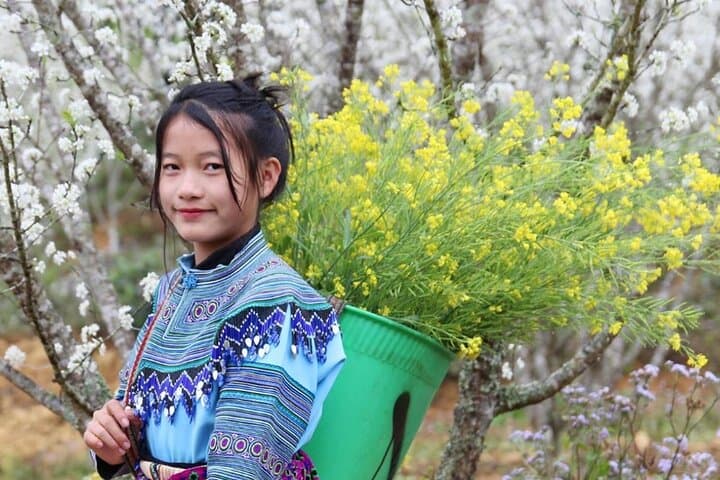
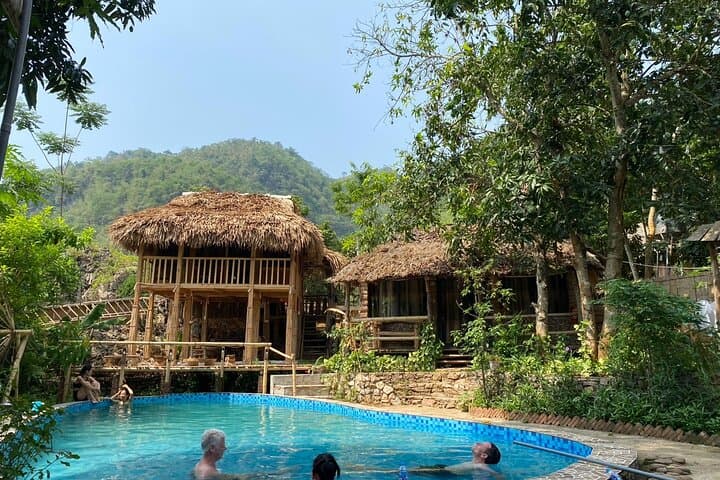
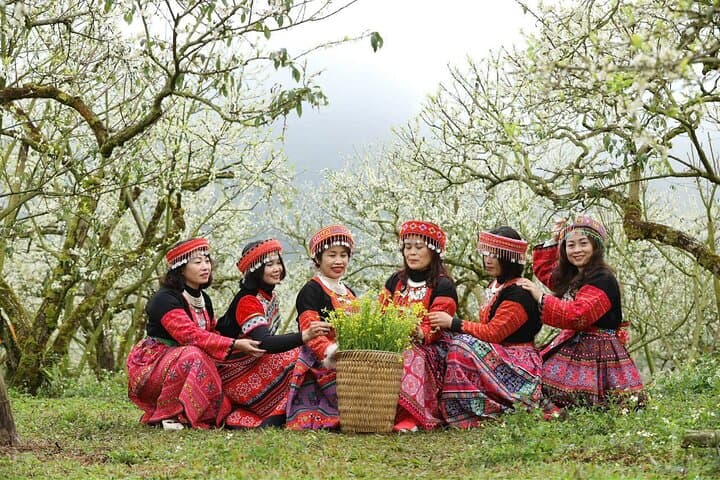
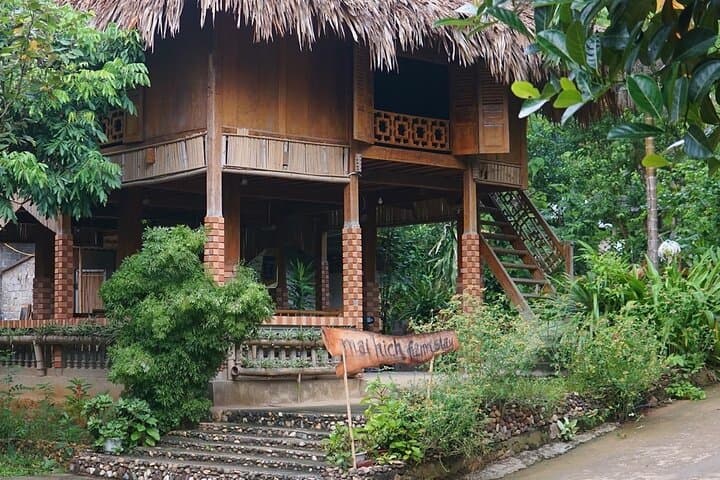
By midmorning you’re on the cool Moc Chau plateau (roughly 1,000–1,200 m elevation), where rolling tea farms spread across gentle slopes and the air has a sharp, oolong clarity. On the first day the itinerary threads through tea terraces and seasonal gardens: plum and strawberry plots in spring and summer, mustard-yellow fields in late winter and early spring. You’ll see white Thai minority villages clinging to valley floors—stilt homes, looms, and the slow choreographies of rural life.
The geology here is quiet but legible: karst outcrops at Thung Khe, then broader, sedimentary plateaus that hold soils deep enough for tea and rice. Culture is equally layered—Moc Chau’s tea was developed through colonial-era plantations and local agronomy, while Mai Chau, to the southeast, has long been a White Thai agricultural center, famed for rice terraces and bamboo craft.
Day two drops you into Mai Chau valley (around 300–400 m elevation) where terraced fields climb the hills and the Ma River cuts a low route through rice paddies. You’ll walk village tracks, cross small streams and—if water levels allow—take a sampan or simple raft on the river, currents nudging the boat like a careful guide. Expect mostly easy walking on dirt trails and paved rural roads, with short climbs to viewpoints (100–300 m elevation gain on optional side trails).
Practical guide: the round-trip from Hanoi covers roughly 140–200 km and includes several hours on rural highways—plan for 3.5–5 hours of driving between stops. Footwear should be sturdy hikers or trail shoes; trails may be muddy after rain. Bring layered clothing—plateau mornings are cool, valley afternoons can be hot—plus sun protection and a small dry bag for the canoe.
Timing matters: visit in late autumn or spring for the clearest light and festivals; mustard blooms in February–March, tea harvests peak in spring and autumn. The trip is straightforward logistically—accommodation in a local farmstay, meals featuring northern Vietnamese staples, and a local guide to bridge language and cultural nuance. For any traveler wanting a compact, tactile introduction to Vietnam’s highland farms, this two-day loop blends slow village life, hands-on tea culture and a soft river adventure into a single, manageable escape from Hanoi.
moderate.
2 days.
Suitable for travelers with basic fitness—short walks on uneven ground and brief climbs; not strenuous but requires mobility.
Yes—meeting point in Hanoi is the Opera House; pickup from Hanoi is available with a surcharge collected by the host.
No—the sampan or raft on the Ma River is weather- and water-level dependent and may be optional.
Breakfast, lunch and dinner are included as listed; meals feature northern Vietnamese home-style dishes.
The tour is rated 'physically easy' by the operator, but walking on uneven terrain and stairs means mobility considerations for some travelers.
Local guides typically speak Vietnamese and basic English; guide quality and English level vary.
Yes—booking requests allow you to note dietary needs; inform the operator in advance.
Mai Chau and Moc Chau sit on historic trade and upland routes; the White Thai and other ethnic groups have farmed these valleys for centuries, shaping terraces and local craft.
Agritourism supports local incomes but increased visitation stresses water and waste systems—choose local homestays and minimize single-use plastics.
MAI HICH FARMSTAY operates guided outdoor trips and adventures with an emphasis on safety, stewardship, and memorable experiences.
You leave Hanoi before dawn, the city shrinking into a line of taillights as the road climbs toward Thung Khe Pass. At the pass, limestone ribs cut the horizon and the wind smells of wet grass; for a moment the van stops and the valley below opens like a different country—green fields, low houses on stilts and a ribbon of river that seems to dare you to follow it.
You leave Hanoi before dawn, the city shrinking into a line of taillights as the road climbs toward Thung Khe Pass. At the pass, limestone ribs cut the horizon and the wind smells of wet grass; for a moment the van stops and the valley below opens like a different country—green fields, low houses on stilts and a ribbon of river that seems to dare you to follow it.
By midmorning you’re on the cool Moc Chau plateau (roughly 1,000–1,200 m elevation), where rolling tea farms spread across gentle slopes and the air has a sharp, oolong clarity. On the first day the itinerary threads through tea terraces and seasonal gardens: plum and strawberry plots in spring and summer, mustard-yellow fields in late winter and early spring. You’ll see white Thai minority villages clinging to valley floors—stilt homes, looms, and the slow choreographies of rural life.
The geology here is quiet but legible: karst outcrops at Thung Khe, then broader, sedimentary plateaus that hold soils deep enough for tea and rice. Culture is equally layered—Moc Chau’s tea was developed through colonial-era plantations and local agronomy, while Mai Chau, to the southeast, has long been a White Thai agricultural center, famed for rice terraces and bamboo craft.
Day two drops you into Mai Chau valley (around 300–400 m elevation) where terraced fields climb the hills and the Ma River cuts a low route through rice paddies. You’ll walk village tracks, cross small streams and—if water levels allow—take a sampan or simple raft on the river, currents nudging the boat like a careful guide. Expect mostly easy walking on dirt trails and paved rural roads, with short climbs to viewpoints (100–300 m elevation gain on optional side trails).
Practical guide: the round-trip from Hanoi covers roughly 140–200 km and includes several hours on rural highways—plan for 3.5–5 hours of driving between stops. Footwear should be sturdy hikers or trail shoes; trails may be muddy after rain. Bring layered clothing—plateau mornings are cool, valley afternoons can be hot—plus sun protection and a small dry bag for the canoe.
Timing matters: visit in late autumn or spring for the clearest light and festivals; mustard blooms in February–March, tea harvests peak in spring and autumn. The trip is straightforward logistically—accommodation in a local farmstay, meals featuring northern Vietnamese staples, and a local guide to bridge language and cultural nuance. For any traveler wanting a compact, tactile introduction to Vietnam’s highland farms, this two-day loop blends slow village life, hands-on tea culture and a soft river adventure into a single, manageable escape from Hanoi.