THE ADVENTURE COLLECTIVE® · Independent discovery and booking for outdoor travel

Swap Hanoi’s horns for rural silence and stilt-house hospitality on this two-day Mai Chau escape. Cycle quiet lanes, trek to remote Thai villages, and sleep in a traditional homestay while learning weaving and local life.
Swap Hanoi’s horns for rural silence and stilt-house hospitality on this two-day Mai Chau escape. Cycle quiet lanes, trek to remote Thai villages, and sleep in a traditional homestay while learning weaving and local life.
The bus slips out of Hanoi before sunrise, the city’s static hum dissolving into a ribbon of rice fields and karst shoulders. By late morning the road climbs through Thung Khe Pass and the valley drops open beneath — a checkerboard of flooded paddies, low-lying stilt houses, and steep limestone ribs that make the sky feel closer. Travelers step from the van into a cool, fragrant air; the homestay welcomes them with green tea and a quiet that seems to belong to the valley rather than to anyone in the group.
Verified experiences and guided adventures in the surrounding area.
Operated by Vietnam Explorer · Mai Chau, Hoa Binh
The bus slips out of Hanoi before sunrise, the city’s static hum dissolving into a ribbon of rice fields and karst shoulders. By late morning the road climbs through Thung Khe Pass and the valley drops open beneath — a checkerboard of flooded paddies, low-lying stilt houses, and steep limestone ribs that make the sky feel closer. Travelers step from the van into a cool, fragrant air; the homestay welcomes them with green tea and a quiet that seems to belong to the valley rather than to anyone in the group.
Mai Chau sits on the edge of the northern highlands where Red River sediments meet older limestone ranges. The Muong and Thai people have farmed these slopes and plains for centuries, carving rice terraces and weaving brocade that carry symbolic patterns of harvest and kinship. The region’s geology creates sudden rises and sheltered bowls, which in turn shaped local architecture — long stilt houses facing the fields and communal spaces built for festivals and work.
The tour’s cadence is deliberately gentle: a guided cycle through village lanes and along irrigation ditches, a short trek into remote hamlets, and hands-on glimpses of daily life — weaving, market bargaining, and regional cooking around an open hearth. Nature here asserts itself in small, persistent ways; morning mists thread through bamboo, the stream dares you to cross, and a distant rooster marks more than time — it marks a landscape still tuned to seasons.
Practicalities are straightforward. Pickup happens in Hanoi’s Old Quarter; expect a four‑ to five‑hour transfer including stops. Accommodation is a traditional stilt-house homestay — simple bedding, shared facilities, and a chance to join the household for dinner. Cycling is on flat village roads and quiet lanes; the trek covers short distances with modest elevation, suitable for most travelers who can manage unpaved paths.
To get the most from two days, travel light and leave room for spontaneous moments: an invitation to a family meal, a marketplace exchange, or a view from Thung Khe Pass at mid-morning light. Hydrate for the ride, wear grippy shoes for muddy paths, and bring cash for crafts and snacks — cards aren’t widely accepted. If cultural sensitivity matters, accept photography requests and ask before entering private homes.
This short escape is less about summiting and more about slowing: a chance to trade Hanoi’s frenzy for measured footsteps through rice and time-honored traditions. For travelers seeking an accessible, culturally rich overnight in Vietnam’s highland fringe, the Mai Chau classic delivers scenery, stories, and a practical, low-impact way to meet a region on its own terms.
easy.
2 days (total travel ~8–10 hours active).
Basic fitness for short cycling and walks; able to ride 5–15 km and handle 30–60 minutes of trekking over uneven ground.
Expect about 3.5–4.5 hours each way depending on traffic and stops, with a scenic stop at Thung Khe Pass.
The cycling sections are easy and on low-traffic village roads; basic bike handling and fitness for 5–15 km is sufficient.
Overnight stays are in Thai-style stilt houses with basic bedding and shared facilities; hosts prepare regional meals included in the tour.
Yes — dietary restrictions (vegetarian, vegan, gluten-free) can be accommodated if noted at booking.
Yes, the pace is gentle and suitable for families; travelers with limited mobility should check accessibility of specific homestays and trails.
Bring cash in small denominations for handmade textiles and souvenirs; polite negotiation is common but keep expectations modest.
Mai Chau’s communities — primarily Thai and Muong — have farmed the valley for generations, preserving weaving techniques and communal living in stilt houses that reflect both climate and social life.
Tourism here is low-impact but growing; opt for local guides, minimize single-use plastics, and support craft purchases directly to benefit households.
Vietnam Explorer operates guided outdoor trips and adventures with an emphasis on safety, stewardship, and memorable experiences.
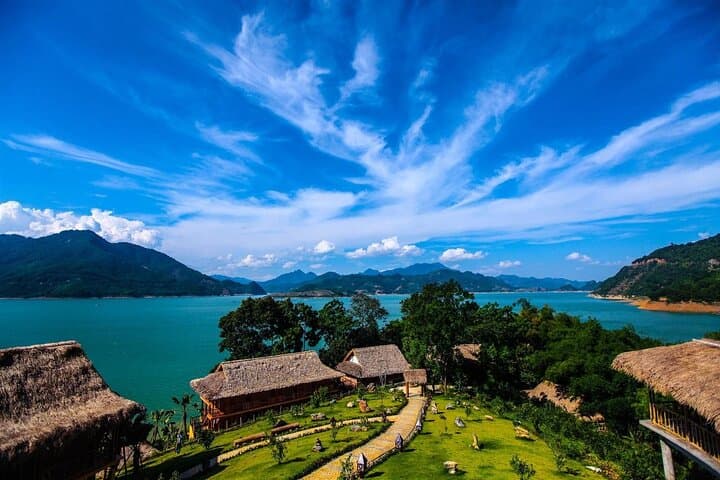
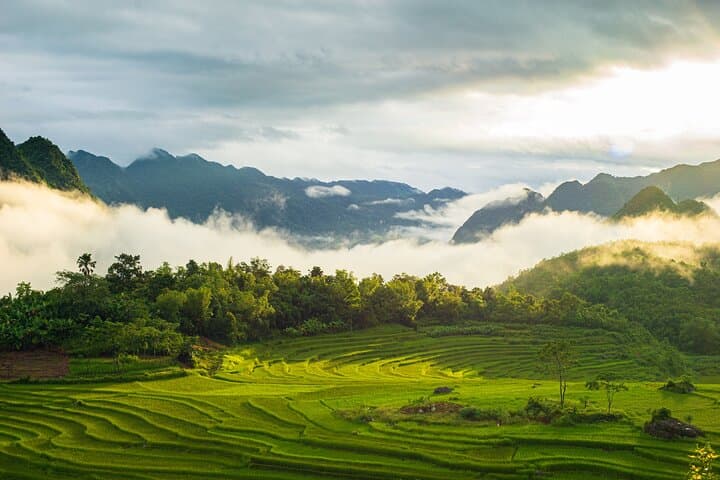
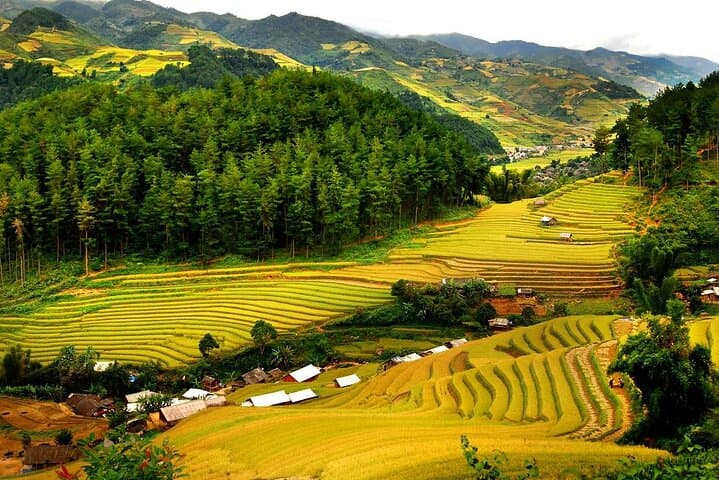
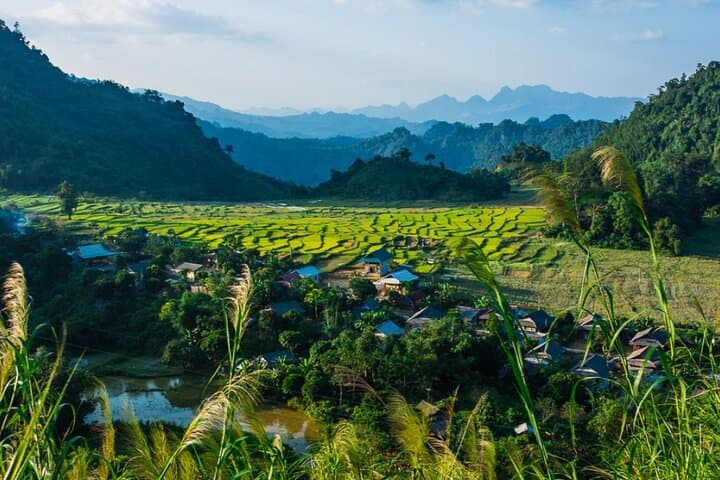
The bus slips out of Hanoi before sunrise, the city’s static hum dissolving into a ribbon of rice fields and karst shoulders. By late morning the road climbs through Thung Khe Pass and the valley drops open beneath — a checkerboard of flooded paddies, low-lying stilt houses, and steep limestone ribs that make the sky feel closer. Travelers step from the van into a cool, fragrant air; the homestay welcomes them with green tea and a quiet that seems to belong to the valley rather than to anyone in the group.
The bus slips out of Hanoi before sunrise, the city’s static hum dissolving into a ribbon of rice fields and karst shoulders. By late morning the road climbs through Thung Khe Pass and the valley drops open beneath — a checkerboard of flooded paddies, low-lying stilt houses, and steep limestone ribs that make the sky feel closer. Travelers step from the van into a cool, fragrant air; the homestay welcomes them with green tea and a quiet that seems to belong to the valley rather than to anyone in the group.
Mai Chau sits on the edge of the northern highlands where Red River sediments meet older limestone ranges. The Muong and Thai people have farmed these slopes and plains for centuries, carving rice terraces and weaving brocade that carry symbolic patterns of harvest and kinship. The region’s geology creates sudden rises and sheltered bowls, which in turn shaped local architecture — long stilt houses facing the fields and communal spaces built for festivals and work.
The tour’s cadence is deliberately gentle: a guided cycle through village lanes and along irrigation ditches, a short trek into remote hamlets, and hands-on glimpses of daily life — weaving, market bargaining, and regional cooking around an open hearth. Nature here asserts itself in small, persistent ways; morning mists thread through bamboo, the stream dares you to cross, and a distant rooster marks more than time — it marks a landscape still tuned to seasons.
Practicalities are straightforward. Pickup happens in Hanoi’s Old Quarter; expect a four‑ to five‑hour transfer including stops. Accommodation is a traditional stilt-house homestay — simple bedding, shared facilities, and a chance to join the household for dinner. Cycling is on flat village roads and quiet lanes; the trek covers short distances with modest elevation, suitable for most travelers who can manage unpaved paths.
To get the most from two days, travel light and leave room for spontaneous moments: an invitation to a family meal, a marketplace exchange, or a view from Thung Khe Pass at mid-morning light. Hydrate for the ride, wear grippy shoes for muddy paths, and bring cash for crafts and snacks — cards aren’t widely accepted. If cultural sensitivity matters, accept photography requests and ask before entering private homes.
This short escape is less about summiting and more about slowing: a chance to trade Hanoi’s frenzy for measured footsteps through rice and time-honored traditions. For travelers seeking an accessible, culturally rich overnight in Vietnam’s highland fringe, the Mai Chau classic delivers scenery, stories, and a practical, low-impact way to meet a region on its own terms.