THE ADVENTURE COLLECTIVE® · Independent discovery and booking for outdoor travel

A short escape from Hanoi that turns commuting time into field-side discovery: cycle quiet lanes, meet Thai ethnic communities in stilt houses, and spend a night in the valley with traditional dance and local food. This two-day tour pairs easy biking with cultural immersion.
A short escape from Hanoi that turns commuting time into field-side discovery: cycle quiet lanes, meet Thai ethnic communities in stilt houses, and spend a night in the valley with traditional dance and local food. This two-day tour pairs easy biking with cultural immersion.
The van eases out of Hanoi before dawn, the city’s honks shrinking behind you as the road unfurls through limestone ridges and patchwork paddies. By late morning the valley opens: wide rice fields laid low like green panels, stilt houses on the horizon, and a slow, humid clarity in the air. On this two-day, one-night loop from Hanoi, travelers swap urban rush for the deliberate pace of Mai Chau — cycling dirt lanes, watching women at looms, and gathering in a longhouse for traditional Thai dance and local rice wine.
Verified experiences and guided adventures in the surrounding area.
Operated by LOCAL TOURS VIETNAM · Mai Chau, Hoa Binh
The van eases out of Hanoi before dawn, the city’s honks shrinking behind you as the road unfurls through limestone ridges and patchwork paddies. By late morning the valley opens: wide rice fields laid low like green panels, stilt houses on the horizon, and a slow, humid clarity in the air. On this two-day, one-night loop from Hanoi, travelers swap urban rush for the deliberate pace of Mai Chau — cycling dirt lanes, watching women at looms, and gathering in a longhouse for traditional Thai dance and local rice wine.
Geology here is plain and honest: folded karst on the high ridgelines giving way to a low-lying basin at roughly 500–600 m elevation, where clay soil and monsoon-fed terraces sustain small-scale wet-rice farming. Culturally the valley is shaped by the White Thai community (Thái), whose stilt-house architecture and communal celebrations remain central. During the tour, guides explain seasonal cycles that dictate planting and festival rhythms; you’ll see hands trimming seedlings, not just a postcard of terraces.
Historically Mai Chau was a corridor between upland communities and the Red River lowlands. Today it balances tourism and tradition — homestays and locally run treks have created income while preserving crafts like brocade weaving. The overnight at a Mai Chau homestay (or bungalow option) means listening for buffalo bells and the low, rhythmic conversation of people mending nets and tools.
Practical guide: the trip covers about 160 km each way from Hanoi (roughly 3.5–4 hours by comfortable van), with afternoon cycling of 6–12 km on mostly flat village lanes and light dirt tracks. Day two includes a short 2 km pedal then a modest trek between remote hamlets (expect another 3–5 km of walking on uneven paths). Terrain is easy to moderate; good balance on a bicycle and steady walking shoes are enough.
Pack for humidity and sun: lightweight layers, a rain shell for sudden showers, and insect repellent for dusk. Cash is useful in villages — many homestays and craft sellers don’t accept cards. If you plan to photograph farmers at work, ask permission; a small tip or a printed copy later will be appreciated.
Timing matters: visit during the planting (May–June) for emerald terraces, or September–October for golden harvest tones. Even outside peak seasons the valley’s rhythms make it a thoughtful short escape from Hanoi — part cultural exchange, part active day-ride, and all quietly restorative.
moderate.
2 days, 1 night.
Suitable for travelers with basic fitness: you should be comfortable on a bicycle for 2–3 hours and able to walk 3–5 km on uneven ground.
Expect about 3.5–4 hours each way by van; the tour includes a short break en route.
The rides follow mostly flat village lanes and short dirt tracks—basic cycling skills are sufficient.
Options include simple homestays or bungalow-style rooms depending on booking; facilities are basic but clean and locally run.
Yes — lunch and dinner on day one, breakfast and lunch on day two are provided, often featuring local dishes and vegetarian options on request.
Infants must sit on laps; the tour notes it’s suitable for all fitness levels but assess endurance for young children during the rides.
Vegetarian and common dietary needs can usually be accommodated if noted at booking—confirm in advance.
Mai Chau’s communities are primarily White Thai (Thái) groups who long cultivated wet-rice terraces and built raised stilt houses adapted to monsoon cycles.
Tourism supports local craft economies but also increases waste; favor homestays that limit plastic and buy directly from artisans to keep revenue local.
LOCAL TOURS VIETNAM operates guided outdoor trips and adventures with an emphasis on safety, stewardship, and memorable experiences.
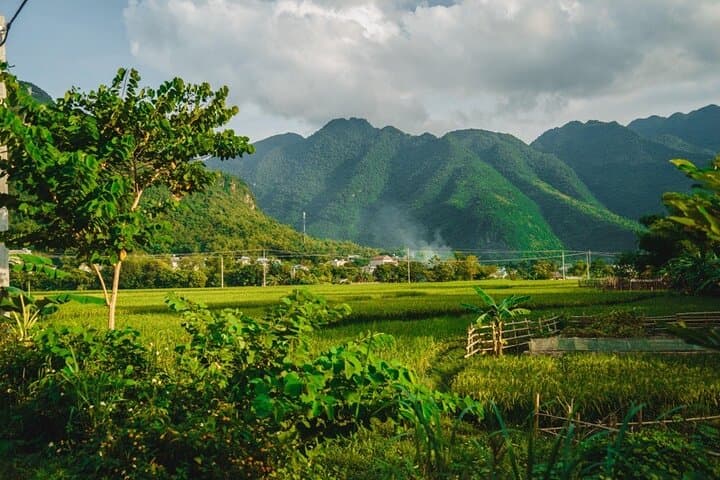
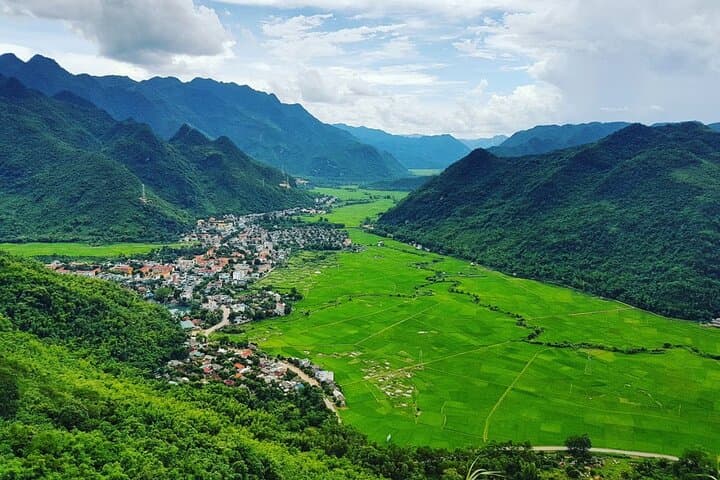
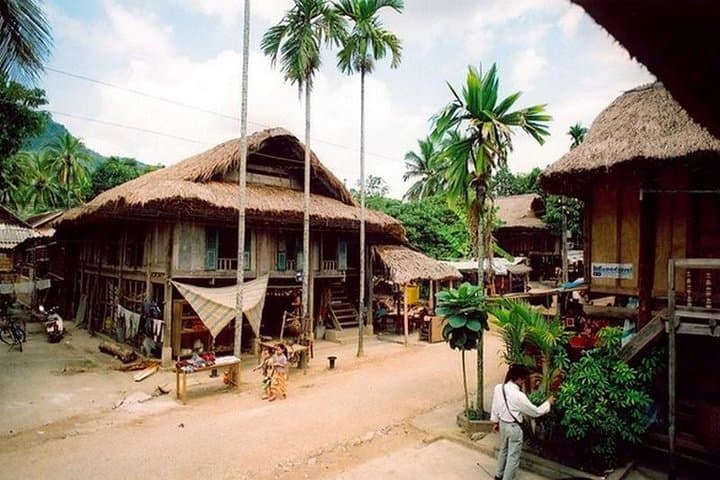
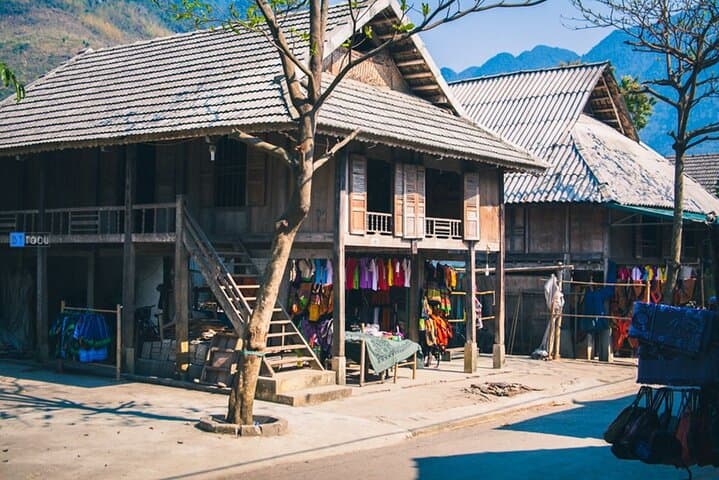
The van eases out of Hanoi before dawn, the city’s honks shrinking behind you as the road unfurls through limestone ridges and patchwork paddies. By late morning the valley opens: wide rice fields laid low like green panels, stilt houses on the horizon, and a slow, humid clarity in the air. On this two-day, one-night loop from Hanoi, travelers swap urban rush for the deliberate pace of Mai Chau — cycling dirt lanes, watching women at looms, and gathering in a longhouse for traditional Thai dance and local rice wine.
The van eases out of Hanoi before dawn, the city’s honks shrinking behind you as the road unfurls through limestone ridges and patchwork paddies. By late morning the valley opens: wide rice fields laid low like green panels, stilt houses on the horizon, and a slow, humid clarity in the air. On this two-day, one-night loop from Hanoi, travelers swap urban rush for the deliberate pace of Mai Chau — cycling dirt lanes, watching women at looms, and gathering in a longhouse for traditional Thai dance and local rice wine.
Geology here is plain and honest: folded karst on the high ridgelines giving way to a low-lying basin at roughly 500–600 m elevation, where clay soil and monsoon-fed terraces sustain small-scale wet-rice farming. Culturally the valley is shaped by the White Thai community (Thái), whose stilt-house architecture and communal celebrations remain central. During the tour, guides explain seasonal cycles that dictate planting and festival rhythms; you’ll see hands trimming seedlings, not just a postcard of terraces.
Historically Mai Chau was a corridor between upland communities and the Red River lowlands. Today it balances tourism and tradition — homestays and locally run treks have created income while preserving crafts like brocade weaving. The overnight at a Mai Chau homestay (or bungalow option) means listening for buffalo bells and the low, rhythmic conversation of people mending nets and tools.
Practical guide: the trip covers about 160 km each way from Hanoi (roughly 3.5–4 hours by comfortable van), with afternoon cycling of 6–12 km on mostly flat village lanes and light dirt tracks. Day two includes a short 2 km pedal then a modest trek between remote hamlets (expect another 3–5 km of walking on uneven paths). Terrain is easy to moderate; good balance on a bicycle and steady walking shoes are enough.
Pack for humidity and sun: lightweight layers, a rain shell for sudden showers, and insect repellent for dusk. Cash is useful in villages — many homestays and craft sellers don’t accept cards. If you plan to photograph farmers at work, ask permission; a small tip or a printed copy later will be appreciated.
Timing matters: visit during the planting (May–June) for emerald terraces, or September–October for golden harvest tones. Even outside peak seasons the valley’s rhythms make it a thoughtful short escape from Hanoi — part cultural exchange, part active day-ride, and all quietly restorative.